How to Locate an Ice House Machine Near Me Quickly
Driving down endless commercial strips looking for fresh ice wastes valuable time and fuel. Today's commercial ice dispensing network uses modern telemetry to help you find operational units in seconds. Instead of guessing whether a station has inventory or power, you can pinpoint active units along your travel route.
Many consumers rely on general web directories, but automated ice units are specialized hardware. For a broader look at how automated retail systems are mapped across different regions, check our finding vending machines guide. If you want to find an ice house machine near you, it helps to look at real-time telemetry platforms and high-density retail corridors where these high-capacity machines thrive.
Using Locator Apps to Find an Ice House Machine Near Me
Dedicated mobile applications make locating an automated ice dispenser straightforward. Platforms like the ICE2U app (which has over 250,000 active users across the country) connect directly to machines built by Ice House America. These digital tools query the machine's internal computer to display real-time operational status, so you know a unit is producing ice before you pull into the parking lot.
These apps provide several practical advantages:
- Real-Time Operational Status: You can confirm whether the machine is actively dispensing or undergoing a scheduled sanitation cycle.
- Touchless Cashless Payments: Pay for your ice directly from your smartphone via Apple Pay, Google Wallet, or linked credit cards without touching the machine interface.
- Loyalty Rewards and Free Vends: Many network operators offer reward programs where every few purchases earn credits toward free bags of ice.
- Remote SMS Codes: Some machine networks allow you to text a redemption code or call the dispenser directly to initiate an automated pour.
Identifying Prime Retail and High-Traffic Spots
If you do not have mobile app access, you can spot these freestanding units by identifying high-traffic commercial hubs. Automated ice houses require high footfall and vehicle access, often serving up to 50,000 customer visits per year.
You can reliably spot these self-contained dispensers in several key areas:
- Gas Station Perimeters: Placed along outer drive lanes to give trucks and passenger vehicles easy access without blocking fuel pumps.
- Strip Mall and Shopping Center Parking Lots: Positioned near highway exits for quick turnarounds.
- Marinas and Boat Launch Corridors: Situated along coastal or lakeside routes where boaters need bulk ice before hitting the water.
- Self-Service Car Wash Bays: Located on shared concrete pads where utility connections and drainage are already established.
If you are scouting commercial spots or considering adding automated dispensers to commercial land, review our breakdown of high-earning vending machine locations to see how site traffic shapes equipment performance. These high-traffic corridors are the most reliable places to start your search.
Benefits of On-Demand Ice Vending vs. Traditional Bagged Ice
Traditional retail ice involves a complicated, touch-heavy supply chain. Commercial ice manufacturers freeze water in central factories, drop the cubes into plastic bags, stack them on wooden pallets, ship them in refrigerated diesel trucks, and unload them into exterior retail freezer bunkers. Along the way, melting and refreezing turns the bags into solid, unusable blocks of ice that shoppers must smash against the pavement.
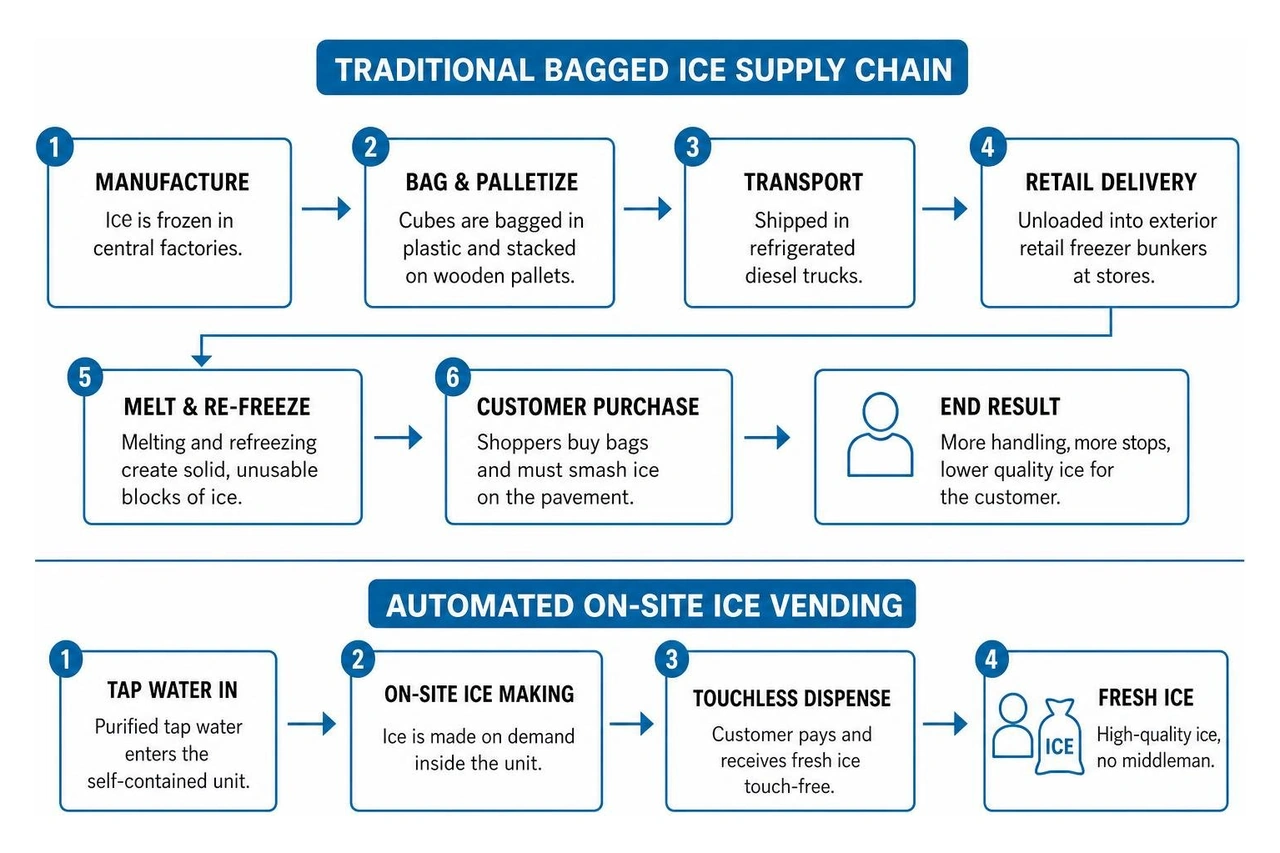
Automated ice houses cut out the middleman entirely by purifying tap water and freezing it on demand inside a self-contained unit.
| Feature | Automated Ice House Dispensers | Traditional Grocery/Gas Station Bunker Ice |
|---|---|---|
| Sanitation & Handling | 100% touch-free automated production | Handled by plant workers, delivery drivers, and retail staff |
| Average Cost (20-lb Bag) | ~$3.00 to $3.50 | $5.00 to $7.00+ |
| Ice Quality | Freshly dropped, loose, individual cubes | Often fused into a solid, frozen block |
| Dispensing Methods | Pre-bagged automated drop or straight to cooler | Pre-bagged plastic sacks only |
| Water Purification | Multi-stage (RO, carbon, micron, UV/Ozone) | Variable standard commercial municipal filtration |
| Operating Hours | 24/7/365 continuous outdoor access | Restricted to store business hours |
Ice Purity and Multi-Stage Filtration Technology
Safety and water clarity are major advantages of on-demand ice production. While traditional ice bunker units sit open to customer hands and fluctuating ambient temperatures, automated systems freeze ice inside a sealed, food-grade interior environment.
Modern ice houses utilize multi-stage commercial purification systems:
- Sediment Pre-Filtration: 5-micron sediment filters remove rust, dirt, micro-particles, and suspended physical solids from the municipal water line.
- Activated Carbon Filtration: High-density carbon blocks eliminate chlorine, chloramines, volatile organic compounds (VOCs), and off-tasting odors.
- Reverse Osmosis (RO) & Water Softening: Dissolved mineral salts and heavy metals are separated from the water stream, preventing scale buildup and yielding crystal-clear ice cubes.
- UV Sterilization and Ozonation: Active ultraviolet light and ozone infusion neutralize biological pathogens, bacteria, and algae without leaving chemical residues.
- Antimicrobial Dispensing Chutes: Food-grade internal contact surfaces and delivery chutes prevent bacterial formation right up to the dispensing point.
Units like high-capacity ice systems rely on these multi-barrier purification processes so that every pound of ice dispensed exceeds municipal drinking water standards.
Cost Savings and Bagged vs. Bulk Options
Because automated ice houses eliminate shipping logistics, warehouse storage, and third-party delivery markups, they produce ice at a fraction of the cost of traditional suppliers. Producing a bag of ice on-site costs an operator roughly $0.10 to $0.20 in utility inputs, compared to the $2.00+ wholesale cost of sourcing pre-bagged bunker ice.
These production efficiencies translate directly to consumer savings. The average retail price for a 20-lb bag dispensed from an automated machine is roughly $3.02, while a standard 10-lb or 16-lb bag inside a convenience store freezer often retails for $4.00 to $6.00.
Additionally, automated units give you flexible dispensing choices:
- Automated Bagged Ice: The machine dispenses loose cubes into an internal food-grade plastic bag, heat-seals or ties it, and drops it into the retrieval bay.
- Bulk Chute Dispensing: If you bring your own marine cooler or storage chest, you can place it under the bulk chute. The machine drops loose, unpackaged ice straight into your container, saving plastic and eliminating packaging waste.
Understanding Different Automated Ice Vending Form Factors
Not every ice vending station uses the same machine profile. Manufacturers engineer different equipment configurations depending on daily production requirements, footprint restrictions, and electrical capabilities.
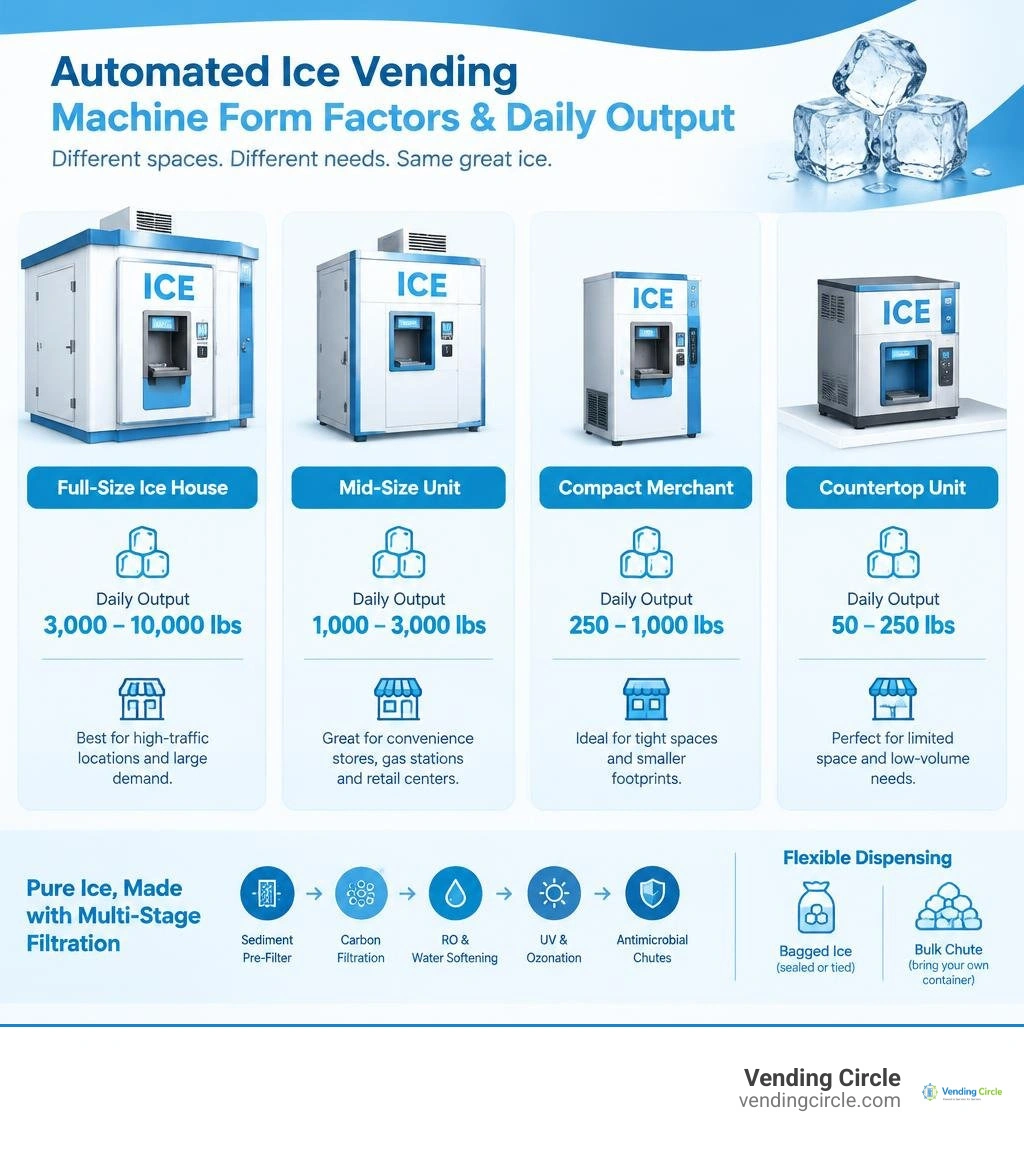
If you are exploring smaller commercial footprints or property placements, you can evaluate various ice kiosk alternatives designed for tighter retail lots.
Full-Scale Ice Houses vs. Compact Merchants
The equipment in the automated ice sector generally falls into four main commercial categories:
- The Full-Size Ice House: The largest footprint unit in the industry, engineered for high-volume commercial corridors. These standalone structures feature a 6,500-lb internal ice storage bin and can serve up to 50,000 customer visits per year. They handle heavy, non-stop weekend rushes from commercial contractors, boaters, and event caterers.
- The Ice Kiosk: A mid-sized, freestanding kiosk that stores between 2,400 lbs and 3,000 lbs of ice. It produces between 2,500 and 4,500 lbs of fresh ice every 24 hours, balancing high production with a manageable parking space footprint.
- The Ice Merchant: A compact unit engineered for shopping center walkways and gas station pump islands. It holds up to 750 lbs of ice in internal reserve and yields 800 to 2,400 lbs of production every 24 hours.
- The Inline Merchant: Designed to mount flush against the exterior wall of an existing commercial storefront. It holds 1,000 lbs in reserve storage and yields 800 to 3,200 lbs of ice daily, tapping directly into the host building's existing plumbing and power.
These systems rely on heavy-duty commercial refrigeration units to keep internal bin temperatures regulated and keep cubes free-flowing. Reliable freezing cycles also depend on strong municipal supply pressure and dedicated internal pump systems to move water cleanly through each filtration stage.
Planning Routes to an Ice House Machine Near Me for Large Trips
When planning fishing trips, camping excursions, construction jobs, or catering events, locating bulk ice stations along your primary driving route prevents unexpected delays.
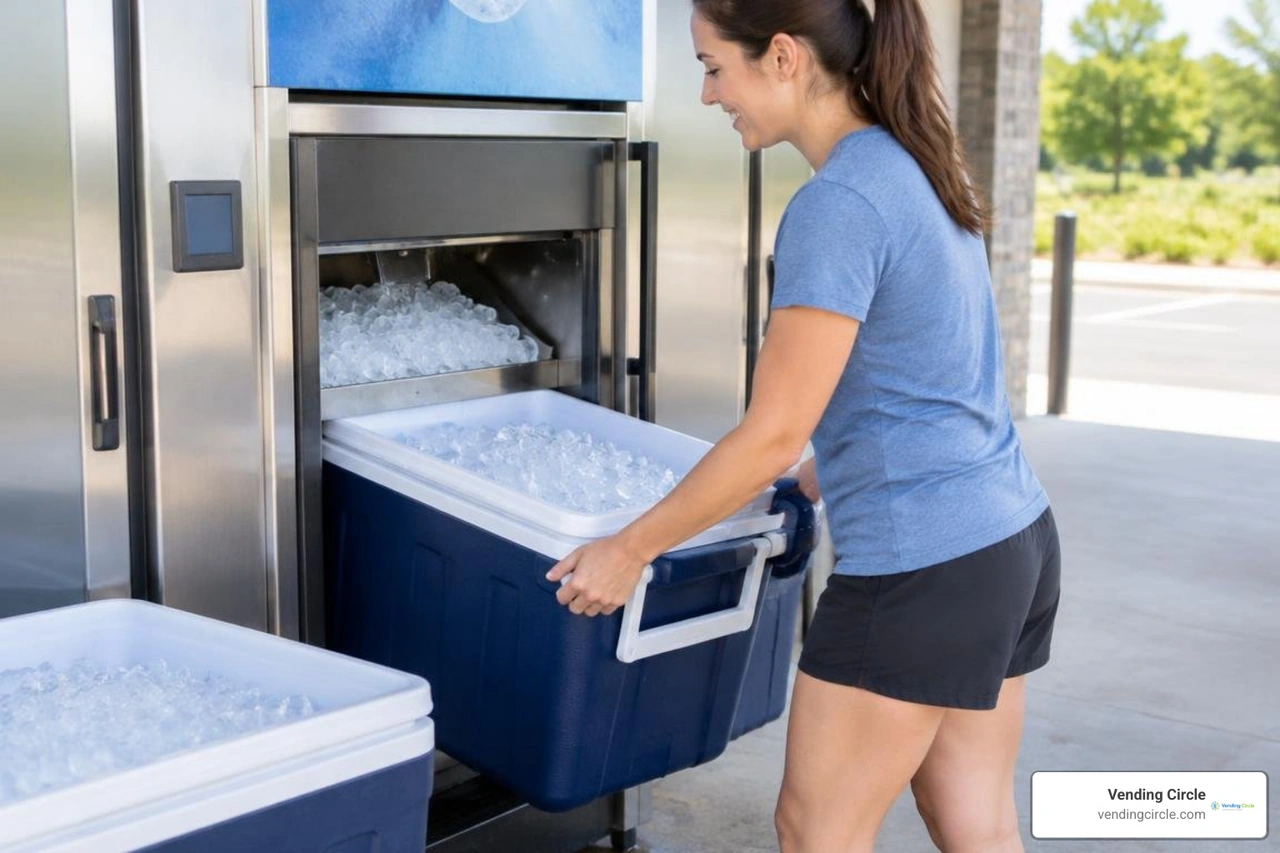
- Calculate Ice Requirements Ahead of Time: A standard 50-quart cooler requires roughly 20 to 25 lbs of ice to maintain food-safe temperatures for a weekend. Commercial catering or offshore marine fishing often requires 100 to 300+ lbs of ice.
- Identify Primary Dispensing Hubs: Use mobile telemetry apps to find high-capacity Ice House or Ice Kiosk units along your travel route. Avoid smaller compact merchants if you plan to fill multiple 100-quart chests, as large bulk extractions can temporarily deplete small storage bins.
- Check Chute Clearance: Ensure your vehicle, trailer, or boat has sufficient turning clearance around the machine. Freestanding ice houses in large retail parking lots offer the easiest pull-through access for vehicles towing trailers.
- Use Cashless Mobile Wallets: Using Apple Pay or credit cards speeds up the transaction process when purchasing multiple consecutive cycles.
For operators and distributors managing multi-site stops, our comprehensive vending machine routes guide explains how travel corridors and logistics influence operational efficiency.
Frequently Asked Questions About Ice House Machines
How much does ice typically cost at an ice house machine?
On average, a 20-lb bag of fresh, filtered ice from an automated ice house costs approximately $3.00 to $3.50, depending on regional utility rates. In comparison, retail grocery stores and convenience marts often charge $2.50 to $4.00 for a bag weighing only 10 to 16 lbs. Bulk direct-to-cooler dispensing is often slightly cheaper per pound since the machine does not consume a plastic bag liner during the cycle.
Are ice vending machines open 24 hours a day?
The vast majority of freestanding automated ice machines operate 24 hours a day, 7 days a week, 365 days a year. Because the internal ice-making and bagging processes are fully automated, the machines require no on-site staff. Most locations feature bright exterior overhead LED lighting and 24-hour security cameras to ensure safe operation late at night or during early morning hours.
How sanitary is automated ice compared to retail bunker ice?
Automated ice house machines are significantly more sanitary than traditional retail bunker ice. In an automated dispenser, tap water passes through multi-stage commercial filtration (including reverse osmosis, carbon blocks, and UV/ozone sterilization) and freezes in a sealed environment. The ice drops directly into your bag or cooler without ever being touched by human hands, plant workers, shipping crews, or other retail shoppers.
Conclusion
Finding fresh, high-quality bulk ice does not require driving around town searching through half-empty gas station freezers. By using mobile telemetry apps, checking real-time machine operational status, and planning your travel routes around high-capacity commercial hubs, you can quickly locate clean, cost-effective ice whenever you need it.
Automated dispensers provide significant savings, touch-free sanitation, and flexible bagging or bulk cooler options that traditional bagged ice cannot match. Whether you are an everyday consumer looking for clean ice for your next family road trip, or an entrepreneur exploring automated retail opportunities, modern ice vending technology offers speed, reliability, and value.
For real-time operational routing and nationwide equipment maps, explore our interactive ice machine locator to find a dispenser on your route. If you are an operator looking to scale your route, connect with industry experts, access equipment sourcing, and master remote telemetry, explore our community at Vending Circle. Join our weekly live Q&A sessions and discover how our collaborative network can help grow your business today.