
Find a Used Vending Machine That Already Takes Cards
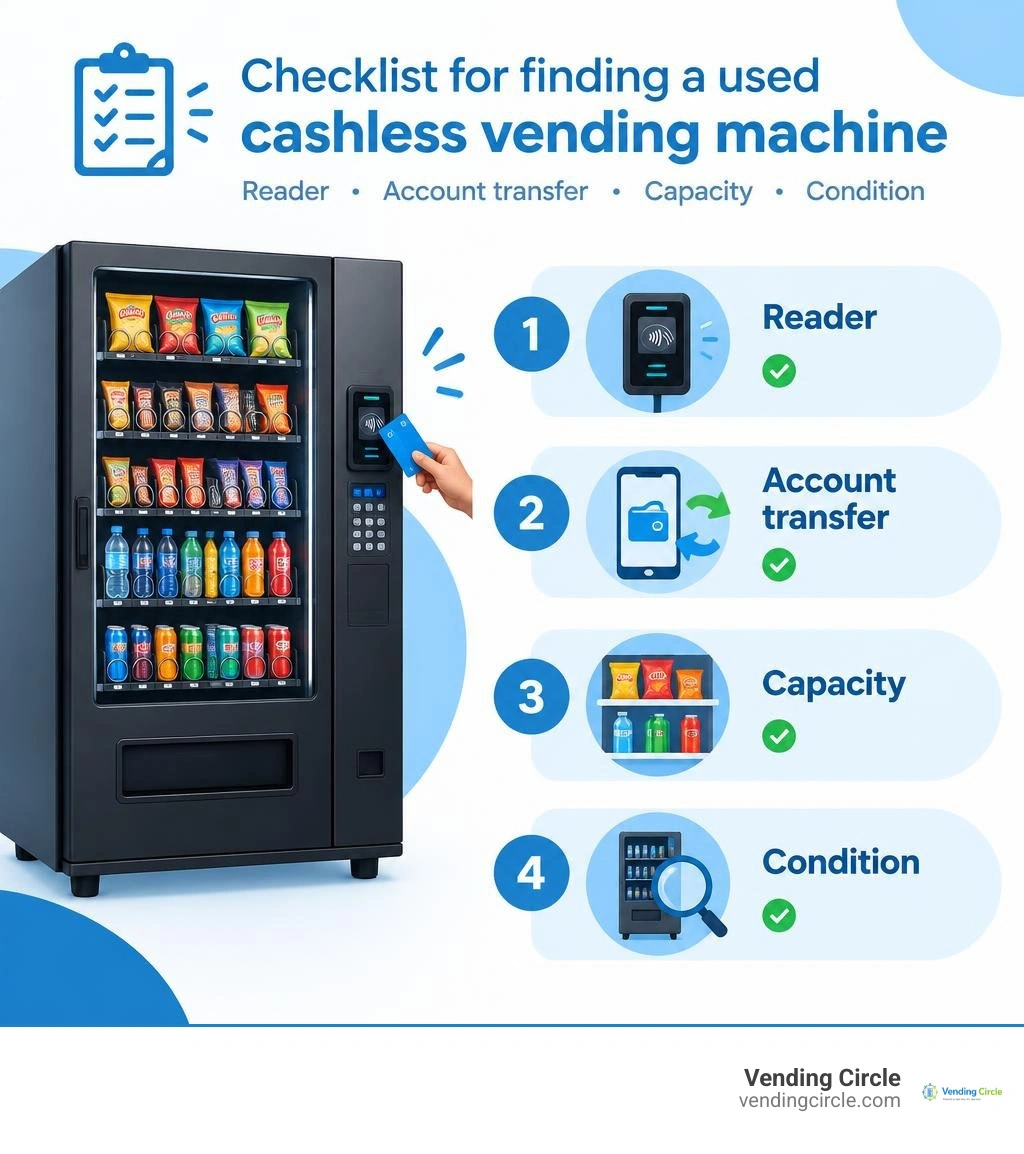
Start with a machine that has a working reader, not just a "card-ready" label. Compare snack, drink, and combo models based on your location and product mix. Before buying, ask for a live card and mobile-wallet test, confirm the reader can be transferred to your account, and check the machine's cooling and delivery systems.
A pre-installed reader can save setup time and help you serve customers who do not carry cash. It may also give you sales and stock data to plan fewer, better-timed service trips. Those benefits depend on the reader, its fees, and the condition of the used machine.
I'm Manuel Mojica, founder of Vending Circle and owner of MM Healthy Vending, where I have worked with the buying and operating decisions behind used vending machines with card reader hardware. I'll walk through what to compare before you add one to your route.
Used vending machines with card reader vocabulary:
- How Do Vending Machine Credit Card Readers Work
- Vending Cashless Reader Guide 2026
- Adding a Card Reader to a Vending Machine
According to the National Automatic Merchandising Association, cashless payments now account for more than 70% of vending transaction volume, making pre-installed card readers a practical starting point for secondhand equipment.
Why Buy Secondhand Cashless Equipment?
Entering the automated retail space does not require spending top dollar on brand-new equipment straight off the assembly line. Savvy operators regularly expand their routes by sourcing quality secondhand equipment. When these units come pre-fitted with modern payment tech, your path to profitability shortens considerably.
Why Operators Choose Used Vending Machines with Card Reader
The most obvious advantage of purchasing secondhand units is the massive reduction in initial capital expenditure. A refurbished machine typically costs a fraction of a new unit while providing the exact same utility to the consumer.
More importantly, getting a machine with the hardware already integrated eliminates the downtime, drill-out labor, and electrical troubleshooting involved in adding a card reader to a vending machine after delivery.
When a machine lands on your location already accepting tap, chip, and swipe payments, it captures every potential customer from day one. Cash-only machines quietly lose sales every hour because fewer consumers carry physical currency. Furthermore, consumers using digital payments are not constrained by the loose change in their pockets, which lifts your average ticket size across all product categories. To better understand reader hardware standards and capabilities, explore our Vending Cashless Reader Guide 2026.
Real-Time Telemetry and Route Optimization
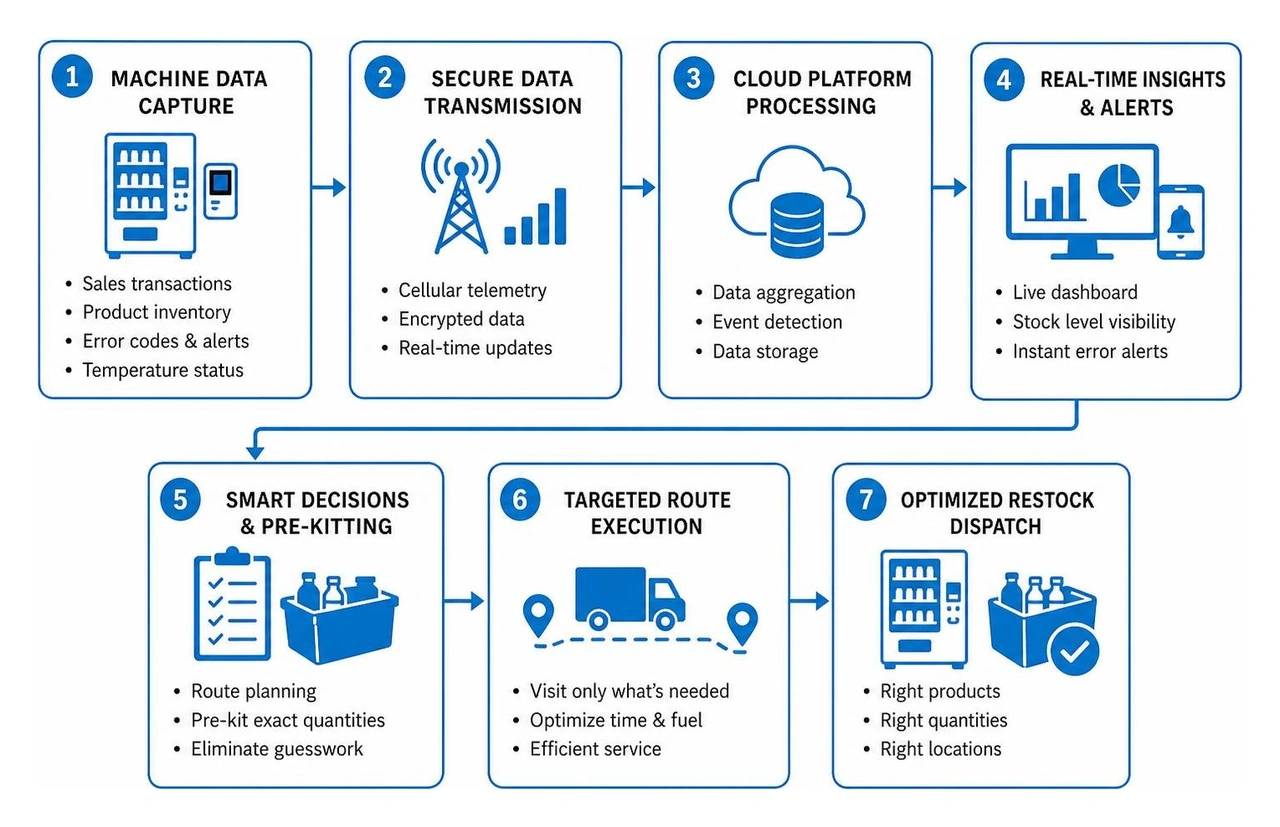
A pre-installed card reader does far more than process payments—it acts as the brain of your machine. Modern cashless terminals feature cellular telemetry modules that broadcast sales data, error codes, and stock levels straight to your phone or desktop.

By integrating live telemetry into your daily operations, you transform your workflow:
- Eliminate Dead Runs: Instead of driving to a location only to discover the machine is still 80% full, you only roll your truck when restocks are genuinely needed.
- Pre-Kitting Efficiency: Pack your bins with exact quantities in your warehouse before heading out, eliminating guesswork.
- Instant Error Alerts: Receive notifications immediately if a bill validator jams, a coin changer faults, or a temperature zone drops out of range.
Mastering vending machine inventory management through telemetry cuts fuel and labor expenses, allowing the technology to pay for itself within months.
Top Used Vending Machines with Card Reader Compared
Selecting the right machine requires matching physical capacity and product mix to your specific location footprint. Below is a side-by-side comparison of standard secondhand configurations across snack, drink, and combo units running standard Multi-Drop Bus (MDB) protocols.
| Machine Model / Type | Typical Capacity | Selection Count | Footprint Dimensions | Primary Features |
|---|---|---|---|---|
| USI 3132 (Dedicated Snack) | ~420 items | 29 selections | 72" H × 29.5" W × 36" D | Tilting pull-out shelves, 360° adjustable helix coils, compact profile |
| AMS 39-640 Sensit (Dedicated Snack) | 600+ items | 40 selections | 72" H × 39" W × 35" D | 5-wide glass front, Sensit optical drop sensor, high-volume capacity |
| Wittern 3589 Express (Multi-Zone Combo) | 217 snacks / 136 beverages | 36 selections | 74.5" H × 34.75" W × 31.22" D | Dual-zone cooling, iVend guaranteed delivery, optional UVend sanitization |
| AMS 39 Combo (Multi-Zone Combo) | ~300+ snacks & beverages | 28–36 selections | 72" H × 39" W × 35" D | Split-refrigeration deck, Sensit delivery sensors, rugged steel chassis |
To evaluate budget requirements across different equipment tiers, check out our Vending Machine Costs Guide 2026 for comprehensive breakdown data.
Dedicated Snack and Ambient Configurations
Dedicated snack machines are the workhorses of dry-goods vending. Units like the compact USI 3132 provide roughly 29 selections (180 candy, 168 pastry/chips, and 72 gum/mint positions), making them ideal for smaller break rooms or tighter hallways.

If your placement has high foot traffic, 5-wide models like the AMS 39-640 offer up to 40 selections and hold over 600 items. These machines feature adjustable helix spirals, modular drop trays, and optical product sensors that detect whether an item fell into the delivery bin, automatically refunding the buyer or retrying the coil if an item hangs.
Multi-Zone Combination Units
When square footage is limited but customers expect both snacks and cold drinks, a combination vendor is the answer. Browse our selection of combo vending machines for sale to see how these dual-purpose layouts function.
Units such as the Wittern 3589 or AMS 39 Combo feature an insulated internal barrier with a dedicated refrigeration deck at the bottom. The chilled zone keeps cans and bottles at refreshing temperatures, while the upper ambient shelves merchandise chips, chocolates, and pastries without condensation damage. Many modern refurbished combos also integrate infrared delivery sensors and UV light sanitization on the retrieval door for enhanced hygiene in health-conscious settings.
Technical Inspection and Support Standards
Purchasing secondhand equipment requires a keen eye. A cosmetic exterior can hide outdated internal wiring or failing control boards.
Checklist for Inspecting Used Vending Machines with Card Reader
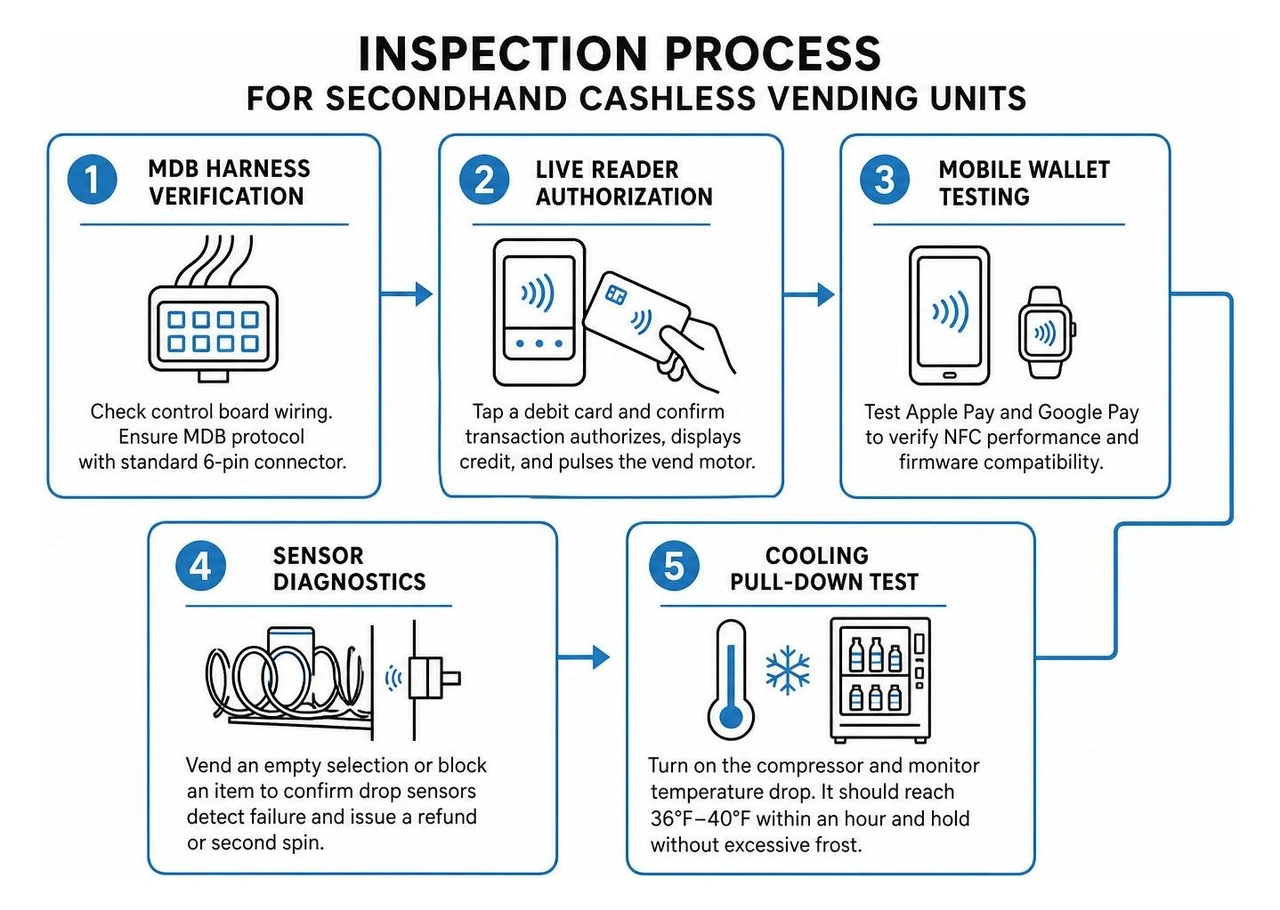
Before taking delivery or closing a purchase on a used cashless machine, run through this step-by-step diagnostic checklist:
- MDB Harness Verification: Check the control board wiring. Ensure the machine uses MDB protocol (standard 6-pin connector) so the card reader, bill acceptor, and coin mech communicate seamlessly.
- Live Reader Authorization: Power on the reader, tap a debit card, and confirm that the test transaction authorizes, displays credit on the machine display, and pulses the vend motor.
- Mobile Wallet Testing: Test contactless payments via Apple Pay and Google Pay to ensure the antenna housing and firmware handle near-field communication (NFC) correctly.
- Sensor Diagnostics: Vend an empty selection or intentionally block an item to confirm that drop sensors (such as Sensit or iVend) correctly detect the failure and offer a refund or second spin.
- Cooling Pull-Down Test: On refrigerated and combo units, turn on the compressor and monitor temperature drop. It should pull down to 36°F–40°F within an hour and hold without excessive frost buildup.
For a deeper dive into wiring protocols and telemetry configurations, review our Vending Machine Card Readers Guide.
Refurbishment Standards and Warranty Coverage
Quality refurbished machines are not just wiped down with cleaner; their core mechanical assemblies are rebuilt. When buying used gear, ensure that the bill validator and coin mechanism have been cleaned, calibrated, and updated to accept the latest currency printings.
Reputable equipment suppliers typically provide limited warranties covering major components, along with remote technical support to help troubleshoot error codes. Setting these quality benchmarks early protects your business as you focus on starting a vending business that scales sustainably.
Strategic Placement for Cashless Returns
A high-performance machine will only generate substantial revenue if it sits in front of ready buyers. Cashless readers dramatically broaden the types of locations where you can turn a healthy profit.
High-Yield Location Selection
Cashless readers excel in environments where consumers carry phones or badges rather than physical wallets:
- Corporate Break Rooms: Office employees rarely carry cash to meetings, but nearly all have corporate cards, personal debit cards, or mobile wallets ready for an afternoon snack.
- 24-Hour Fitness Centers: Gym members buying energy drinks and protein bars want instant tap-and-go convenience after a workout.
- Student Housing & Dorms: Younger demographics represent the highest proportion of cashless-only spenders.
- Healthcare Facilities & Waiting Rooms: Visitors and shift workers need quick sustenance at all hours without hunting down an ATM.
Targeting locations with at least 50 to 100 daily passersby ensures healthy turnover. For actionable location scouting strategies, explore our guide on finding great locations for vending machines.
Frequently Asked Questions About Cashless Secondhand Vending
What payment methods work on used vending card readers?
Modern card readers installed on secondhand machines (such as Nayax or Cantaloupe units) accept a comprehensive suite of payment options. These include NFC contactless taps, EMV chip inserts, magnetic stripe swipes, and mobile wallets like Apple Pay, Google Pay, and Samsung Pay. The reader works in parallel with traditional coin mechanisms and bill validators via the MDB bus, ensuring no customer is turned away.
How much does adding cashless capabilities increase secondhand machine revenue?
Industry data indicates that going cashless provides an immediate lift in gross vending revenue. With contactless payment accounting for over 70% of total vending transaction volume nationwide, cash-only machines leave massive revenue on the table. Cashless customers also spend more per transaction because they are not limited by exact change. You can see comprehensive transaction trends in our Vending Machine Industry Statistics 2026 report.
How is reader ownership transferred on secondhand machines?
When you buy a used machine with a pre-installed reader, the device serial number must be released by the previous owner's merchant account. Once released, you contact the reader's service provider to register the device under your merchant portal, set up your banking details for direct deposit payouts, and activate the cellular connection plan.
Conclusion
Investing in secondhand vending equipment with pre-installed cashless payment systems delivers the optimal balance of low upfront capital, rapid operational deployment, and maximized ticket sizes. By eliminating the hardware installation learning curve, you can focus your time on what truly drives route value: securing prime locations, optimizing product assortments, and building route density.
At Vending Circle, we support operators at every stage of their journey with live weekly coaching, practical courses, peer networking, and direct procurement access. When you are ready to expand your route with top-tier equipment, explore high-performance vending machines designed to maximize your bottom line.