
Why Every Operator Needs an Active Coffee Vending Forum
Participating in a dedicated coffee vending forum connects operators directly with experienced peers who share real-world machine reliability reports, troubleshooting steps, and pricing benchmarks that manufacturer brochures never provide. Whether diagnosing a boiler fault, troubleshooting an erratic whipper motor, or comparing ingredient costs before signing a lease, an active coffee vending forum saves you dozens of hours of trial and error while safeguarding your daily route revenue.
Running hot drink equipment brings a unique set of operational challenges that cold snack or cold beverage units never encounter. Boilers, water inlet valves, silicone delivery tubing, ingredient mixing bowls, and whipper motors add layers of mechanical and electrical complexity. When a hot drink brewer acts up during a morning factory rush or an office break, you need practical diagnostic answers immediately to prevent lost sales and irritated site managers.
Connecting with seasoned operators in an active vending forum gives you unfiltered field data from real routes. Manufacturer brochures rarely detail how often an ingredient chute clogs when seasonal humidity hits a warehouse floor, nor do they tell you which dispense valves are prone to scale buildup after six months of hard water usage.
Experienced peers share real-world reliability reports, helping you sidestep troublesome hardware before signing lease agreements or committing capital. When exploring the best vending machine communities and forums, you gain access to decades of collective operational trial and error, significantly reducing unscheduled downtime across your route.
Choosing the Right Coffee Vending Forum for Machine Troubleshooting
For independent and solo operators without a dedicated service engineer on payroll, technical support can make or break profitability. When an error code halts coffee dispense, deciphering cryptic wiring diagrams or outdated service manuals on your own eats into valuable route time and directly hurts your customer retention.
Dedicated operator discussions provide real-world troubleshooting steps from professionals who service these exact units daily. When weighing a paid vending community vs free forums, the deciding factors are usually the response speed, depth of technical guidance, and the presence of direct supplier pricing.
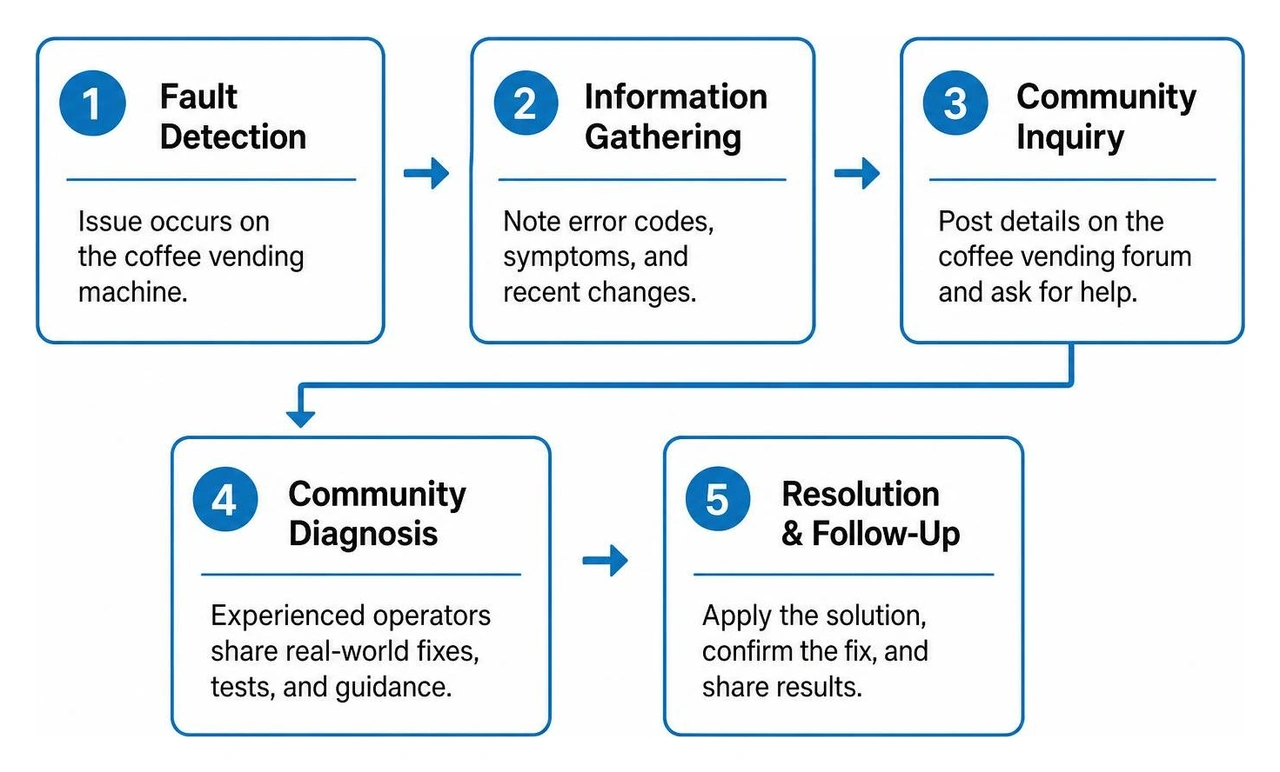
While open message boards provide a broad archive of legacy machine faults, structured professional communities give you prompt access to verified technicians and seasoned route owners who can guide you through complex diagnostic sequences step-by-step. They can help you isolate whether a water delivery error stems from a clogged flow meter, a calcified solenoid valve, or an unexpected mainboard voltage drop.
Key Profitability and Pricing Insights from a Coffee Vending Forum
Peer discussions provide vital pricing benchmarks that ensure you maximize your margins while remaining competitive in your local market. While ingredient costs for instant hot drinks average roughly 8p per cup, forum contributors discuss realistic retail pricing structures based on venue type, foot traffic, and customer demographic expectations.
Operators frequently share pricing models ranging from 20p to 35p per cup for instant coffee, tea, and soup in high-turnover staff canteens, while premium whole-bean drinks command significantly higher rates in office environments. Learning how seasoned vendors structure their ingredient procurement, negotiate wholesale rates, and set vend tariffs ensures healthy margins across every client site.
Evaluating Coffee Vending Machines for Small Operators Without an Engineer
Selecting the right hardware is critical when you manage maintenance on your own. When starting a vending business, operators often wrestle with choosing between instant canister models, in-cup systems like the Klix 900, or complex bean-to-cup systems. The choice you make here shapes your day-to-day workload for years, since every additional moving part is one more thing that can fail on a Friday afternoon when no engineer is available.
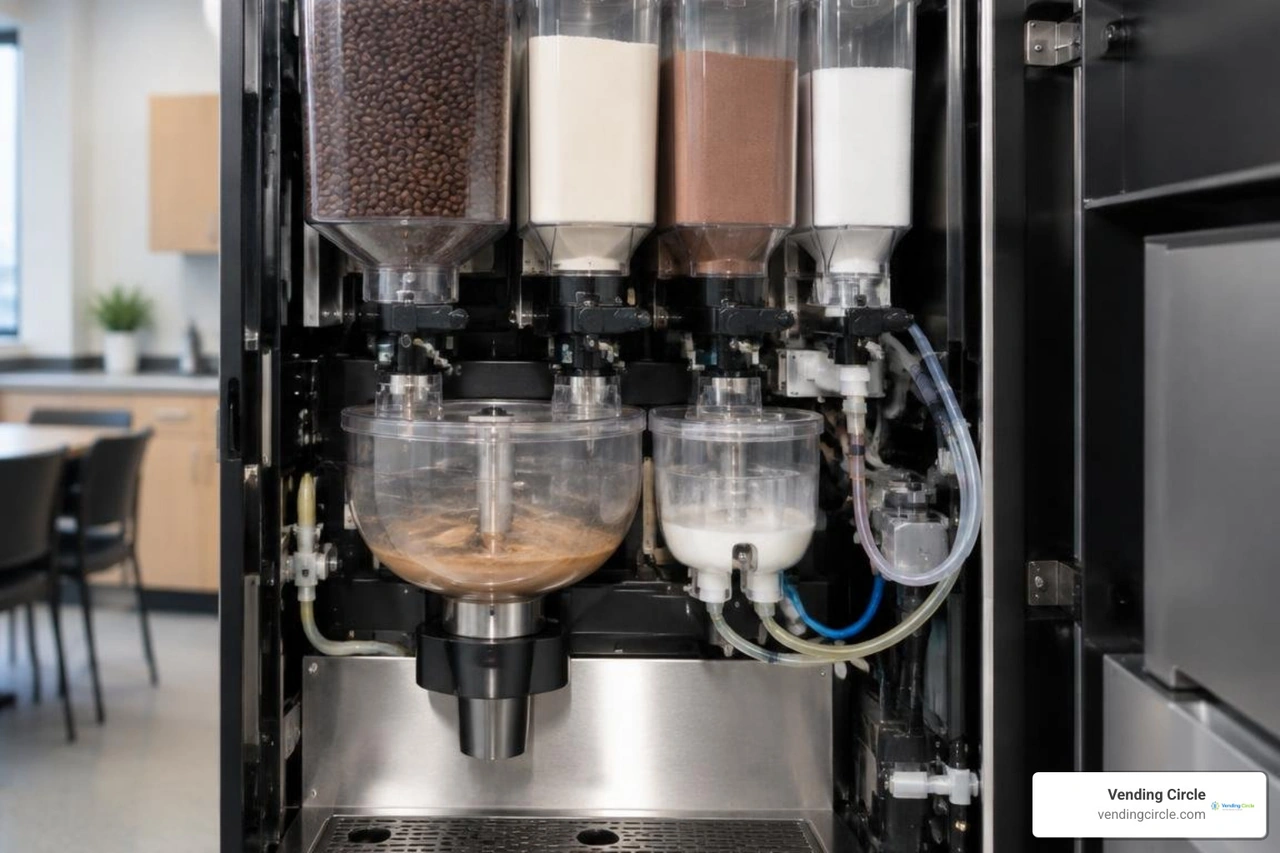
In community discussions, units like the Stentorfield Fusion consistently receive high praise from independent operators. The Fusion is known for straightforward plumbing, reliable components, and accessible telephone technical support—even when purchased second-hand. Its modular design allows solo operators to swap out mixing bowls, extract motors, and replace silicone tubing without specialized technical training.
Conversely, while in-cup systems offer rapid restocking and zero mixing bowl mess, their proprietary cup supplies can squeeze your profit margins compared to bulk ingredients. Highly capable floor-standing units like the Necta Kikko offer solid performance, but require regular preventive maintenance to keep their mixers, coffee group seals, and waste buckets clear. Operators who neglect these routine checks often see a slow creep in complaint calls long before a full breakdown occurs, so building a simple weekly cleaning checklist pays for itself quickly.
| Machine Category | Upfront Equipment Cost | Maintenance Complexity | Average Cost per Cup | Gross Profit Margin |
|---|---|---|---|---|
| Instant Bulk (e.g., Stentorfield Fusion) | Low to Moderate (£500–£1,500 used) | Low (Routine wipe-down & descale) | 8p | 60% – 75% |
| In-Cup System (e.g., Klix 900) | Low (£300–£800 used) | Very Low (Pre-dosed sleeve refills) | 12p – 16p | 45% – 55% |
| Bean-to-Cup (e.g., Commercial Espresso) | High (£1,500–£4,000+ used/new) | Moderate to High (Daily group clean) | 15p – 20p | 75% – 85%+ |
Instant vs Bean-to-Cup: Matching the Machine to Your Site Demographics
Matching machine capability to your location's demographics prevents costly operational headaches. In high-turnover, blue-collar factory environments, speed and low cost take priority over artisanal roast profiles. As operators frequently note in community threads, industrial shifts require fast, hot caffeine without fussy brewing cycles. Instant machines deliver drinks in under 15 seconds with an 8p base cost, making a 20p to 30p vend price highly viable and profitable.
Conversely, corporate headquarters and golf club lounges demand café-quality espresso, fresh milk options, and speciality bean selections. Installing a bean-to-cup system in these premium spaces allows you to vend at £1.00 to £2.50 per cup. Even with raw bean, granulated milk, and paper cup costs sitting between 15p and 25p, the resulting 80%+ gross margin easily offsets the higher initial machine investment and required cleaning routines. Operators who serve mixed-use buildings sometimes install both machine types side by side, letting staff choose between a quick instant cup and a slower, premium bean-to-cup pour depending on their break schedule.
High-Volume Site Requirements and Used Machine Pitfalls
Managing high-volume locations—such as logistics hubs or manufacturing plants with 300 or more employees—requires robust commercial units with large boiler capacities and rapid recovery times. A machine that cannot keep water temperature stable during a 15-minute shift break will result in lukewarm drinks, customer complaints, and persistent service calls. At these volumes, even a few minutes of downtime during a rush can mean dozens of missed sales, so operators often prioritize recovery speed over fancy drink options when selecting equipment for these sites.
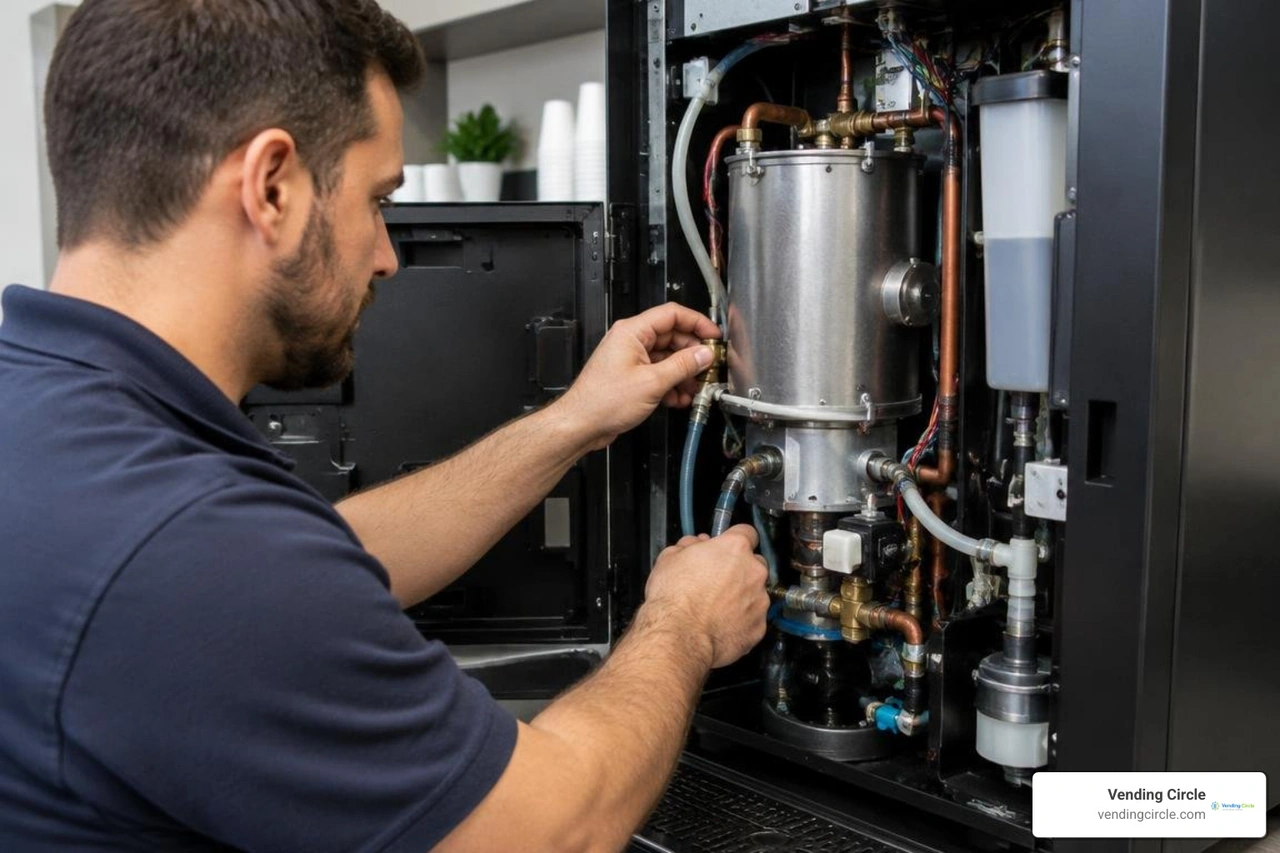
Budget-conscious operators often turn to the secondary market, where legacy models like the Wittenborg Mariner can be found for £200 to £300. However, experienced community members often caution that while these older machines were built to high industrial standards, buying discontinued models carries real operational risks that can quickly turn a bargain into a money pit.
When weighing where to ask these questions, it helps to compare dedicated vending platforms against open general forums. Dedicated platforms tend to concentrate operators who service the exact same legacy machines, meaning you are more likely to find someone who has already solved your specific boiler fault or sourced a hard-to-find coin mechanism. Open forums cast a wider net but can dilute the signal with unrelated vending categories, making it harder to find relevant, machine-specific advice quickly.
Sourcing Spare Parts and Ensuring Ongoing Technical Support
The most common trap with bargain used machines is parts obsolescence. When key components such as control boards, coin interface looms, or specialized boiler elements fail on machines that exited production years ago, replacement parts become scarce or prohibitively expensive. Boiler scaling is another frequent issue on older units, particularly in hard water regions, where limescale buildup gradually reduces heating efficiency and can eventually damage heating elements if left unaddressed.
Before purchasing used equipment, check with peers or read guides on how to find a vending machine mentor to verify whether aftermarket parts, wiring diagrams, and compatible coin validators remain widely available. Reliable support networks from specialist refurbishers and operator forums are essential for resolving electrical and mechanical issues without paying for an on-site engineer. Establishing a routine preventative maintenance schedule, including regular descaling and seal inspections, also significantly extends the working life of older units. For broader context on equipment classifications and history, the Vending machine entry on Wikipedia provides a useful overview of equipment categories and operational models across the global industry.
Frequently Asked Questions About Coffee Vending Operations
What are the typical profit margins on hot drinks in coffee vending?
Hot beverage vending typically delivers gross margins between 60% and 85%. Standard instant coffee and tea vends cost operators approximately 8p per cup in bulk ingredients, selling for 20p to 30p. Vending soups and hot chocolates generally yield comparable margins when vended between 20p and 35p. Premium bean-to-cup drinks cost roughly 15p to 25p to produce and vend for £1.00 to £2.50 or more at high-end corporate locations.
Which coffee vending machine is best for a small operator with no technical staff?
The Stentorfield Fusion is widely considered one of the most reliable and user-friendly machines for independent operators. It features straightforward internal plumbing, uses economical bulk ingredients, and benefits from readily available technical advice and telephone support across operator networks.
Is it worth putting a bean-to-cup machine in an industrial or factory site?
Generally, no. Industrial and factory environments prioritize dispense speed, low vend prices, and extreme mechanical durability. Bean-to-cup brewers require daily maintenance, have longer drink preparation cycles, and carry higher maintenance requirements. Instant machines serve high-volume shift workers quickly and reliably while keeping drink prices affordable.
Conclusion
Building a profitable hot beverage vending route requires sound equipment choices, realistic pricing structures, and reliable troubleshooting support. Leveraging community knowledge helps you avoid unsupported hardware, source cost-effective spare parts, and implement proven operating procedures.
To connect with active operators, access practical training materials, and take advantage of discounted supplier pricing, explore the resources available at Vending Circle.