Where to Find Places in Need of Vending Machines
Start with places where people stay for hours and have few easy food options. Multi-shift plants, warehouses, hospitals, large apartment buildings, and recreation centers are strong prospects. Look for a busy breakroom or waiting area, steady traffic, and no reliable on-site food service. A broken, empty, or cash-only machine can also signal a location ready for a new operator.
Before you buy equipment, visit at a busy time. Count the people who pass the proposed spot, note how long they stay, and ask who makes the vending decision. Strong locations can gross more than $1,000 a month, but sales depend on access, product mix, and service.
I'm Manuel Mojica, founder of Vending Circle and owner of MM Healthy Vending. I help operators find places in need of vending machines and choose placements they can serve profitably.
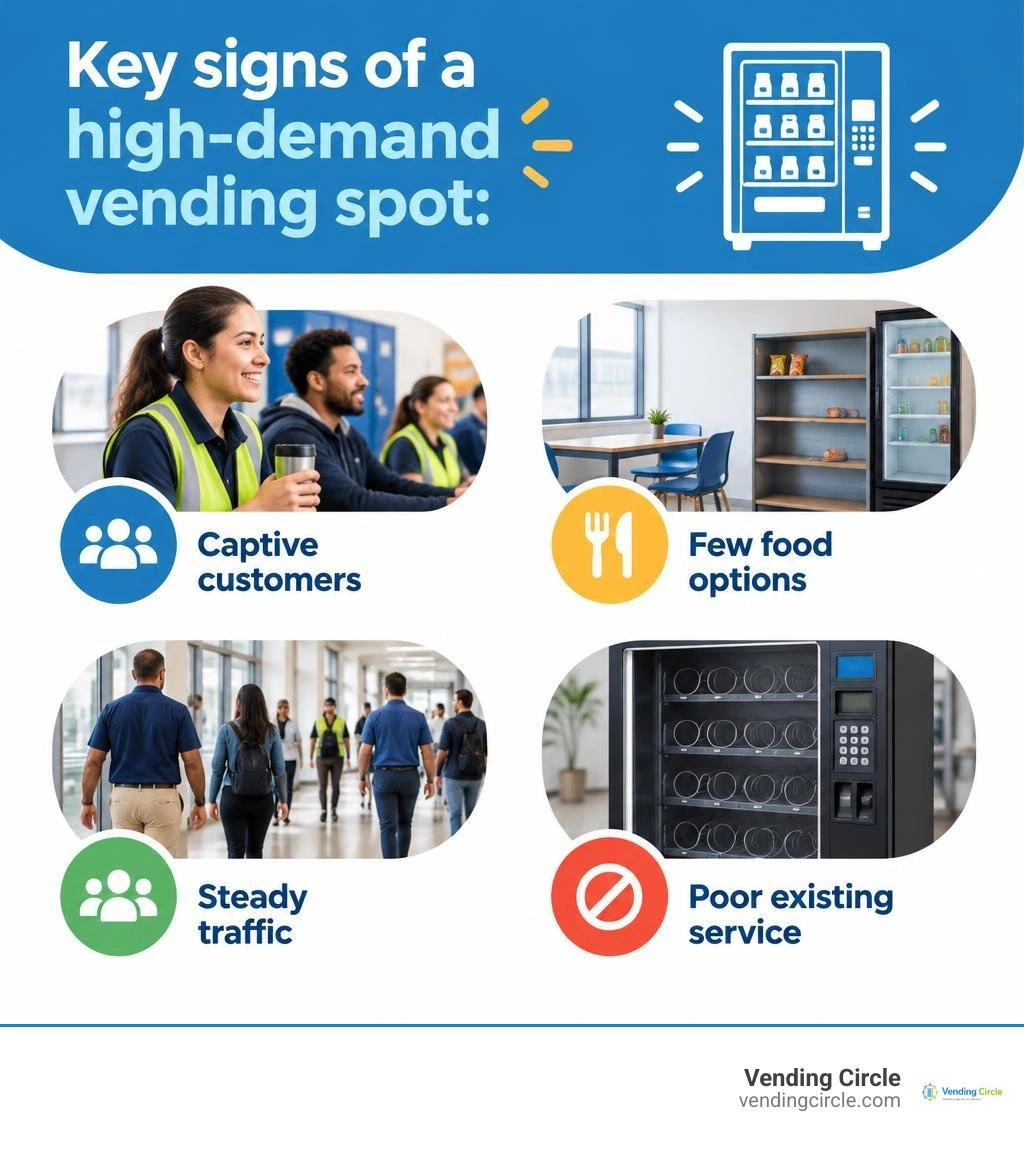
Common places in need of vending machines vocab:
- finding a location for a vending machine
- great locations for vending machines
- vending machine locations
Top 7 High-Yield Places in Need of Vending Machines
When we evaluate prime territory, we focus on identifying true captive audiences where consumers cannot quickly leave for lunch or run across the street for a cold drink. A standard retail venue might pull in $300 to $600 per month, but an optimized commercial site with steady dwell time can easily exceed $2,000 to $5,000 in monthly gross revenue.
| Location Category | Minimum Target Headcount | Operating Hours | Est. Monthly Gross per Machine |
|---|---|---|---|
| Manufacturing & Distribution | 100–150+ workers | Multi-shift / 24/7 | $1,500 – $6,000+ |
| Hospitals & Medical Centers | 250+ daily occupants | 24/7 / Continuous | $2,000 – $6,000 |
| Large Multi-Family Residential | 200+ residential units | 24/7 Resident Access | $2,000 – $5,000 |
| High-Occupancy Hotels | 150+ guest rooms | 24/7 Guest Turnover | $1,500 – $4,500+ |
| Courthouses & Municipal Hubs | 100+ daily visitors/staff | Business hours + late | $1,000 – $3,000 |
| Recreation & Sports Centers | 200+ daily visitors | 7 days / Extended | $1,200 – $3,500 |
| Call Centers & Tech Campuses | 100+ on-site staff | Single / Multi-shift | $1,200 – $2,800 |
Selecting high-performing vending machine locations requires analyzing foot traffic density alongside pause time. If people are rushing through a hallway, conversion rates hover below 1%. When they are lingering in a breakroom or waiting area, conversion jumps to 2% to 5%.
Multi-Shift Manufacturing Plants and Warehouses
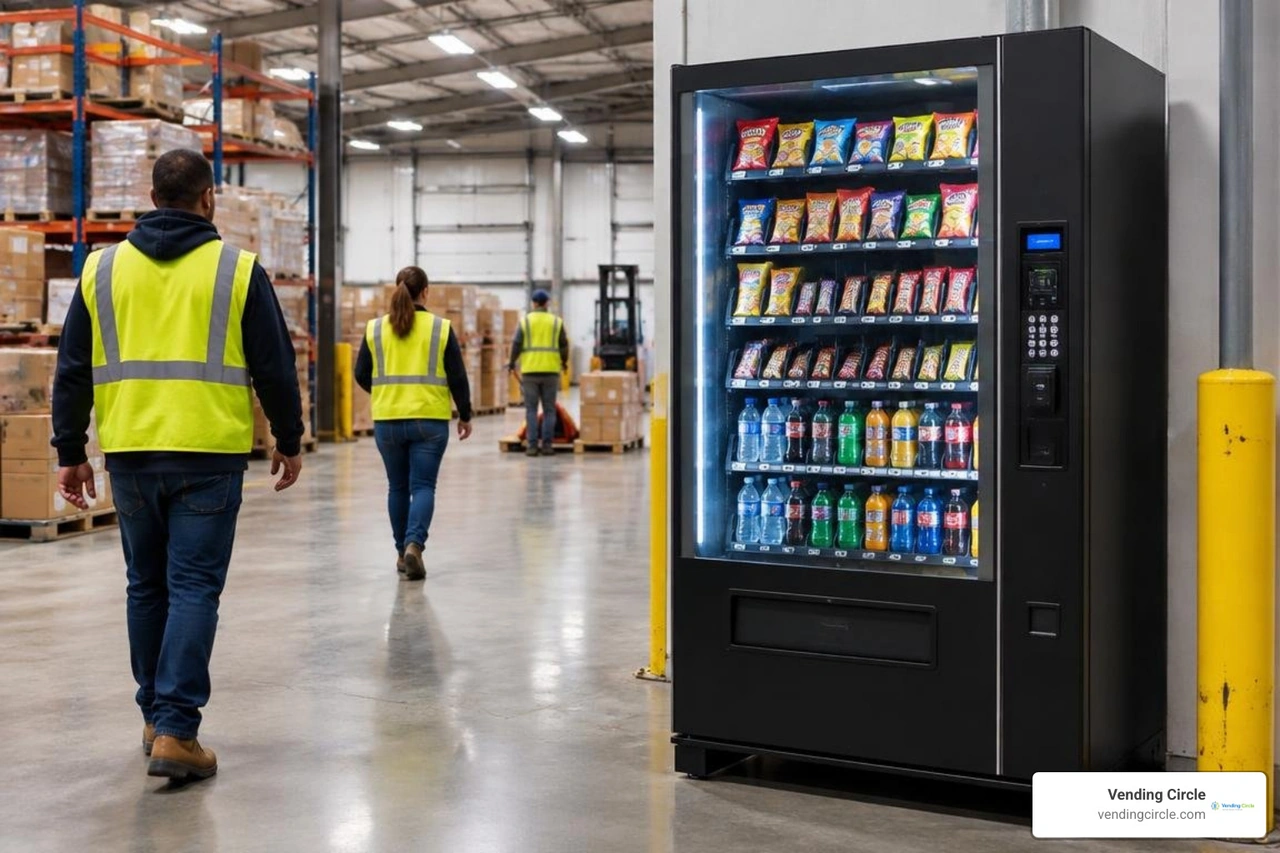
Multi-shift manufacturing facilities and logistics fulfillment hubs represent some of the highest-earning vending environments in 2026. A blue-collar workforce pulling 8- to 12-hour shifts deals with physical fatigue, short rest breaks, and strictly timed lunches.
In these settings, workers rarely have time to drive off-site for food. A well-stocked combo machine or dual-drink setup dispensing energy drinks, sparkling waters, protein bars, and hearty snack items frequently yields between $1,500 and $6,000+ per machine every month. In fact, a single high-capacity machine inside an active industrial building can reach over $4,000 a month in gross revenue.
Hospitals and Medical Outpatient Facilities
Hospitals, regional medical centers, and urgent care clinics operate around the clock. Doctors, nursing staff, technicians, and anxious family members spend extended hours on-site, frequently when hospital cafeterias are closed.
Placing modern snack and drink machines inside emergency room waiting rooms or staff break lounges serves a continuous stream of visitors. Outpatient facilities typically produce $1,200 to $1,800 monthly, while large hospital placements generate $2,000 to $6,000 per machine per month.
Large Residential and Multi-Family Apartment Complexes
Residential complexes with 200 or more units function as micro-neighborhoods. Tenants look for instant gratification late at night without waiting for food delivery apps.
Placing machines near central mailrooms, resident clubhouses, or package locker areas turns your unit into an on-demand convenience store. Strong apartment communities frequently average over $2,500 per month, with high-volume residential properties driving between $2,000 and $5,000 in monthly sales.
High-Occupancy Hotels and Hospitality Hubs
Hotels and extended-stay properties benefit from constant foot traffic and arriving travelers seeking midnight refreshments. In high-density hospitality venues, stocking travel essentials, pain relievers, and premium cold beverages alongside traditional snacks maximizes revenue. An operator managing a strong hotel portfolio can generate upwards of $15,000 to $18,000 monthly across their on-site machines by maintaining consistent stock and reliable card readers.
Government Facilities, Courthouses, and Transit Centers
Municipal buildings, courthouses, and regional administrative offices feature mandatory security checkpoints and long waiting periods. Visitors summoned for jury duty or processing administrative paperwork cannot leave easily without clearing security lines again. This dynamic creates a captive customer base that relies heavily on accessible, self-service breakroom vending.
How to Discover Underserved and Abandoned Vending Sites
Finding profitable accounts does not always require unearthing brand-new construction. Often, the best accounts are established facilities where the previous vendor provided poor service, neglected equipment, or let their contract lapse.
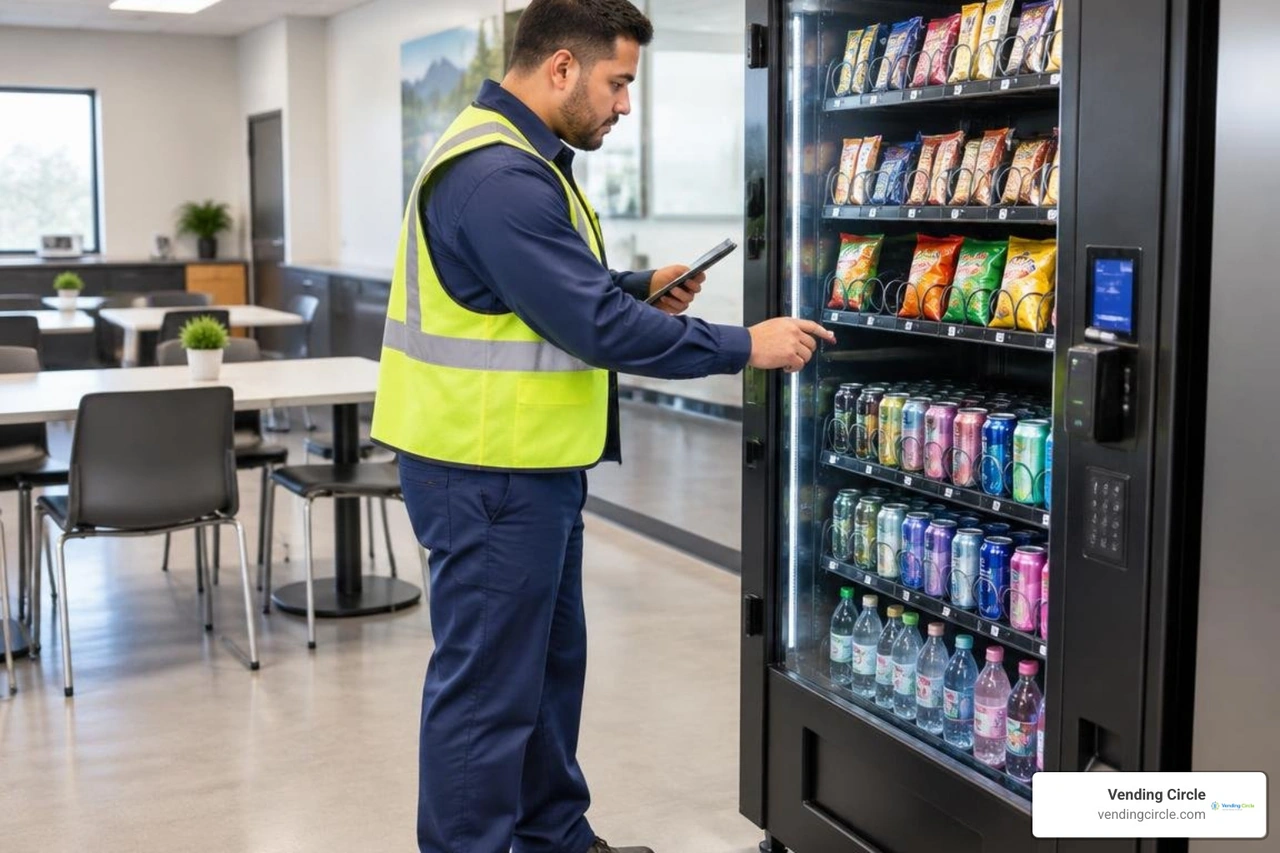
When scouting territories for great locations for vending machines, we look for specific operational vulnerabilities that open doors for a superior service provider.
Key Signals That Identify Commercial Places in Need of Vending Machines
Several distinct environmental signals reveal that a property needs a dedicated vending operator:
- Food Deserts: The property is situated more than a 10-minute walk or drive from retail restaurants or convenience stores.
- Strict Break Windows: Shifts allow only 15- to 20-minute breaks, making off-campus travel impossible.
- Outdated Payment Hardware: Existing machines take cash only, frequently jam, or feature obsolete bill validators.
- Chronic Stockouts: Current machines sit half-empty with expired merchandise, causing employee dissatisfaction.
- High Facility Headcount: A building has expanded its workforce to 100+ on-site personnel without expanding breakroom amenities.
Taking Over Expired Contracts and Neglected Machine Accounts
Facility managers dislike dealing with broken equipment, refund requests, and empty snack spirals. If an incumbent vendor fails to restock weekly, a polite introduction can quickly turn into an account takeover.
When you approach managers dealing with poor service, frame your offer around reliability, clean modern equipment, remote inventory monitoring, and rapid restocking schedules. If you are looking to accelerate growth through route acquisitions, reviewing guides on how to buy vending machine routes will help you assess whether taking over existing route contracts makes financial sense.

Leveraging Online Directories and Industry Community Boards
Online industry boards and local commercial directories provide direct leads on businesses actively seeking vendors. Property managers and commercial developers often post requests for amenities on regional message boards. For example, operators frequently use network listings to place smart coolers in breakrooms with 30 to 100 daily staff members.
Winning Municipal RFPs and Public-Sector Contracts
Municipalities, school districts, and county recreation departments frequently issue formal Requests for Proposals (RFPs) to award multi-year exclusive vending rights for public facilities.
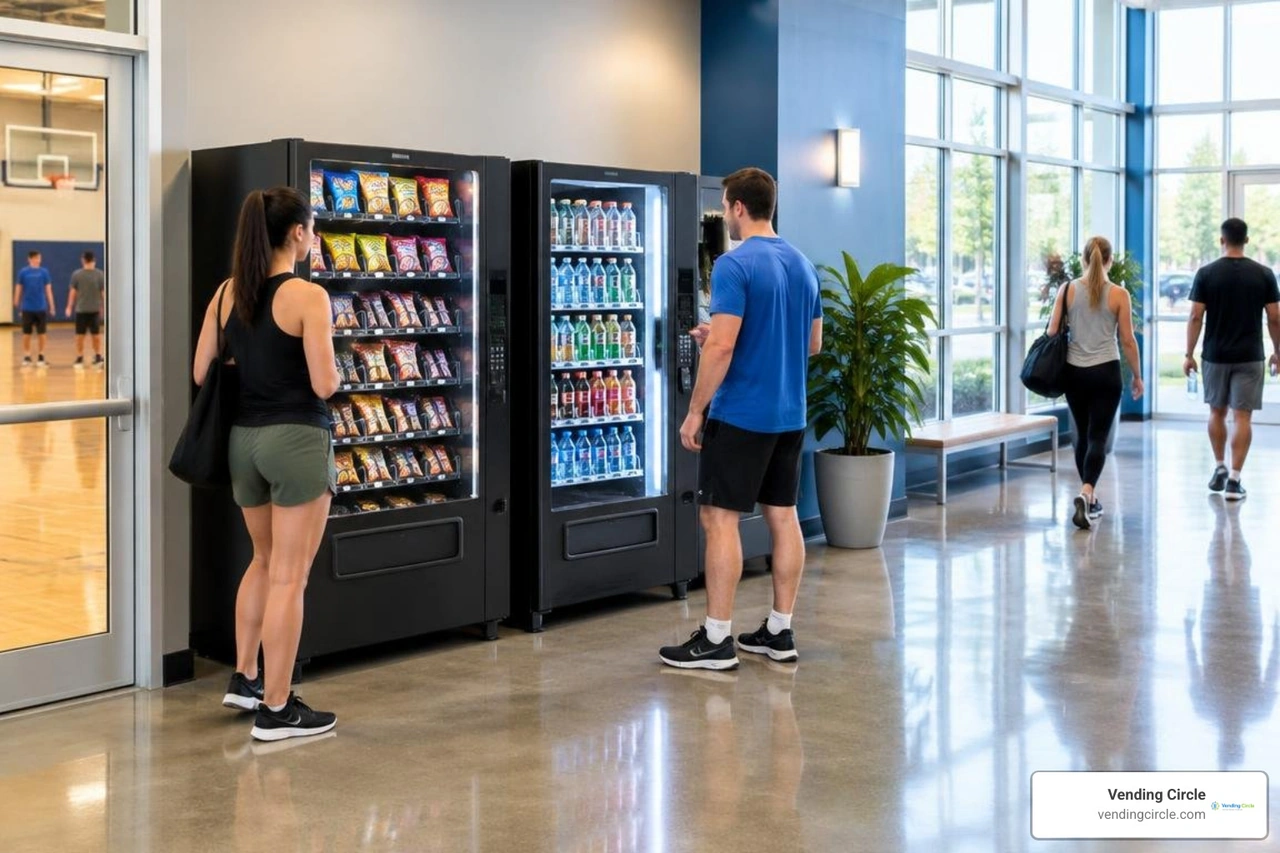
Public procurement notices provide stable, legally binding contracts. Reviewing our comprehensive guide to places looking for vending will help you systematically navigate government bidding schedules.
Sourcing Public Places in Need of Vending Machines via RFPs
Public opportunities are posted on municipal procurement websites and state bidding portals under NAICS codes like 454210 or 445132 (Vending Machine Operators). Recent solicitations illustrate the broad scope of these placements:
- The City of Unalaska issued an RFP seeking snack and beverage vending services for its Parks, Culture & Recreation Community Center, establishing clear ADA and cashless operational standards.
- The City of Vandalia published an RFP for snack and drink vending at its Recreation Center, detailing a multi-year term structure and specific product criteria.
Monitoring municipal portals within your target operating radius allows you to submit structured bids before competitive deadlines close.
RFP Compliance: ADA Standards, Healthy Product Quotas, and Insurance
Government contracts require strict adherence to regulatory standards:
- ADA Accessibility: Machine coin slots, bill acceptors, and selection keypads must remain reachable for wheelchair users, typically between 15 and 48 inches from the floor, with unobstructed clearance.
- Healthy Product Quotas: Many public recreation contracts mandate that 25% or more of all stocked selections meet recognized healthy nutrition criteria (e.g., lower sugar, reduced sodium, whole grains).
- Insurance Coverage: Bidders must carry commercial general liability (usually $1,000,000 to $2,000,000), automobile liability, and statutory workers' compensation policies.
Structuring Commission Rates and Municipal Revenue-Sharing Models
Municipalities generally evaluate bids based on product pricing, vendor experience, and the proposed revenue-sharing percentage. Typical public commission structures range between 10% and 20% of gross monthly sales, paid on a monthly or quarterly schedule accompanied by detailed telemetry sales audits. Proposing clean, transparent reporting builds trust and secures long-term contract renewals.
Matching Machine Formats to Location Headcount and Space
Deploying the wrong machine format in a facility drains profitability. An oversized micro-market in a 25-person office will lose money on spoilage, while a small combo machine in a 400-person warehouse will sell out daily and frustrate staff.
If you are just starting a vending business, matching machine capabilities to room layout and electrical infrastructure is vital for long-term margins.
Smart Coolers for Mid-Sized Workplaces (30–100 Staff)
Smart coolers utilize automated locking mechanisms and credit card pre-authorization. Customers tap their payment card, unlock the door, grab fresh salads, sandwiches, yogurts, or specialty beverages, and close the door. Cameras or RFID sensors track what was removed and bill the customer automatically. These units fit perfectly into professional offices and tech breakrooms that want fresh food options without the floor space of a full market.
Traditional Snack and Beverage Combos for High-Footfall Areas
Combo machines integrate refrigerated drink sections and ambient snack trays into a single cabinet. They are well-suited for industrial breakrooms, gym lobbies, and residential clubhouses with 100 to 200 daily occupants. Dual-temperature zones keep soda and energy drinks cold while protecting chocolate and pastries from melting.
Self-Service Micro-Markets for High-Volume Facilities (250+ Staff)
Micro-markets replace closed vending machines with open retail shelving, commercial reach-in glass coolers, and an unattended touchscreen checkout kiosk. Because customers can physically handle merchandise before buying, average transaction sizes increase significantly. In massive corporate hubs, distribution facilities, or manufacturing complexes, a high-traffic micro-market can generate $10,000 to $20,000+ per month in total gross sales.
Pitching Strategy: Closing Locations and Scaling Routes
Securing high-margin locations requires an organized prospecting system. Rather than relying on guesswork, operators should evaluate the mathematical potential of every prospect using proven benchmarks on where to place vending machines for maximum profit in 2026.
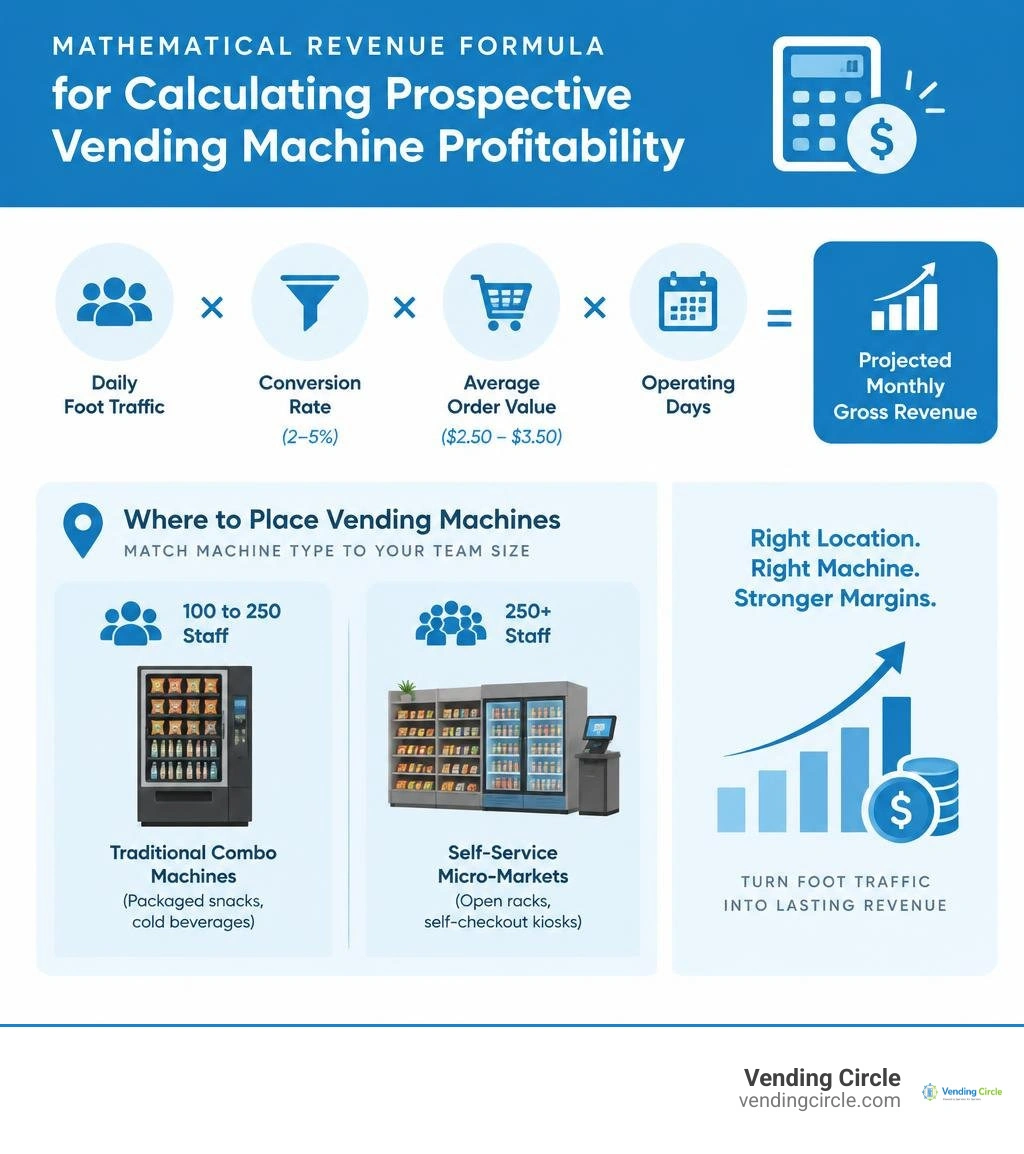
When you manage multiple placements, organizing operations around vending machine routes ensures you minimize windshield time while keeping inventory turnover high.
Cold Pop-In vs. Formal RFP Timelines and Closing Tactics
Securing private commercial sites differs significantly from winning public bids:
- Private Cold Pop-Ins: When approaching warehouses, apartments, or auto repair facilities, visit mid-morning (between 9:30 AM and 11:00 AM) and ask for the facility or property manager. Present your service as a complimentary, zero-cost employee amenity. Decision cycles typically conclude within 14 to 30 days.
- Formal Public RFPs: Government and school solicitations involve structured submission guidelines, mandatory site visits, public bid openings, and formal board approvals. Timelines span 60 to 90 days from posting to contract commencement.
Strategic Geographic Clustering to Maximize Route Efficiency
Route density dictates operational profitability. Clustering accounts within an 8- to 12-mile operating radius allows an operator to service multiple accounts in a single morning run. Spending less time driving preserves profit margins, cuts vehicle maintenance expenses, and ensures you can respond swiftly to unexpected service calls or emergency restocks.
Frequently Asked Questions About Finding Vending Locations
What is the single best type of location for a vending machine in 2026?
Multi-shift manufacturing plants and logistics warehouses with 100+ on-site personnel are widely considered the premier placement type. Their 24/7 operating schedules, physical work demands, and short break windows create consistent customer demand around the clock.
How much commission should you offer a property or facility manager?
Most commercial private placements expect between 10% and 15% of gross sales as a commission share, while many private employers accept zero commission in exchange for providing modern, reliable food and beverage amenities to their workforce. Avoid offering commissions exceeding 20%, as doing so compresses your profit margins after factoring in cost of goods sold (COGS) and merchant processing fees.
Can you place vending machines in apartment buildings without paying fees?
Yes. Many multi-family residential property managers view on-site vending machines and micro-markets as valuable resident amenities that improve tenant satisfaction and retention. By emphasizing your commitment to premium product lines, clean equipment, and rapid maintenance support, you can frequently secure apartment placements with no upfront location fees.
Conclusion
Securing profitable vending placements requires analyzing foot traffic volume, dwell time, and local food availability rather than relying on intuition. By targeting captive environments such as logistics warehouses, healthcare centers, municipal hubs, and multi-family residential properties, you position your vending business for steady cash flow and sustainable route expansion.
At Vending Circle, we equip operators with practical education, active peer mentorship, weekly live Q&A sessions, and direct access to discounted equipment. When you are ready to expand your route and upgrade your fleet, explore commercial vending machines and equipment to source high-capacity hardware tailored for your top-tier locations.