Find Places Looking for Vending Machines That Can Support a Profitable Route
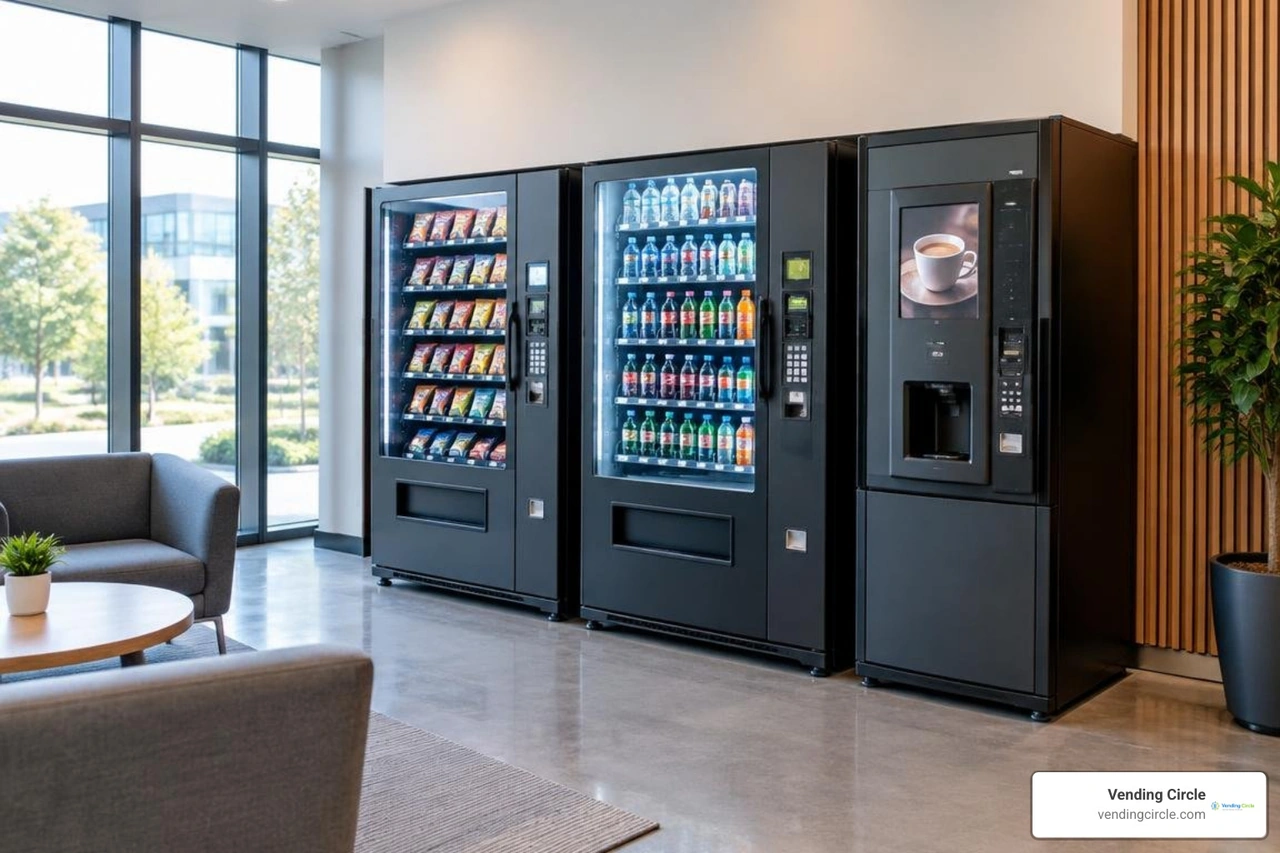
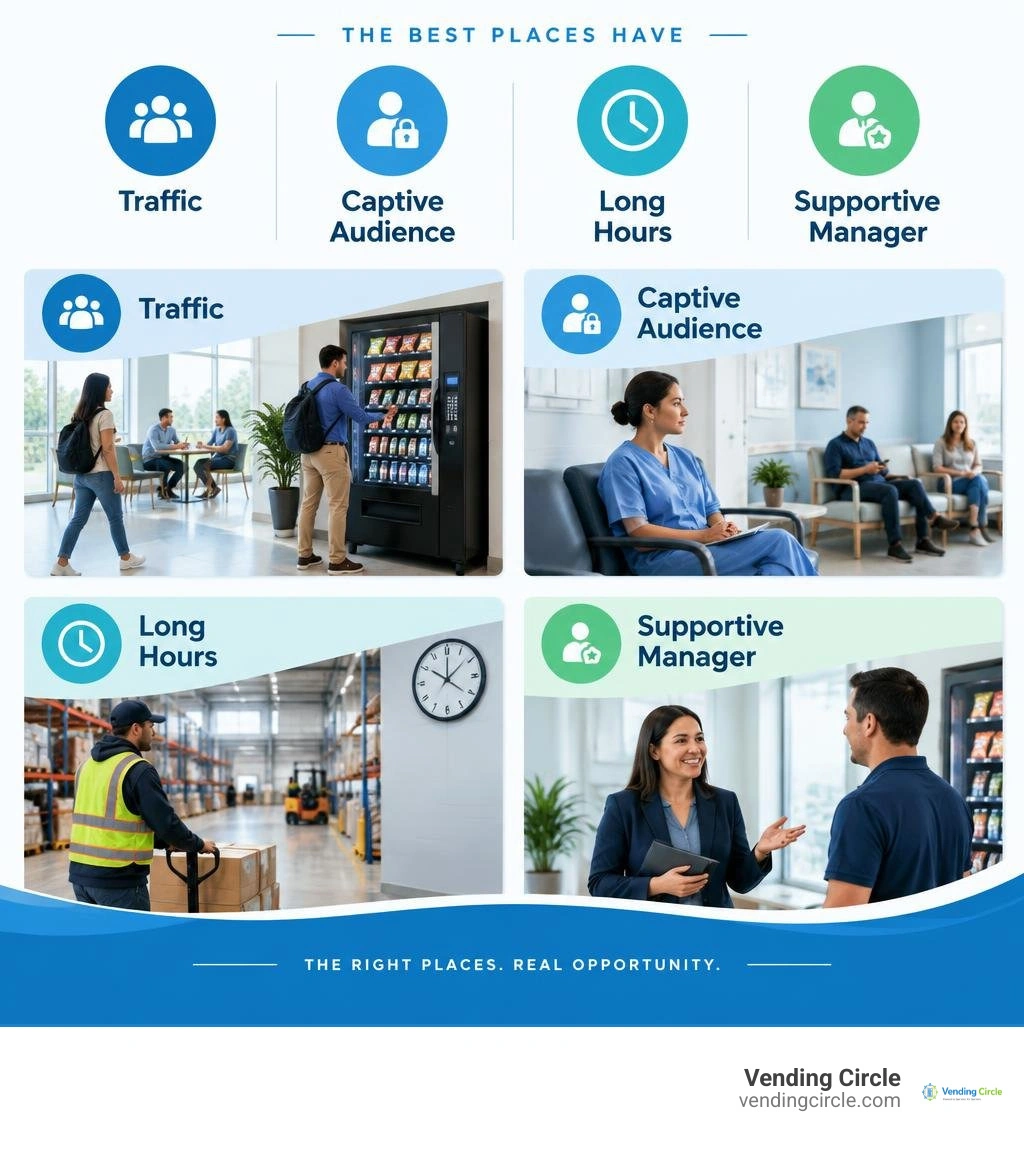
The best places looking for vending machines have three things in common: steady traffic, people who cannot easily leave for food or drinks, and a manager who wants a better amenity. Start with multi-shift warehouses, outpatient medical centers, apartment and student-housing common areas, offices, gyms, and municipal facilities.
Before you pitch, qualify each site with a quick check:
- Count the right traffic. Look for people who pause in breakrooms, waiting areas, mailrooms, lobbies, or near elevators, not just people walking past.
- Check convenience gaps. A location with limited nearby food, long wait times, or 24-hour shifts has stronger demand.
- Verify the basics. Confirm a visible placement area, accessible delivery path, reliable power, and a decision-maker open to a written agreement.
- Match the machine to the audience. Warehouses may need energy drinks and quick meals. Medical sites may need drinks, healthier snacks, and grab-and-go options. Apartments often benefit from 24/7 convenience.
Location quality matters more than machine count. A well-placed machine can produce two to three times the sales of a weak placement, while strong industrial plants, medical facilities, and residential properties can create repeat demand throughout the day.
I am Manuel Mojica, founder of Vending Circle and owner of MM Healthy Vending. I help operators evaluate places looking for vending machines, build stronger routes, and source the equipment and supplies needed to keep those locations profitable.
Relevant articles related to places looking for vending machines:
Top High-Yield Places Looking for Vending Machines
The automated retail sector continues to expand rapidly across the United States. According to key vending machine industry statistics 2026, the economic impact of vending in the U.S. reached $40.04 billion as of June 2025, marking an impressive 30% jump since 2023. As corporate cafeterias scale down and businesses search for cost-free amenities to support their on-site teams, commercial properties are actively reaching out to secure dependable vending partners.
Finding high-yield placements is all about identifying venues with a captive audience, meaningful dwell time, and consistent daily traffic.
| Venue Type | Daily Foot Traffic Baseline | Average Dwell Time | Monthly Revenue Potential (Per Machine/Unit) | Prime Product Categories |
|---|---|---|---|---|
| Industrial / Logistics | 100+ shift workers | 8–12 hours (Captive) | $3,000 – $5,000 | Energy drinks, cold meals, hearty snacks |
| Medical Outpatient | 75+ visitors & staff | 45–120 minutes | $1,200 – $1,800 | Healthy snacks, cold brew, sparkling water |
| Class A Multi-Family | 150+ residents | 24/7 Access | $2,000 – $3,500 | Quick beverages, frozen items, pantry staples |
| Student Housing | 200+ students | 24/7 Access | $3,000 – $5,000+ | Energy drinks, instant noodles, microwavables |
| Municipal / Civic | 100+ public & staff | 30–90 minutes | $1,000 – $2,200 | Traditional snacks, juice, low-sugar drinks |
Multi-Shift Industrial Plants and Distribution Centers
Manufacturing plants, fulfillment centers, and distribution hubs represent some of the highest-earning locations for vending operators. Workers operate on strict 30-minute lunch breaks or brief 15-minute rest periods, making it impractical to leave the facility for outside food.
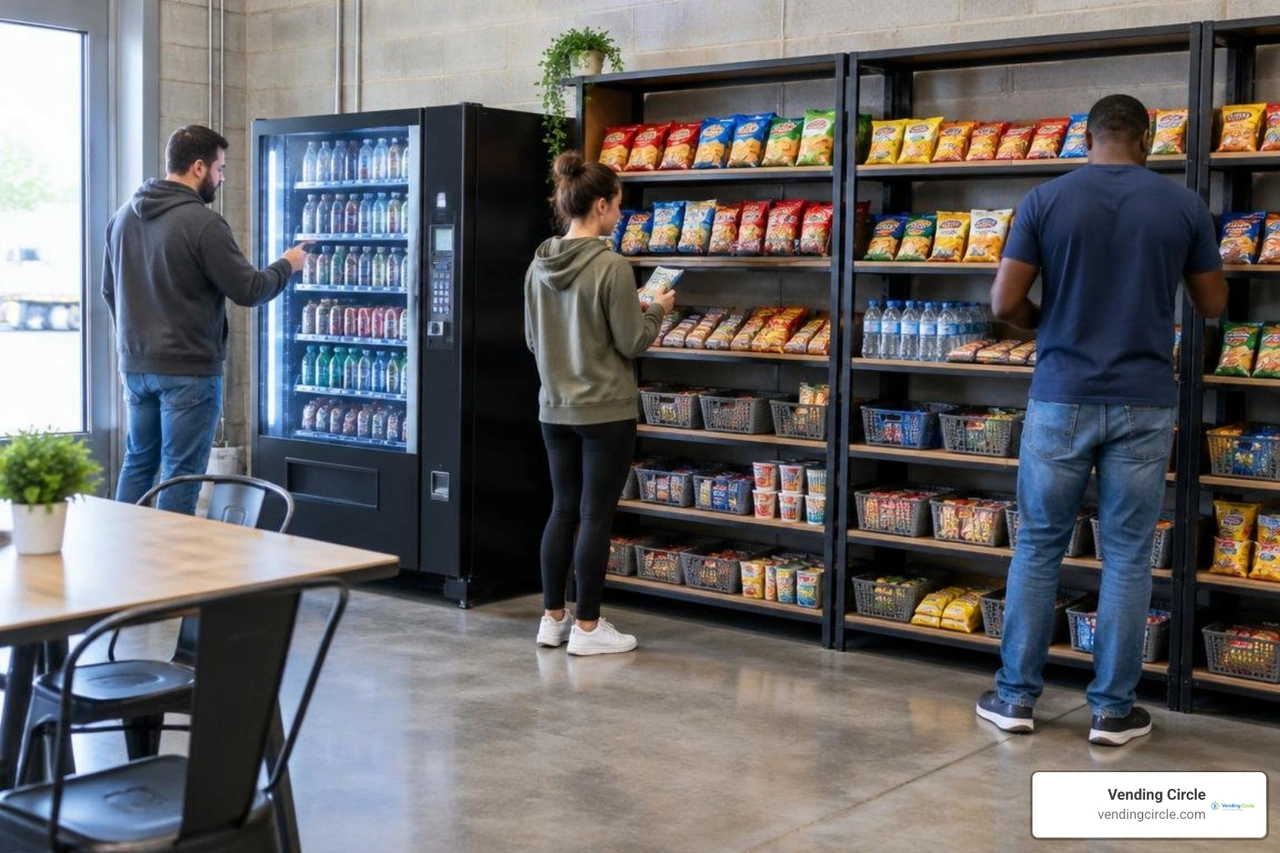
A single beverage or combo machine situated inside a bustling manufacturing plant can generate up to $5,000 a month. Facilities running around-the-clock shifts create sustained volume late at night and during early morning shift changes when local restaurants are closed.
When scouting and identifying great locations for vending machines, prioritize facilities employing 50 to 200+ on-site staff. High-caffeine energy drinks, isotonic hydration beverages, protein bars, and shelf-stable lunch options (like noodle cups and sandwiches) generate exceptional turnover in industrial settings.
Healthcare Facilities and Medical Outpatient Centers
Healthcare environments feature a powerful three-tier customer base: doctors and clinical staff working 12-hour shifts, patients arriving for appointments, and visiting family members sitting in waiting lounges.
A single combo machine placed inside an outpatient urgent care or specialty medical clinic typically yields $1,200 to $1,800 per month. In larger hospitals, breakroom placements often record a 45% sales boost compared to general public lobbies due to predictable shift usage.
When scouting profitable vending machine locations, look for urgent care clinics, dialysis centers, oncology clinics, and physical rehabilitation hubs. Modern smart coolers that offer clean-label snacks, cold brew coffee, electrolyte waters, and basic sanitization supplies perform remarkably well in modern medical environments.
Multi-Family Residential Complexes and Student Housing
Modern multi-family properties and off-campus student housing complexes increasingly treat unattended retail as an essential resident amenity. Studies show that renters are willing to pay $55 to $59 more per month for premium amenities that make their daily lives easier.
A single vending machine placed in the mailroom, package hub, or main clubhouse of a Class A apartment community often averages more than $2,500 monthly. In student housing clusters, operators running routes across multiple complexes near college campuses regularly average upwards of $5,000 per machine.
For these properties, machines equipped with modern touchscreens and contactless payment readers (Apple Pay, Google Wallet, credit cards) capture consistent evening and weekend sales when residents want late-night snacks without ordering food delivery.
Uncovering Public RFPs and Municipal Opportunities
While commercial prospecting involves private negotiations, municipal agencies, county governments, and school districts acquire vending services through public procurement. Navigating these public bids opens the door to stable, multi-building accounts that sign long-term service contracts.
Understanding current procurement trends outlined in our vending machine market guide 2026 helps operators formulate competitive, compliant bids.
Government Bids and Municipal Places Looking for Vending Machines
Municipalities regularly publish Requests for Proposals (RFPs) and public solicitations to outfit civic buildings with vending equipment. Common locations include:
- City halls and administrative complexes
- Public libraries and senior community centers
- Municipal youth recreation pavilions and sports parks
- Public works depots and transit hubs
These contracts are typically structured as 3- to 5-year exclusive service agreements. Municipalities frequently outline nutritional guidelines, requiring operators to allocate a specific percentage of machine slots to lower-sugar, healthy snack and beverage alternatives.
Leveraging Procurement Portals and Bid Specifications
To win public vending contracts, operators must monitor city bid portals and procurement boards for solicitations classified under NAICS code 445132 (Vending Machine Operators).
Public bids require comprehensive documentation. Agencies often require:
- Commercial General Liability policies ($1M to $2M standard coverage)
- Commercial Automobile Liability ($1M coverage)
- Workers' Compensation and Employer's Liability coverage
- Professional and Cyber Liability certifications (for connected cashless systems)
- References from past commercial or public contracts
Reviewing sample bid documentation and public procurement specifications helps ensure your business has its certificates of insurance (COIs), licensing, and service level agreements (SLAs) ready before competitive submission deadlines close.
Qualifying Commercial Sites and Pitching Decision Makers
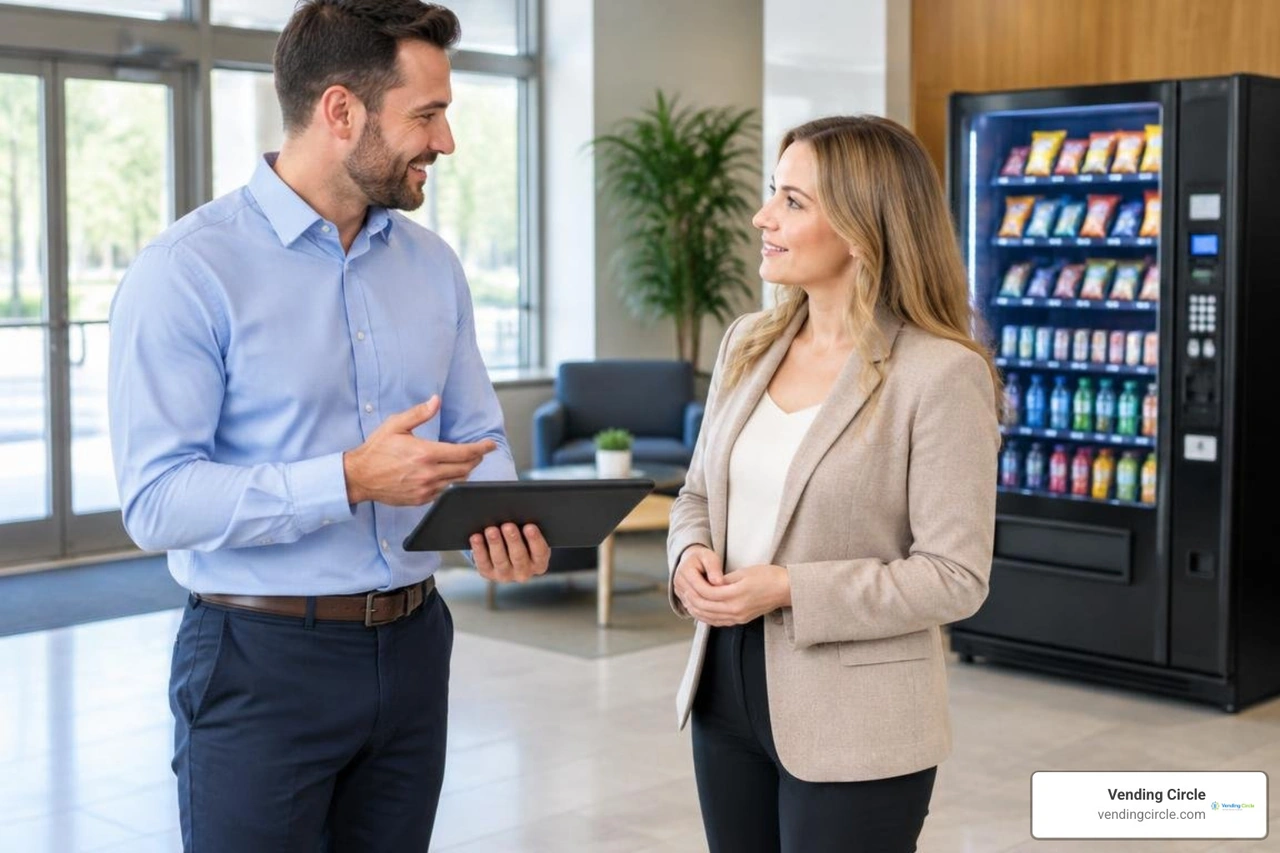
Securing profitable private locations requires a balance of objective site qualification and a polished, professional pitch. Approaching property owners isn't about selling a machine—it is about presenting a zero-cost, hands-off amenity that improves their workplace or community.
Evaluating Commercial Places Looking for Vending Machines
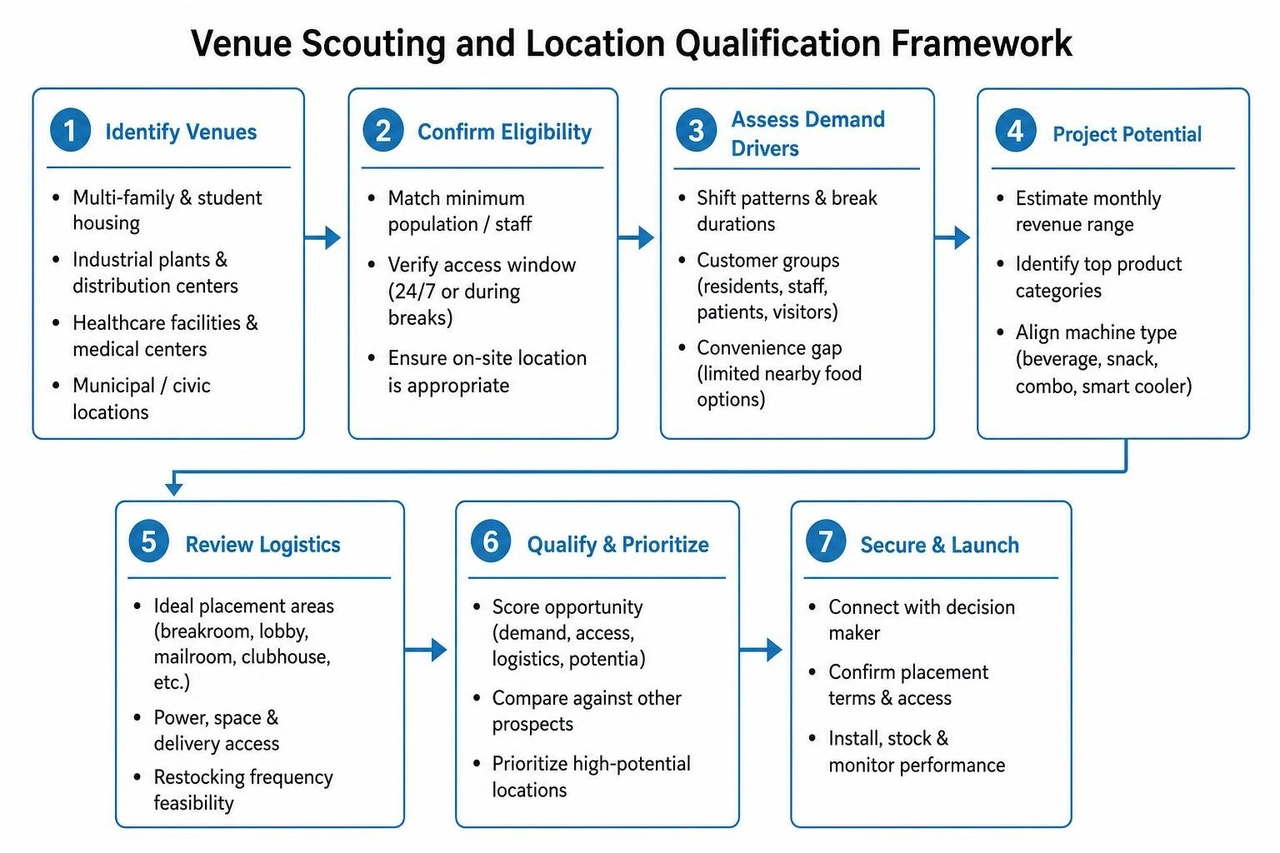
Before offering to place equipment, evaluate the venue using a strict qualification framework:
- Baseline Foot Traffic: Ensure the space has at least 50+ consistent daily visitors or 30+ full-time employees on site.
- Dwell Time & Foot Traffic Flow: Fast-moving traffic in an outdoor corridor rarely converts. Look for natural pause points—breakrooms, customer waiting rooms, elevator lobbies, and laundry facilities.
- Physical Accessibility & Utilities: Confirm the presence of a dedicated, grounded 110V electrical outlet and measure doorway clearances (standard vending units require at least 32 to 36 inches of clearance to move into position).
Applying this systematic approach is essential when building sustainable vending machine routes that hold long-term resale value.
Structuring Contracts, Revenue Sharing, and Placement Proposals
When presenting your proposal to property managers, focus on reliability, equipment aesthetics, and responsive maintenance. Most commercial sites are pleased to host a clean, modern machine at zero cost to their business.
In situations where commissions are requested (such as large residential developments or high-volume corporate centers), offers typically range from 5% to 10% of gross sales, accompanied by transparent monthly reporting.
Always formalize every placement with a written agreement. When negotiating vending machine agreements, ensure your contract clearly specifies:
- Machine ownership and exclusive operational rights
- Electrical utility provision by the property
- Routine restocking schedules and a 24-to-48-hour service repair commitment
- A standard 30-day trial period followed by a 1- to 3-year term with clear cancellation terms
Frequently Asked Questions About Finding Vending Locations
What types of businesses are most actively seeking vending machines?
Industrial manufacturing plants, 24-hour logistics warehouses, medical outpatient clinics, multi-family apartment developments, and car dealerships are the most common commercial venues seeking vending services. These businesses want to keep staff and visitors on site without spending capital to manage their own food inventory.
How much revenue can a vending machine generate in a high-traffic location?
Revenue varies based on foot traffic quality and product mix. A standard combo machine in an outpatient clinic generally earns $1,200 to $1,800 monthly, while a well-stocked machine in a multi-shift manufacturing facility can generate $3,000 to $5,000 per month. High-volume buildings that transition to full unattended micro markets can clear up to $20,000 monthly.
Do operators need to pay commission to host locations?
Not always. Many small- to mid-sized businesses, offices, and medical clinics view vending machines as a complimentary perk for their staff and customers, requiring no commission or rent. In larger corporate hubs or luxury residential communities, operators often provide a 5% to 10% commission on gross sales to secure the exclusive placement.
Conclusion
Securing prime placements is the foundation of building a high-margin vending route. By prioritizing locations that demonstrate strong dwell times, steady daily foot traffic, and limited off-site food options, you build durable cash-flowing assets that scale your business.
At Vending Circle, our community connects operators with real-world route-building frameworks, live weekly coaching sessions, and direct supplier discounts. If you are preparing to deploy new units or upgrade an existing account, explore high-performance equipment on Vending Circle to find reliable smart vending and micro market hardware for your next placement.