
The Hidden Cost Draining Your Vending Business Right Now
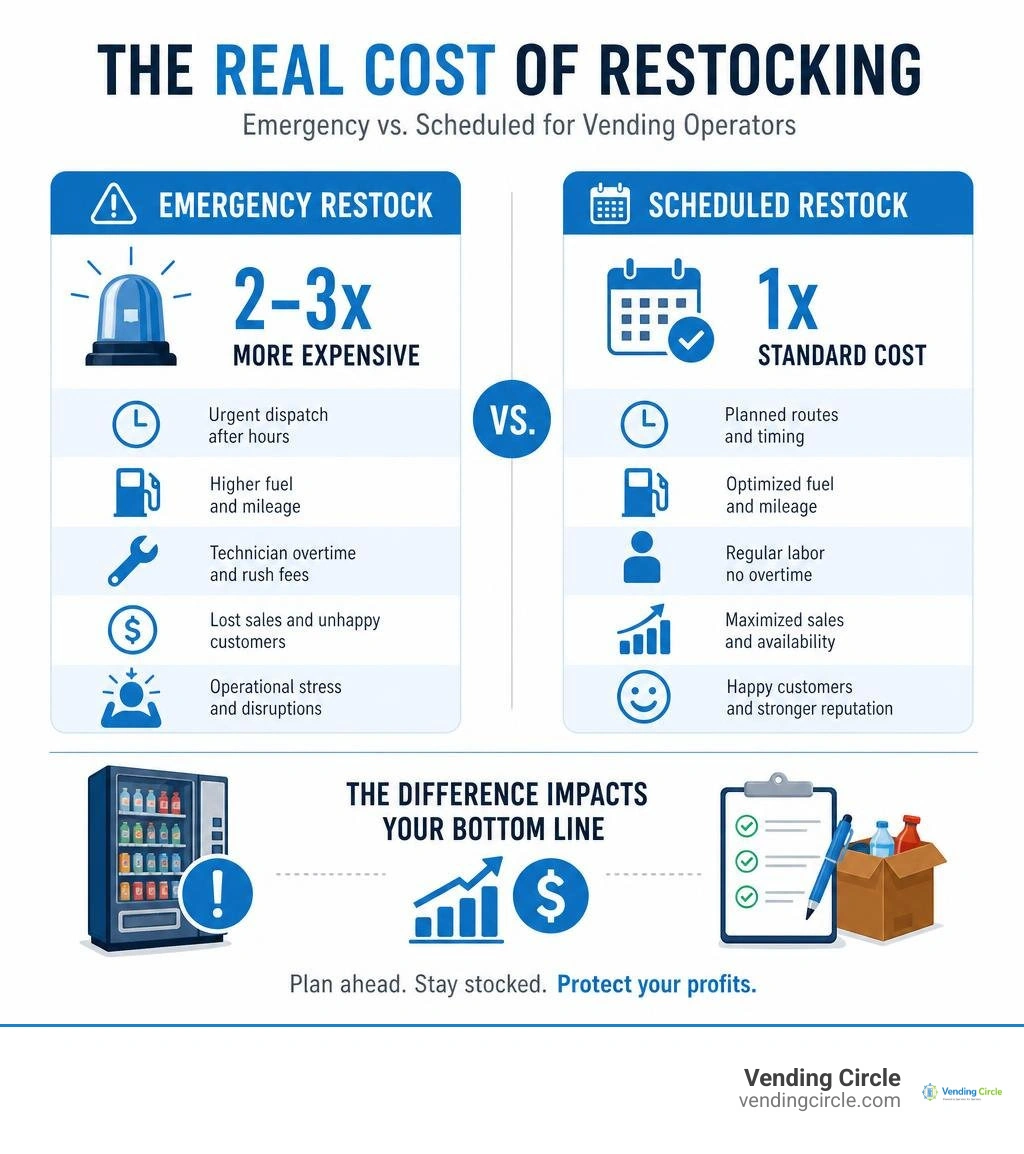
A vending machine emergency restock can cost you two to three times more than a standard scheduled run — and it almost always catches operators off guard.
Here's a quick breakdown of what triggers one and how to respond:
| Situation | Severity | Recommended Action |
|---|---|---|
| Complete machine outage | Critical | Dispatch technician immediately |
| Refrigeration failure | Critical | Dispatch technician immediately |
| High-demand item sold out | Moderate | Same-day or next-day restock |
| Single product jam | Minor | Batch into next scheduled visit |
| Payment system failure | Moderate | Remote diagnostic or self-service guide first |
The hard truth? Most emergency restocks are preventable. With the right systems in place — telemetry, predictive alerts, and clear dispatch protocols — operators can cut unplanned visits by as much as 92%.
But when you're managing a growing route without those systems, a single stockout at a high-traffic location can mean lost sales, frustrated customers, and a scrambled last-minute run that eats into your margins.
One medical student at Boston University noticed her campus had almost no accessible health resources available outside business hours. The solution was a specialized vending machine with a QR code that let students trigger a restock alert directly. It's a simple example of a broader truth: the operators who build smart reporting into their machines stop chasing emergencies and start preventing them.
I'm Manuel Mojica, founder of Vending Circle and owner of MM Healthy Vending, and I've seen how a reactive approach to vending machine emergency restock situations drains time, money, and operator morale. In this guide, I'll walk you through how to build a system that keeps your machines full — and keeps you off the road at 2 a.m.
Defining the Vending Machine Emergency Restock: Triggers and Operational Impacts
Before we can prevent emergency runs, we have to define exactly what constitutes a genuine vending emergency. Too many operators treat every single customer complaint as a code-red emergency, rushing out to a location to fix a minor issue that could have easily waited until the next scheduled route.
In the vending world, a true emergency falls into one of three categories:
- Complete Machine Outage or Power Failure: The machine is completely dark, accepting no payments, and generating zero revenue.
- Refrigeration Failure in Cold Food Units: This is a critical food safety hazard. If a machine holding dairy, sandwiches, or perishable meals loses cooling capabilities, the temperature rises, posing a severe risk of foodborne illness. Operators must dispatch a technician immediately to pull the spoiled stock and prevent customers from purchasing unsafe food.
- Severe Stockouts of High-Velocity Anchor Items: If your top three best-selling drinks or snacks are completely sold out on a Friday afternoon at a high-volume manufacturing plant, you are looking at substantial lost revenue over the weekend.
When you sign a full-service contract with a commercial client, the responsibility for keeping those machines stocked and functional falls squarely on your shoulders. Clients expect a seamless experience. If their employees walk into the breakroom and find empty coils day after day, they will quickly look for another provider.
To maintain high satisfaction without running yourself ragged, you need to understand how to delegate and structure your operational logistics. For those who want a completely hands-off approach, outsourcing to professional Vending Machine Product Restock Services can be a game-changer, allowing you to scale your business without investing heavily in your own logistics fleet.
The True Cost of Unplanned Dispatches for Vending Operators
Every time you or one of your technicians climbs into a service van for an unscheduled run, your profitability takes a hit. In the vending industry, profitability relies entirely on route density and scheduled efficiency. When you break a route to handle an emergency, you aren't just paying for the fuel and labor of that single trip—you are disrupting the carefully planned schedule of every other machine on that driver's list.
Unplanned dispatches lead to:
- Shattered Route Efficiency: Instead of servicing 18 to 24 machines in a tight geographical loop, your driver is forced to drive across town, wasting hours in traffic.
- Technician Burnout: Constantly calling technicians after hours or on weekends to handle avoidable stockouts ruins work-life balance and drives up employee turnover.
- Inflated Fuel and Maintenance Bills: Extra miles on your fleet vehicles translate directly to higher maintenance costs and accelerated vehicle depreciation.
Let's look at a realistic cost comparison between a standard scheduled restock and an emergency off-schedule run in 2026:
| Expense Category | Standard Scheduled Restock | Emergency Off-Schedule Restock |
|---|---|---|
| Labor Cost | $15 - $25 (standard hourly rate) | $45 - $75 (overtime/emergency premium) |
| Fuel & Vehicle Wear | $3 - $5 (optimized route share) | $20 - $40 (cross-town transit) |
| Opportunity Cost | $0 (planned downtime) | $50 - $150 (delayed servicing on other routes) |
| Customer Experience | High (machine is kept clean and full) | Low (machine was already empty/broken) |
| Total Estimated Cost | $18 - $30 | $115 - $265 |
As highlighted in the After-Hours Vending Machine Service Automation Guide, failing to filter out non-emergency calls can drain thousands of dollars from your monthly bottom line. By reviewing the latest Vending Machine Industry Statistics 2026, we can see that operators who automate their dispatch and inventory systems protect their margins and scale far faster than those sticking to traditional clipboard-and-guesswork methods.
Leveraging Telemetry and Predictive Analytics to Prevent Stockouts
The most effective way to handle a vending machine emergency restock is to ensure it never has to happen in the first place. Thanks to modern technology, the days of driving to a machine just to "see what it needs" are officially over.
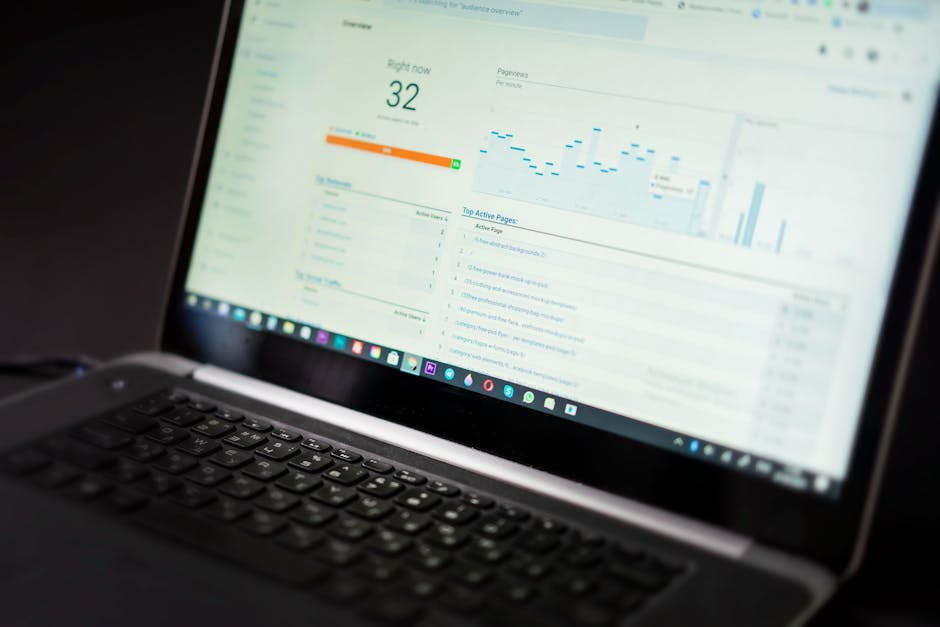
By equipping your fleet with smart telemetry systems, you gain a real-time window into every coil of every machine on your route. Telemetry hardware polls your machines constantly, transmitting data back to your cloud-based management software.
Instead of waiting for a client to call and complain that their favorite energy drink is gone, your system monitors the rate of consumption. If a particular item is selling faster than usual due to a local event or a heatwave, the predictive analytics engine flags the trend. It calculates the depletion rate and automatically schedules a restock run 2 to 3 days before the coil actually empties.
Transitioning to Data-Driven Inventory Management
Embracing automated inventory management does more than just prevent empty coils; it completely transforms how you handle your warehouse and fleet operations.
When you utilize systems like those detailed in the guide on Vending Machine Inventory Automation | 60% Faster Restocking, your warehouse team can generate precise pre-sorted "pick lists" for your route drivers. Instead of loading a truck with random cases of sodas and snacks, drivers load exactly what is needed for the day.
This transition to data-driven management yields massive operational returns:
- 60% Faster Restocking: Because the driver knows exactly what to bring before stepping out of the truck, the time spent servicing a single machine drops from 30 minutes to just 12 minutes.
- 45% Less Expired Inventory: Implementing strict First-In, First-Out (FIFO) tracking ensures older stock is rotated to the front and sold before it expires.
- 98.5% Stockout Prevention Rate: Predictive models adjust your par levels dynamically based on seasonal trends and historical sales velocity.
How Telemetry Eliminates the Need for a Vending Machine Emergency Restock
At the heart of modern vending technology are DEX (Data Exchange) and MDB (Multi-Drop Bus) communication protocols. These industry-standard systems connect your bill acceptors, card readers, and drop sensors to a central telemetry hub.
Every time a transaction occurs, the machine updates its inventory database. By partnering with a dedicated service like Stock Refilling for Vending Machines | GetVending Sydney, operators can leverage automated usage reports to keep their machines consistently filled without having to manage the tracking logistics themselves.
These automated systems send real-time alerts the moment a machine experiences a payment failure, a coin jam, or a sudden spike in sales. This immediate feedback loop allows you to address issues during standard business hours, completely eliminating the need for costly, frantic weekend runs.
Streamlining After-Hours Requests and Dispatch Logistics
Even with the best telemetry in the world, physical failures can still occur. A compressor might fail on a hot summer night, or a rogue coin might jam a validator. When an issue does arise after hours, having a structured triage process is critical.

Instead of immediately sending out a technician, your system should automatically assign a severity score to the incoming ticket. Critical issues (like refrigeration failure) are escalated immediately, while minor issues (such as a single jammed coil of chips) are automatically queued for the driver's next scheduled visit.
Establishing an Emergency Protocol for High-Priority Locations
For high-priority locations like hospitals, airports, or large distribution centers, your service level agreements (SLAs) will often dictate strict emergency response times. To meet these demands without burning out your staff, you must establish a clear on-call rotation.
When setting up your after-hours protocol, keep these best practices in mind:
- Define clear escalation paths: If the primary on-call technician does not acknowledge an emergency alert within 15 minutes, the system should automatically escalate the alert to a backup technician or supervisor.
- Batch non-emergency issues: If a machine has a minor issue but is otherwise functioning, schedule the repair for the next standard route run.
- Leverage professional networks: If you manage a large, geographically dispersed route, partnering with localized services like those offered by Book a vending machine restocking service – Always fully stocked can help you maintain your SLAs without overextending your internal team.
Deploying Customer-Facing Tech for a Vending Machine Emergency Restock
One of the easiest ways to filter out unnecessary dispatches is to empower your customers with self-service tools. By placing custom QR codes or simple SMS instructions on your machine wraps, you can redirect anxious customers to a digital troubleshooting assistant.
Data shows that 41% of after-hours requests can be resolved without ever dispatching a technician simply by guiding the customer through basic troubleshooting steps.
Here are the most effective customer-facing reporting tools you can deploy:
- QR Codes Linking to Interactive Web Forms: Customers scan the code to instantly report a stockout or a coin jam, uploading a photo if necessary.
- SMS-Based Automated Diagnostics: A customer texts a machine ID and a keyword (e.g., "JAM") to receive an automated refund link or an explanation of how to clear a simple payment error.
- In-App Support Portals: For closed-loop corporate accounts, integrating vending support into the company's internal Slack or messaging platform allows for rapid, friction-free communication.
Using these tools, your system can automatically identify the root cause of 73% of issues without requiring a human operator to look at the machine.
Specialized Vending: Managing Time-Sensitive and Harm Reduction Inventory
As the vending industry evolves in 2026, machines are dispensing far more than just potato chips and soda. Specialized vending machines — distributing public health supplies, harm reduction tools, and time-sensitive medications — have become incredibly common.
Managing inventory for these machines requires an entirely different level of precision. If a snack machine runs out of chocolate bars, it’s a minor inconvenience. If a community harm reduction machine runs out of Naloxone (Narcan) or emergency contraception, it can have serious health consequences.
These specialized machines require:
- Strict 24/7 Availability: Because these machines are often placed in outdoor or community spaces to provide barrier-free access to health supplies, they must remain fully operational around the clock.
- Dynamic Stock Substitution: If a specific brand of emergency contraception (like Plan B) is unavailable due to supply chain issues, operators must have protocols to substitute equivalent products (like Julie or Opill) immediately.
- Low-Barrier Reporting: To protect user privacy, these machines often rely on discreet QR codes that allow users to report low stock levels anonymously, triggering an immediate, high-priority restock request.
To stay updated on the latest trends and compliance guidelines in specialized vending, check out our library of industry-focused Articles.
Frequently Asked Questions About Emergency Restocking
What is the difference between a standard restock and an emergency restock?
A standard restock is a planned, geographically optimized visit scheduled as part of a driver's regular route. The driver knows exactly what inventory is needed based on telemetry reports and services the machine during normal business hours.
An emergency restock is an unscheduled, reactive run triggered by a sudden machine failure, a critical stockout of key products, or a refrigeration breakdown. These runs are highly inefficient, expensive, and disrupt standard operations.
How do automated diagnostics reduce unnecessary technician dispatches?
Automated diagnostics poll the machine's internal computer (via the MDB/DEX interface) to verify if a reported error is a true system failure or a temporary glitch.
For instance, if a card reader fails to authorize a transaction, the system can attempt a remote reboot. If a single coil is jammed, the software can temporarily disable that selection while keeping the rest of the machine fully functional, saving you a costly trip.
Can legacy vending machines be retrofitted with telemetry?
Absolutely! You do not need to buy brand-new, expensive smart machines to benefit from telemetry.
You can easily retrofit older machines with wireless cellular telemetry sensors for about $150 to $300 per machine. These sensors plug directly into the machine's existing MDB port and typically pay for themselves within 8 to 12 months by eliminating unnecessary travel and preventing lost sales.
Conclusion
Building a highly profitable vending business isn't just about placing machines in high-traffic locations; it's about mastering your operational logistics. Letting a reactive vending machine emergency restock cycle dictate your schedule is a fast track to high costs and operator burnout. By investing in telemetry, setting up smart triage protocols, and utilizing customer-facing tech, you can take complete control of your routes.
If you want to stop guessing, optimize your inventory, and learn directly from experienced operators who have built highly successful routes, you don't have to do it alone. Knowing How to Find a Vending Machine Mentor can save you years of trial and error.
At Vending Circle, we’ve built the ultimate platform for operators who want to scale smart. When you join our community, you get access to manufacturer-direct pricing on the latest telemetry hardware, step-by-step training courses, and a supportive network of active operators sharing real-world strategies every day.
Ready to upgrade your machines and maximize your margins? Discover how our community can help you scale your route by visiting https://www.vendingcircle.com/machines today!