Vending Machine Prices in 2026: What to Budget
Vending machine prices start around $1,200 to $3,000 for many used or refurbished machines. New standard machines often cost $3,000 to $8,500, while premium combo models can reach $11,000. Smart machines with touchscreens and cashless features commonly run $6,000 to $12,000 or more.
The machine is only part of your startup budget. Allow for delivery, permits, and an initial stock purchase of roughly $100 to $400. Before buying, compare the total cost with the sales you can reasonably expect at your location. According to the U.S. Small Business Administration, planning for these secondary costs is a key part of estimating startup expenses.
I’m Manuel Mojica, founder of Vending Circle and a former vending business owner. My experience sourcing equipment and working with operators shapes how I compare vending machine prices and long-term value.
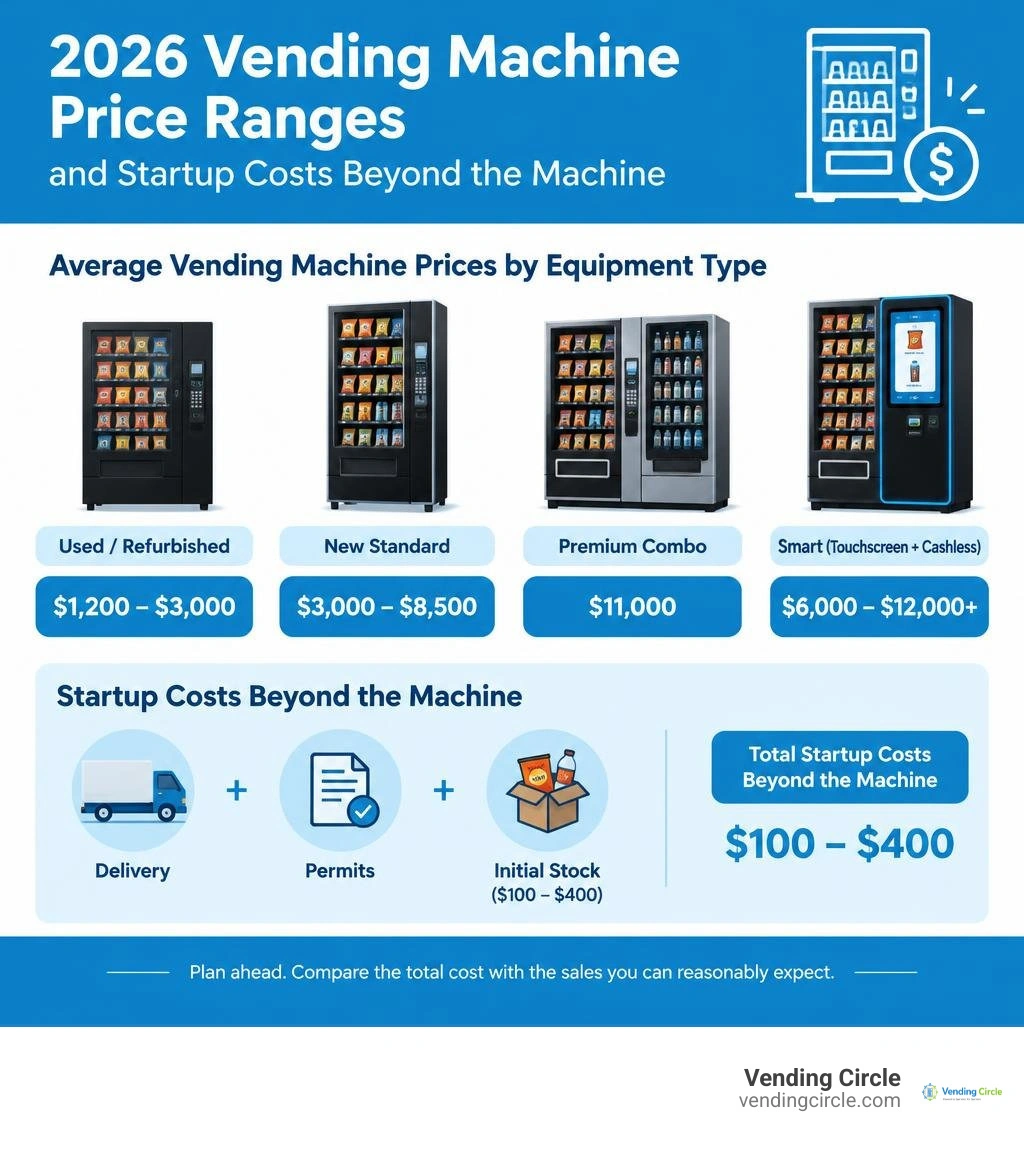
Average Vending Machine Prices by Equipment Type in 2026
When establishing your automated retail route, hardware costs vary dramatically depending on the category, cooling system, and internal dispensing mechanisms. Choosing the right hardware requires matching product dimensions and refrigeration requirements to the foot traffic of your placement site.
| Equipment Type | Refurbished / Used Price Range | New Price Range | Typical Capacity |
|---|---|---|---|
| Snack Machines | $1,200 – $2,500 | $3,000 – $8,300 | 20 – 40 selections |
| Cold Drink Machines | $1,300 – $5,000 | $4,000 – $8,500 | 6 – 12 drink varieties |
| Combination (Snack & Drink) | $1,800 – $5,300 | $3,000 – $11,000 | 20–35 snacks / 6–12 drinks |
| Smart Coolers / AI Kiosks | $1,200 – $4,000 | $3,300 – $12,000+ | Flexible open-shelf / 100+ items |
| Micro Market Bundles | N/A (Custom) | $3,600 – $19,100 | Full open-market setup |
| Bulk Candy Dispensers | $50 – $200 | $100 – $500 | 1 – 4 bulk heads |
| Robotic / Hot Food Kiosks | $3,000+ (Robotic base) | $15,000 – $109,000 | Custom preparation assemblies |
Traditional Snack, Drink, and Combo Machines
Traditional coil and drop-sensor hardware remains the backbone of the automated retail industry. Ambient snack units are the most economical entry point, ranging from $1,200 to $2,500 for quality refurbished models, while new snack machines retail between $3,000 and $8,300. Because snack units lack compressors, their maintenance overhead remains exceptionally low.
Cold beverage units incorporate heavy-duty refrigeration systems to keep soda cans, energy drinks, and bottled water chilled. Refurbished drink machines run from $1,300 to $5,000, while brand-new units range between $4,000 and $8,500. If you are preparing to buy a drink machine to capture high-margin liquid refreshment sales, ensuring compressor efficiency is critical.
Combination configurations house ambient snack trays on top and a refrigerated beverage compartment below. Exploring combo vending machines for sale allows you to serve both snacking and beverage demands from a single physical footprint. Refurbished combos cost $1,800 to $5,300, whereas new standard to premium units range from $3,000 up to $11,000.
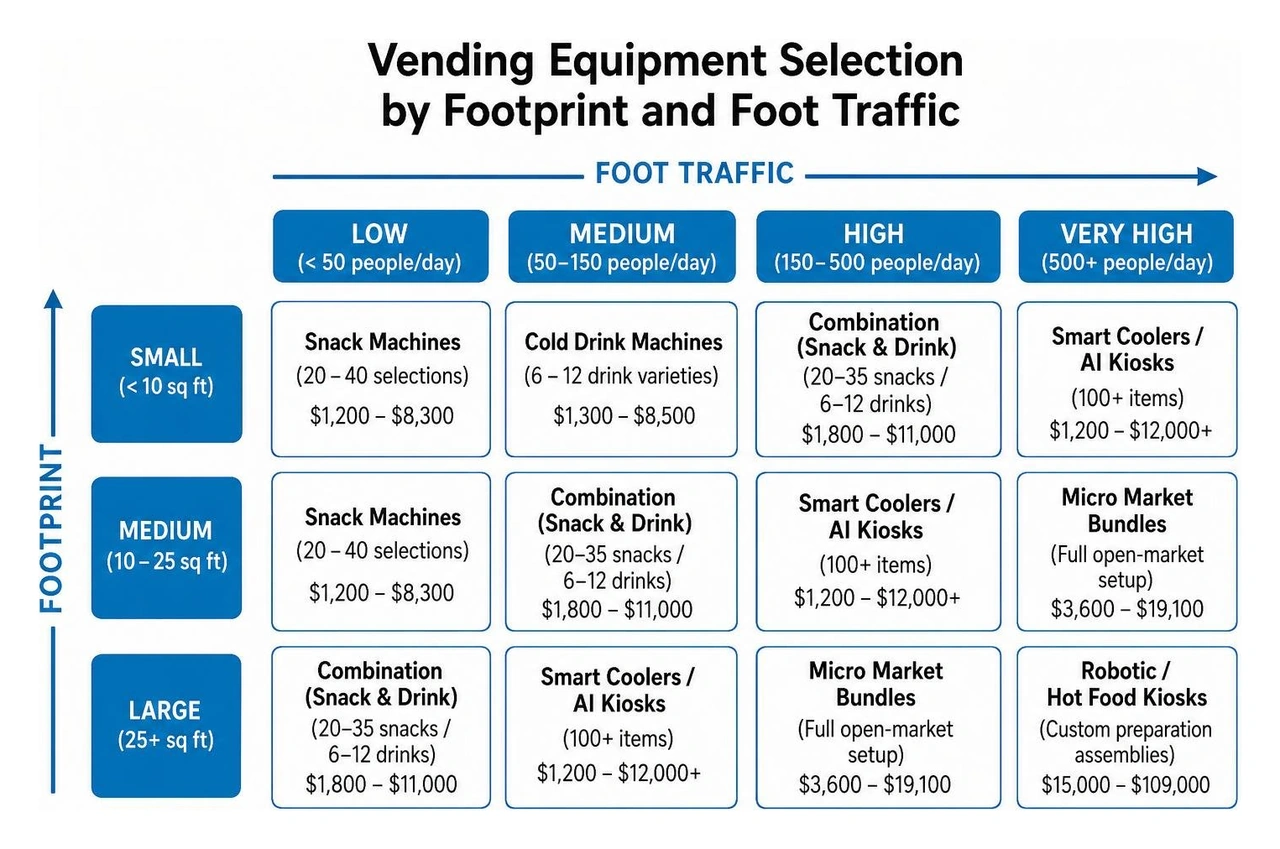
Smart Coolers, Micro Markets, and Robotic Units
Automated retail has evolved beyond mechanical spirals. Smart grab-and-go coolers and AI-driven vision kiosks cost between $3,300 and $6,900 for standard models, with advanced touchscreen freezers reaching $12,000 or more. These units allow customers to tap a credit card or mobile wallet, open the glass door, and walk away. Visual computer sensors automatically detect selected items and charge the account, virtually eliminating mechanical tray jams.
Micro market installations are popular for secure corporate break rooms with over 150 employees. Starter self-checkout kiosks and modular shelving begin around $3,600, while multi-cooler enterprise micro-market setups scale up to $19,100. For non-packaged food service, automated robotic units (such as fresh cotton candy spinners or popcorn makers) start around $3,000 for compact builds, whereas complete outdoor hot-food kiosks span $75,000 to $109,000. Custom enterprise-level automated retail dispensers can reach up to $50,000 depending on custom API and ERP integrations.
Bulk Candy and Specialty Vending Entry Points
Mechanical bulk vending represents the lowest barrier to entry in the industry. Compact mechanical heads mounted on stands dispense gumballs, toy capsules, or loose confections without requiring electrical wiring. If you want to start lean, researching bulk candy machines for sale provides units costing only $100 to $500 new, or under $100 used.
Specialty commercial dispensers handle specialized consumer niches. Commercial bean-to-cup coffee machines cost $1,500 to $10,000, while frozen treat dispensers run between $5,000 and $12,000. These specialized entry points demand precise product rotation, but they command premium ticket prices compared to standard packaged confection lines.
Key Factors That Determine Equipment Costs and Total Startup Budget
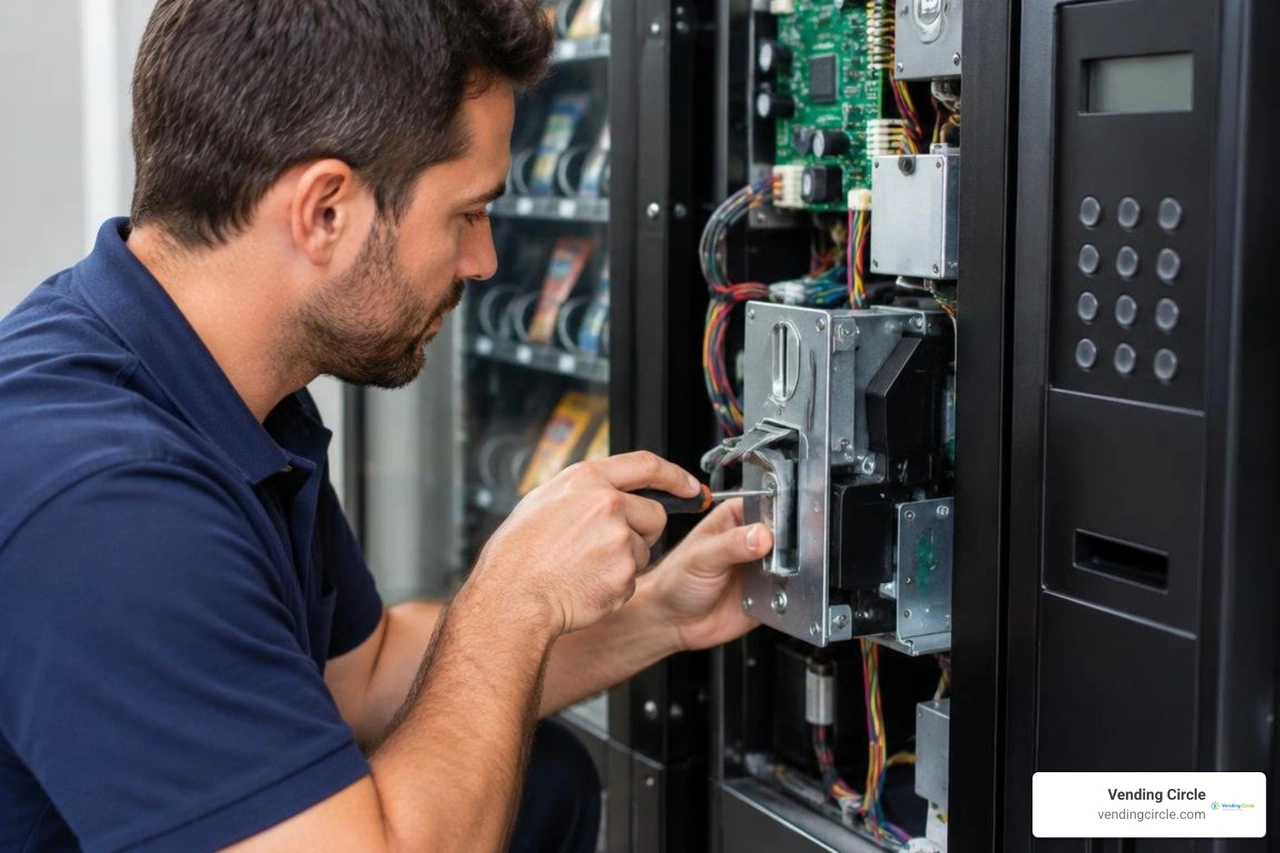
Understanding what drives equipment pricing helps you avoid overpaying for unnecessary features while securing the hardware capabilities your location demands.
New vs. Used Vending Machine Prices
Condition plays the largest role in upfront purchase prices. While unverified private-party used machines can be found on local marketplaces for $500 to $1,500, they carry real risks of failing compressors or obsolete circuit boards. A professionally refurbished machine from an authorized dealer typically costs $1,500 to $3,500 and includes a multi-point component overhaul along with a 90-day parts warranty.
Reviewing a dedicated used vending machines guide is wise before shopping the secondary market. If a $1,500 used machine requires an immediate $600 compressor repair and a $300 card reader retrofit, you have invested $2,400 with none of the warranty protections included on modern equipment.
How Technology and Smart Features Impact Vending Machine Prices
Upgraded electronics add to initial equipment costs while significantly lifting daily gross sales. Modern consumers rarely carry loose change; non-cash transactions represent roughly 71% of all vending transactions. Prioritizing options to buy a vending machine with card reader integration ensures you capture contactless cards, NFC, Apple Pay, and Google Wallet. Card readers and cloud telemetry units add $200 to $500 per machine when purchased as add-ons.
Total Startup Budget Beyond the Machine
Budgeting strictly for the steel cabinet is a common rookie mistake. A comprehensive route launch includes freight logistics, operational compliance, initial stock, and a capital buffer. Reviewing our vending machine costs guide provides a complete roadmap for these initial expenditures.
Ongoing Operating Costs, Revenue, and Payback Timelines
Owning vending equipment requires active inventory and operational overhead management. Long-term profitability depends on maintaining healthy margins across all operating categories.
Recurring Monthly Ownership Expenses
Every active machine generates standard variable and fixed operating expenses that must be deducted from monthly gross sales:
- Inventory Restocking (Cost of Goods Sold): Sourcing inventory via wholesale warehouse clubs or distributors generally consumes 40% to 55% of gross revenue. Expect to spend $100 to $400 per machine each month restocking snacks and beverages.
- Card Processing & Telemetry SaaS Fees: Merchant processors charge roughly 5% to 6% of cashless transaction volume, plus a $5 to $12 monthly cellular telemetry connectivity fee.
- Location Commissions: Property owners often require a commission to host your hardware. Standard venue commissions range between 10% and 25% of gross machine revenue (or roughly 7% for managed corporate break rooms).
- Power Draw & Electricity: Ambient snack machines consume minimal power ($5 to $20 monthly). Refrigerated drink units cost $25 to $60 per month in electricity, which is either absorbed by the property host or deducted from commission settlements.
- Maintenance & Component Reserves: Setting aside $10 to $30 per month per machine covers routine wear items like harness clips, gummed coin slots, and replacement motors. Consulting a vending machine parts cost guide helps you budget for replacement coils, control boards, and bill validators over time.
Profit Margins, Gross Sales, and Breakeven Timelines
A standard, well-placed vending machine generates between $300 and $600 in gross monthly revenue, with high-traffic sites (such as transport hubs, manufacturing distribution warehouses, or large apartment buildings) clearing over $1,000 per month. Net monthly take-home profit typically ranges between $150 and $400 per machine after factoring in cost of goods, processor fees, and location cuts.
Evaluating wider vending machine industry statistics highlights the historical financial formula for calculating capital payback timelines:
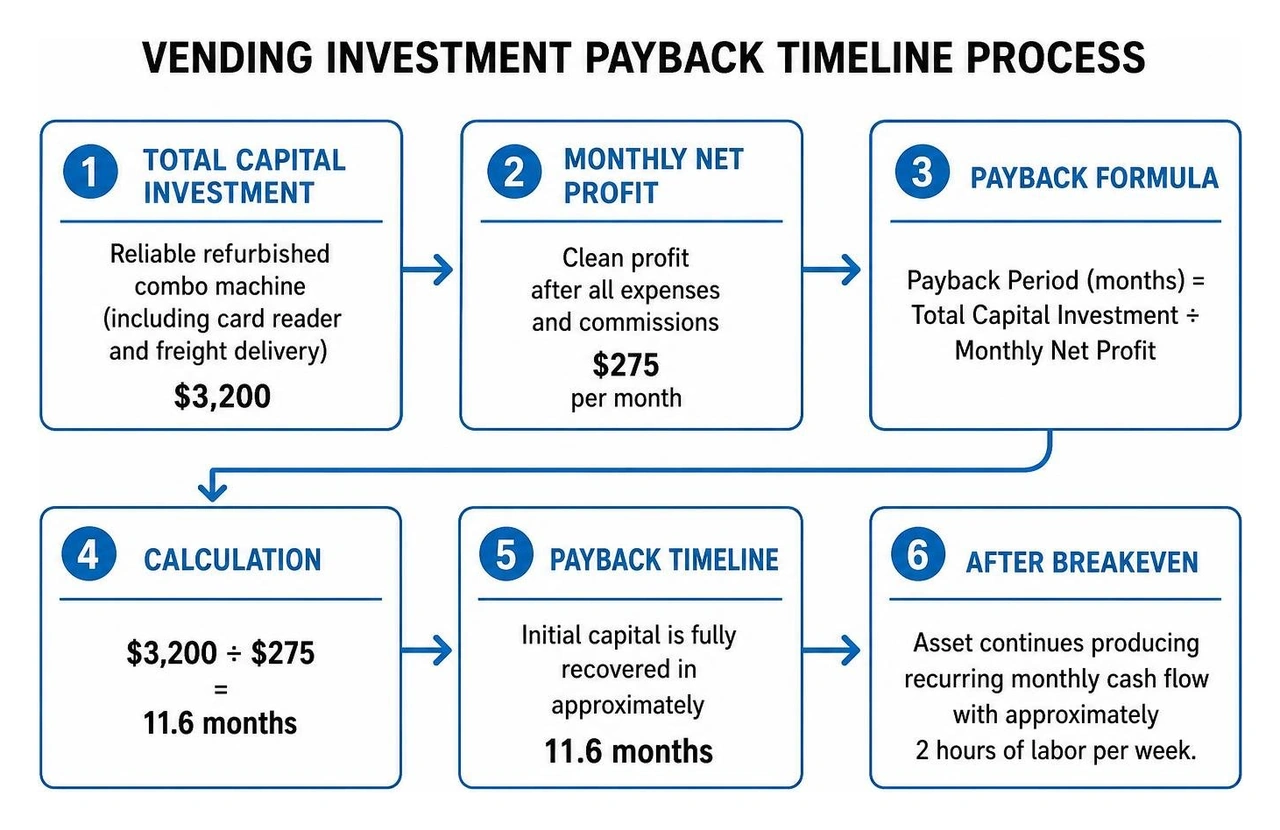
If you acquire a reliable refurbished combo machine for $3,200 (including card reader and freight delivery) and place it in a corporate office netting $275 per month in clean profit, your initial capital is fully recovered in roughly 11.6 months. After reaching breakeven, that asset continues producing recurring monthly cash flow with approximately 2 hours of labor per week.
Smart Buying Strategies: Financing, Mistakes to Avoid, and Scaling
Expanding an automated retail route requires capital discipline, reliable supply relationships, and strategic location placement.
Equipment Financing and Lease-to-Own Options
You do not have to exhaust your liquid cash reserves to deploy quality equipment. Many commercial operators rely on equipment financing and lease-to-own programs to conserve capital for inventory and marketing. Following our vending machine financing guide helps you navigate lease contracts and interest terms.
Standard equipment lease-to-own agreements range from $100 to $300 per month per machine. Financing allows the machine's monthly sales revenue to cover its own hardware debt service while preserving your operating cash flow. Many capital equipment purchases also qualify for Section 179 tax deductions, allowing you to deduct the full purchase price of qualifying equipment in the tax year it is placed in service.
Costly Mistakes to Avoid When Purchasing Machines
Over our years in the vending industry, we have seen operators make the same unforced errors when buying equipment:
- Buying Hardware Before Securing the Location: Never buy a machine and store it in your garage hoping to find a home for it later. Secure a signed location agreement first, measure the doorways and designated footprint, assess user demographics, and purchase the specific machine format that fits the site.
- Believing Unverified Seller Revenue Claims: When buying an existing route or on-location machine from a private seller, never rely on handwritten logs or verbal promises. Demand at least six months of merchant processor reports and wholesale inventory receipts to verify true historical sales volume.
- Purchasing Obsolete, Non-MDB Equipment: Older vending machines manufactured prior to MDB (Multi-Drop Bus) standards cannot communicate with modern card readers, mobile wallets, or cloud telemetry hardware. Upgrading orphaned control boards often costs more than the machine is worth.
- Ignoring Local Access Logistics and Foot Traffic: Placing a premium $6,000 machine in a secured office corridor with only 15 workers will result in slow inventory turnover and expired goods. Match high-capacity machines to locations with at least 50 to 200 daily visitors.
Frequently Asked Questions About Vending Machine Costs
How much does it cost to buy and stock a first vending machine?
Launching a single traditional vending location typically costs between $2,500 and $5,500 total. This baseline includes purchasing a quality refurbished or entry-level new machine ($1,800–$4,000), freight shipping and placement ($300–$500), an MDB-compatible cashless card reader ($250–$350), municipal permits ($25–$100), and an initial inventory fill of popular snacks and cold beverages ($150–$400).
Should beginners start with a new or refurbished vending machine?
For most first-time operators, a certified refurbished vending machine from an authorized dealer is the most practical choice. Refurbished models cost 40% to 60% less than new machines, deliver comparable mechanical reliability when sourced with a 90-day parts warranty, and reduce overall capital risk while you validate foot traffic and product demand at a new location.
How long does it take for a vending machine to pay for itself?
A properly placed vending machine typically achieves full financial payback within 10 to 18 months. An entry-level refurbished combo machine costing $3,000 all-in that yields $250 in net monthly profit clears its entire capital expenditure in approximately 12 months, generating positive cash flow from that point forward.
Conclusion
Navigating equipment costs is the first major step in building an automated retail business. Success requires balancing upfront capital outlays against ongoing operating costs and real foot traffic potential. Whether starting with a single refurbished snack unit or scaling a network of smart grab-and-go coolers, focus on location quality, cashless convenience, and reliable hardware.
At Vending Circle, we support vending operators at every stage of their business journey. Our online community and marketplace provides weekly live Q&A sessions with veteran operators, step-by-step training courses, peer-tested route strategies, and manufacturer-direct procurement discounts.
Ready to equip your locations with reliable, high-performing hardware? Explore our curated catalog to find the right vending machines for your business and secure competitive pricing today.