Find Wholesale Vending Machines Nearby Without Buying a Headache
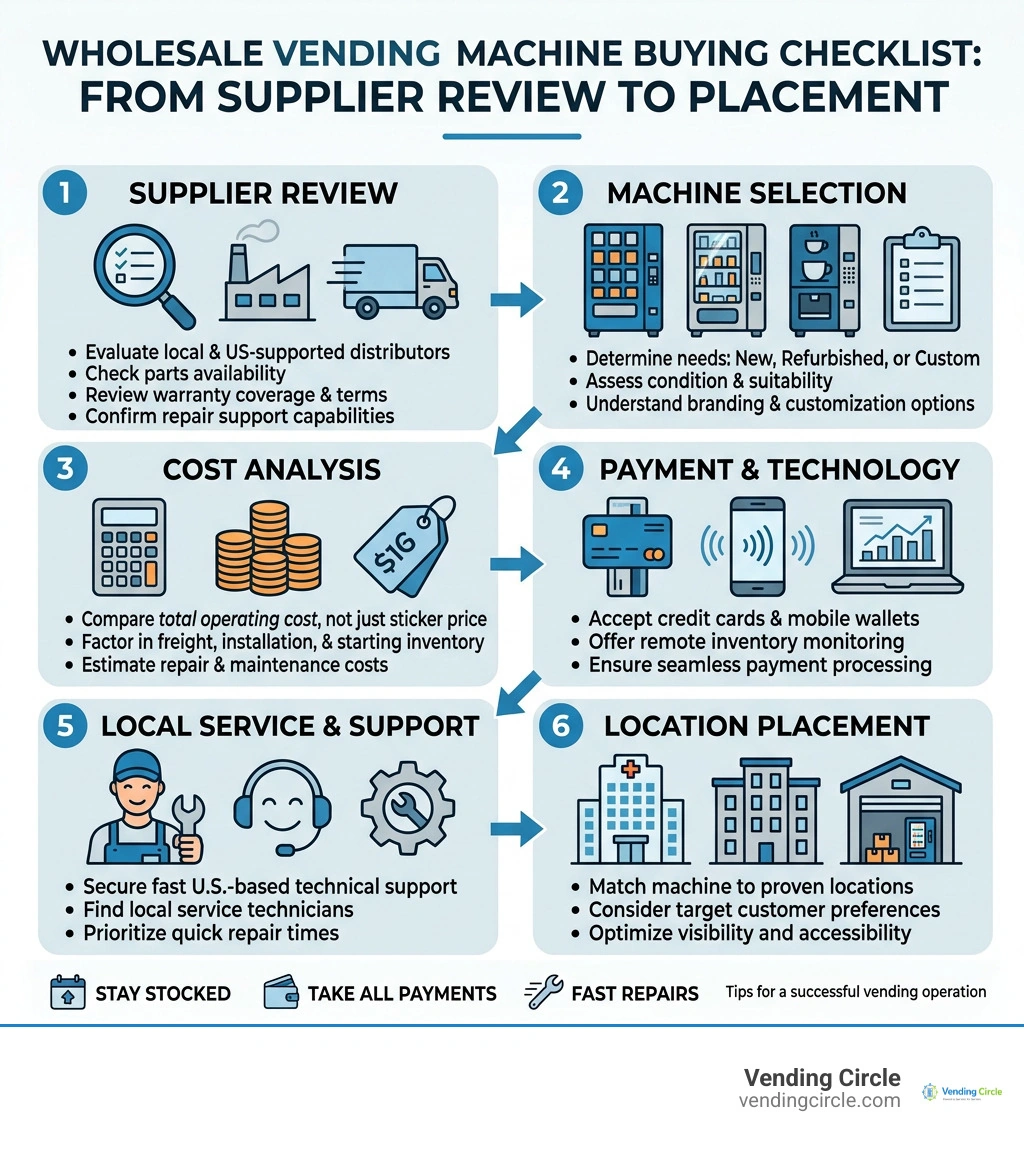
To find vending machine wholesale near me options that make business sense, start with local or U.S.-supported distributors that can show you the machine, confirm parts availability, explain warranty coverage, and support repairs after delivery. Compare the total operating cost, not just the sticker price: a cheaper machine can become expensive fast if its card reader, refrigeration system, or replacement parts are hard to service.
Before you buy, ask each supplier:
- Is the machine new, refurbished, or custom, and what does the warranty cover?
- Can you get local service or fast U.S.-based technical support?
- Does it accept cards and mobile wallets, and offer remote inventory monitoring?
- What are freight, installation, card-reader, and starting-inventory costs?
- Can the machine fit a proven location such as a medical facility, apartment property, or multi-shift warehouse?
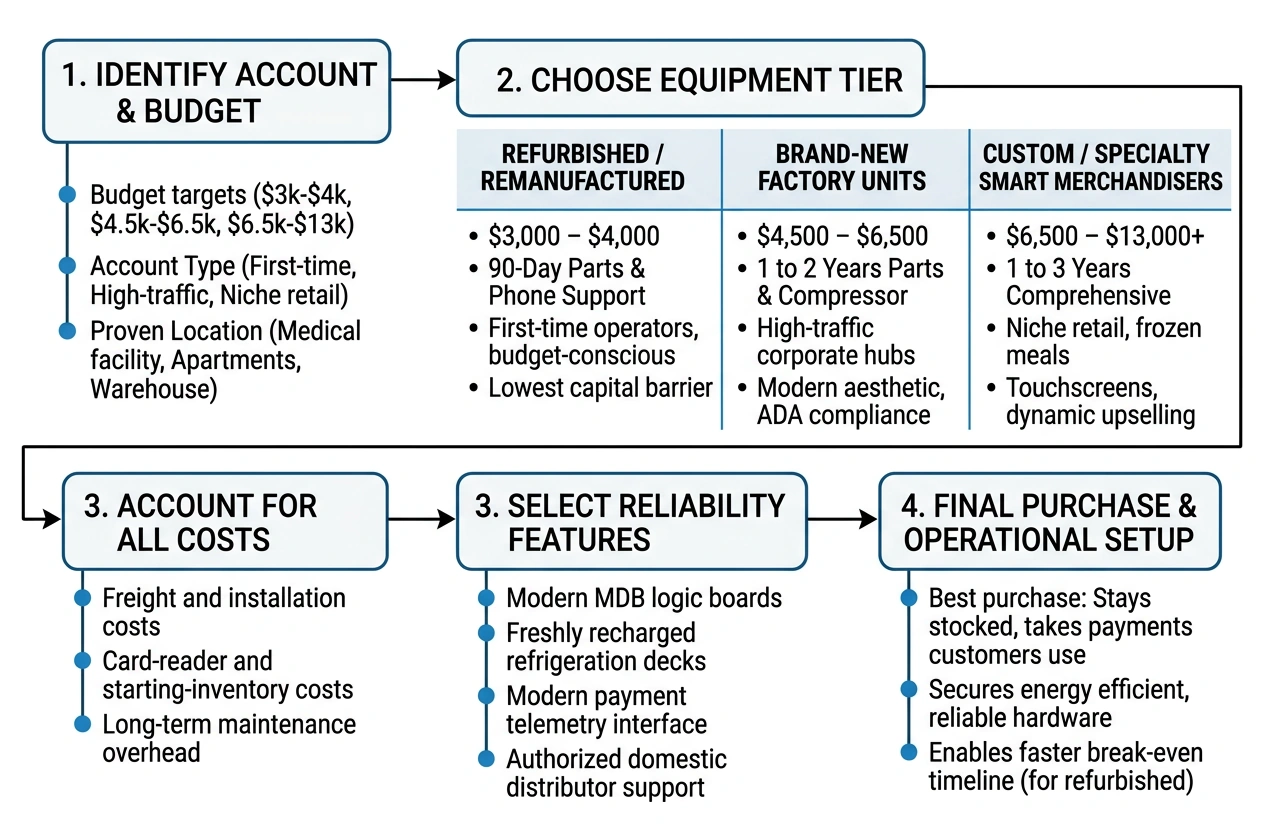
Wholesale pricing commonly starts around $3,000 to $4,000 for refurbished machines, $4,500 to $6,500 for new equipment, and $6,500 to $13,000 for custom-branded or specialty units. The best purchase is the one that stays stocked, takes the payments customers use, and can be repaired quickly when it matters.
I'm Manuel Mojica, founder of Vending Circle and an operator who built MM Healthy Vending before creating a community and marketplace for vending professionals. My experience helping operators compare equipment, supplies, and support options informs this guide to finding vending machine wholesale near me options that protect cash flow and keep a route running.
Vending machine wholesale near me terms at a glance:
Evaluating Equipment: Types, Features, and Price Ranges
Stepping into automated retail means treating your hardware as income-generating commercial real estate. Every square foot your equipment occupies must justify its footprint through reliability, energy efficiency, and high product turnover. Choosing the right machinery requires balancing upfront capital expenditure against long-term maintenance overhead.
To help budget effectively, review our detailed vending machine costs guide, alongside the baseline market data below:
| Equipment Category | Average Wholesale Cost | Standard Warranty | Best Suited For | Key Advantages |
|---|---|---|---|---|
| Refurbished / Remanufactured | $3,000 – $4,000 | 90-Day Parts & Phone Support | First-time operators, budget-conscious route expansion, secondary accounts | Lowest capital barrier, proven legacy component reliability, faster break-even timeline |
| Brand-New Factory Units | $4,500 – $6,500 | 1 to 2 Years Parts & Compressor | High-traffic corporate hubs, medical centers, premium apartment complexes | Modern aesthetic appeal, maximum energy efficiency, factory warranties, ADA compliance |
| Custom / Specialty Smart Merchandisers | $6,500 – $13,000+ | 1 to 3 Years Comprehensive | Niche retail, branded consumer goods, frozen meals, luxury residential lounges | Large interactive touchscreens, custom graphic vinyl wraps, dynamic upselling displays |
For a complete breakdown of commercial models and hardware specifications, consult our wholesale vending machines guide.
New vs. Refurbished vs. Custom Machines
Navigating equipment tiers is the first major decision for any operator.
- Refurbished Equipment: Commercial remanufacturing involves stripping a legacy chassis down to its steel frame, replacing worn wiring harnesses, installing freshly recharged refrigeration decks, and upgrading older MDB (Multi-Drop Bus) logic boards to interface smoothly with modern payment telemetry. A professionally remanufactured unit saves thousands in initial capital while offering years of dependable service, provided it comes from an authorized domestic distributor that backs its work.
- Brand-New Equipment: Factory-fresh machines offer pristine aesthetics, whisper-quiet eco-friendly refrigeration, modern LED product illumination, and comprehensive manufacturer warranties. They minimize service calls during your critical launch phase and make an immediate positive impression during client pitches.
- Custom & Specialty Merchandisers: These smart machines serve locations seeking elevated automated retail. Equipped with oversized touchscreens, elevator delivery systems for fragile goods, and custom vinyl exterior branding, these units can vend everything from fresh salads and microwavable entrees to high-end electronics.
Essential Tech: Cashless Payments, Telemetry, and Digital Merchandising
Deploying a cash-only machine today severely limits your earning potential. The contemporary automated retail sector thrives on convenience, seamless payment processing, and remote management.
Modern operators should demand three non-negotiable tech features:
- Integrated Cashless & Contactless Readers: Modern consumers expect frictionless transactions. Your equipment must process EMV chip cards, tap-to-pay, Apple Pay, Google Wallet, and wearable payments. Cashless capability regularly increases top-line sales by 30% to 50% compared to cash-only units.
- Real-Time Cellular Telemetry & Inventory Management: Modern telemetry devices broadcast live inventory levels, sales volumes, coin-mech status, and refrigeration temperatures straight to your smartphone or laptop. This allows you to pre-pack exact replenishment totes in your warehouse, eliminating wasted trips and preventing out-of-stock revenue leaks.
- Interactive Digital Merchandising & Suggestive Selling: Touchscreen merchandisers display interactive nutrition facts, manufacturer promotions, and video advertisements. More importantly, they support multi-product digital shopping carts and automated suggestive selling (such as prompting: "Add a cold sparkling water for $1.50?"), which measurably lifts your average transaction value.
How to Choose the Best Vending Machine Wholesale Near Me Suppliers
Sourcing your machinery locally or through regional authorized distribution channels provides massive logistical advantages. Beyond slashing cross-country freight rates, building a direct relationship with a domestic supplier gives you access to physical equipment showrooms, hands-on mechanical training, and instant access to replacement components when an urgent repair arises.
When vetting distributors, reference our vending machine suppliers guide to evaluate supplier standards and warranty terms.
Finding Reputable Vending Machine Wholesale Near Me Distributors
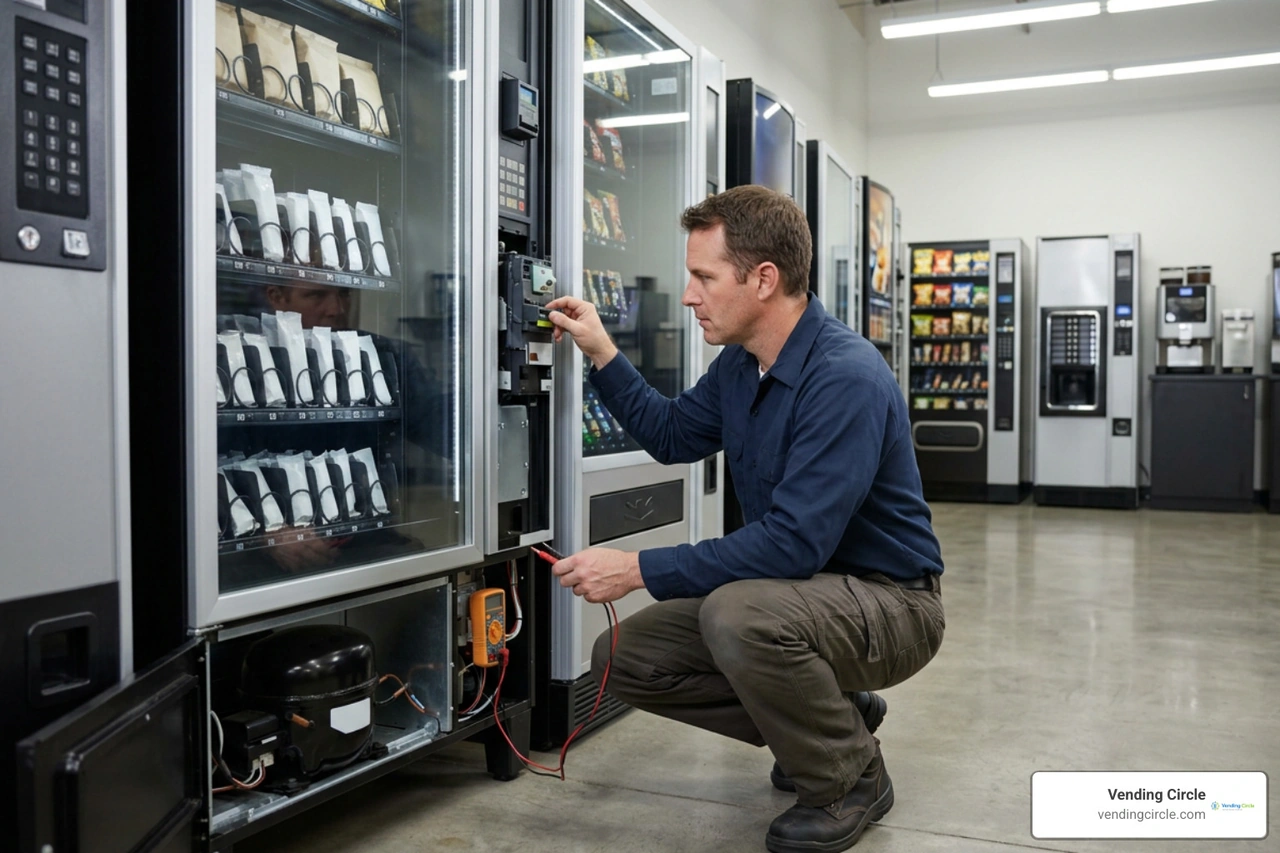
Locating a reputable partner involves more than typing a quick query into a search engine. You want to partner with a stocking distributor or factory-authorized equipment hub with established roots in the automated retail industry.
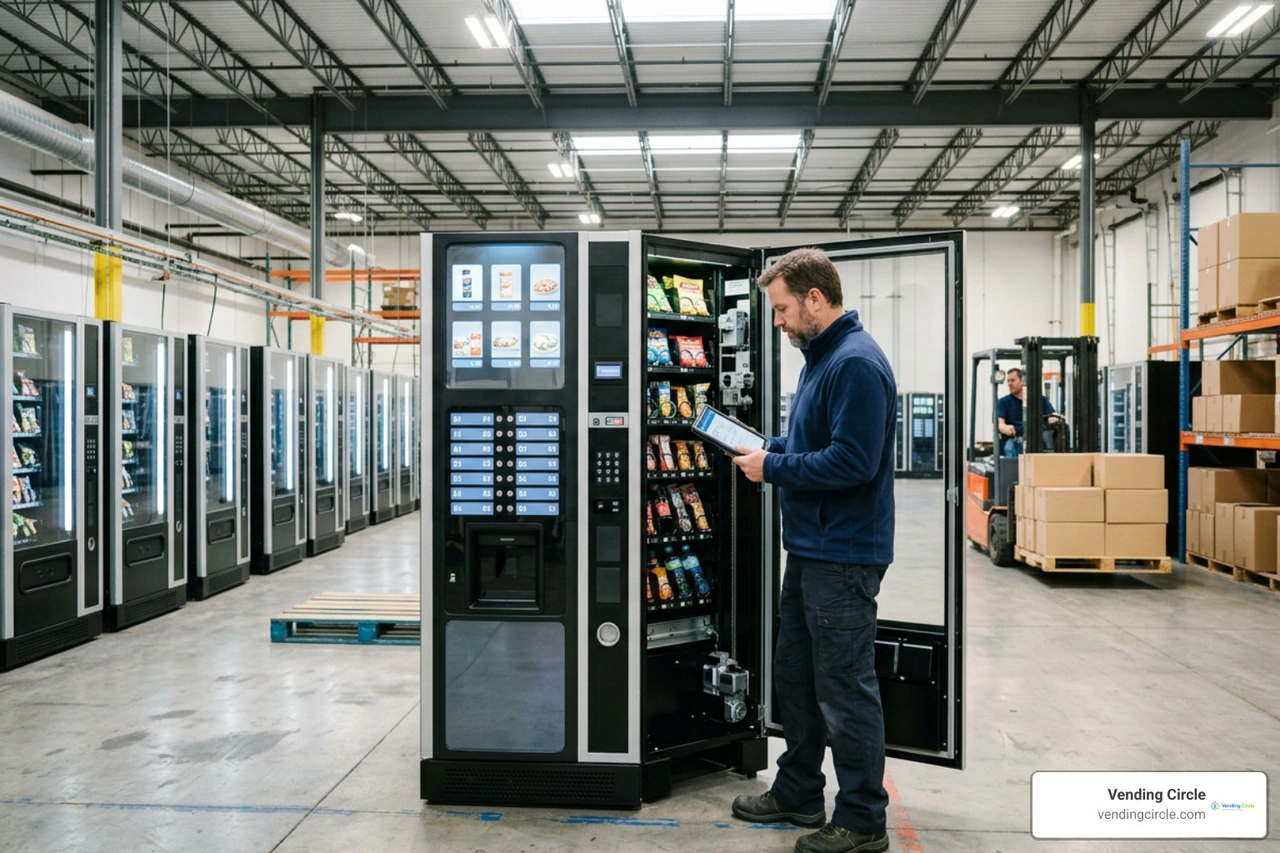
Top-tier distributors maintain extensive showrooms where you can physically test vending cycles, examine drop sensors, and inspect the build quality of various cabinet models. Reputable distributors also maintain dedicated technical support desks, employ in-house refrigeration specialists, and offer direct access to factory replacement parts.
Reviewing our wholesale machine buying strategies will help you negotiate equipment packages, bundled telemetry hardware, and initial delivery logistics.
What Should I Check When Visiting a Vending Machine Wholesale Near Me Facility?
When visiting an equipment showroom or remanufacturing warehouse, run through this hands-on physical inspection:
- Refrigeration Health: Listen to the compressor cycle on. Ensure it runs smoothly without violent rattles or excessive heat build-up. Verify that the evaporator coils are clean, the condenser fan spins freely, and the internal cabinet reaches food-safe holding temperatures (below 41°F for cold food combo units).
- Wiring Harnesses & Logic Boards: Inspect the internal wiring. Look for clean, factory-loomed MDB cables rather than brittle wires, loose terminal splices, or scorched circuit boards.
- Payment & Drop Sensor Functionality: Test the bill validator with crisp and crumpled bills. Run test vends across all spiral rows to confirm that optical drop sensors reliably detect product delivery and trigger automatic re-drops if a package hangs.
- Cabinet & Gasket Integrity: Inspect the magnetic door seals for tears or air leaks that could force the compressor to overwork. Check hinges, locking T-handles, and internal steel shelving for structural integrity and corrosion resistance.
When vetting equipment, operators can also reference industry standards outlined by groups like the National Automatic Merchandising Association to benchmark certified hardware standards, warranty terms, and service models.
The Real Risks of Cheap Overseas Imports vs. Domestic Support
It can be tempting to browse unvetted overseas marketplaces offering unbranded smart vending units at seemingly bargain prices. However, experienced operators know that unverified overseas imports are one of the fastest ways to lose capital.
These imported machines often arrive with non-standard logic boards that cannot integrate with North American telemetry systems (such as Cantaloupe or Nayax), lack proper electrical safety certifications (such as UL or ETL standards), and utilize proprietary refrigeration parts that local technicians cannot service. When an unbranded imported machine breaks down, sourcing a replacement mainboard or custom gear motor can take months—leaving your machine dark and frustrating your location host.
Sticking with established domestic manufacturers and authorized distributors ensures your investment is supported by reliable warranties, domestic parts warehouses, and accessible phone support.
Top Placement Locations and Revenue Potential
Securing dependable equipment is only half the equation; profitability depends on placement strategy. A vending machine operates as an automated convenience point. The key to high sales is identifying locations with consistent foot traffic, long dwell times, and limited immediate competition for food and drinks.

To maximize your route's earnings, pair strategic placements with product optimization insights from our wholesale vending snacks strategy.
High-Yield Venues: Medical, Apartments, and Industrial Facilities
Understanding location dynamics allows you to forecast revenue accurately and tailor your product mix to customer demographics:
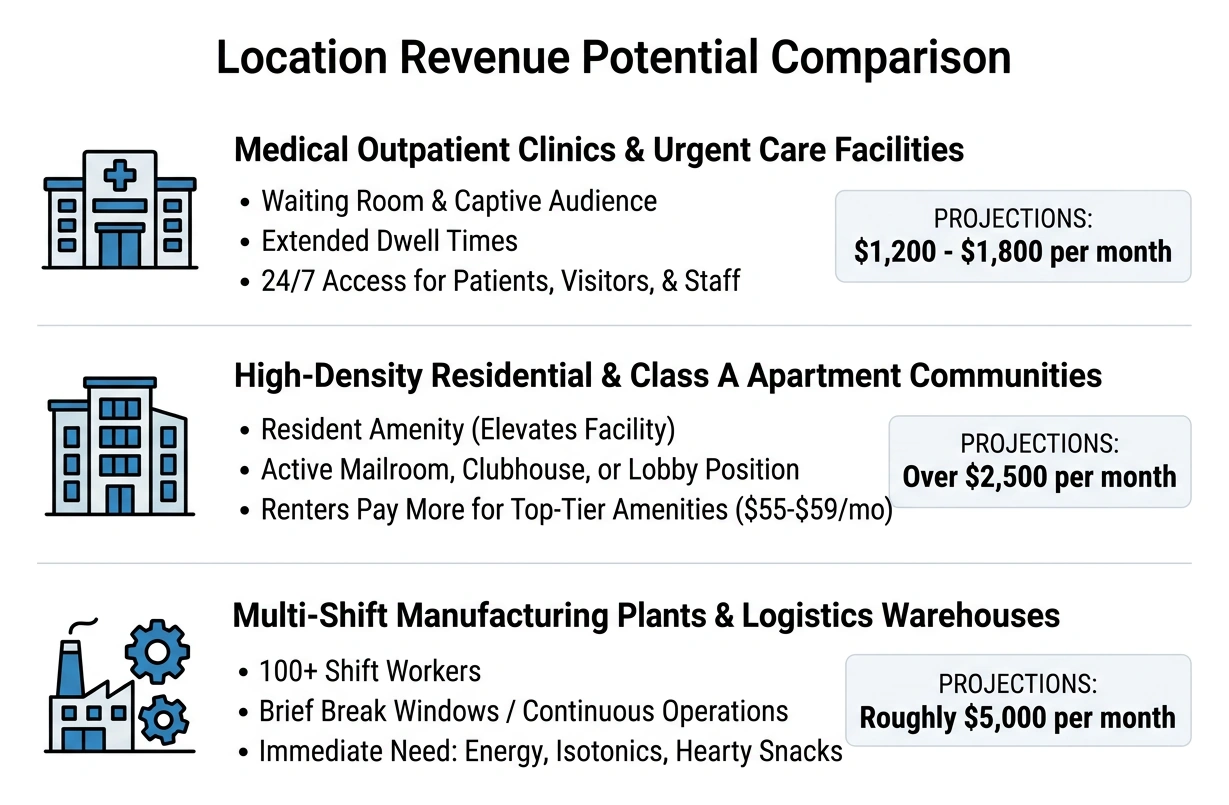
- Medical Outpatient Clinics & Urgent Care Facilities: Waiting rooms create a captive audience experiencing extended dwell times. Patients, visitors, and nursing staff need quick snacks and refreshing beverages around the clock. A well-stocked combo machine in a busy outpatient facility typically generates $1,200 to $1,800 per month.
- High-Density Residential & Class A Apartment Communities: Modern residential buildings treat high-end automated retail as a valuable resident amenity. In fact, real estate data shows that renters are willing to pay $55 to $59 more per month for communities featuring top-tier on-site amenities. An attractive snack and beverage unit positioned in an active mailroom, resident clubhouse, or parking garage lobby regularly averages over $2,500 per month.
- Multi-Shift Manufacturing Plants & Logistics Warehouses: Industrial facilities with 100+ shift workers, brief 15-minute break windows, and continuous 24/7 operations represent premier vending real estate. Workers need energy drinks, isotonic beverages, and hearty snacks without losing time traveling off-site. A machine at a busy manufacturing plant can reach roughly $5,000 per month.
Pitching Property Managers and Securing Free Placement Agreements
Pitching a property manager or business owner does not require aggressive sales tactics. Instead, frame your automated retail service as a complimentary, hands-free amenity that elevates their facility at zero cost to their balance sheet.
When presenting your proposal:
- Highlight Employee and Resident Satisfaction: Emphasize how on-site refreshments boost workplace morale, reduce break-time travel off property, and provide residents with convenient 24/7 access to snacks and essentials.
- Guarantee Operational Excellence: Assure the property decision-maker that your company handles everything: complete installation, professional restocking, preventative sanitation, and full maintenance.
- Provide Proof of Insurance: Carry a comprehensive commercial general liability insurance policy ($1,000,000 to $2,000,000 coverage) and offer to list the host property as an additional insured.
- Clarify the Business Model: Clarify that qualifying locations receive equipment, delivery, and full-service operations with no upfront investment or hidden service fees.
Financing Options and Route Profitability Breakdown
Scaling an automated retail business requires smart capital allocation. You do not need tens of thousands of dollars in liquid cash to launch or expand a professional vending route.
Leveraging equipment leasing structures keeps cash reserves intact for inventory purchases and unexpected operational needs. Explore our vending machine financing guide and our vending machine pricing models to dial in your route economics.
Low-Barrier Financing and Zero-Down Equipment Leasing
Equipment financing programs make commercial hardware accessible to operators at every stage. Many specialized equipment lenders offer instant soft-credit check pre-approvals that deliver funding decisions in minutes without dinging your personal credit score.
Key financing structures include:
- Zero-Down Equipment Leasing: Acquire factory-new or certified remanufactured machines with zero upfront equipment capital, rolling standard delivery and telemetry hardware directly into predictable monthly payments ($100 to $180 per month per machine).
- Section 179 Tax Deductions: Under current IRS Section 179 tax guidelines, qualifying operators can deduct up to 100% of the purchase price of eligible commercial equipment acquired and placed in service during the tax year, accelerating cash recovery.
- Equipment Working Capital Lines: Revolving credit structures allow growing operators to secure locations first and draw down capital only when ready to order and deploy new machines.
Revenue Expectations, Operating Margins, and Route Valuation
The overall retail vending sector was valued at approximately $15 billion in 2024, underscoring strong consumer demand for automated convenience.
A realistic look at individual unit economics reveals healthy margins:
- Gross Margins: Traditional snack lines typically achieve 50% to 60% gross profit margins, while cold canned and bottled beverages regularly generate 65% to 75% gross margins.
- Operating Expenses: Typical overhead includes card processing transaction fees (around 5% to 6%), monthly telemetry subscriptions ($8 to $10 per reader), location commissions if applicable (0% to 10%), and vehicle fuel for restocking routes.
- Route Scalability and Business Valuation: Operators frequently scale from an initial placement into substantial multi-unit operations. Within our industry, established and well-documented vending routes commonly sell for 24 to 30 times monthly net profit. One dedicated operator notably scaled from a single struggling location into an automated route covering 40 properties, generating more than $80,000 in monthly revenue.
Frequently Asked Questions About Wholesale Vending Machines
How much startup capital do I need to buy my first wholesale vending machine?
Starting with a single commercial machine typically requires an initial capital budget between $3,500 and $6,000. This covers the cost of a quality refurbished or entry-level new machine ($3,000–$4,500), local freight or professional delivery and placement ($250–$500), a modern cashless card reader ($300–$400), and your opening bulk product inventory ($300–$500). Utilizing zero-down equipment financing can significantly reduce this initial cash requirement.
Do property managers charge monthly rent for hosting vending machines?
In most commercial settings, property managers do not charge rent or take commission fees. They view reliable vending services as a free amenity for their staff, tenants, and visitors. In exceptionally high-traffic environments—such as busy transit centers, universities, or massive distribution hubs—operators may offer a modest commission (typically 5% to 10% of gross cash and card sales) in exchange for exclusive placement rights.
How often do modern smart vending machines need to be restocked and serviced?
Restocking frequency depends on foot traffic and machine capacity, but most active machines require servicing once every 7 to 14 days. High-volume industrial sites or large apartment complexes may require visits twice a week. Because modern machines utilize real-time cellular telemetry, you can monitor live stock levels from your phone and only dispatch a restocking run when inventory thresholds justify the trip.
Conclusion
Building a profitable automated retail business starts with reliable hardware, strong placement strategy, and solid local support. By working with established domestic distributors, prioritizing modern cashless telemetry, and targeting high-yield locations like medical clinics, residential communities, and multi-shift industrial plants, you can establish an automated retail route designed for sustainable long-term cash flow.
At Vending Circle, we bring operators together inside an active community and marketplace. We provide weekly live Q&A sessions, practical training courses, manufacturer-direct equipment pricing, and direct connections to experienced operators who share real-world operating strategies.
Ready to expand your route with dependable commercial equipment? Explore premium wholesale vending machines and take the next step toward growing your vending business today.