Navigating the Vending Machine Wholesale Market: New, Used, and Custom Equipment
Entering the vending machine wholesale space requires a clear understanding of asset valuation, capital allocation, and long-term hardware support. Buying machines without understanding equipment tiers often leads to overcapitalization or high repair expenses down the road. Wholesale distributors typically organize their inventory into three main categories: new, refurbished/used, and fully customized units.
Comparing Equipment Types and Costs
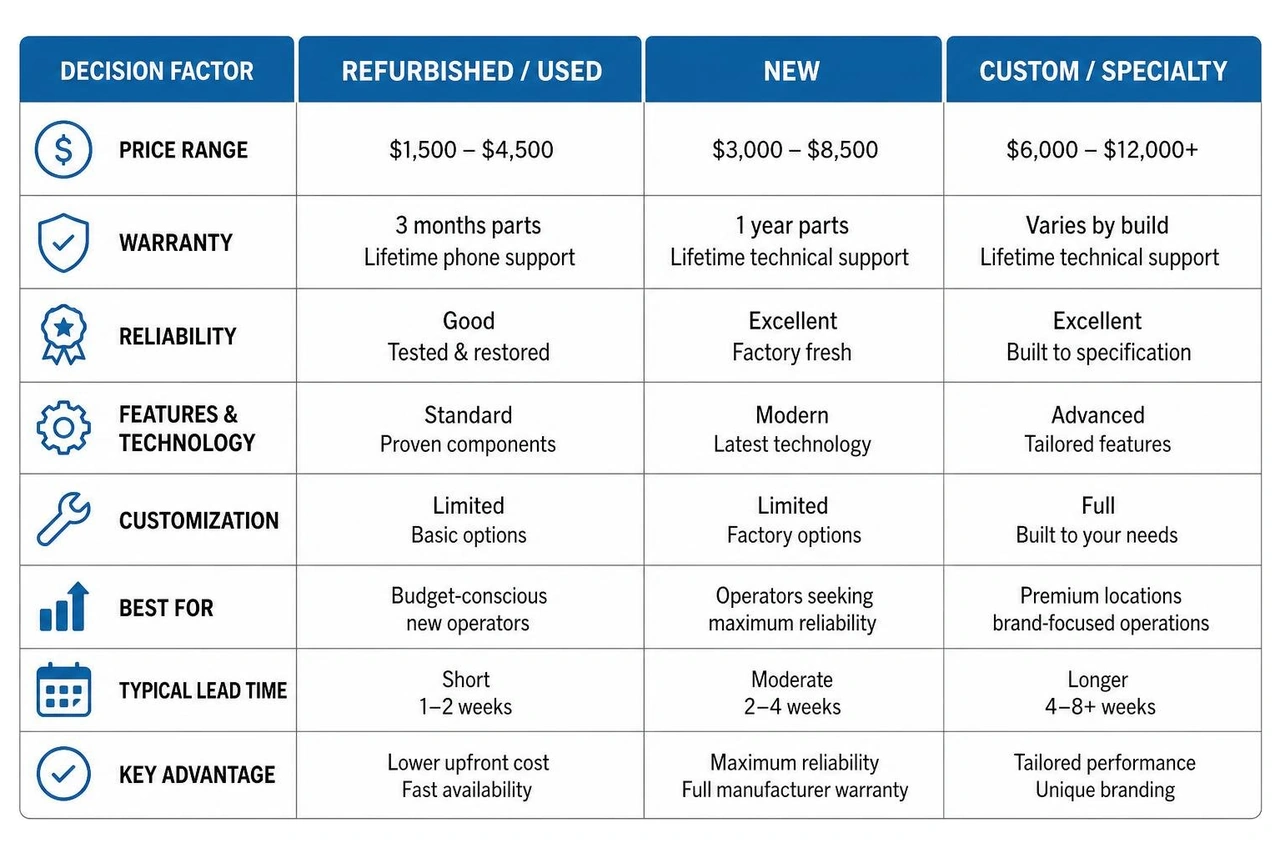
The price spectrum across vending machine wholesale distributors varies based on technology, refrigeration requirements, and condition. Entry-level units start around $3,000 for countertop or basic ambient machines, while high-end ambient and refrigerated combo models easily reach $12,000 or more.
- Used & Refurbished Machines ($1,500 – $4,500): Refurbished machines provide lower initial equipment costs for new operators entering the industry. Reliable distributors thoroughly test coin mechanisms, bill acceptors, cooling compressors, and delivery sensors before resale. Standard commercial refurbished equipment usually includes a 3-month parts warranty along with lifetime technical support.
- New Commercial Machines ($3,000 – $8,500): Buying new equipment provides maximum operational reliability, modern energy efficiency, and contemporary aesthetic design. New factory machines feature full manufacturer warranties—typically a full 1-year parts warranty backed by lifetime technical support.
- Custom & Specialty Smart Vendors ($6,000 – $12,000+): Custom machines feature specialized product coils, elevator delivery systems, temperature-zoned lockers, and bespoke branding. Custom vinyl wrapping allows operators to brand units for corporate clients, luxury apartment complexes, or specialized retail inventory.
When ordering equipment from a wholesale distributor, ensure you confirm telemetry capabilities or choose to buy a vending machine with card reader factory-installed to maximize customer conversion from day one.
Key Modern Features to Demand
In 2026, deployable machines must feature modern convenience and operational automation. Installing outdated equipment without remote tracking or digital payments limits revenue potential and increases service drive times.
- Cashless Payment Systems: Over 80% of automated retail transactions occur via credit cards, debit cards, or mobile wallets like Apple Pay. Integrating modern vending card readers increases average transaction value by encouraging impulse multi-item purchases and digital tipping option prompts.
- Remote Telemetry & Inventory Management: Modern telemetry devices connect your machine directly to cloud management software. Real-time sales updates allow operators to optimize inventory restock schedules without making unnecessary manual counting trips.
- Guaranteed Vend Infrared Sensors: Infrared laser sensors detect whether a product physically drops into the delivery bin. If an item fails to drop, the machine automatically spins another coil or refunds the customer, eliminating stuck-item complaints and service calls.
- AI Smart Coolers: Open-door, grab-and-go AI micro-coolers utilize machine vision or weight sensors to automatically bill customer payment cards when the door closes. These units fit perfectly in secure corporate offices and high-density residential buildings where standard glass-front vendors might feel restrictive.
Sourcing Equipment and Parts: How to Choose the Right Suppliers
Selecting a reliable equipment vendor is as important as choosing the right machine. A bad distributor can leave you stranded without technical support, warranty enforcement, or critical repair components when machines go down.

Choosing a Reliable Vending Machine Wholesale Supplier
When evaluating a vending machine wholesale partner, verify their operational track record, physical warehouse inventory, and post-sale technical support structure. Top industry distributors maintain deep parts catalogs and factory partnerships to guarantee quick components replacement and minimal downtime.
Key criteria to evaluate before placing a wholesale purchase:
- Parts Inventory & Turnaround: Confirm the supplier maintains an extensive local spare parts stock (ideally thousands of active SKUs) with 24-hour delivery capability to minimize machine downtime.
- Comprehensive Warranties: Look for distributors offering at least a 1-year warranty on new equipment and a 3-month warranty on refurbished hardware.
- Lifetime Technical Support: Ensure dedicated phone and video troubleshooting assistance is included to help you resolve mechanical issues quickly on-site.
- Proven Market Experience: Work with established distributors holding deep industry experience who have distributed thousands of commercial units across regional routes.
- Competitive Pricing Guarantees: Select suppliers that offer transparent direct wholesale pricing, bulk volume tiered discounts, and flexible hardware financing terms.
Wholesalers vs. Full-Service Vending Companies
New business owners often confuse vending machine wholesale suppliers with full-service vending companies. Understanding the difference determines your business model, profit potential, and operational responsibilities.
| Feature | Wholesale Supplier | Full-Service Vending Company |
|---|---|---|
| Core Business | Sells hardware and parts directly to route operators | Places, stocks, and services hardware on location |
| Primary Customer | Vending operators and route owners | Property owners and location facility managers |
| Equipment Ownership | Transferred directly to the buyer | Retained entirely by the operating company |
| Revenue Source | One-time equipment sales and ongoing replacement parts | Daily product sales from snacks, drinks, and goods |
| Operational Overhead | Warehouse logistics, assembly, freight management | Route driving, inventory restocking, on-site repairs |
For entrepreneurs building long-term business equity, buying wholesale equipment yields higher profit retention, full control over inventory selection, and complete operational independence.
High-Profit Locations and Product Selection Strategies
Having high-end equipment means little without high-traffic locations and optimized wholesale inventory. Matching product offerings directly to location demographics maximizes overall machine revenue and inventory turnover.
High-Margin Locations for 2026
Securing profitable vending machine locations requires targeting sites with consistent, captive foot traffic. Underutilized residential and commercial properties offer significant untapped revenue potential.
- Multi-Family Residential Complexes: High-density apartment communities represent top opportunities for modern automated retail. Placing 24/7 smart coolers stocked with quick meals, chilled beverages, and personal essentials yields high repeat usage from busy residents.
- Corporate Breakrooms & Industrial Warehouses: Facilities employing 50 to 200+ workers generate consistent daily sales. Busy employees rely heavily on breakroom machines during short break periods and shift changes.
- Medical Facilities & Service Waiting Rooms: Auto repair waiting areas, urgent care centers, and laundromats keep customers on-site for extended periods, driving impulse snack and drink sales.
Product Sourcing and Inventory Management
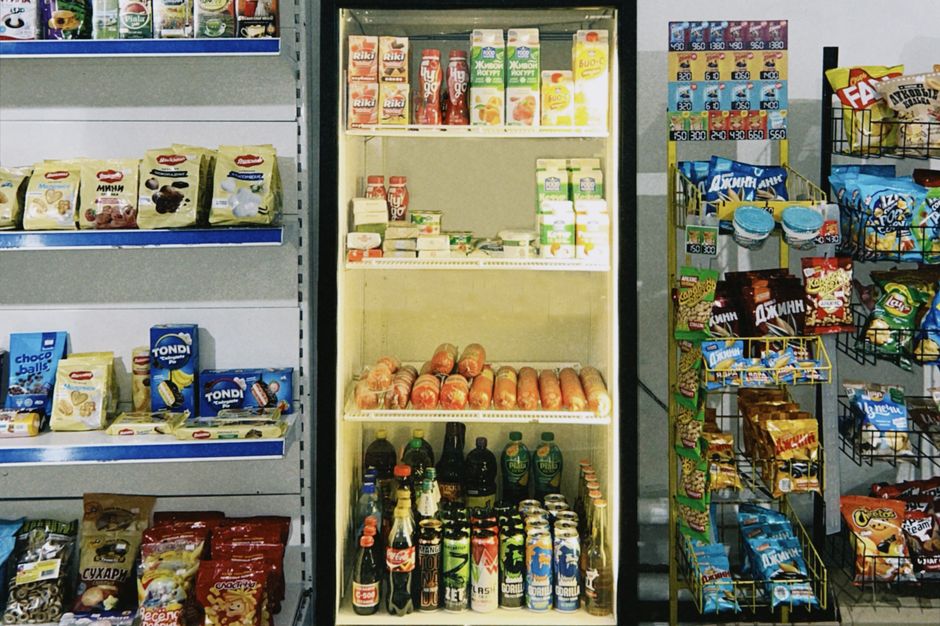
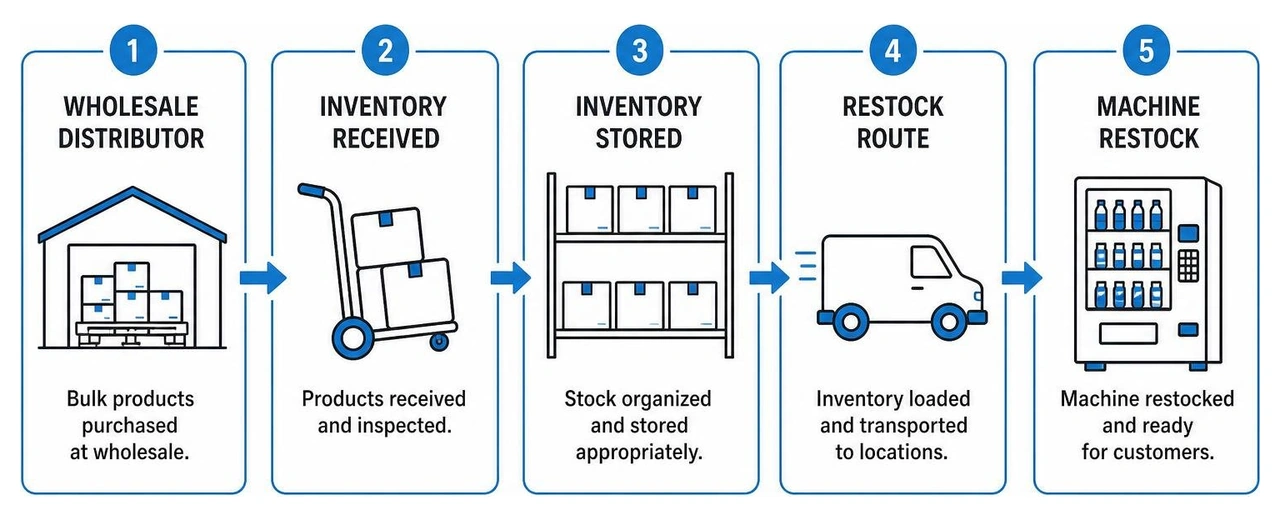
Maximizing profit requires sourcing vending machine products wholesale in bulk and maintaining tight vending machine inventory management. Sourcing single-serve beverages and packaged snacks through wholesale club stores or dedicated regional food distributors reduces your unit cost, keeping gross product margins between 50% and 70%.
Expanding beyond standard sodas and chips into high-margin non-traditional specialty items—such as electronic charging cables, personal hygiene products, over-the-counter health items, and specialty coffee—further expands revenue opportunities per transaction.
Financial Planning: Hidden Costs, Financing, and Buying Pitfalls
Building a successful route requires accurate financial forecasting beyond the baseline equipment purchase price. Proper budgeting ensures smooth cash flow as you expand hardware count across multiple locations.
Understanding Hidden Costs and Financing Options
When purchasing vending machine wholesale equipment, account for secondary startup and operational expenses:
- Merchant Processing & Telemetry Fees: Credit card processors charge monthly wireless connectivity fees ($5 to $10 per card reader) plus 2.5% to 5% transaction processing fees. Consolidating credit card processing terminals—where a single gateway covers adjacent machines—helps lower monthly overhead.
- Freight & Inside Delivery: Shipping commercial equipment weighing between 600 and 900 lbs costs $200 to $600 per machine depending on delivery distance, liftgate services, and professional inside placement.
- Transport Equipment: Safe machine transit requires specialized moving gear, such as hydraulic heavy movers rated up to 3,960 lbs, or specialized stair-climbing hand trucks to prevent equipment damage and personal injury.
- Financing Options: Many wholesale vendors offer zero-down or low-interest equipment financing. You can also explore capital resources provided by organizations like the U.S. Small Business Administration to fund initial route expansions. Leveraging low-interest capital lets you deploy multi-machine routes faster while preserving working capital for inventory and emergency repairs.
Avoiding Common Vending Machine Wholesale Pitfalls
Avoid these common mistakes when purchasing wholesale equipment:
- Buying Unverified Equipment: Purchasing legacy equipment without verifying spare parts access leads to unserviceable machines. Stick with established hardware manufacturers with readily available aftermarket parts catalogs.
- Skipping Hands-On Hardware Practice: Buy and set up your initial equipment early in a garage or workshop to learn coil configuration, bill acceptor calibration, temperature adjustments, and price programming before placing units on location.
- Neglecting Service Agreements: Always secure signed placement agreements with location owners specifying electrical utility access, liability limits, service schedules, and commission splits prior to installing machines.
Frequently Asked Questions About Vending Machine Wholesale
How much do commercial wholesale vending machines cost?
Wholesale prices range from approximately $1,500 to $4,500 for refurbished equipment, $3,000 to $8,500 for standard new units, and $6,000 to $12,000+ for specialized or custom smart vendors.
What is the difference between a vending machine wholesaler and a full-service operator?
A wholesaler imports, refurbishes, and sells vending hardware directly to operators. A full-service vending operator installs, stocks, and services machines on location, providing free machine placement to property owners while retaining product sales revenue.
What product types yield the highest profit margins in automated retail?
Non-traditional specialty items (electronics, health supplies, personal care products) yield gross margins of 60% to 80%, while cold beverages and packaged candy average 50% to 65% gross margins when sourced wholesale.
Conclusion
Scaling a successful automated retail business requires strategic hardware sourcing, solid supplier partnerships, and disciplined route operations. Sourcing through reputable vending machine wholesale distributors gives you access to modern technology, competitive pricing, and ongoing technical support needed to maximize route efficiency.
At Vending Circle, we connect operators with factory-direct pricing, specialized courses, and an active community of route owners sharing real-world strategies. Ready to build or expand your route? Explore available commercial machines today.