Why Smart Operators Buy Wholesale Vending Machine Supplies (And Where to Find Them)
Buying wholesale vending machine supplies is one of the fastest ways to cut inventory costs and protect your profit margins across every machine on your route. Here's a quick look at the top sources operators use:
| Source | Best For | Notes |
|---|---|---|
| Warehouse Clubs | Bulk snacks, drinks, candy | Membership required |
| Online Restaurant Suppliers | Bottled drinks, packaged candy, equipment | Hundreds of drink and candy SKUs |
| Specialty Bulk Distributors | Toys, capsules, stickers, novelty candy | Items from $0.25–$1.00 vend price |
| Local full-service operators | Free machine placement + restocking | No upfront cost; operator takes a cut |
| Manufacturer-direct marketplaces | All categories at reduced pricing | Best margins; less middleman markup |
Running a vending route is a low-overhead business — but only if you keep your supply costs in check. Once a machine is placed, there are no labor costs, no rent, and no utilities to worry about. The product itself is where your margin lives.
That means sourcing matters a lot.
Fragmented purchasing — buying chips from one place, drinks from another, candy from a third — quietly eats into your profits and wastes hours every week. The operators who win are the ones who consolidate, buy in bulk, and build reliable supplier relationships before they need them.
I'm Manuel Mojica, founder of Vending Circle and owner of MM Healthy Vending, and I've spent years helping operators find smarter ways to source wholesale vending machine supplies without leaving money on the table. My experience running real machines on real routes — combined with building a manufacturer-direct marketplace for operators — gives me a ground-level view of exactly where the savings are hiding.
Essential Categories of Wholesale Vending Machine Supplies

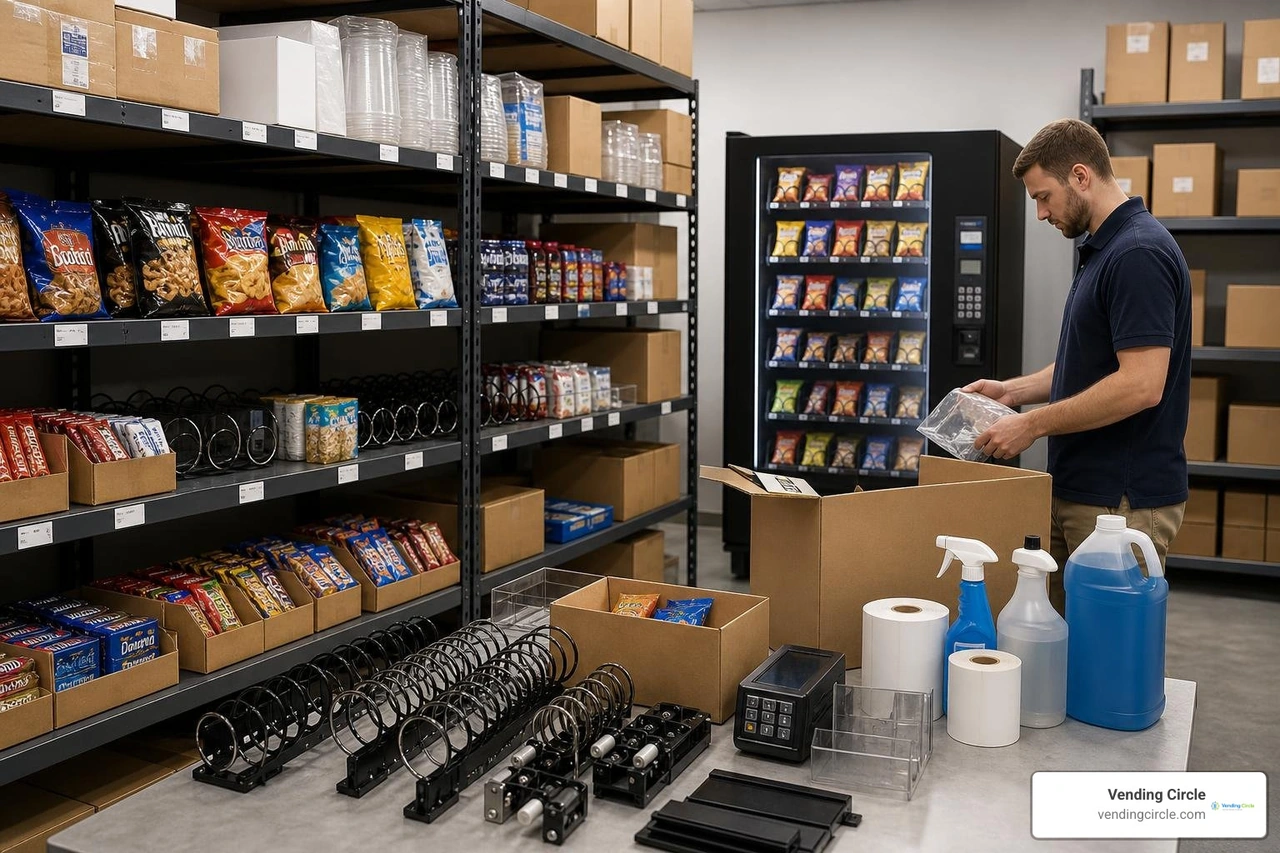
To run a highly profitable vending route, we must first understand the diverse landscape of inventory available to us. Stocking a machine is not just about grabbing whatever is on sale at the local grocery store; it is a calculated science. We need to align our inventory with the specific cravings and needs of the foot traffic passing by our machines every day.
The primary categories of wholesale vending machine supplies that keep cash flowing include:
- Individually Wrapped Snacks: This is the backbone of any snack or combo machine. From potato chips and pretzels to granola bars and pastries, individually wrapped items are non-negotiable for food safety, hygiene, and freshness.
- Bottled and Canned Drinks: Thirst is a powerful driver of impulse sales. A great beverage selection includes a mix of carbonated sodas, energy drinks, sports drinks, iced teas, juices, and plain bottled water.
- Packaged Candy: Chocolates, gummies, and sour candies have some of the longest shelf lives in the industry and offer excellent markups.
- Hygiene and Specialty Products: Often overlooked, non-food items like laundry detergent sheets, single-use soaps, and travel-sized toiletries are goldmines in locations like laundromats, truck stops, and university dorms.
- Micro-Market Inventory: For modern, open-shelf breakrooms, we stock fresh sandwiches, salads, yogurts, and premium glass-bottled cold brews that command higher price points.
To dive deeper into how to manage and scale these product lines, check out our library of industry-tested Articles.
Sourcing Wholesale Vending Machine Supplies from Bulk Distributors
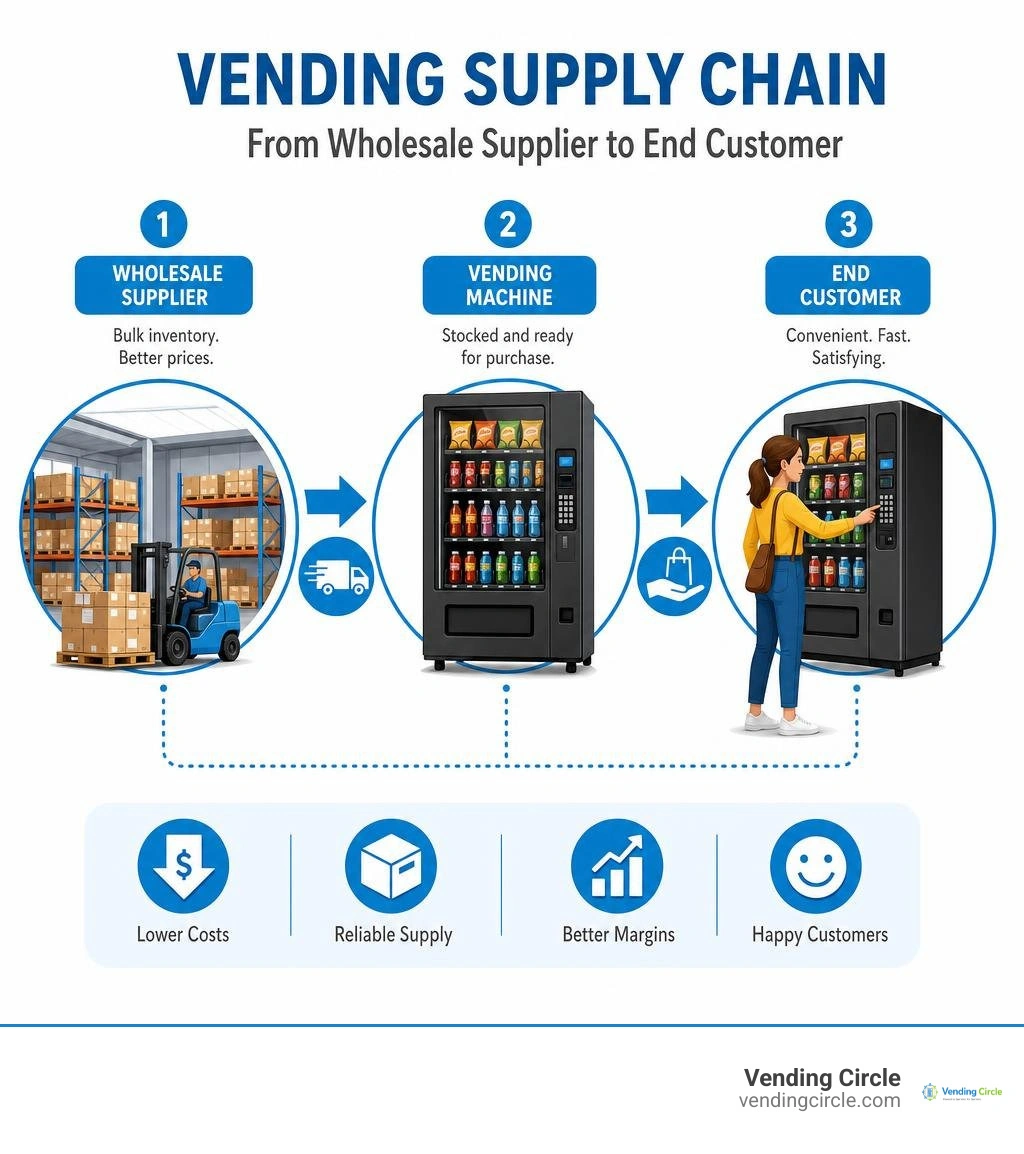
When we are looking to buy in bulk, we generally look toward three primary channels: warehouse club stores, specialized online restaurant suppliers, and manufacturer-direct marketplaces.
Warehouse club stores are incredibly popular for local operators who want to grab inventory on the go. They offer a reliable selection of bulk vending supplies, concession supplies, and popular name-brand variety packs. The downside is that we have to spend our own time driving, loading heavy boxes into our vehicles, and dealing with occasional out-of-stock headaches.
Online restaurant suppliers solve the transport problem by shipping directly to our door or warehouse. They offer massive catalogs—including hundreds of bottled drink products and packaged candy products specifically packaged for commercial vending.
However, if we want to truly maximize our margins, we need to look at manufacturer-direct pricing. By cutting out the middleman, we can secure lower per-unit costs on high-volume items. To see how manufacturer-direct pricing can transform your route's bottom line, take a look at our transparent Pricing structures.
Non-Food Wholesale Vending Machine Supplies and Novelties
If you operate bulk vending machines—the classic mechanical machines that dispense small toys, gumballs, or stickers—your sourcing strategy will look slightly different. Instead of tracking expiration dates, you will be focusing on capsule sizes, toy trends, and coin mechanisms.
Specialty bulk suppliers specialize in this highly profitable niche, offering bulk toys, prizes, stickers, and novelty candies. These products are designed to fit standard capsule sizes:
- 1-inch (25mm) and 1.1-inch capsules: Perfect for small plastic toys, rings, and high-bounce balls. These typically vend at $0.25 or $0.50.
- 2-inch (49mm/50mm) capsules: Ideal for larger squishy toys, licensed figurines, and premium novelty items. These usually vend at $0.75 or $1.00.
- Stickers and Tattoos: Flat-pack items dispensed through specialized card drop mechanisms, usually priced at $0.50 or $1.00.
What makes bulk toy vending so attractive is the sheer margin. With over 161 items priced perfectly for a $0.50 vend point, operators can buy bulk counts (such as 850-count or 1,000-count packs) for pennies per unit and sell them for a 400% to 500% markup.
Maximizing Profitability with the Right Snack and Beverage Selection
Not all vending inventory is created equal. To build a highly profitable route, we must understand the unit economics of what we put inside our glass fronts.
| Product Category | Average Wholesale Cost | Standard Vend Price | Average Profit Margin | Best Location Types |
|---|---|---|---|---|
| Bottled Water | $0.25 - $0.35 | $1.50 - $2.00 | 75% - 85% | Gyms, Offices, Transit Hubs |
| Energy Drinks | $1.20 - $1.50 | $3.00 - $4.00 | 55% - 65% | Colleges, Call Centers, Warehouses |
| Name-Brand Chips | $0.35 - $0.45 | $1.25 - $1.75 | 60% - 70% | Schools, Waiting Rooms, Breakrooms |
| Packaged Candy | $0.40 - $0.55 | $1.50 - $2.00 | 65% - 75% | Arcades, Laundromats, Hotels |
One of the biggest mistakes new operators make is trying to save a few cents by purchasing generic or off-brand snacks. While the wholesale cost might look appealing, generic items do not sell. Name-brand snacks and drinks leverage millions of dollars in national advertising. When a customer walks up to a machine, seeing a familiar logo like Snickers, Doritos, or Coca-Cola triggers an instant, trusted impulse buy.
To optimize your product selection, consider these three rules:
- Prioritize High-Dwell-Time Locations: Places where people wait—such as auto repair shops, laundromats, and hospital waiting rooms—are prime real estate for impulse snacks.
- Balance the Mix: Always offer a healthy alternative alongside your indulgent snacks. Keeping bottled water, zero-sugar teas, and baked chips in the mix ensures you do not alienate health-conscious customers.
- Monitor Regional Preferences: A product that flies off the shelves in a southern manufacturing plant might sit untouched in a Pacific Northwest tech office. Track your sales data closely and rotate out slow movers every month.
Choosing the Right Vending Equipment: Ambient, Refrigerated, and Combo Machines
Choosing your inventory is only half the battle; you also need the right hardware to protect and display it.
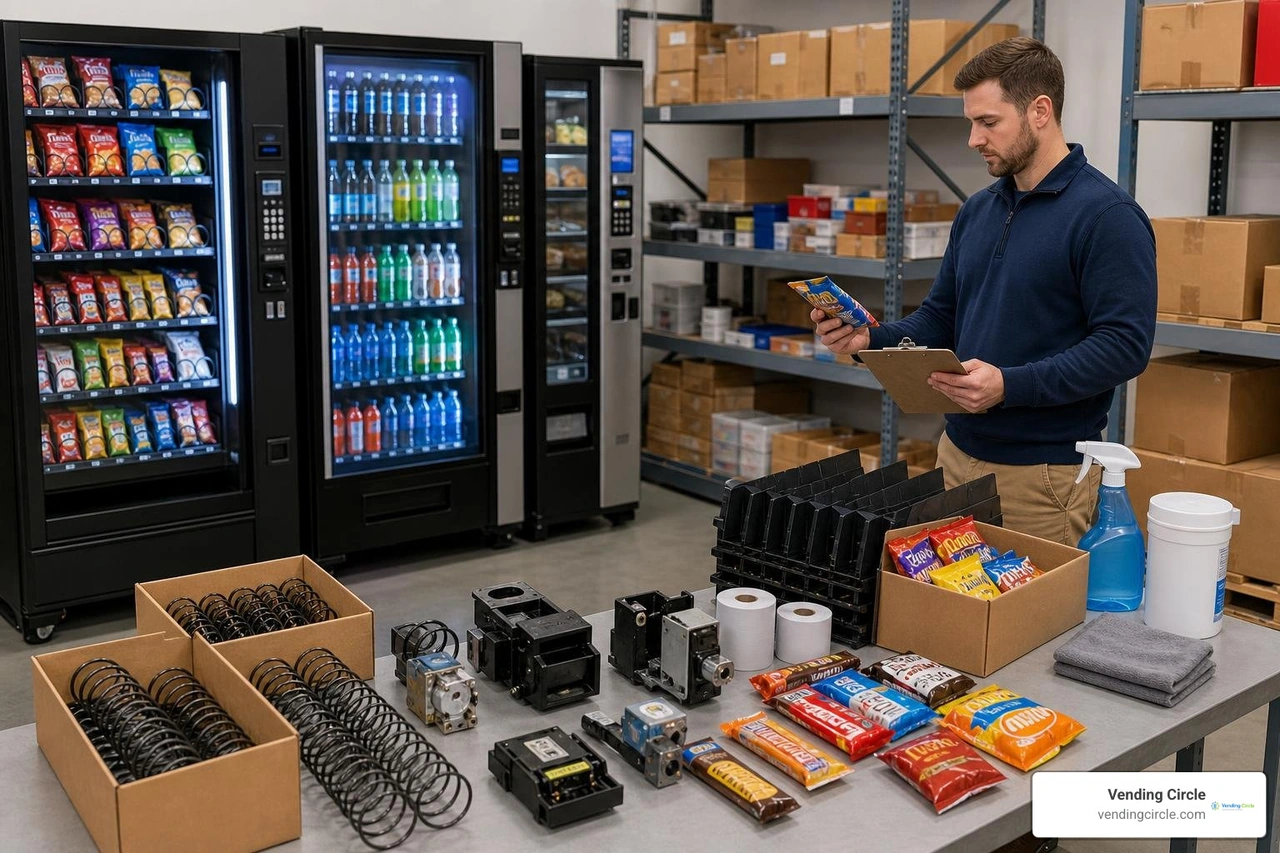
When selecting equipment, we generally choose between three configurations:
- Ambient Vending Machines: These machines do not have temperature control. They are perfect for chips, candy, pastries, and non-food items. Because they lack cooling compressors, they are cheaper to buy, lighter to transport, and use very little electricity.
- Refrigerated Beverage Machines: Designed solely to keep canned and bottled drinks ice-cold. These are essential for outdoor placements or high-traffic areas where people expect an immediate, refreshing cold drink.
- Combo Vending Machines: These are the ultimate space-saving crowd-pleasers. A standard combo machine features an ambient top section for chips and pastries, and a refrigerated bottom section for cold sodas, water, and energy drinks.
Using combo machines allows us to maximize our revenue footprint in locations that do not have the physical space or electrical capacity for two separate machines.
However, a word of caution on equipment: reliability is everything. While buying cheap, unbranded machines online might seem like a great way to save on initial investment, it often leads to maintenance nightmares. For example, some budget models on the market (ranging from $2,700 to $5,800) have historically received mixed customer reviews due to component wear or configuration challenges.
Always invest in reliable, highly-rated commercial-grade machines that feature modern drop-sensors (to ensure customers get their product or their money back) and robust coin and card acceptors.
How to Start a Profitable Vending Machine Business from Scratch
Starting a vending route is one of the most accessible ways to build a passive income stream, but it requires a structured approach to avoid costly mistakes.
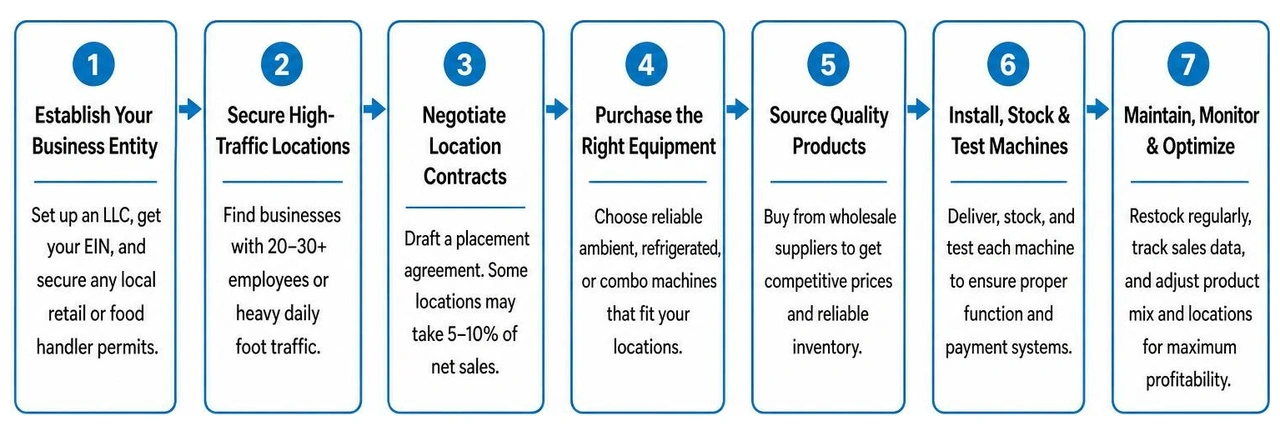
Here is our step-by-step blueprint to launching your business:
- Establish Your Business Entity: Set up an LLC, obtain your Federal Employer Identification Number (EIN), and secure any local retail or food handler permits required in your state. For a complete guide on navigating the legalities of starting a business, refer to the SBA Guide on Starting a Business.
- Secure High-Traffic Locations: Before you buy a single machine, secure the rights to place it. Look for businesses with at least 20 to 30 employees or heavy daily foot traffic (like hotels, repair shops, and micro-markets).
- Negotiate Location Contracts: Draft a professional placement agreement. While some high-traffic locations may request a small commission (typically 5% to 10% of net sales), many small business owners are happy to have the machine placed for free simply to keep their employees and customers happy.
- Purchase Your Equipment and Supplies: Buy your machines and stock them with high-margin, name-brand wholesale vending machine supplies.
- Install Modern Payment Tech: Do not rely solely on quarters. Equipping your machines with credit card readers and mobile payment processors (like Apple Pay) can increase your overall sales by up to 30% to 40%.
- Use Telemetry Software: Modern telemetry systems allow you to monitor your machine's inventory levels in real-time from your smartphone. This prevents "ghost runs"—driving to a machine only to find out it is still mostly full.
Frequently Asked Questions About Vending Operations
How can businesses get free vending machines and service?
Many business owners do not want to buy or maintain their own vending machines, but they still want the convenience of having snacks and drinks on-site for their staff and customers.
In these cases, businesses can partner with local vending operators for free machine placement. Under this model, the operator provides the machine, handles all installation, keeps it fully stocked with fresh products, and manages all maintenance at zero cost to the business owner.
To make this arrangement viable, operators typically require a location to meet a minimum threshold of daily foot traffic or employees (usually 40+ full-time staff). In exchange, reliable operators commit to excellent service standards, such as a 24-hour response time for any mechanical issues, with no long-term contract obligations for the host business.
What are the most profitable items to put in a vending machine?
The most profitable items are those that combine a low wholesale cost with high impulse appeal and a long shelf life.
- Bottled Water: Regularly purchased wholesale for under $0.30 and sold for $1.50 to $2.00, yielding margins close to 80%.
- Energy Drinks: Premium brands like Monster and Red Bull can be purchased in bulk for around $1.50 and sold for $3.50 to $4.00.
- Salty Snacks: Name-brand potato chips and pretzels have excellent turn rates and strong markup potential.
- Chocolate and Chewy Candies: Items like Skittles, M&Ms, and sour gummies are highly resistant to damage and have incredibly long expiration windows.
What are the standard capsule sizes for bulk toy vending?
Standard capsule sizes for bulk mechanical vending include 1-inch (25mm), 1.1-inch, 1.25-inch (32mm), 1.75-inch (45mm), and 2-inch (49mm/50mm) capsules.
To successfully dispense these items, you must ensure your bulk vending machine is equipped with the correct dispensing wheel (e.g., a 1-inch gumball/capsule wheel or a larger 2-inch toy capsule wheel) to prevent jams and double-vending.
Conclusion
Succeeding in the vending industry in July 2026 requires more than just finding a good location—it requires smart procurement, reliable equipment, and a supportive community of experienced operators who can help you navigate the learning curve.
At Vending Circle, we have built a combined learning-and-procurement platform designed specifically to help you succeed. By joining our active network of operators, you gain access to weekly live Q&As, comprehensive business courses, and manufacturer-direct pricing that keeps your supply costs as low as possible.
Ready to take your vending business to the next level? Get in touch with us through our Contact page today, or Explore our premium vending machines and start your journey today!