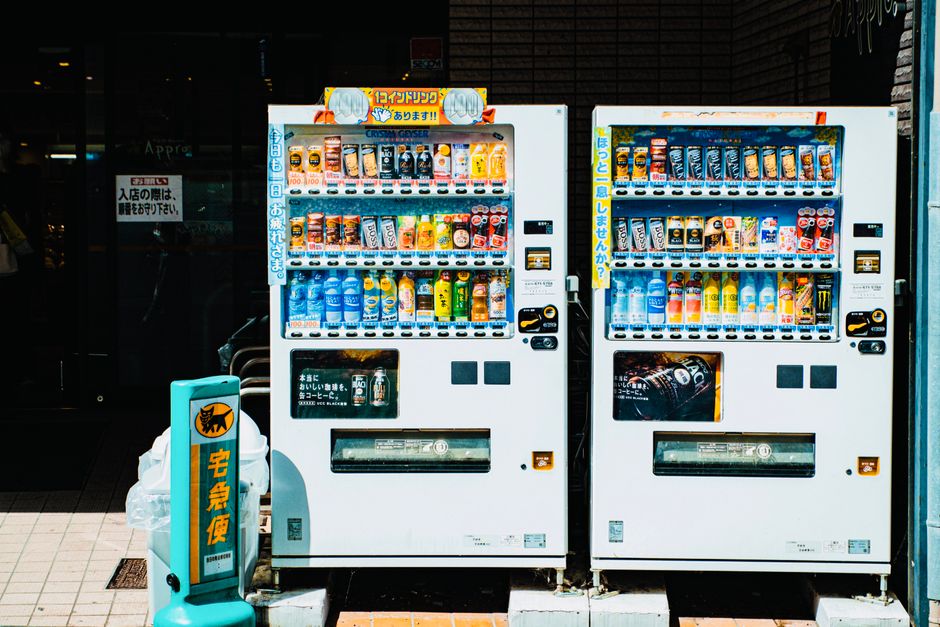
How Much Vending Machines Cost in 2026
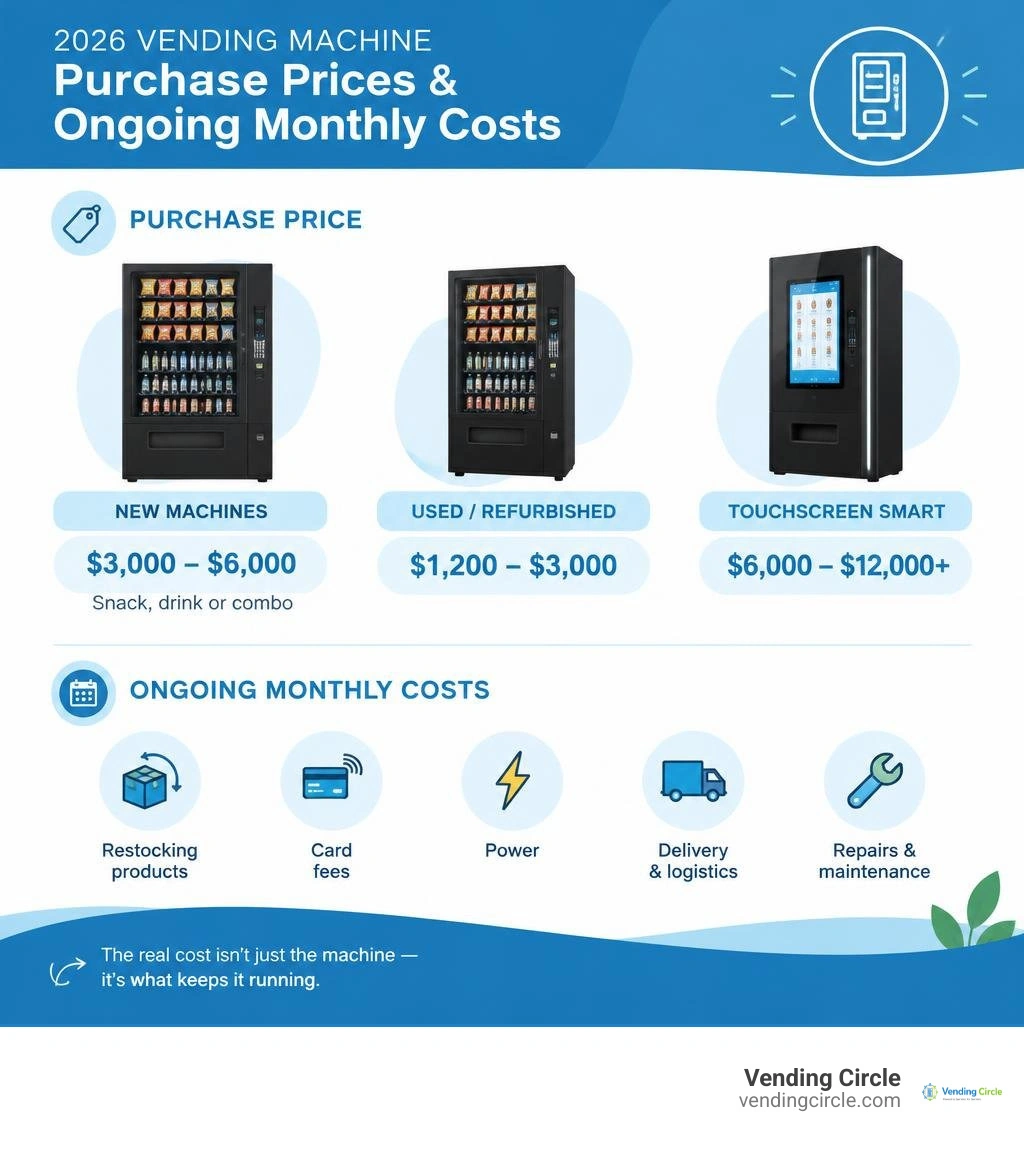
To estimate how much vending machines cost in 2026, start with the equipment. A new snack, drink, or combo machine typically costs $3,000-$6,000. Used or refurbished units usually cost $1,200-$3,000, while touchscreen smart machines run $6,000-$12,000 or more.
The purchase price is only part of the budget. You will also need to pay for delivery, the first stock of products, and ongoing costs such as restocking, card fees, power, and repairs. Those costs matter most when you run several machines. According to the U.S. Census Bureau's Annual Retail Trade Survey, vending machine operators generated over $8.6 billion in annual revenue, which shows how competitive and capital-intensive the industry can be.
I'm Manuel Mojica, founder of Vending Circle and owner of MM Healthy Vending. I've learned that understanding how much vending machines cost means looking beyond the sticker price to what each machine costs to keep running.
How much vending machines cost terms made easy:
How Much Vending Machines Cost in 2026 by Equipment Type
When budgeting for equipment, understanding the broader landscape helps you match hardware to your location's foot traffic. In the U.S., the vending industry generated over $8.6 billion in annual revenue, with food and cold beverages claiming the vast majority of consumer transactions.
Equipment pricing is segmented primarily by internal mechanics, cooling systems, and digital features. The table below breaks down realistic price benchmarks across standard categories for 2026:
| Machine Category | Used / Refurbished Price | Brand New Price | Best Suited For |
|---|---|---|---|
| Bulk Mechanical (Gumball/Candy) | $50 – $200 | $100 – $500 | Laundromats, classic diners, small retail |
| Ambient Snack Units | $1,200 – $2,500 | $3,000 – $5,000 | Staff break rooms, school lounges, dry goods |
| Cold Beverage Units | $1,500 – $3,000 | $4,000 – $6,000 | Gyms, transit stations, warehouses |
| Combination (Snack & Drink) | $1,800 – $3,000 | $3,000 – $5,500 | Small-to-medium offices with single-plug limits |
| Touchscreen Smart Units | $3,500 – $6,000 | $6,000 – $12,000+ | Tech offices, airport terminals, luxury venues |
| Specialty & Automated Food | $4,000 – $12,000 | $8,000 – $25,000+ | Hospitals, universities, 24/7 industrial hubs |
Snack and Cold Beverage Equipment
Ambient snack machines are purely mechanical in their dispensing systems. Because they lack cooling compressors, internal fans, and insulated refrigeration walls, new units cost between $3,000 and $5,000.
Dedicated drink machines, on the other hand, require heavy-duty refrigeration decks to maintain temperatures near 36°F to 38°F. That added cooling hardware pushes the price of new beverage machines to between $4,000 and $6,000. When reviewing our comprehensive vending machine pricing breakdown, keep in mind that replacement compressors alone run $400 to $800 plus labor, making cooling integrity a major pricing factor.
Multi-Product Combination Units
Combination machines split a single cabinet between an ambient snack section at the top and a refrigerated beverage compartment at the bottom. These units solve space constraints for locations with room for only one machine.
A new combination machine typically costs between $3,000 and $5,500, while quality refurbished models run $1,800 to $3,000. If you are browsing combo vending machines for sale, look for dual-temperature baffle controls that keep sodas chilled without causing chocolate bars above to sweat or freeze.
Bulk Vending and Mechanical Dispensers
Bulk vending represents the lowest barrier to entry in the automated retail industry. These mechanical dispensers run entirely on coin cranks, requiring zero electricity or internet connections.
New commercial bulk vending machines cost between $100 and $500, with used cast-iron or polycarbonate globes available for $50 to $200. Because they require no power, monthly utility costs are zero, allowing operators to test foot traffic with minimal downside risk.
New vs. Used Equipment: Reliability and Price Comparison
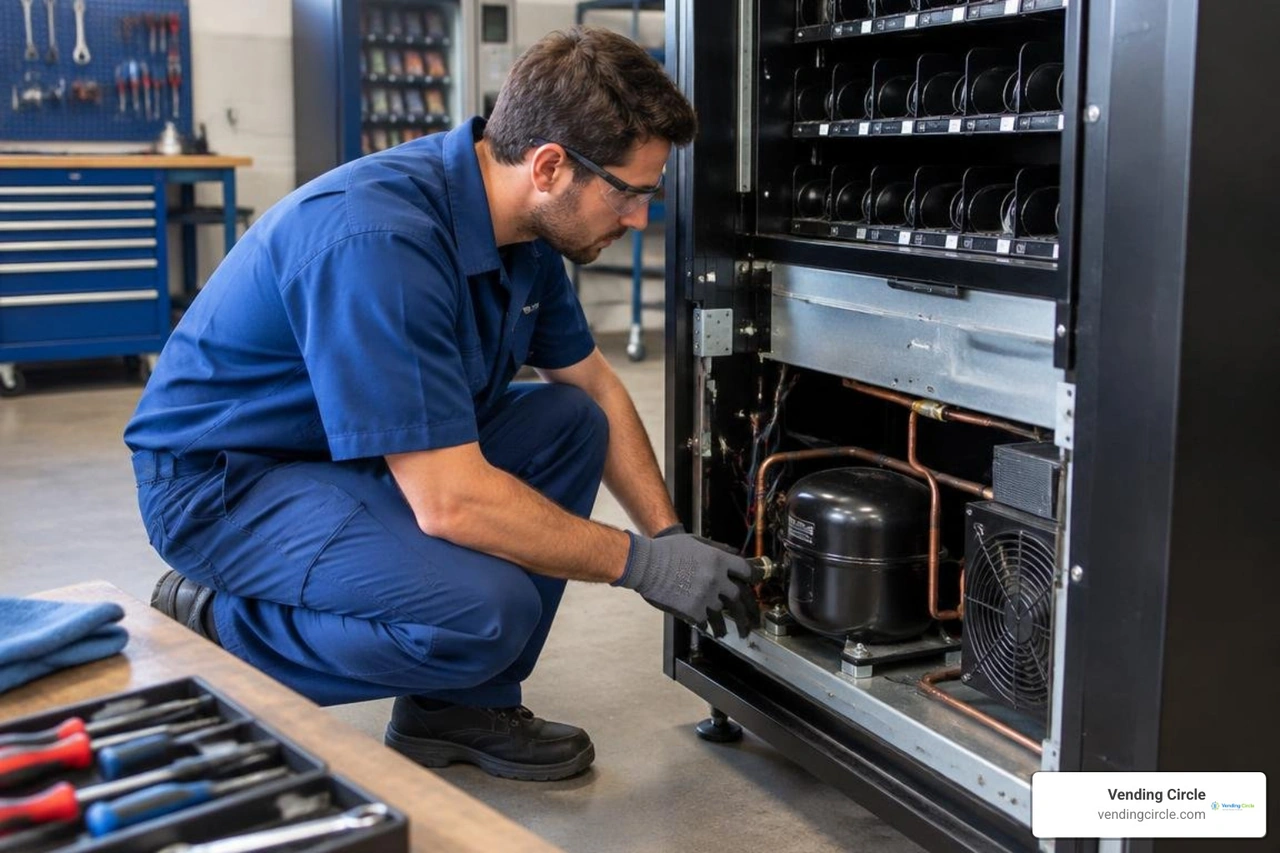
Choosing between brand-new hardware and pre-owned machines is one of the most significant decisions you will make. While secondary market deals look attractive on paper, roughly 40% of uninspected used machines require a major repair within their first 12 months on location.
Evaluating Market Prices: How Much Vending Machines Cost Brand New vs. Used
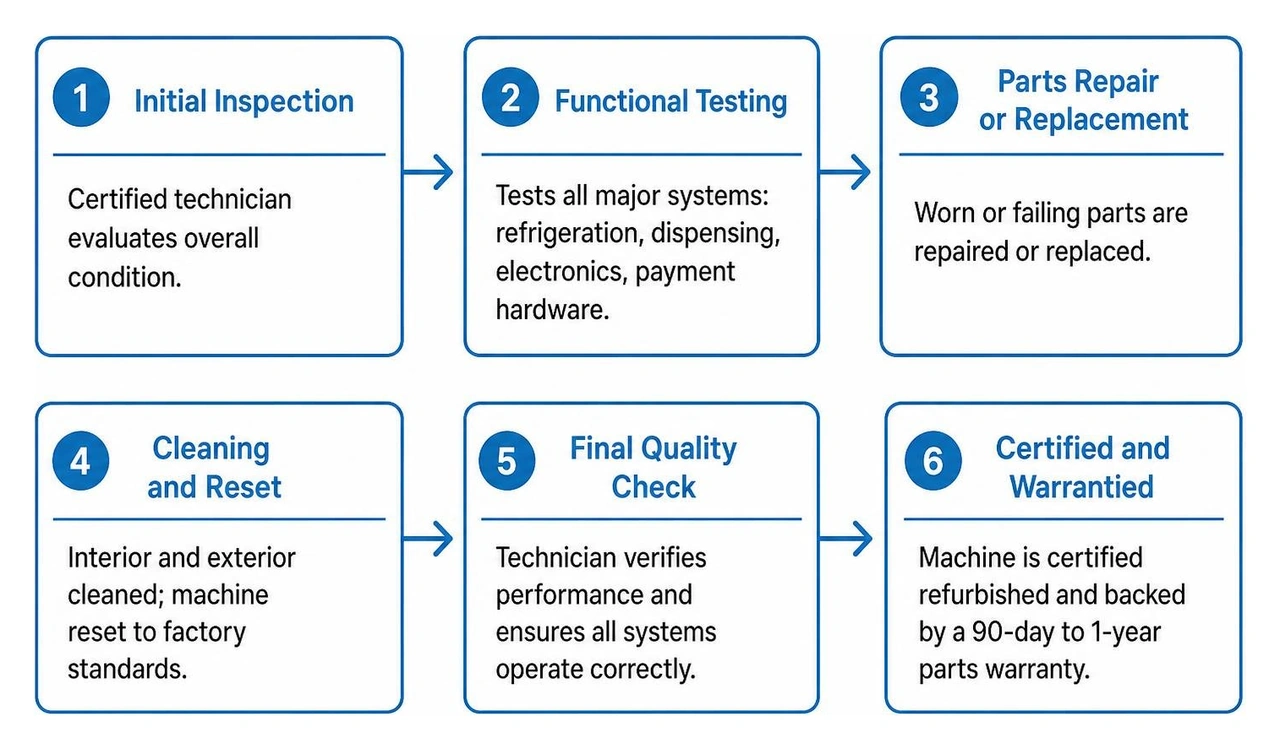
Pre-owned equipment prices range from $1,200 to $3,000 depending on cosmetic condition, internal board revisions, and included peripherals. Certified refurbished machines from reputable distributors sit higher ($2,500 to $4,000) but often include a 90-day to one-year parts warranty.
Buying private-party equipment for under $1,000 can work well if you understand repair costs, but missing components add up quickly. Reviewing our used vending machines guide helps you separate reliable workhorses from obsolete models with hard-to-find parts.
Essential Component Inspections for Pre-Owned Machines
Before handing over cash for a pre-owned machine, inspect four critical systems:
- Refrigeration Health: Power the unit and time the compressor. It should pull internal temperatures down to 38°F within 30 to 45 minutes without rattling or icing up.
- MDB Protocol Support: Verify that the main logic board supports Multi-Drop Bus (MDB) standards (typically firmware level 3.0 or higher). Non-MDB legacy boards cannot accept modern card readers.
- Bill and Coin Acceptance: Run five modern banknotes and a handful of mixed coins through the validators. Jams indicate worn belts or faulty optical sensors.
- Cabinet Seals and Alignment: Check the perimeter rubber gaskets. Torn seals allow warm air infiltration, forcing the compressor to run continuously and inflating utility bills.
Our complete vending machine buying steps explain how to test logic boards and confirm part availability for older models before you commit.
Smart Technology and 3-Year Total Cost of Ownership
Modern vending goes well beyond coin slots. Smart machines integrate cashless card readers, high-definition interactive touchscreens, and real-time internet-of-things (IoT) telemetry. However, digital upgrades introduce recurring monthly fees that affect long-term profit margins.
| Cost Element | Connected Basics | Touchscreen Smart | Vision Grab & Go |
|---|---|---|---|
| Initial Hardware Purchase | $4,500 | $8,500 | $11,000 |
| Freight & Liftgate Delivery | $600 | $700 | $800 |
| First Product Inventory Fill | $400 | $500 | $600 |
| Monthly Telemetry & SaaS (36 Mo) | $288 ($8/mo) | $432 ($12/mo) | $720 ($20/mo) |
| Monthly Card Gateway Fees (36 Mo) | $324 ($9/mo) | $324 ($9/mo) | $324 ($9/mo) |
| Card Processing (500 vends/mo) | $1,620 (~5.5%) | $1,620 (~5.5%) | $1,620 (~5.5%) |
| 3-Year Power Consumption | $1,080 ($30/mo) | $1,260 ($35/mo) | $1,440 ($40/mo) |
| Routine Maintenance Reserve | $720 ($20/mo) | $720 ($20/mo) | $1,080 ($30/mo) |
| Total 3-Year Cost of Ownership | $9,532 | $14,056 | $17,584 |
Upgrading to Smart Hardware: How Much Vending Machines Cost with Telemetry
Connected basic units run $3,000 to $6,000, while interactive touchscreen displays cost $6,000 to $12,000. If you already own functional traditional machines, you can retrofit them for $350 to $700 per unit rather than replacing the entire cabinet.
When you choose to buy a vending machine with a card reader, you capture the 20% to 40% sales increase that cashless payments typically generate over cash-only machines. Cashless hardware pays for itself quickly, making it one of the most reliable upgrades in the industry.
Calculating Total Cost of Ownership Over Three Years
As shown in our 3-year Total Cost of Ownership (TCO) breakdown, upfront hardware accounts for only 45% to 60% of what you spend over 36 months. Monthly telemetry subscriptions ($8 to $20/month) and merchant processing fees (5% to 6% per transaction) make up the rest.
Before choosing high-end hardware, use our vending machine operational costs guide to calculate your required sales volume. A premium touchscreen unit needs roughly 23% higher monthly sales than a standard connected machine just to cover its higher equipment payment and software fees.
Hidden Startup Fees and Ongoing Monthly Operating Expenses

Many new operators budget strictly for the machine's purchase price and find themselves short on working capital when initial logistics and inventory bills arrive.

Initial Logistics, Delivery, and First Inventory Fill
Standard vending machines weigh between 400 and 850 pounds. Freight delivery with liftgate service runs $150 to $600 depending on distance. If your site has stairs or tight doorways, professional inside rigging adds another $200 to $400.
Stocking a 30-to-40 selection machine for the first time requires $200 to $600 in wholesale inventory. Sourcing your drinks and snacks through wholesale vending distributors lets you purchase items at 30% to 50% of your retail price, keeping profit margins healthy from day one.
Monthly Running Costs: Power, Maintenance, and Location Commissions
Once on location, every machine generates recurring monthly expenses:
- Electricity: Ambient snack units draw 1 to 3 kWh per day ($5 to $15/month). Refrigerated drink units draw 7 to 14 kWh per day ($25 to $50/month).
- Location Commissions: Property owners typically ask for 5% to 25% of gross revenue (averaging 10% to 15%) in exchange for placement rights and power access.
- Maintenance Reserve: Set aside $10 to $30 monthly per machine so routine repairs don't cut into your cash flow.
- Licensing & Permits: Municipalities often charge $10 to $250 annually for per-machine operating permits.
When budgeting for 500 vends per month, plan for total monthly operating costs of $350 to $650 per machine, covering inventory, card fees, location commission, and power.
Financing, Tax Deductions, and Return on Investment
You don't need to pay for all your equipment out of pocket. Equipment financing programs and lease-to-own agreements let you spread costs over 24 to 60 months, usually for $100 to $350 per machine each month.
Equipment Financing and Section 179 Deductions
Under U.S. tax code Section 179, operators can deduct up to 100% of the purchase price of qualifying equipment in the year it is placed in service. This applies whether you pay cash or finance the machine.
Financing an $8,000 smart machine with $500 down allows you to deduct the full $8,000 asset value on that tax year's return. Our vending equipment financing guide explains how to structure lease terms to keep your monthly payments lower than the machine's net revenue.
Breakeven Timelines and Revenue Expectations
An average machine in a location with 100 to 200 daily workers typically grosses $300 to $600 per month, while high-traffic spots can clear $1,000 or more.
With typical product markups (items bought for $0.60 and sold for $1.75), a machine netting $250 to $350 monthly after all expenses will pay for a $3,500 initial investment in 10 to 14 months.
Frequently Asked Questions About Vending Equipment Costs
How long does it take for a vending machine to pay for itself?
A standard machine typically pays for itself within 10 to 18 months. For example, a $3,500 refurbished combo unit grossing $500 monthly will net around $275 after inventory, card fees, and location commissions, paying off the initial purchase in roughly 13 months.
Can you start a vending machine business with under $2,000?
Yes. You can start with a commercial bulk candy machine ($150 to $400 all-in) or a quality used pre-owned snack machine ($1,200 to $1,500) paired with an entry-level credit card reader and an initial inventory fill.
What ongoing monthly expenses catch first-time operators off guard?
First-time operators are often surprised by cashless merchant fees (5% to 6% per vend), monthly telemetry cellular charges ($8 to $12 per reader), and location commissions (10% to 20% of gross revenue).
Conclusion
Understanding equipment costs comes down to looking at the full picture: upfront purchase price, delivery, initial inventory, and ongoing operating expenses. A machine that looks like a bargain can quickly become expensive if it needs frequent repairs, while a reliable unit in a high-traffic spot can provide steady cash flow for years.
At Vending Circle, we help operators build sustainable, profitable businesses. Through our weekly live Q&A sessions, practical courses, discounted supplies, and active operator community, we provide the tools you need to buy right and scale your route. Explore our Vending Circle operator resources to connect with our network and take your vending business to the next level.