Understanding Vending Machine Price Ranges Across Equipment Types
A commercial vending machine price typically ranges from $1,200 to $3,000 for certified refurbished units, $3,000 to $8,000 for standard new snack and beverage models, and $8,000 to $25,000+ for smart coolers, bean-to-cup coffee setups, or specialty automated retail equipment. Private-party used machines can be found for $500 to $2,000, though they often require mechanical overhaul or payment upgrades.
When evaluating equipment for your business, the baseline sticker cost is determined by four main engineering factors: internal cooling requirements, physical dimensions, product dispensing mechanics, and internal computing technology.
A standard non-refrigerated snack cabinet has relatively simple mechanics—trays, spirals, a control board, and a drop sensor. The moment you introduce commercial refrigeration units, insulated double-pane glass, internal temperature sensors, or specialized robotic delivery elevators, the manufacturing complexity and overall expense increase significantly.
Here is how typical commercial equipment compares across different categories and conditions in 2026:
| Equipment Category | Used / Private Seller | Certified Refurbished | Brand New Standard | Premium / Smart Integrated |
|---|---|---|---|---|
| Ambient Snack | $500 – $2,000 | $1,200 – $2,800 | $3,000 – $5,000 | $5,500 – $6,500 |
| Cold Beverage | $800 – $2,500 | $2,500 – $4,500 | $4,000 – $6,000 | $6,500 – $8,000 |
| Snack & Drink Combo | $1,500 – $3,500 | $2,500 – $5,500 | $3,500 – $7,500 | $8,000 – $10,995 |
| Commercial Coffee (Bean-to-Cup) | $1,500 – $4,000 | $3,500 – $6,000 | $6,000 – $12,000 | $12,000 – $18,000 |
| Smart Cooler / AI Grab-and-Go | N/A (Emerging) | $2,500 – $4,000 | $3,950 – $6,895 | $8,000 – $15,000+ |
| Frozen / Ice Cream | $2,000 – $4,500 | $4,000 – $7,000 | $5,000 – $11,695 | $12,000 – $25,000 |
| Specialty Automated Retail | $1,800 – $4,000 | $3,500 – $6,500 | $4,400 – $9,600 | $10,000 – $30,000+ |
Standard Snack, Drink, and Combo Machine Costs
For the vast majority of route operators, core revenue relies on three workhorse formats: ambient snack cabinets, cold beverage units, and dual-zone combo machines.
Ambient snack units represent the most cost-effective entry point because they do not require cooling systems or heavy insulation. A new 3-wide to 5-wide snack machine typically retails between $3,000 and $5,000 (such as standard multi-shelf units ranging from $5,795 to $6,595 for larger commercial footprints). These machines carry an empty weight of roughly 450 to 600 pounds and feature adjustable coil spacing to accommodate standard candy bars, pastries, and chips.
Dedicated beverage machines command a premium, ranging from $4,000 to $8,000 new. The added expense comes from internal R134a or R290 refrigeration systems, heavy polyurethane foam insulation, and reinforced live-display or closed-front drop chutes designed to vend cold 12-ounce cans and 20-ounce bottles at continuous 36°F to 40°F temperatures.
Combo machines serve as an ideal middle ground for smaller commercial footprints like breakrooms, auto dealerships, and health clubs. By splitting the cabinet into an ambient upper snack section and a refrigerated lower drink deck, you can vend both product types from a single footprint. Basic new combo units range between $3,500 and $7,500, while advanced heavy-duty commercial models with built-in internal elevators—designed to gently lower carbonated drinks or fragile salads without dropping them—can reach $8,500 to $10,995. To explore available configurations, you can browse our curated catalog of commercial Machines.
Specialty, Coffee, and Fresh Food Equipment Pricing
Specialty equipment serves high-intent environments that demand products beyond standard chips and sodas.
Commercial bean-to-cup coffee machines typically cost $6,000 to $12,000 for tabletop and compact freestanding units, while high-capacity floor units with fresh milk frothers, integrated cup dispensers, and multi-flavor syrup injectors can reach $18,000. Because these units serve high-margin hot beverages ($2.50 to $5.00 per cup at an ingredient cost of under $0.50), they are popular in office headquarters, car dealerships, and university lounges.
Frozen food and automated ice cream machines require industrial-grade sub-zero compressors, heated glass doors to eliminate external condensation, and specialized drop sensors. Standard new frozen food units range from $5,000 to $11,695, while interactive automated soft-serve and novelty ice cream kiosks can climb between $10,000 and $25,000.
If you are planning to place equipment outdoors, expect weatherized housing, reinforced anti-vandalism T-handles, internal rain hoods, and dual-pane impact glass to add $1,500 to $3,000 to the base price of the machine. To understand which equipment manufacturers provide reliable warranties for extreme environments, consult our comprehensive Vending Machine Suppliers Guide.
New vs. Used vs. AI Smart Vending Systems
Choosing between brand-new hardware, refurbished equipment, or newer AI-driven smart platforms comes down to balancing initial capital expenditure against long-term maintenance costs and average basket size.
Balancing New and Refurbished Vending Machine Price Points
Buying a pre-owned machine on the private market for $500 to $1,500 can seem like an easy way to save money, but it often carries hidden expenses. A cheap machine bought "as-is" from an online listing might come with obsolete MDB (Multi-Drop Bus) control boards that cannot connect to modern card readers, worn-out refrigeration compressors, or intermittent coin mechanism jams.
Investing in a factory-refurbished machine from an equipment distributor (typically $1,200 to $3,000) provides a more reliable middle ground. Reputable rebuilders perform rigorous multi-point inspections:
- Replacing the refrigeration compressor, evaporator fan, and condenser coils
- Installing modern MDB-compliant control boards compatible with cashless telemetry
- Replacing worn spiral motors, belt drives, and gum-and-mint trays
- Providing a 90-day to 1-year limited parts warranty
For operators looking to buy multiple units at volume without absorbing full retail markups, our Wholesale Vending Machines Guide 2026 explains how to vet refurbished distributors and negotiate commercial lot discounts.
Evaluating Smart Coolers and AI Vending Machine Price Factors
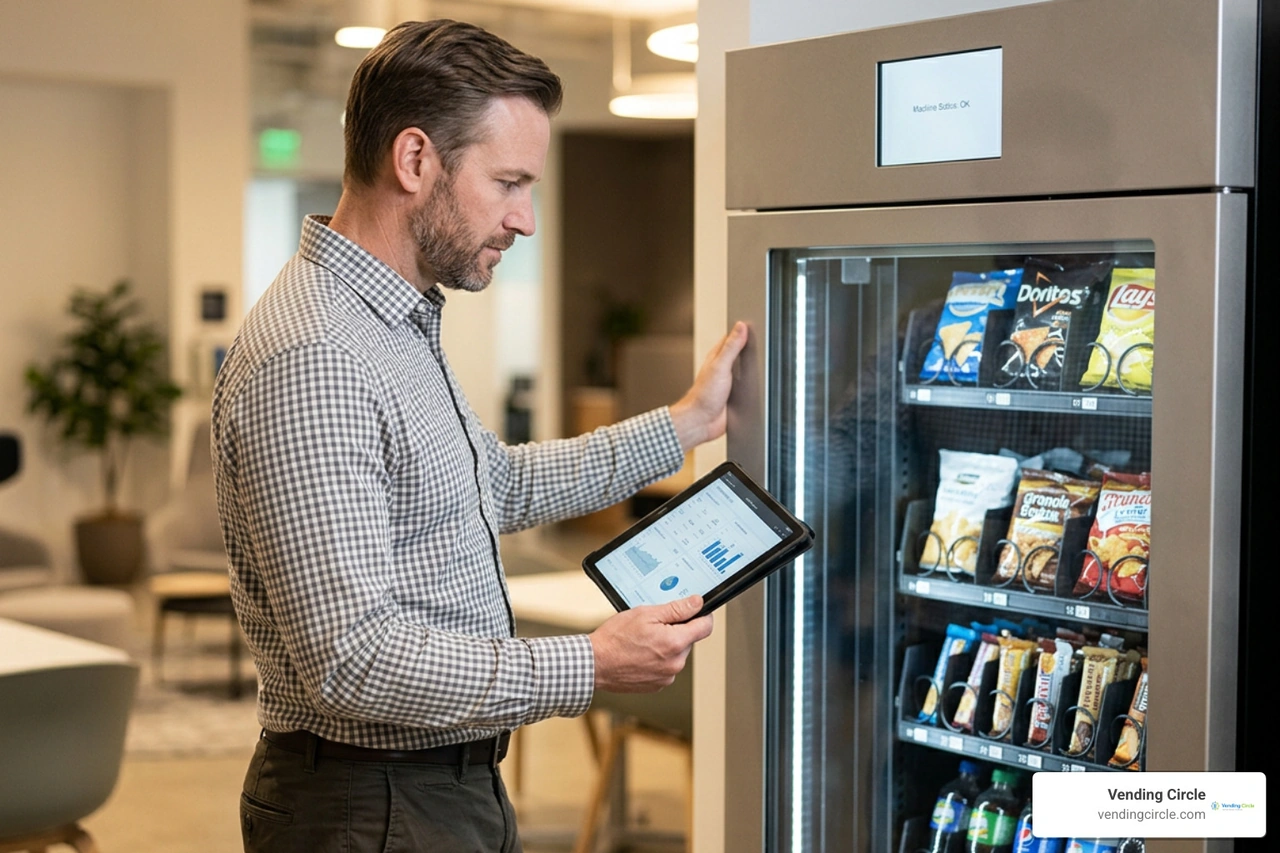
Smart coolers and AI grab-and-go units represent a significant shift in automated retail hardware. Instead of dropping products through traditional drop chutes using mechanical coils, these units allow customers to tap a credit card or mobile wallet to unlock a transparent glass door, pick up multiple items directly from adjustable retail shelves, and simply close the door.
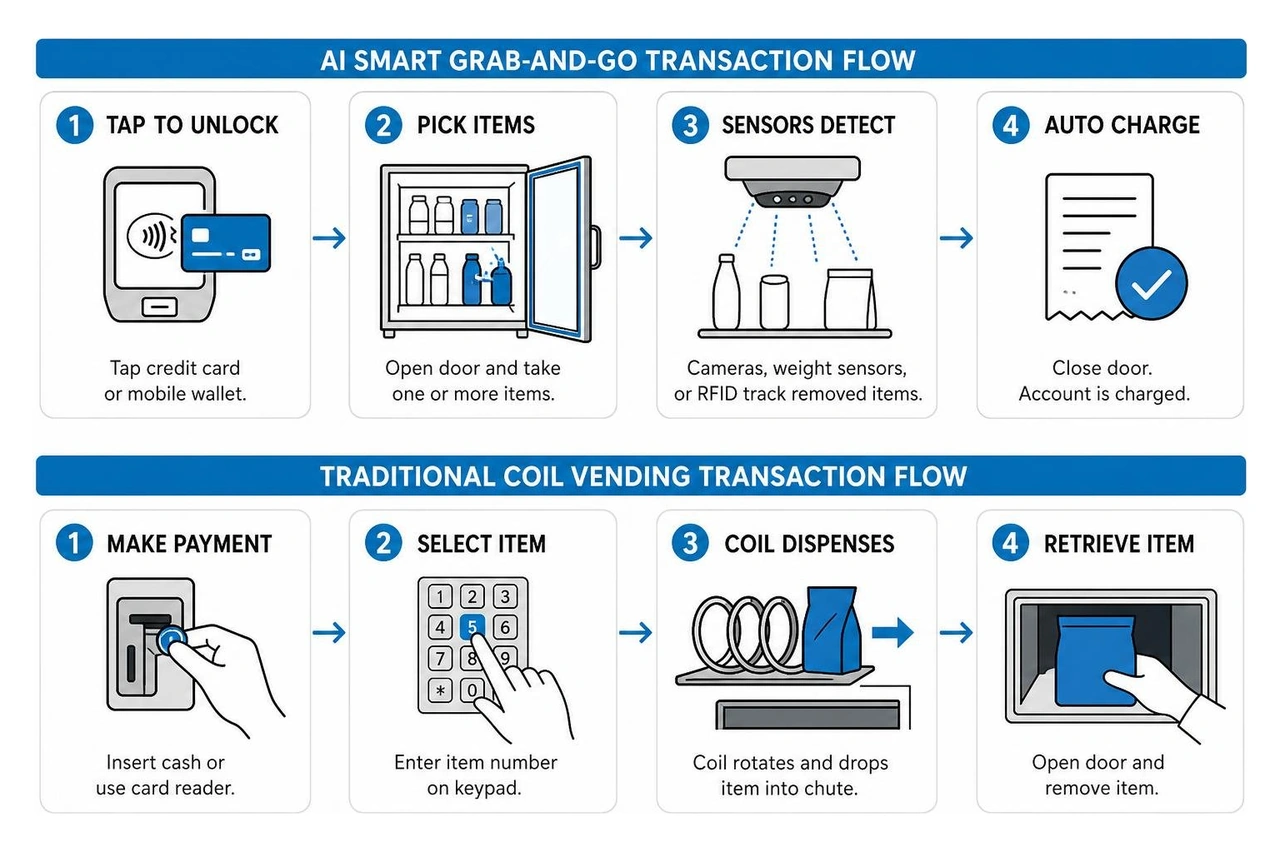
The internal computing system uses overhead computer vision cameras, weight sensor shelves, or high-frequency RFID scanners to track which items were removed, automatically charging the customer upon door closure.
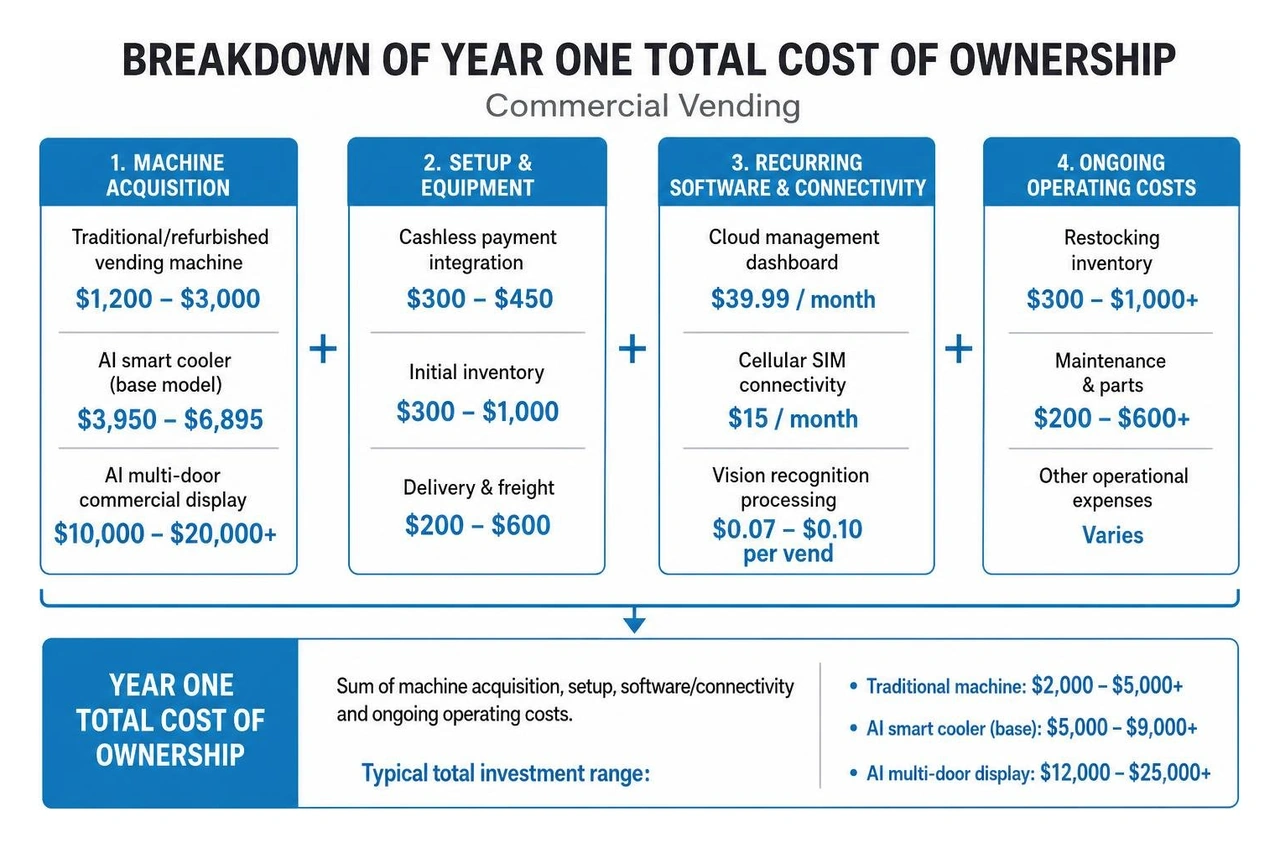
A base AI smart combo cooler typically retails between $3,950 and $6,895, while multi-door commercial robotic displays can cost $10,000 to $20,000+.
The fundamental difference lies in consumer buying psychology:
- Traditional Coil Machines: Sells single items consecutively. Customers rarely complete two separate transactions back-to-back. The average transaction value stays between $1.50 and $3.50.
- AI Grab-and-Go Coolers: Encourages multi-item basket purchasing. Customers frequently grab an artisan beverage, a fresh sandwich, and a bag of premium snacks in a single interaction. The average transaction value jumps to $6.00 to $15.00+.
However, AI machines introduce recurring software expenses. Unlike traditional machines that can run without active data subscriptions, smart coolers require cloud management dashboards ($39.99/month), cellular SIM connectivity ($15/month), and vision recognition processing fees ($0.07 to $0.10 per vend).
Hidden Startup Expenses and Ongoing Operating Costs
When creating your initial business budget, the machine invoice is only one component of your overall capitalization. Overlooking freight logistics, merchant hardware, and inventory will leave your business underfunded before your first machine goes live.
Initial Inventory, Delivery, and Card Readers
To launch a single traditional or smart vending unit, budget for the following setup expenses:
- Cashless Payment Integration: More than 75% of vending transactions are now completed using contactless cards or mobile wallets. Outfitting a machine with a dedicated telemetry reader costs roughly $300 to $450 upfront. To make sure you select compatible payment hardware, read our guide on how to Buy a Vending Machine with Card Reader.
- Freight and White-Glove Placement: Commercial machines weigh 500 to 800 pounds empty. Standard curbside freight runs $150 to $350, while inside delivery involving stairs, elevator maneuvers, or tight doorways will cost $300 to $600.
- Initial Opening Inventory: Fully stocking a standard snack or combo unit requires $300 to $800 in wholesale inventory per machine. Purchasing inventory at true wholesale rates (30% to 50% of retail price) is essential to protect your gross product margins. You can explore product assortment strategies in our guide on Vending Machine Products Wholesale.
Recurring Restocking, Power, and Location Commissions
Once your machine is operational, set aside $50 to $150 per machine per month to cover ongoing operational overhead:
- Electricity Consumption: Non-refrigerated snack cabinets draw minimal power, costing $5 to $15 per month. Refrigerated beverage and frozen units draw continuous compressor cycles, costing $20 to $45 per month in utility expenses.
- Merchant Processing Fees: Card processing networks deduct roughly 2.5% to 3.5% plus $0.10 to $0.30 per swipe (amounting to ~5% to 6% of total cashless gross revenue).
- Location Host Commissions: Commercial property managers, gym owners, or office building operators often request a revenue-share commission ranging between 5% and 25% of gross sales in exchange for foot traffic and electrical access.
- Maintenance Reserves: Setting aside $15 to $30 per month into an emergency hardware reserve ensures you can immediately replace a bill validator, harness cable, or evaporator fan without disrupting cash flow. For high-volume operators buying consumables and hardware parts in bulk, review our breakdown of Bulk Vending Machine Supplies.
Financial Strategy: Buying, Financing, and Calculating ROI
A successful vending business is built by managing capital efficiently and matching machine types to location foot traffic.
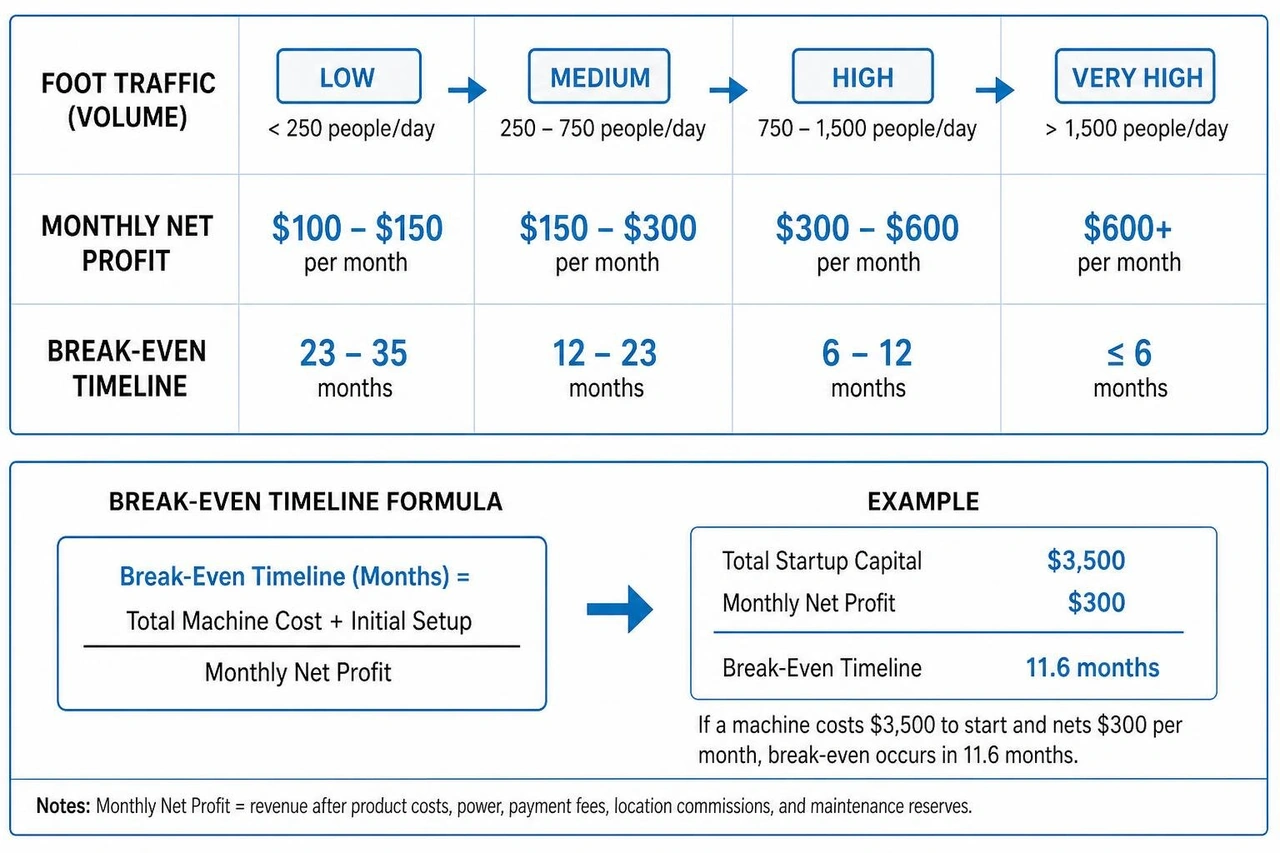
For example, if you purchase a certified refurbished combo machine with a card reader and initial stock for $3,500 total startup capital, and place it in a corporate facility where it nets $300 per month after product costs and power, your break-even payback period is:
Comparing Machine Acquisition Strategies
- Buying Outright (Cash): The most cost-effective option over a 2- to 5-year operating window. You retain 100% equity, avoid monthly interest fees, and can sell the physical asset on the secondary market at any time.
- Equipment Financing: Spreads a $4,000 to $10,000 purchase over 24 to 48 months (typically $110 to $250 per month). This allows you to deploy multiple machines simultaneously while using location cash flow to service the debt.
- Short-Term Equipment Leasing: Costs $100 to $300 per month. While helpful for temporary contracts or testing a location, long-term leasing results in higher overall costs without building equipment equity.
For a comprehensive review of equipment procurement strategies and volume discounts, read our Vending Machine Wholesale Ultimate Guide 2026. If you'd like to join our weekly operator Q&A calls, access supplier discounts, and take our route-building courses, explore our membership Pricing.
Frequently Asked Questions About Vending Machine Costs
How much does a reliable used vending machine cost?
A reliable, operator-grade used vending machine costs between $1,200 and $3,000. While you can find private-party units on local classifieds for under $1,000, these often require $500 to $1,000 in immediate repairs, such as replacement compressors, updated MDB control boards, or modern payment interfaces. Investing in a certified refurbished machine backed by a 90-day parts warranty from an established equipment supplier is generally the safest approach for new operators.
How long does it take for a vending machine to pay for itself?
Most well-placed vending machines achieve full return on investment (ROI) within 6 to 14 months.
- In medium-traffic locations (office breakrooms, small manufacturing plants, automotive service centers) generating $300 to $600 gross per month ($150 to $350 net), a $3,500 machine breaks even in roughly 10 to 14 months.
- In high-traffic 24/7 environments (hospitals, college dormitories, large distribution hubs) generating $1,000 to $2,000+ gross per month, equipment can pay for itself in as little as 4 to 8 months.
Is it cheaper to lease or buy a vending machine?
Buying outright is significantly cheaper over a multi-year operating period. A standard snack-and-drink combo machine that costs $4,000 to purchase outright will cost between $4,800 and $7,200 if leased at $150 to $200 per month over a 36-month period, without building direct asset equity. Leasing is primarily advantageous when you want to test an unproven location for 3 to 6 months without committing upfront capital.
Conclusion
Understanding real-world equipment pricing is the foundation of building a profitable vending route. By matching your equipment choices to your location demographics—whether that means placing a dependable $2,500 refurbished combo unit in an office breakroom or investing in a $5,000 smart cooler for a busy fitness center—you can build a resilient, cash-flowing portfolio.
At Vending Circle, our mission is to cut through distributor sales pitches and provide clear, transparent guidance for operators at every stage. Through our online community, live weekly operational Q&A sessions, step-by-step masterclasses, and group procurement discounts, we help you source equipment, negotiate location contracts, and scale your business efficiently.
To continue building your operational knowledge, explore our library of detailed articles on vending machine operations.