Find Local Vending Supplies Without Slowing Down Your Route
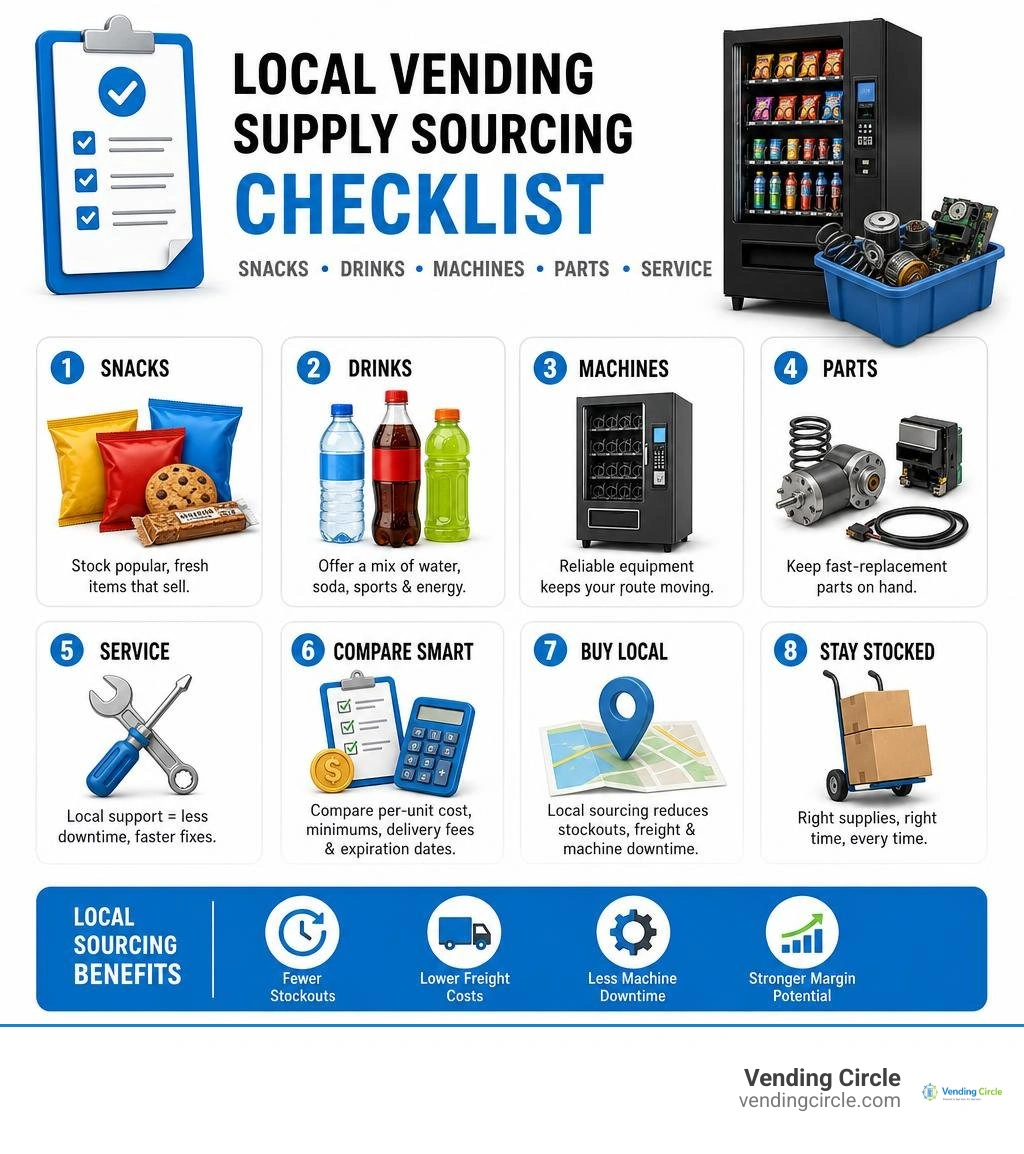
To find vending machine supplies near me, start with three local sources: wholesale clubs for fast bulk pickup, regional food and beverage distributors for case pricing and delivery, and vending equipment suppliers for machines, parts, and repair support. Compare the per-unit cost, product expiration dates, minimum order size, and delivery fees before buying. The cheapest case is not always the best deal if it sits too long, expires, or takes up needed storage space.
For a multi-machine route, prioritize supplies that sell reliably and dispense cleanly:
- Single-serve chips, cookies, protein bars, and packaged candy
- Bottled water, soda, sports drinks, and energy drinks
- Cups, coffee ingredients, stirrers, and cleaning supplies for beverage machines
- Coil motors, bill validators, coin mechanisms, cables, and other fast-replacement parts
- Specialty inventory, such as hygiene products or regionally approved harm-reduction supplies, where local programs and regulations support them
Local sourcing matters because it reduces stockouts, emergency freight, and machine downtime. The U.S. vending industry was valued at roughly $15 billion in 2024, and operators who keep popular items available while controlling purchase costs have a clearer path to protecting margin.
I am Manuel Mojica, founder of Vending Circle and owner of MM Healthy Vending, where I have worked through the real challenges behind finding reliable vending machine supplies near me. This guide will help you build a simpler local supply plan that keeps machines stocked, working, and profitable.
Explore more about vending machine supplies near me:
Sourcing Vending Machine Supplies Near Me: Local Distributors vs. Wholesale Clubs
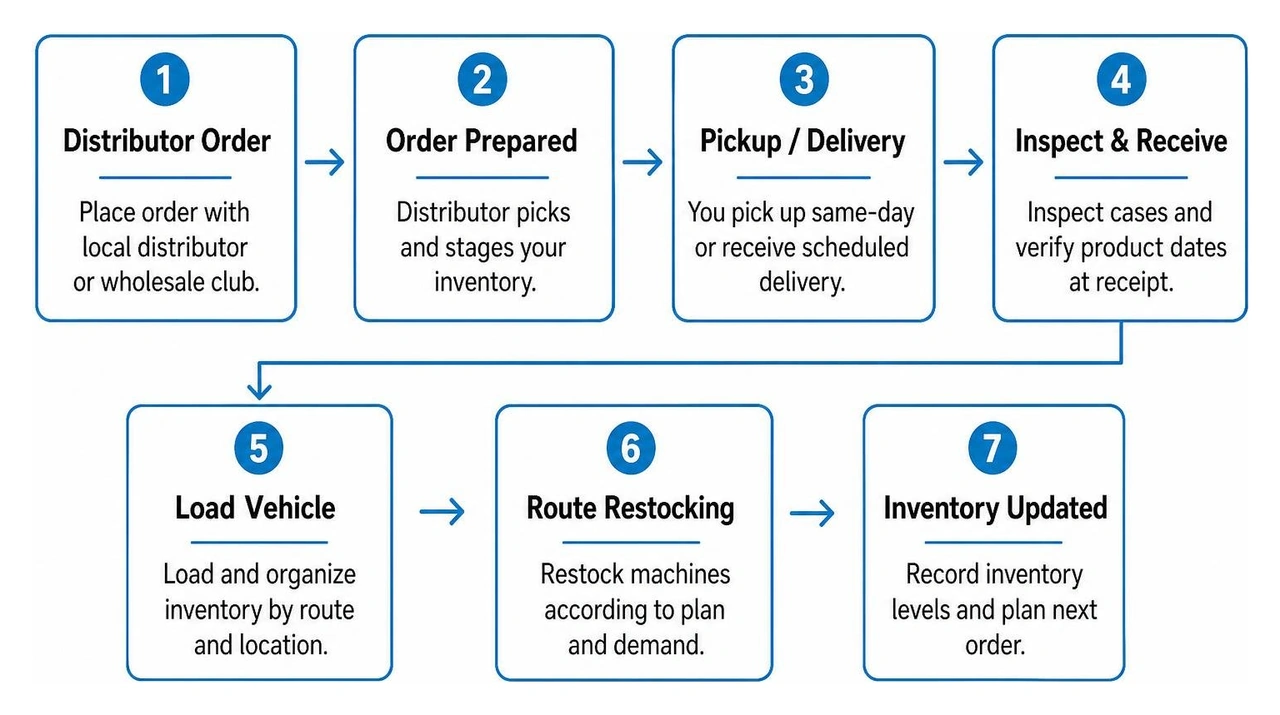
When you are mapping out your weekly restocking runs, choosing the right source for your inventory determines whether you run a high-margin enterprise or spend all your profit on fuel and freight. Most operators alternate between wholesale clubs and regional commercial distributors. Each serves a distinct operational purpose depending on your route size, cash flow, and storage capacity.
Wholesale clubs are the primary choice for operators managing one to ten machines. They offer immediate, same-day pickup, zero freight charges, and the flexibility to buy single 12-pack or 24-pack cases rather than entire pallets. Sourcing your consumables through bulk wholesale clubs can reduce initial supply costs by 10% to 20% compared to traditional retail pricing, keeping upfront investment low. If a sudden surge empties your top beverage spirals on a Tuesday afternoon, you can drive to a local club, load your vehicle, and restock within hours.
Regional food and beverage warehouses deliver maximum value once your route scales beyond 10 locations. These dedicated distributors supply full cases, bulk pallets, and commercial vending supplies directly to your storage unit or garage. Buying by the pallet unlocks deep volume discounts, driving your per-unit costs down to maximize gross profit margins.
However, regional distributors require scheduled ordering windows, minimum order values (often $1,000 to $2,000 for free delivery), and adequate climate-controlled inventory holding space. Balancing both sourcing methods provides the cost benefits of wholesale pallet pricing alongside the flexibility of local cash-and-carry depots.
Finding Bulk Snacks and Vending Machine Supplies Near Me
Selecting high-performing consumable products requires a balance between brand familiarity and healthy per-unit profit margins. Sourcing vending machine products wholesale allows you to secure recognizable brand-name sodas, bottled energy drinks, single-serve chips, pastries, and packaged candy at price points that protect your margins.
When you purchase bulk inventory locally, always inspect case packaging and verify production date codes. Vending spirals require rigid, reliable packaging to dispense smoothly without hanging up on coils. Pastries and baked goods typically have shorter shelf lives (30 to 60 days) compared to salty snacks (90 to 180 days) and canned sodas (9 to 12 months). Buying an entire pallet of short-dated pastries to capture a 5% discount can easily backfire into heavy inventory waste if your route volume cannot clear the stock before expiration.
Sourcing Specialty and Harm Reduction Inventory Locally
Vending operations extend well beyond traditional chips and soda. Automated retail continues to expand into specialty consumer products, non-traditional personal care merchandise, and public health supplies. Depending on your region and target demographic, specialty machines can deliver reliable, non-cyclical revenue.
Public health initiatives and municipal agencies increasingly use automated kiosks for harm reduction. Operators collaborating with municipal grants or health departments stock essential safety inventory, including:
- Nasal naloxone (Narcan) kits for emergency overdose reversal
- Fentanyl and xylazine diagnostic test strips
- Medication deactivation pouches and disposal bags
- Lockable medication travel bags and mechanical safety gun locks
- Single-serve hygiene packs, sanitizing wipes, and personal protective equipment
These products are typically procured through regional medical supply distributors or direct government health partnerships. Placing specialty products in high-density civic centers, transit hubs, and recreation facilities delivers an essential service to the community while securing long-term, subsidized placement contracts.
Sourcing Equipment: New, Used, and Refurbished Vending Machines
Your equipment selection represents your largest capital investment. Finding dependable equipment locally eliminates costly cross-country freight—which can add $400 to $800 per machine—while allowing you to inspect internal components before committing funds.
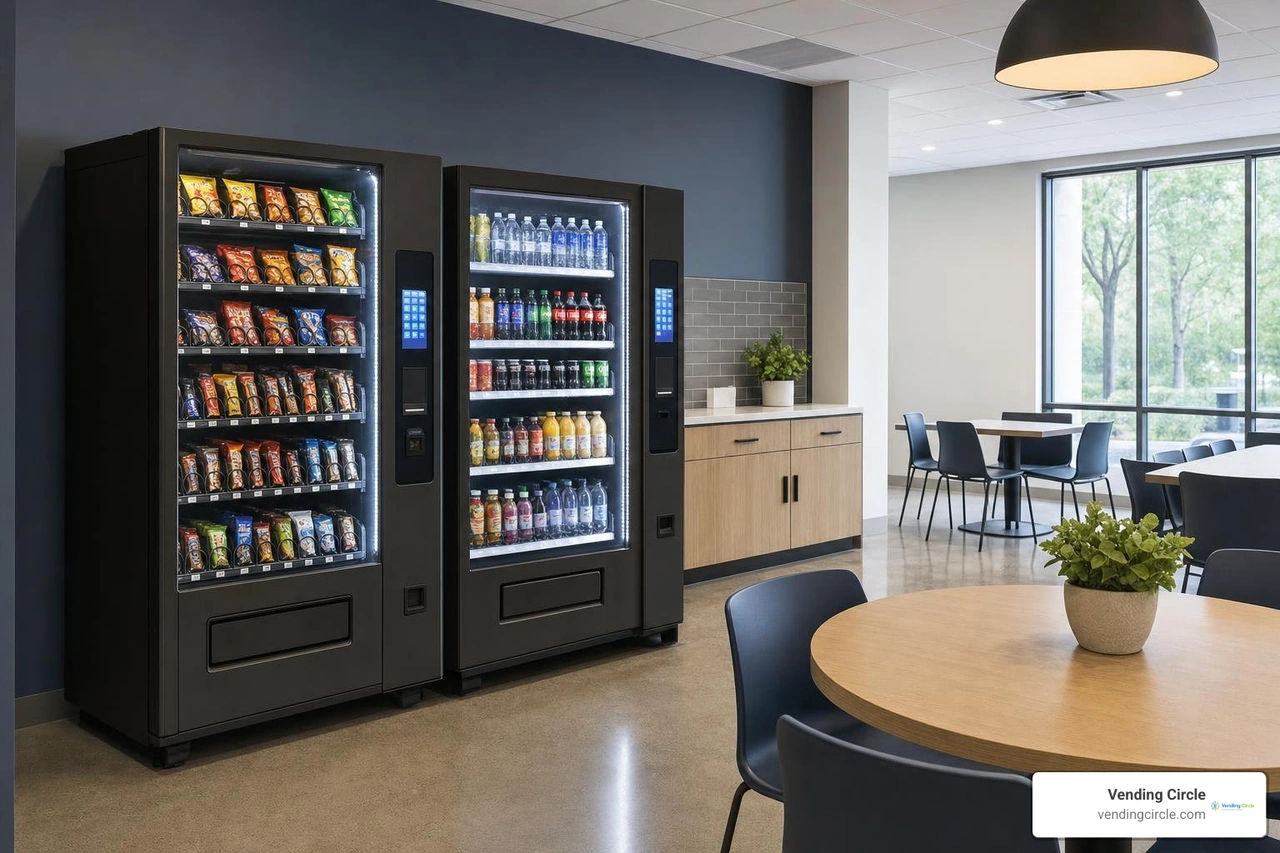
Regional equipment showrooms and depot warehouses allow operators to view modern combo units, standalone glass-front snack machines, and cold drink merchandisers in person. Partnering with established regional equipment dealers ensures your machines arrive configured with modern MDB (Multi-Drop Bus) protocols, DEX telemetry ports, and modern cashless card readers.
Evaluating New vs. Refurbished Machine Costs and Warranties
Choosing between new, used, and factory-refurbished equipment hinges on your capital budget, technical confidence, and the expectations of your host location.
A brand-new machine offers pristine aesthetics, a 1- to 2-year factory parts warranty, and modern energy efficiency. However, new machines carry substantial upfront costs ($4,500 to $7,000+).
Factory-refurbished machines provide a practical middle ground. Reputable refurbishers disassemble the hardware, steam-clean the chassis, replace worn coil motors and refrigeration compressors, install updated bill validators, and apply protective exterior vinyl wraps. Refurbished machines typically run $2,500 to $4,000, include a 90-day parts warranty, and offer a working lifespan of 10 to 15 years when properly maintained.
| Equipment Tier | Average Cost Range | Warranty Protection | Expected Service Lifespan | Ideal Placement Scenario |
|---|---|---|---|---|
| New Machines | $4,500 – $7,000+ | 1–2 Year Factory Parts | 12 – 15+ Years | High-end corporate HQs, Class A residential |
| Refurbished Units | $2,500 – $4,000 | 90-Day Parts & Support | 10 – 12 Years | Outpatient clinics, multi-shift warehouses |
| Used / As-Is | $1,200 – $2,200 | 30-Day or As-Is | 5 – 8 Years | Low-risk trial accounts, entry-level budgets |
When evaluating local used machines, look past fresh exterior paint. Inspect the refrigeration condensing unit for corrosion, test the bill acceptor with older and newer bills, cycle every motor spiral, and verify that the control board accepts modern credit card readers and remote telemetry hardware.
Financing Options and Low-Capital Route Acquisition
Scaling your route does not require paying cash upfront for every machine. Equipment distributors and specialized lenders offer equipment lease-to-own programs with $0 down, low monthly payments, and options without hard credit pulls. Financing allows you to deploy a machine that generates revenue immediately, using the location's cash flow to cover the equipment's monthly payment.
If you prefer to buy an existing route locally, evaluate the business based on verifiable numbers. Routes commonly sell for 24 to 30 times monthly net profit, while stable individual locations sell for close to one times annual revenue. Request 12 months of sales reports from card readers and utility agreements before finalizing an acquisition.
Locating Reliable Replacement Parts and Maintenance Services
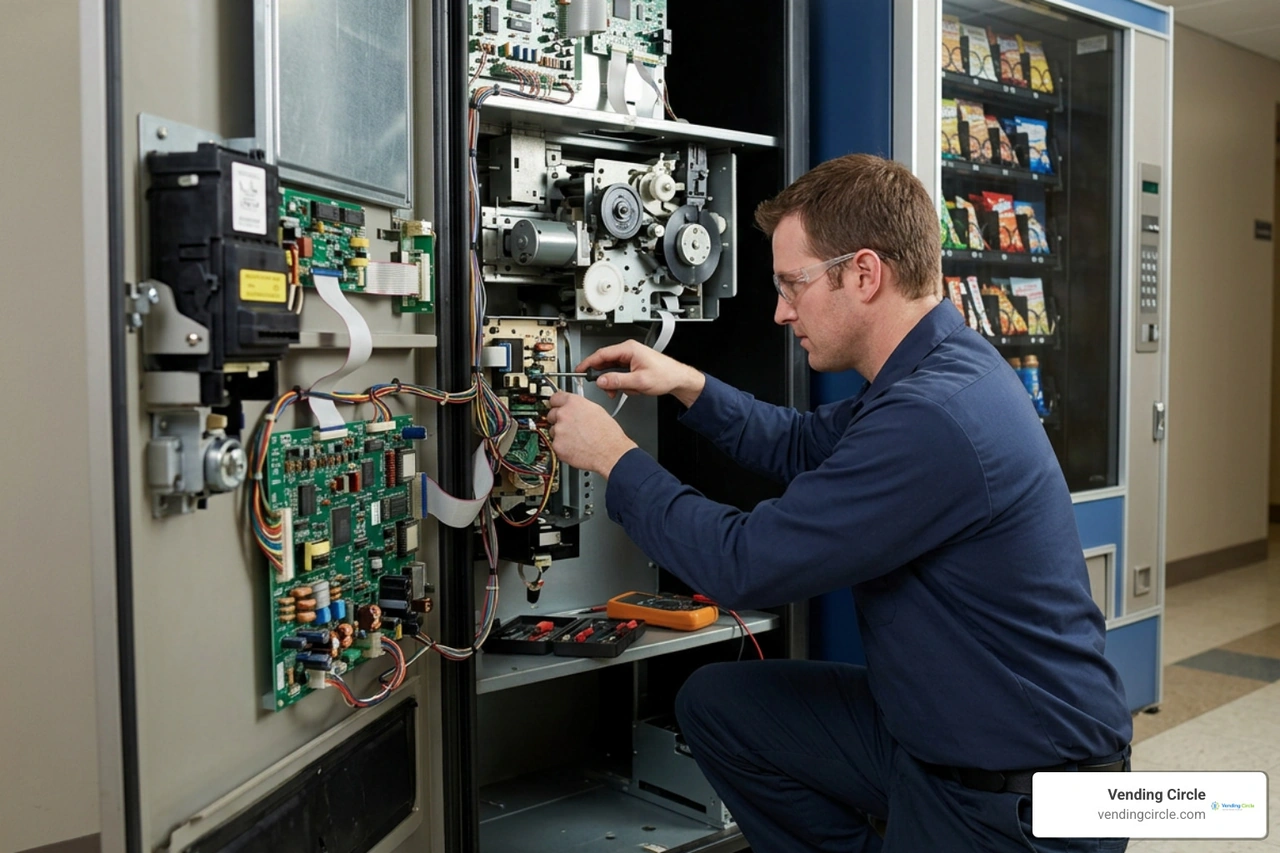
When a vending machine experiences a bill jam or refrigeration failure, every hour of downtime translates into lost sales and frustrated location managers. Sourcing local replacement parts and building a network of reliable repair technicians protects your route's cash flow.
Sourcing Fast Replacement Vending Machine Supplies Near Me for Repairs
Carrying a spare parts kit in your service vehicle prevents single-component failures from turning into multi-day outages. You can source regional parts through dedicated supply depots and component specialists that stock thousands of parts and supplies to support both modern and legacy equipment lines.
Keep these high-wear replacement components on hand in your mobile tool kit:
- Drop sensor boards and MDB wiring harnesses
- Universal bill validators (configured for $1, $5, $10, and $20 notes)
- Multi-tube coin changers and payout mechanisms
- Universal 24V DC auger/coil drive motors
- Digital temperature control sensors and relay switches
- Replacement lock cylinders and high-security tubular keys
On-Demand Technical Support and Local Repair Networks
For complex refrigeration failures or main logic board errors, having access to local, certified vending technicians is essential. Equipment suppliers and regional service contractors provide local equipment servicing, delivery, and ongoing parts support across their operational territories.
When evaluating local equipment and repair providers, seek partners that offer:
- Guaranteed Response Windows: Technicians who can reach your accounts within 24 hours to handle urgent cooling or electrical issues.
- Comprehensive Parts Warehousing: Maintenance hubs and dedicated supply facilities that maintain an extensive parts inventory to minimize shipping delays.
- Remote Diagnostic Support: Direct phone or video troubleshooting with technicians to help you resolve error codes on-site.
High-Profit Machine Placement and Local Route Optimization
Securing reliable wholesale supplies is only half the battle; placing your equipment in front of the right consumers drives your actual profit. Sourcing quality inventory at wholesale prices gives you the margin foundation to run a thriving business, as detailed in our comprehensive Wholesale Vending Supplies Guide 2026.
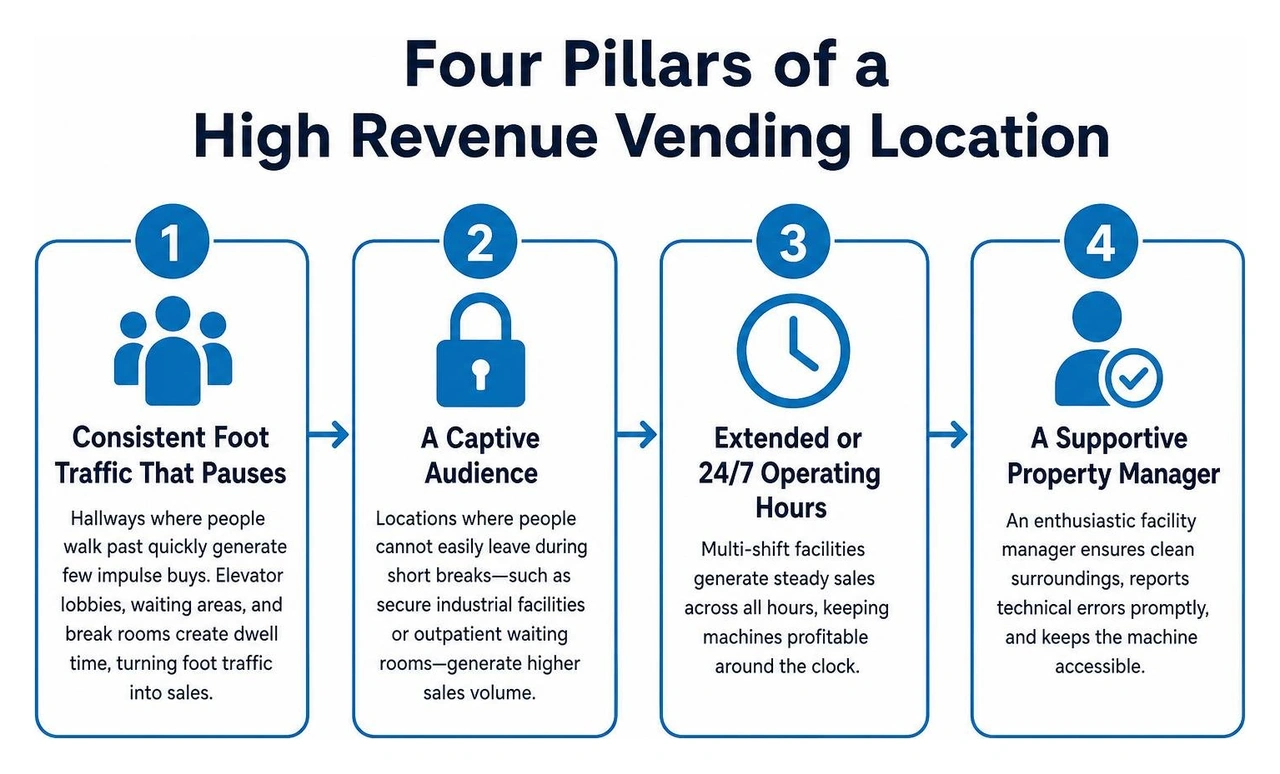
A profitable location requires four fundamental characteristics:
- Consistent Foot Traffic That Pauses: Hallways where people walk past quickly generate few impulse buys. Elevator lobbies, waiting areas, and break rooms create dwell time, turning foot traffic into sales.
- A Captive Audience: Locations where people cannot easily leave during short breaks—such as secure industrial facilities or outpatient waiting rooms—generate higher sales volume.
- Extended or 24/7 Operating Hours: Multi-shift facilities generate steady sales across all hours, keeping machines profitable around the clock.
- A Supportive Property Manager: An enthusiastic facility manager ensures clean surroundings, reports technical errors promptly, and keeps the machine accessible.
High-Yield Placement: Medical Centers, Apartments, and Manufacturing
Different business environments produce distinct monthly revenue patterns:
- Medical Outpatient Facilities & Urgent Care Centers: These locations deliver consistent, daily traffic with extended wait times. A single combo machine in an outpatient center typically generates $1,200 to $1,800 per month in revenue.
- Class A & B Residential Apartment Complexes: Properties with over 200 residential units provide strong, 24-hour demand. A machine placed near the mailroom or clubhouse regularly averages over $2,500 per month. According to NMHC’s renter preferences survey, renters are willing to pay $55 to $59 more per month for properties offering convenient, on-site convenience amenities.
- Multi-Shift Manufacturing and Distribution Warehouses: Facilities with 100+ active shift workers represent top-tier locations. A single machine at a busy plant often reaches $5,000 per month, while self-checkout micro markets in high-volume industrial hubs can clear $20,000 per month (roughly $600 per day).
Securing Placement Agreements and Pitching Property Managers
Securing prime vending real estate requires a professional, value-driven pitch. Position your machine as a zero-cost employee amenity that boosts workplace satisfaction, rather than focusing on your own business venture.
Stocking Strategies and Inventory Management for Peak Revenue
Maximizing sales requires thoughtful product placement and real-time inventory tracking. Using a structured approach to vending machine inventory management helps you understand exact shelf velocities, reduce product spoilage, and eliminate stockouts.
Effective stocking relies on visual merchandising. Place high-demand, recognizable brand items at eye level to capture immediate attention. Position premium items—such as specialty energy drinks, cold brews, and protein bars—on upper beverage shelves where their premium price points feel natural to consumers.
High-Margin Product Assortment and Small Packaging Selection
Securing the right mix of bulk vending machine supplies protects your bottom line while keeping customers satisfied. Focus on packaging sizes tailored specifically for vending drops to prevent machine jams.
- Energy Drinks and Specialty Teas: Sourced locally at $1.10 to $1.40 per unit; vend smoothly at $3.25 to $4.00, generating gross profit margins above 60%.
- Single-Serve Salty Snacks (1.5 oz - 2.0 oz bags): Sourced at $0.45 to $0.60 per bag; vend reliably at $1.50 to $2.00.
- Pastries and Large Cookies: High impulse appeal that commands $1.75 to $2.25 price points, provided you track their shorter expiration cycles closely.
- Bottled Spring Water (16.9 oz / 20 oz): Your lowest wholesale cost product ($0.20 to $0.30 per bottle) that vends reliably for $1.25 to $1.75, delivering strong profit margins.
Dynamic Restocking Schedules and Inventory Rotation
Relying on guesswork for restocking leads to wasted trips and empty shelves. Modern automated retail uses cloud-based telemetry devices installed inside each machine to stream real-time sales data to your smartphone or laptop.
Using connected inventory vending solutions lets you monitor your machines remotely, ensuring you only pack the inventory needed for each location.
During every restocking visit, follow the First-In, First-Out (FIFO) rotation process: move existing items to the front of the spiral and load fresh stock behind them. Rotating 15% to 20% of your snack selections every six to eight weeks keeps your product mix interesting for regular daily customers.
Frequently Asked Questions About Local Vending Operations
What are the cheapest ways to source vending inventory locally?
The most cost-effective local sourcing strategy combines regional wholesale membership clubs with local food and beverage distributors. Use wholesale clubs for single-case flexibility on fast-moving chips and sodas without paying freight fees.
As your route grows, establish accounts with commercial food distributors to purchase full pallets of top-selling beverages at lower volume tiers. Joining a shared-procurement community like Vending Circle provides access to manufacturer-direct pricing discounts that independent operators cannot secure on their own.
How much revenue does an average vending machine generate monthly?
Monthly machine revenue varies significantly based on location foot traffic, dwell time, and operating hours:
- Medical Outpatient Clinics: $1,200 to $1,800 monthly per combo unit
- Large Residential Apartment Buildings (200+ units): $2,000 to $3,000+ monthly
- Multi-Shift Warehouses & Industrial Plants: $4,000 to $5,500 monthly
- Low-Traffic Retail / Auto Repair Shops: $300 to $600 monthly
Do I need special permits or contracts to place vending machines?
Yes. You should execute a written Property Placement Agreement (Location Agreement) with the property owner or facility manager before installing equipment. This contract outlines machine placement terms, utility access, liability coverage, and any optional commission terms (typically 5% to 10% of net sales for competitive locations).
Additionally, register your business as a legal entity (such as an LLC), secure a general business license from your municipality, and register with your state department of revenue for a sales tax permit to remit applicable sales taxes on food and beverage items.
Conclusion
Building an efficient, profitable vending route requires a reliable local supply chain. Sourcing your snacks, cold beverages, and fast-moving replacement parts from dependable local distributors and wholesale depots minimizes shipping costs, keeps your machines fully stocked, and prevents costly equipment downtime.
Whether you operate a single combo machine in an urgent care clinic or manage a multi-location commercial route, success comes down to consistent fundamentals: secure prime locations, source quality wholesale products, monitor inventory data, and keep your equipment running smoothly.
If you are ready to expand your route and source equipment at competitive prices, explore the Vending Circle community and procurement network to connect with fellow operators, access weekly mentorship, and secure manufacturer-direct equipment pricing today.