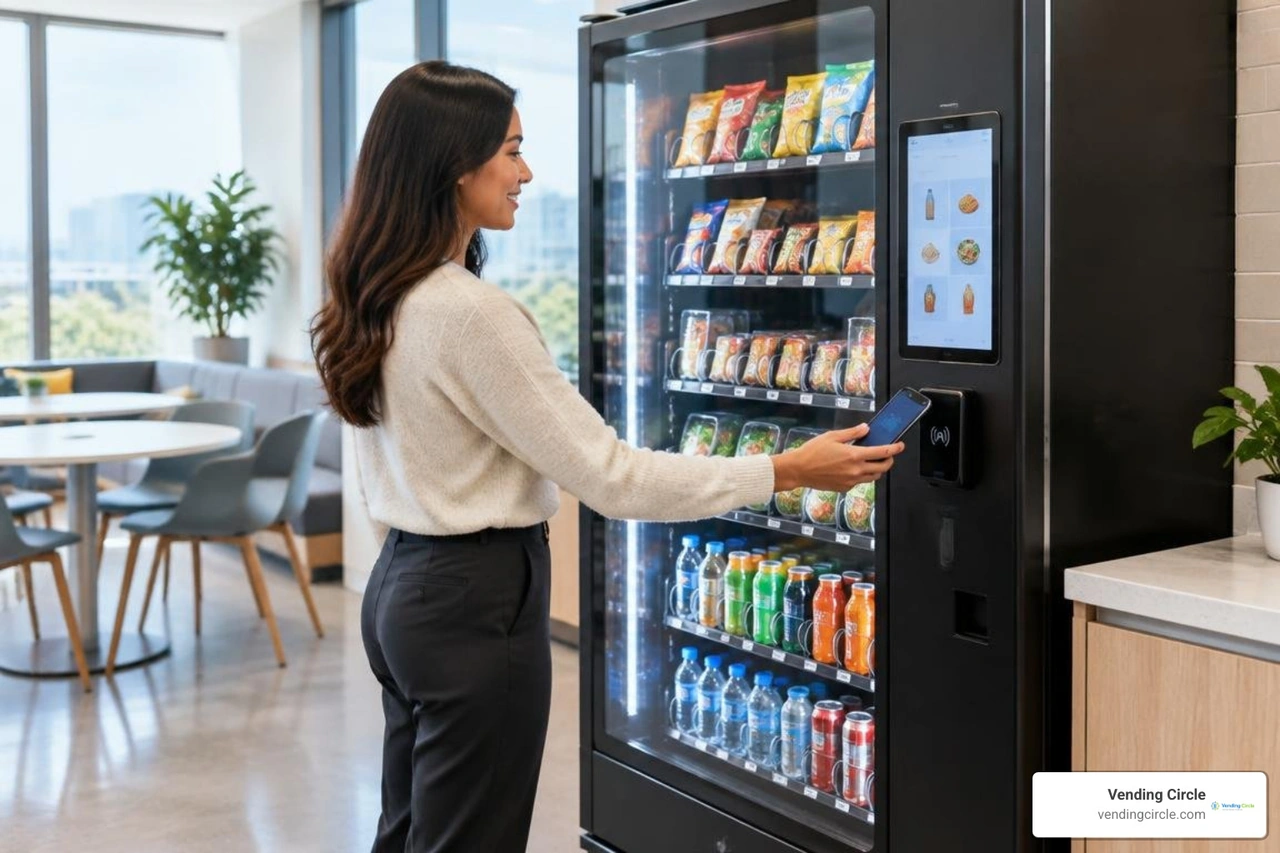
Vending Machine Industry Trends in 2025: What Matters in 2026
The biggest vending machine industry trends in 2025 were cashless payments, connected machines, healthier products, and new formats like smart fridges and micro-markets. In 2026, operators can use those shifts to make practical choices: add payment options customers use, track stock remotely, and test products by location. The goal is simple: fewer wasted trips, less spoilage, and machines that earn more.
I'm Manuel Mojica, founder of Vending Circle and a former vending operator. That hands-on experience shapes my look at vending machine industry trends 2025 and the decisions operators face now.
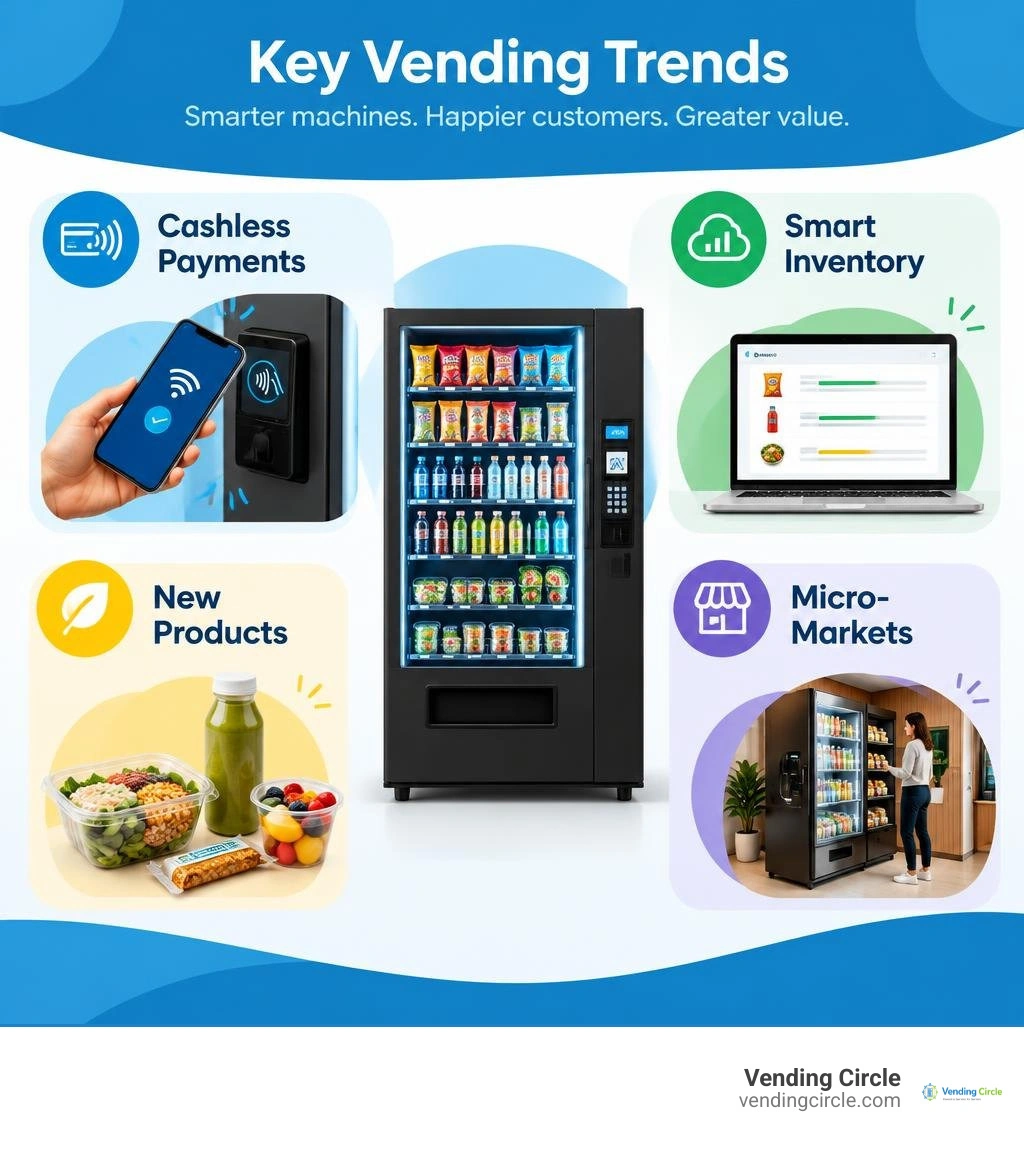
Quick vending machine industry trends 2025 terms:
Macro Vending Machine Industry Trends 2025 and Global Market Forecasts
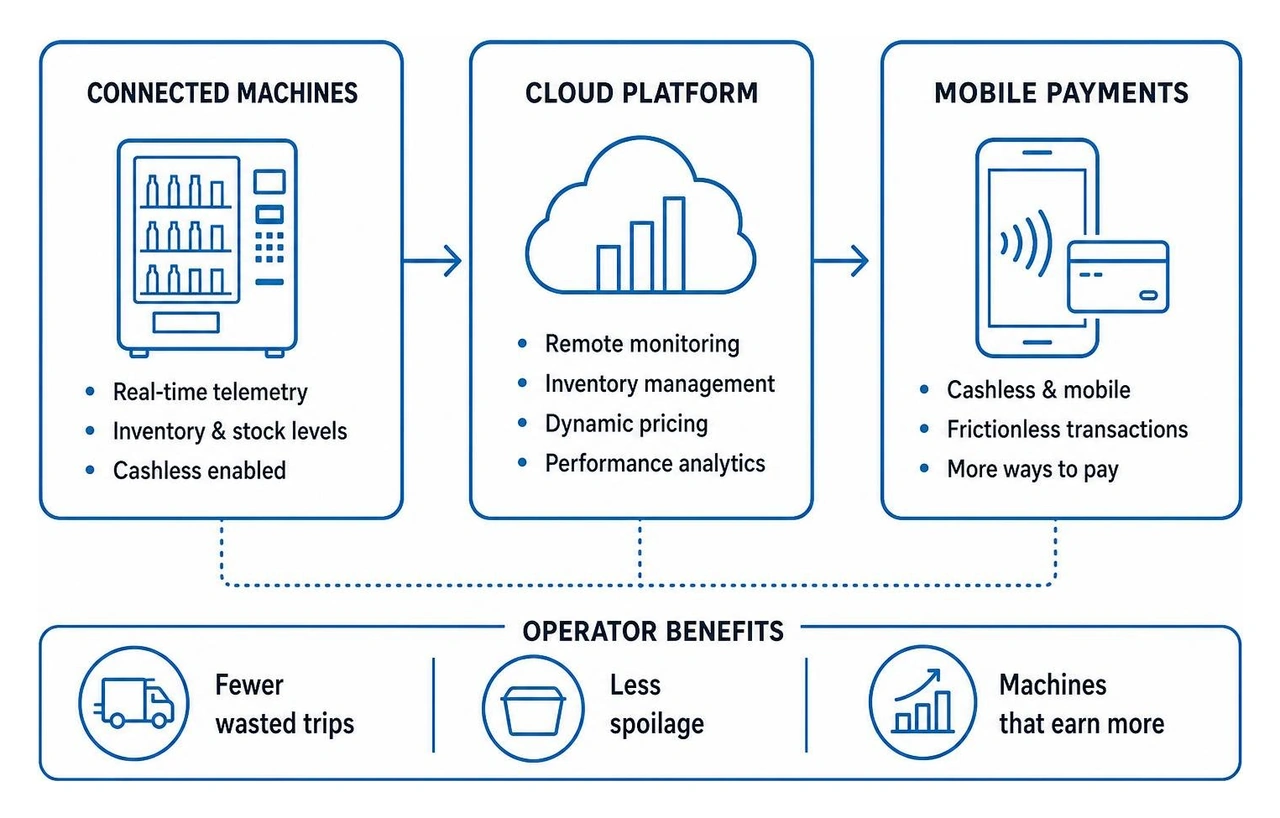
The global automated retail landscape has expanded at a remarkable pace. The global vending machine market is projected to grow from USD 21.55 billion in 2025 to USD 36.12 billion by 2035, progressing at a compound annual growth rate (CAGR) of 5.3%. When examining broader vending machine industry statistics, smart and connected machines represent the primary growth engine, expanding at an 8.2% CAGR thanks to real-time telemetry, automated dynamic pricing, and frictionless digital transactions.
In North America, the U.S. retail vending market stood at USD 15.03 billion in 2024 and is on track to hit USD 17.99 billion by 2030 at a 3.10% CAGR. Meanwhile, across the Atlantic, findings from the 2024 AVA Census & Market Report confirmed that total UK automated retail revenues surged past £3.66 billion before climbing even higher in subsequent audits.
| Region | Market Valuation Baseline | Projected Regional CAGR | Key Growth Levers |
|---|---|---|---|
| North America | USD 15.03 Billion (2024) | 3.10% – 3.70% | Micro-market conversions, cashless dominance, premium hot beverages |
| Asia-Pacific | 38% Global Share (2025) | 6.50% – 9.20% | High machine density in Japan, UPI mobile rail deployments in India |
| Europe | €1.55 Billion (Italy alone) | 3.30% – 4.20% | Premium bean-to-cup coffee, smart fridges, strict eco-design compliance |
| Middle East & Africa | Emerging Regional Base | 7.10% | Smart city mega-projects, solar-powered off-grid automated retail kiosks |
Evaluating Core Vending Machine Industry Trends in 2025 That Shifted the Market
The single largest growth catalyst across automated commerce has been cashless and mobile payment adoption, which on its own contributed an estimated +1.4% to headline market CAGR. Today, unattended retail is no longer an isolated box dispensing generic sodas; it has transformed into an interconnected platform. As detailed in our comprehensive market guide, operators are shifting from fragmented, manual routes toward platform economics and route-level consolidation where centralized software runs hundreds of endpoints seamlessly.
Regional Dynamics Across North America, Europe, and Asia-Pacific
Geographic performance varies considerably based on local infrastructure and consumer habits:
- Asia-Pacific: Holds a dominant 38% global market share. Japan remains the world benchmark for per-capita density, generating 46% of regional revenues. In India, vending adoption is surging at a 9.2% CAGR, driven by the Unified Payments Interface (UPI) and high-footfall concessions across major railway networks.
- Europe: Emphasizes premium beverage experiences and high-tech food dispensing. Demonstrating this momentum, official industry data confirmed UK vending and automated retail growth reached £3.78 billion in revenue, expanding 3.3% year-on-year. Italy continues to lead Europe in raw machine count with over 785,000 units installed, where bean-to-cup espresso accounts for 88% of hot drink sales.
- North America: Accounts for roughly 45% of total global vending value. Operators are aggressively retrofitting legacy glassfronts with smart coolers and deploying multi-category micro-markets across manufacturing hubs, multi-family residential complexes, and enterprise corporate campuses.
Cashless Payments, IoT, and AI-Driven Smart Retail Infrastructure
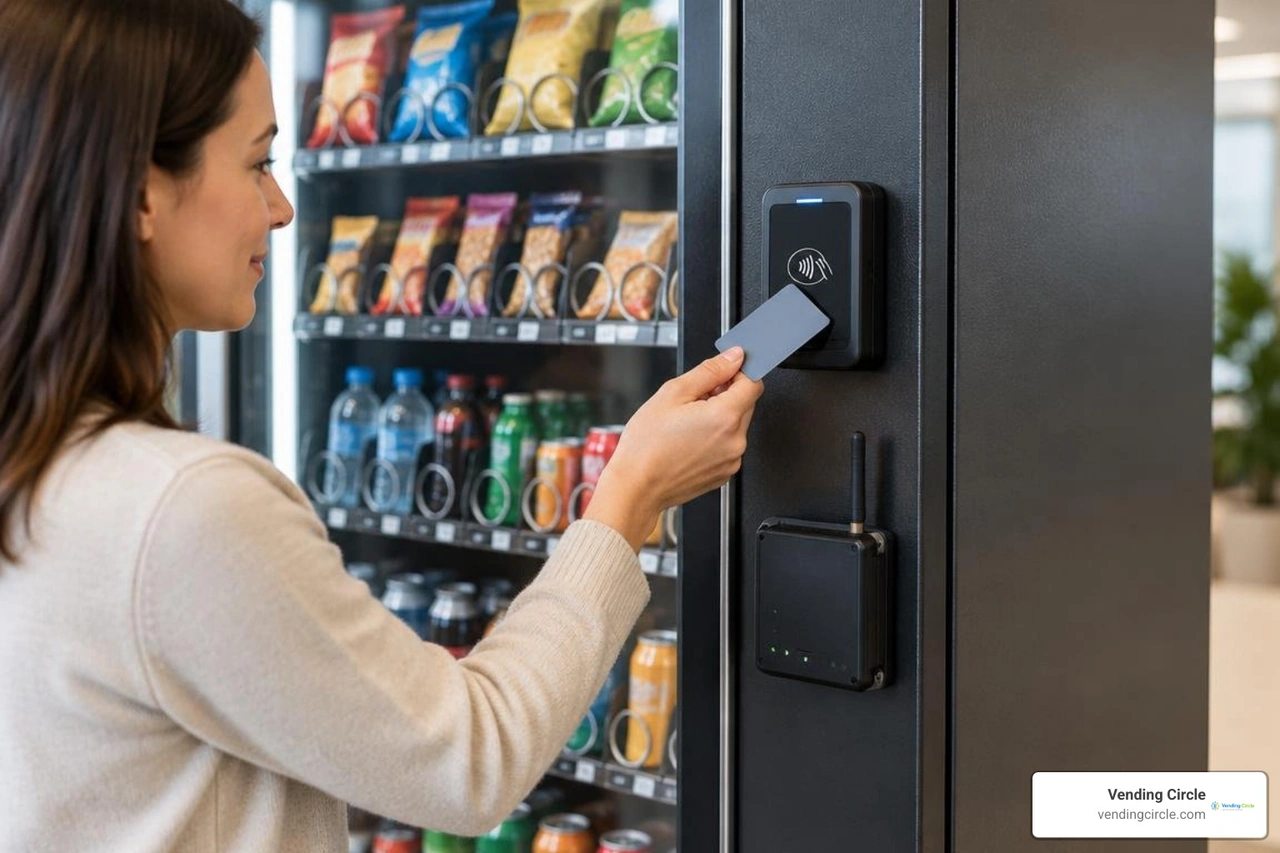
The hardware backbone of vending has changed fundamentally. A traditional coin-only machine is practically obsolete. Today, integrating dependable cashless card reader integrations is the baseline requirement for any route looking to remain viable.
Cashless and Mobile Payment Acceleration
Cashless payments now represent over 75% to 84% of all transactions across North American and European vending networks. In the UK, 95% of pay-vend machines feature cashless capability, and mobile wallets (Apple Pay and Google Pay) represent over 60% of those digital vends.
Crucially, consumers who tap a card or phone spend on average 100% more per transaction than coin users. Unattended payment terminals must adhere strictly to PCI DSS data security protocols, while European operators have integrated PSD3 Strong Customer Authentication standards to process transactions securely without creating customer friction.
IoT Telemetry, Route Logistics, and Predictive Maintenance
Sending route drivers to visit machines on fixed schedules without knowing stock levels leads to wasted fuel and out-of-stock coils. Modern machines rely on stable network connectivity solutions to stream live data back to central vending management systems.
IoT telemetry delivers immediate operational dividends:
- Restocking Route Optimization: Real-time visibility cuts driver restocking travel costs by 15% to 20%.
- Waste Mitigation: Live temperature monitoring reduces perishable product spoilage by up to 30%.
- Predictive Maintenance Alerts: Sensors monitor refrigeration compressor cycles and bill validator errors, triggering service calls before customers encounter a broken machine.
AI-Enabled Edge Computing and Autonomous Restocking
By 2030, an estimated 45% of new vending shipments will feature integrated edge-computing processors. Using modern AI forecasting models, smart machines analyze historical sales patterns against local variables like weather forecasts and building shift changes.
Cloud planogram tools review live movement by SKU, identifying slow-moving items and recommending high-margin alternatives. Top operators utilizing data-driven planogram optimization report consistent 10% to 15% revenue increases across their routes.
Product Diversification: Healthy Snacks, Energy Drinks, and Non-Food Retail
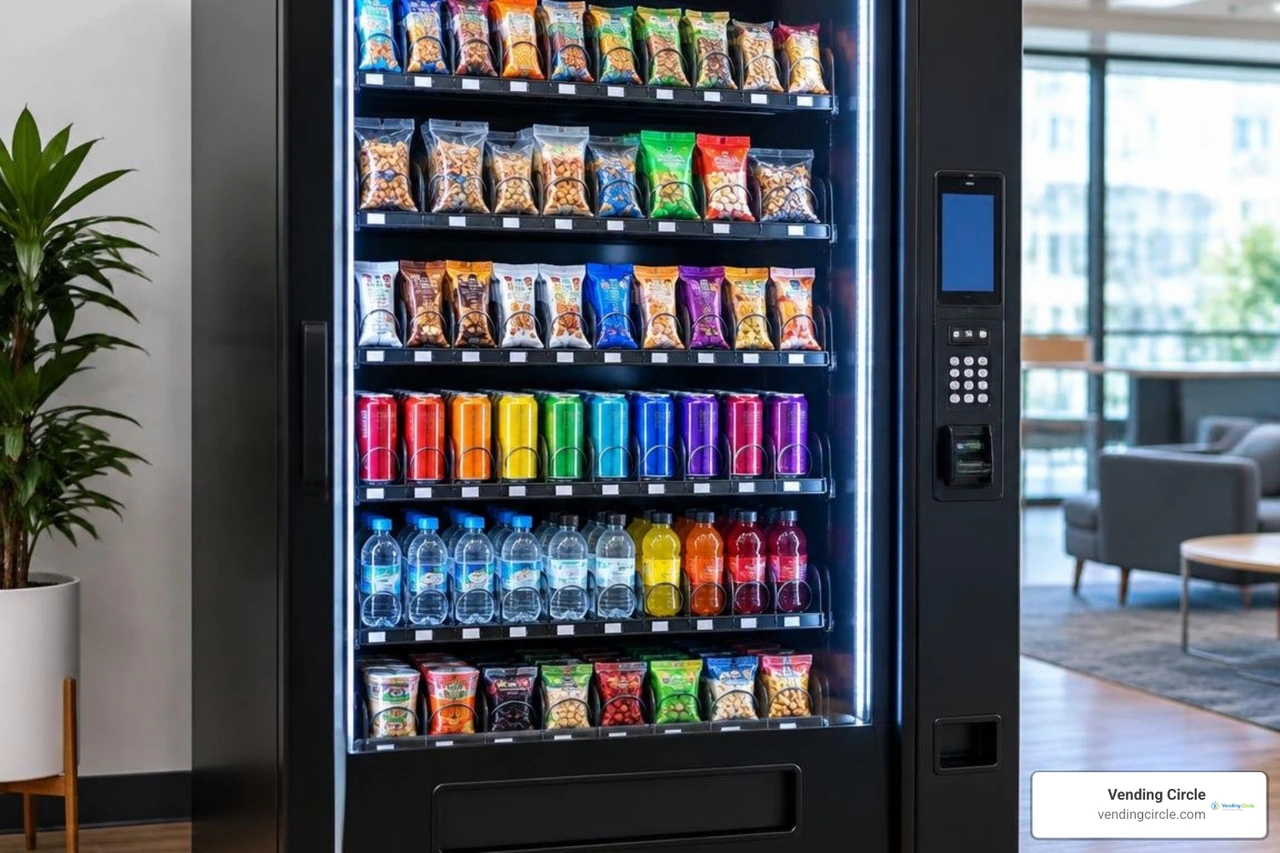
Understanding which items drive profit requires matching the right mix to your foot traffic. Stocking the top profitable vending products means striking a calculated balance between high-velocity items and high-margin specialty goods.
Modern Unattended Retail Strategies
To maximize revenue per square foot, operators follow dynamic pricing strategy guide principles:
- High-Velocity Staples: Traditional sodas and classic chips carry gross margins around 40% to 50% and turn over rapidly.
- High-Margin Functional Snacks: Premium beef jerky, artisan nuts, and protein bars command gross margins exceeding 55% to 65%.
- Impulse Merchandising: Placing high-ticket energy drinks and functional snacks at direct eye level maximizes impulse purchases, while standard sodas sit reliably on lower shelves.
The Surge in Functional Foods, Energy Drinks, and Fresh Meals
Beverages remain the single largest product segment with a 48% global market share. Within that category, functional energy drinks represent the fastest-growing beverage line, generating strong volume across warehouses, automotive centers, and universities.
Simultaneously, healthy snack vending is accelerating at a 7.8% CAGR. Driven by wellness trends and institutional snack guidelines in schools and hospitals, operators are allocating coils to dried fruit, baked chips, and gluten-free items. In high-traffic office complexes, fresh meals—such as artisan salads, yogurt parfaits, and fresh-milk bean-to-cup coffee—deliver substantial basket sizes that dwarf traditional candy sales.
Non-Food Categories: Electronics, Cosmetics, and Pharma Dispensing
Vending has moved well beyond food and beverages. High-margin automated retail kiosks are expanding rapidly in transit hubs and entertainment venues:
- Consumer Electronics: Automated units in airports and hotel lobbies dispense charging cables, power banks, and noise-canceling headphones.
- Cosmetics & Skincare: Premium beauty kiosks in shopping malls and transit terminals allow shoppers to grab travel-size essentials on the move.
- Over-The-Counter (OTC) Healthcare: Medical clinics, university dorms, and residential high-rises are installing automated dispensers for pain relievers, allergy medication, and first-aid kits.
The Rise of Micro-Markets and Smart Coolers in Hybrid Workplaces
Open-shelf micro-markets and camera-equipped smart coolers are transforming the commercial break room. Selecting the right format depends heavily on your high-traffic location selection criteria.
Smart Fridge and Micro-Market Expansion Over Traditional Spirals
Standalone smart fridges have become one of the fastest-growing formats in unattended retail, with installations climbing roughly 50% year-over-year. These units use RFID tags, weight sensors, or computer-vision cameras to detect exactly which items a customer removes after tapping their credit card, charging their account automatically when the door closes.
Smart coolers eliminate product jam service calls, hold double the inventory of traditional spiral glassfront machines, and support fresh meal plates that cannot drop down an elevator chute. In locations with 100 or more employees, micro-markets provide an open deli-style shopping environment that encourages multi-item basket purchases, lifting monthly location revenues up to $5,000 to $20,000 compared to $1,500 from a standard combo machine.
Captive Audience Economics in Industrial and Healthcare Settings
The most lucrative automated retail placements share three specific characteristics: a captive audience, long or continuous operating hours, and limited off-site food options.
- Manufacturing and Distribution Plants: Multi-shift facilities operating 24/7 generate high volumes of late-night energy drink, hot coffee, and hearty snack sales.
- Healthcare and Outpatient Facilities: Hospital staff and visitors require around-the-clock access to fresh meals, cold drinks, and functional snacks when cafeterias are closed.
- Multi-Family Residential Properties: Apartment mailrooms and clubhouses provide steady, late-night foot traffic where residents gladly pay a premium for quick convenience.
Sustainability Regulations, Energy Efficiency, and Operational Headwinds
Energy efficiency is no longer just a marketing slogan; it directly impacts monthly operating overhead. Operators must ensure their machines meet current energy efficiency standards to lower utility bills and comply with municipal requirements.
Energy Standards, Eco-Design, and Reverse Vending Systems
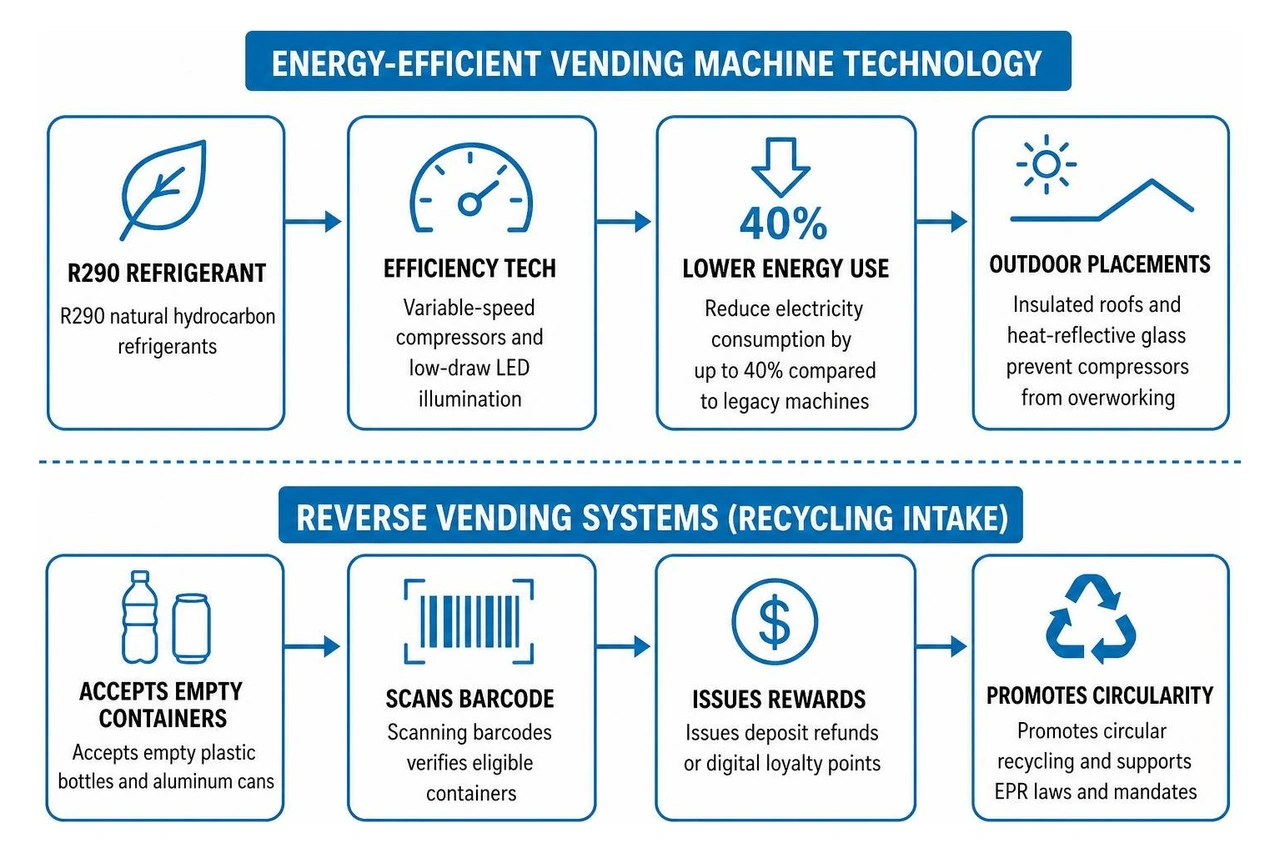
Modern refrigerated vending units integrate R290 natural hydrocarbon refrigerants, variable-speed compressors, and low-draw LED illumination to reduce electricity consumption by up to 40% compared to legacy machines. In outdoor placements across warmer climates, operators utilize insulated roofs and heat-reflective glass to prevent compressors from overworking.
Additionally, municipal recycling mandates and Extended Producer Responsibility (EPR) laws across Europe and North America have spurred the growth of reverse vending machines (RVMs). These automated kiosks accept empty plastic bottles and aluminum cans, scanning barcodes and issuing deposit refunds or digital loyalty points to promote circular recycling.
Managing Input Inflation, Labor Shortages, and Capital Intensity
Operators face ongoing economic pressures, including wholesale ingredient inflation (such as green coffee and cocoa price spikes), rising vehicle fuel costs, and technician labor shortages.
When starting a scalable vending business, managing capital expenditure is essential. While a basic ambient snack machine costs $3,000 to $5,000, high-end refrigerated smart units and fresh-food kiosks run between $8,000 and $15,000. To navigate this capital intensity, growing operators leverage equipment leasing packages to preserve working capital while upgrading their fleets to smart, telemetry-connected models.
Frequently Asked Questions About Vending Machine Trends
What is the average payback period for a smart connected vending machine?
Most operators achieve a full return on investment (ROI) within 18 to 24 months on a smart connected machine placed in a location generating 40 or more transactions per day. In high-traffic transit hubs, airports, or large manufacturing plants, strong daily volume can compress the payback timeline to under 12 months.
How do cashless payments impact average transaction value in vending?
Upgrading a machine to accept contactless cards and mobile wallets typically increases total sales by 20% to 30%. Furthermore, cashless consumers spend up to 100% more per transaction than cash-paying customers because they are not restricted by the physical coins or paper bills in their pockets, making them far more likely to purchase multiple items or premium functional snacks.
What methods do operators use to manage spoilage in fresh-food machines?
Top operators maintain spoilage rates below 3% by utilizing:
- Real-time temperature telemetry that alerts technicians instantly if refrigeration drops below safe thresholds.
- First-Expiry-First-Out (FEFO) automated dispensing logic within smart machine firmware.
- Dynamic markdowns, automatically discounting items that are within 24 hours of expiration to incentivize last-minute sales and eliminate waste.
Conclusion
The automated retail sector has moved far beyond legacy coin-operated snack boxes. By combining cashless convenience, IoT telemetry, AI-driven inventory forecasting, and modern formats like smart coolers and micro-markets, vending operators can build highly profitable, resilient unattended retail businesses.
Staying ahead of market shifts requires the right knowledge, strategic industry connections, and direct access to dependable equipment. At Vending Circle, our online community and marketplace support operators at every stage of growth—providing weekly live Q&A sessions, step-by-step masterclasses, peer networking, and manufacturer-direct pricing on top-tier equipment and supplies. Explore our complete selection of smart retail and commercial vending machines to upgrade your fleet today.