How to Buy a Drink Machine Without Overpaying
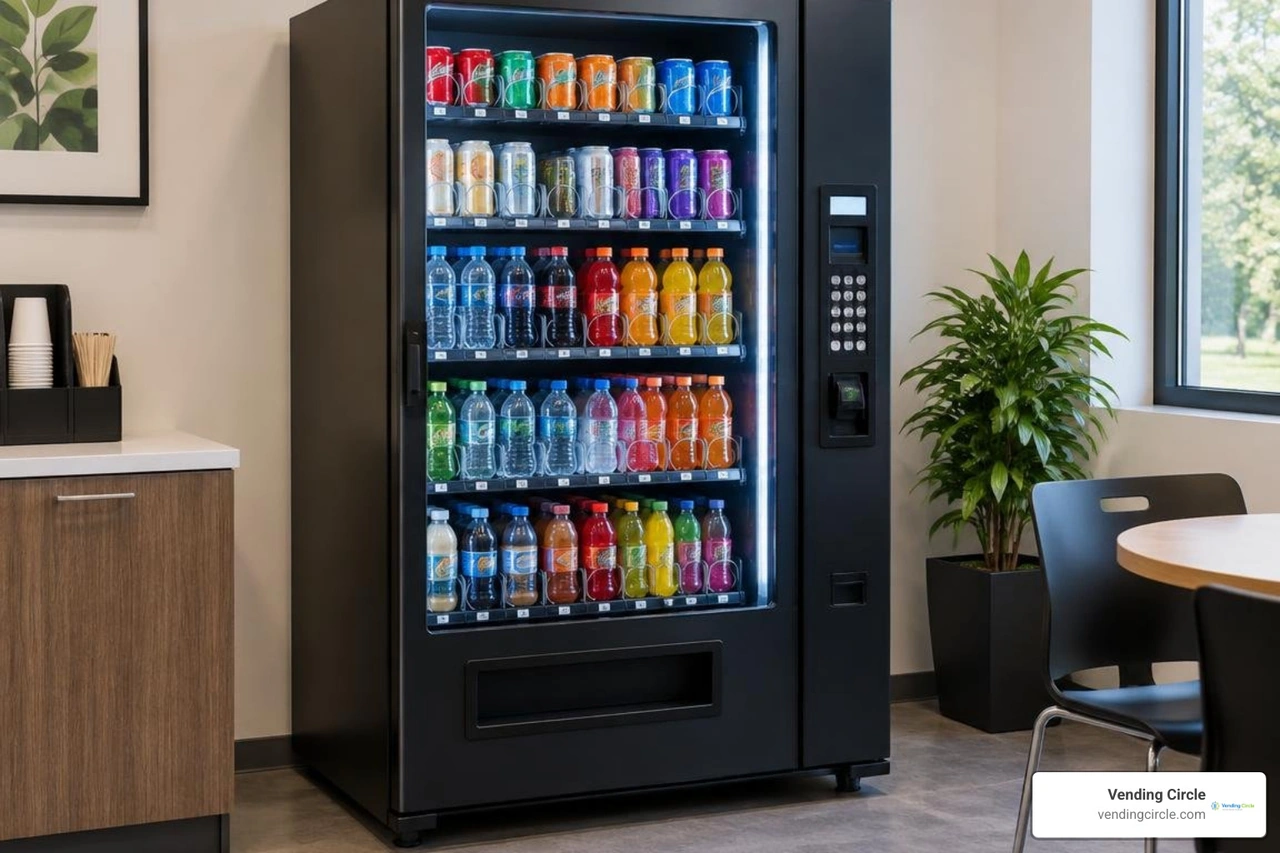
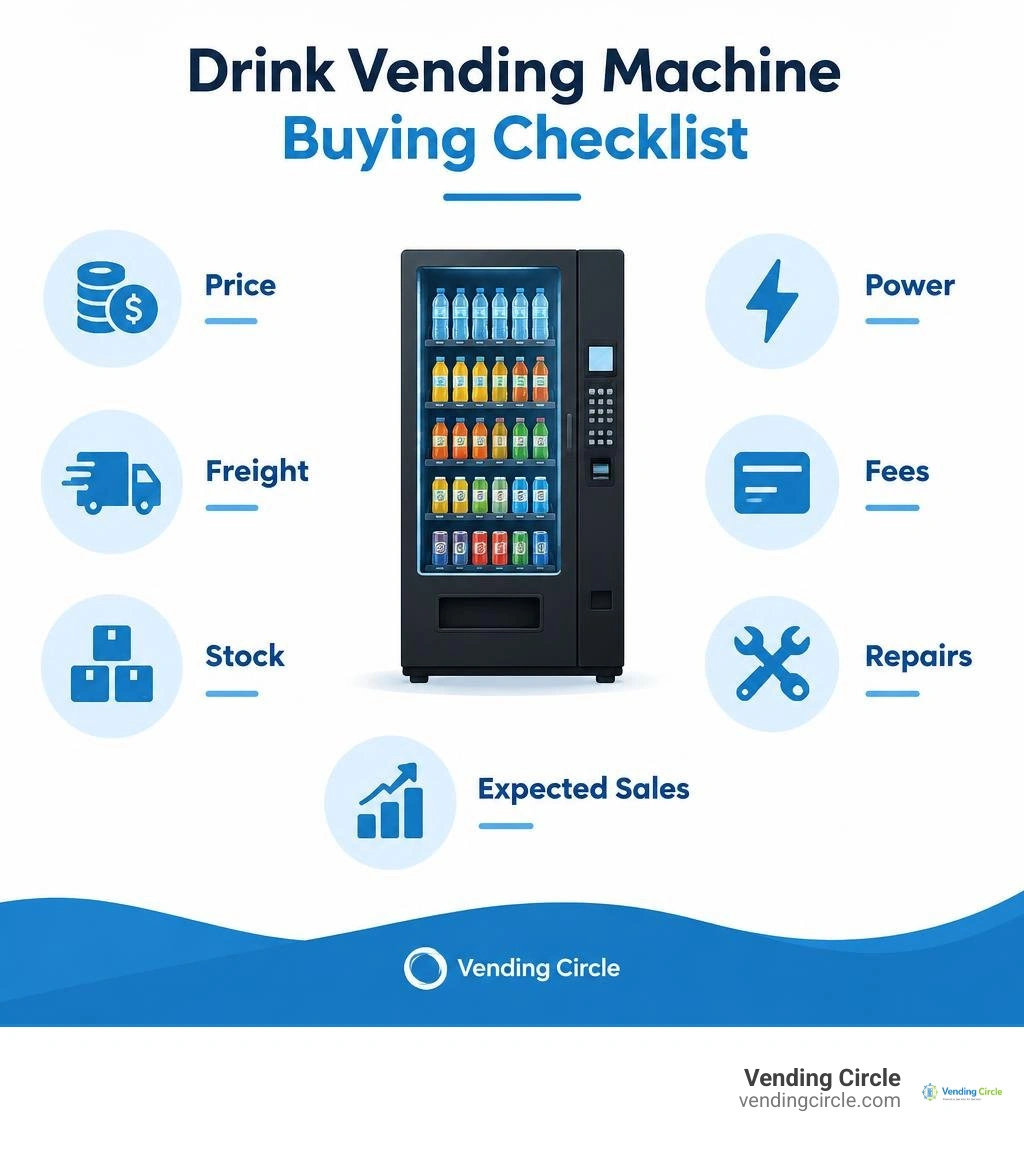
Start with the location, then choose the machine. A drink-only machine suits a site with steady beverage demand. A combo machine makes more sense when space is tight and customers also want snacks. As a price reference, a new combo vending machine typically costs $4,500-$7,000; a used one may cost $2,500-$4,000. Compare the full cost before you buy: freight, installation, card-reader fees, power, repairs, and the first stock order all affect your return.
Cheap equipment is only a bargain if it fits your products and you can keep it running. Check refrigeration, payment options, parts availability, warranty coverage, and return terms before placing an order.
I'm Manuel Mojica, founder of Vending Circle and former owner of MM Healthy Vending. I help operators buy a drink machine with both the purchase price and day-to-day operating costs in mind.
Popular Types of Commercial Beverage Machines and Dispensers
Choosing the right equipment begins with assessing your footprint, customer base, and volume requirements. A high-output distribution facility demands vastly different hardware than a boutique fitness studio or an executive break room.
| Equipment Type | Typical Cost Range | Capacity | Ideal Placement Locations |
|---|---|---|---|
| Dedicated Cold Drink Machines | $3,000 – $6,500 (New) $1,500 – $3,500 (Used) | 300 – 600+ Cans / Bottles | Warehouses, transport hubs, manufacturing plants, gyms |
| Combination Snack & Beverage | $4,500 – $7,000 (New) $2,500 – $4,000 (Used) | 150 – 300 Drinks + 150 – 300 Snacks | Office break rooms, medical clinics, school staff rooms |
| Commercial Countertop Soda Dispensers | $150 – $400 | Single-serve on-demand (48 oz reservoir) | Small offices, boutique waiting lounges, executive suites |
| Commercial Slush & Granita Machines | $800 – $2,500 | 2.6 L to 12 L per bowl | Cafes, pool bars, amusement venues, convenience stores |
Dedicated Cold Can and Bottle Dispensers
When beverage turnover is your primary focus, dedicated cold drink machines are the undisputed workhorses of automated retail. Built with rugged, heavy-gauge sheet metal and specialized stack mechanisms, these units handle high transaction volumes without product jams.
Modern units feature optical drop sensors that verify whether a beverage has successfully dropped into the retrieval bin. If a bottle gets stuck, the system prompts the buyer to select another drink or immediately refunds their payment, eliminating the classic frustration of shaking the machine. Multi-pricing logic allows you to charge different rates for premium energy drinks, sodas, and bottled water within the same cabinet while dedicated digital thermostats keep inventory chilled between 34°F and 38°F.
Combination Snack and Beverage Systems
If square footage is limited or foot traffic does not justify two separate standalone cabinets, explore combo vending machines for sale. These models merge chilled beverage sections with ambient snack shelving inside a single compact frame.
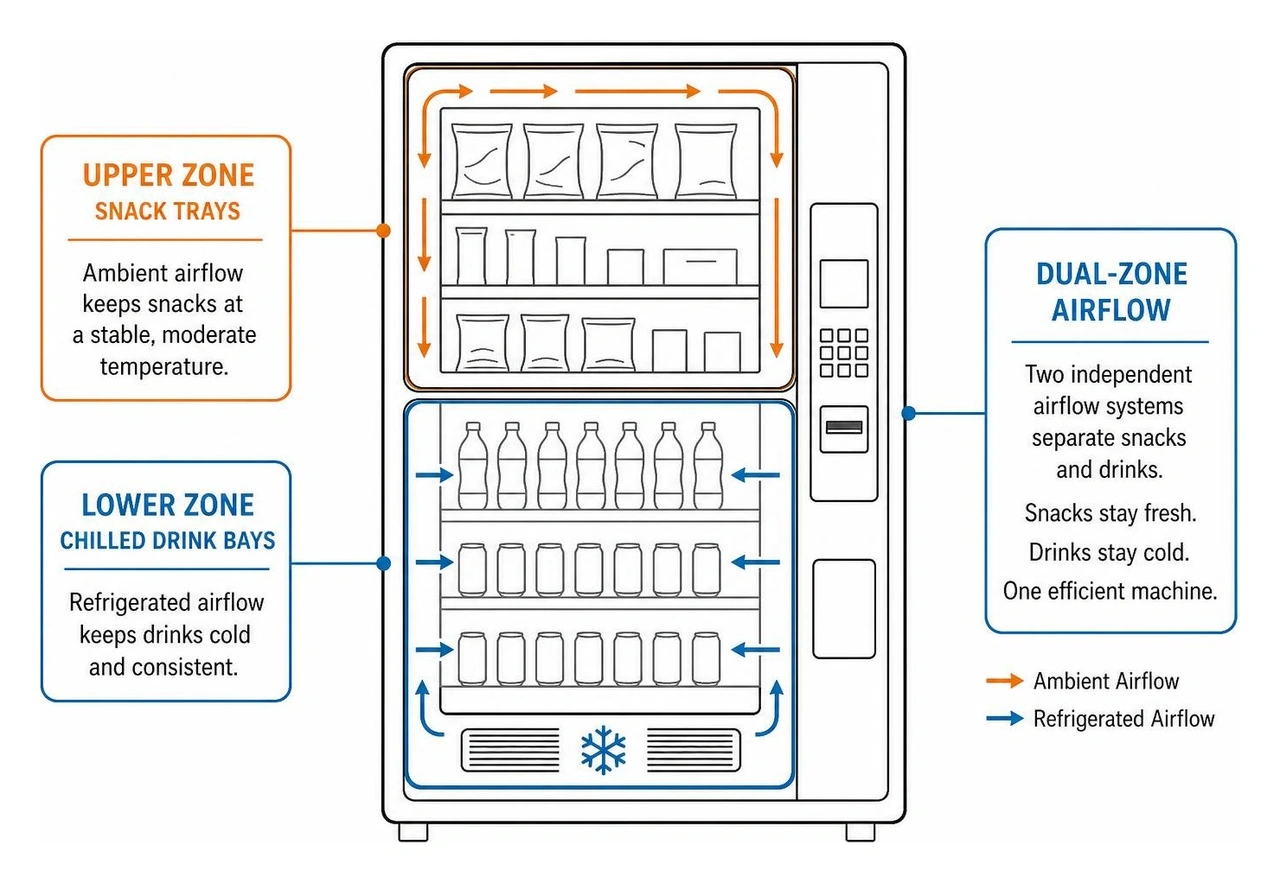
Dual-zone climate controls direct refrigerated airflow across the lower beverage shelves while maintaining a moderate, ambient temperature on the upper snack shelves. This design prevents chocolate from melting while avoiding excessive power consumption on dry goods. It unlocks high impulse buy rates by letting customers pick up a cold drink and a salty snack in a single transaction.
Countertop Beverage Systems and Frozen Drink Dispensers
Commercial spaces do not always need a full-sized floor model. Countertop units offer quick refreshment with a tiny footprint. For instance, compact countertop soda makers dispense a 12 oz flavored sparkling or still beverage in under 35 seconds. They feature 60-liter carbonation cylinders, BPA-free cold-water reservoirs with thermochromic temperature indicators, and support over 20 low-calorie flavors.
For frozen treats, commercial-grade slush units feature rapid-chill technology. By rotating a continuous internal auger around a cooling cylinder, these machines create smooth frozen drinks in 15 to 60 minutes without requiring loose ice, keeping up to 2.6 liters chilled for 12 hours.
Key Factors to Consider Before You Buy a Drink Machine
Evaluating commercial hardware requires looking beneath the exterior paint. Review our vending machine pricing guide 2026 to see how build specs influence lifetime profitability.
Energy Efficiency and Refrigeration Systems
Refrigeration accounts for the vast majority of an automated dispenser's utility draw. Investing in vending machine energy efficiency protects your bottom line and keeps property owners happy with their electric bills.
Modern commercial machines use hydrocarbon refrigerants like R290, high-efficiency variable-speed compressors, and bright, low-draw LED illumination, often meeting ENERGY STAR efficiency standards. Advanced units also offer programmable eco-modes that raise cabinet temperatures slightly during off-peak hours (such as overnight in an office building), cutting monthly refrigeration power draw by up to 30%.
Cashless Telemetry and Modern Payment Tech
Carrying physical cash is increasingly rare. If your machine only takes dollar bills and quarters, you are leaving substantial revenue behind. Upgrading to a model when you buy a vending machine with card reader instantly expands your customer base by accepting tap-to-pay cards, mobile wallets, and smartwatches.
These systems rely on a stable vending machine network connection via cellular 4G/5G telemetry modems. Cashless payment readers regularly increase gross machine sales by 25% to 30% because they eliminate payment friction and encourage multi-item purchases.
Smart Inventory Telemetry and Machine Intelligence
Telemetry modems do far more than process card payments. They send live stock and system data directly to your phone or computer.
Using telemetry combined with insights from our vending machine ai forecast guide 2026, operators can track sales real-time, anticipate sold-out drink columns, and plan efficient restocking trips. Automated alerts notify you immediately if a compressor fails or a coin mechanism jams, protecting your chilled inventory and minimizing costly downtime.
Sourcing Strategies: Finding Budget-Friendly Equipment
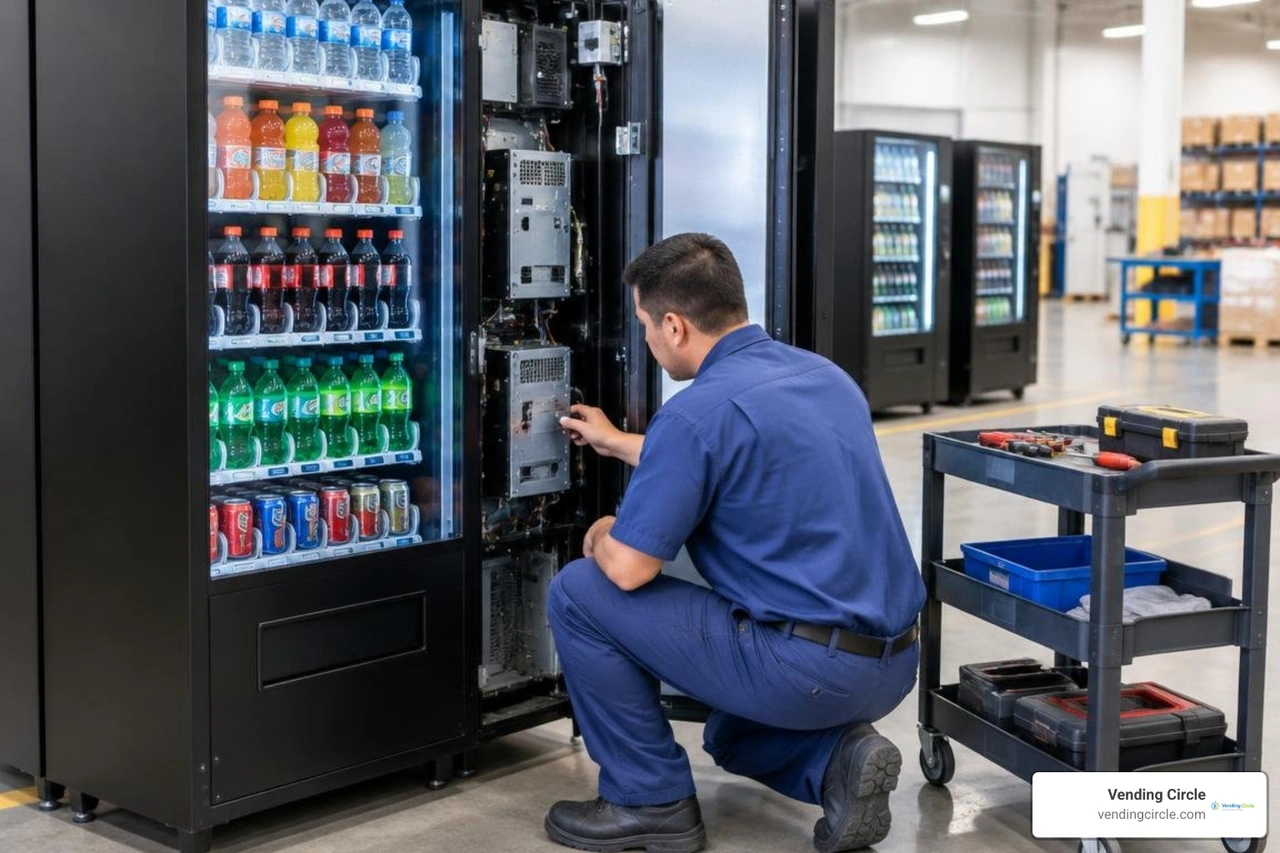
Smart procurement is about balancing initial equipment costs against ongoing reliability. Refer to our vending machine costs guide 2026 to budget for hardware, freight, and routine maintenance without surprises.
Where to Buy a Drink Machine for Maximum ROI
Finding reliable equipment at competitive prices depends on your sourcing channel, as detailed in our vending machine market guide 2026. Sourcing directly through an operator network like Vending Circle gives you access to wholesale, manufacturer-direct pricing and verified factory builds without the retail markups that usually come with piecing together equipment from scattered suppliers.
Always confirm freight delivery terms (such as lift-gate delivery requirements), verify warranty length (typically 1 to 2 years on major parts for new commercial machines), and check return policies before sending payment.
How to Buy a Drink Machine Outright
Paying for your machine outright gives you 100% ownership, total control over product selection and pricing, and avoids ongoing interest charges or monthly equipment fees. Review our vending machine financing guide 2026 for a closer look at how to budget for an outright purchase and plan your payback period.
Evaluating Refurbished and Pre-Owned Hardware
Buying pre-owned equipment is one of the fastest ways to shorten your payback period, provided you carefully inspect the machine first. Use our used vending machines guide 2026 alongside this practical field inspection checklist:
- Compressor and Refrigeration Test: Plug the unit in and let it run for at least an hour, then confirm it reaches and holds 34°F to 38°F without excessive cycling noise.
- Door Seals and Cabinet Body: Check gaskets for cracks, dents, or rust that could let cold air escape or let moisture damage internal wiring.
- Coin, Bill, and Card Reader Function: Insert cash and a test card to confirm the payment stack reads cleanly and dispenses correct change.
- Drop Sensors and Delivery Bin: Run a test vend on every column to confirm products drop fully and the retrieval bin opens and closes properly.
- Maintenance and Service Records: Ask the seller for documentation on past repairs, compressor replacements, or firmware updates.
- Available Parts and Warranty: Confirm replacement parts are still manufactured for that model and ask whether any limited warranty transfers to you as the new owner.
Maximizing Profitability and Securing High-Traffic Locations

The overall U.S. retail vending machine industry was valued at roughly $15 billion in 2024, driven heavily by convenient, cold-beverage sales. Review our vending machine industry statistics 2026 to see why beverages remain the cornerstone of profitable routes.
High-Margin Beverage Selection and Inventory Sourcing
Beverages generally deliver higher gross margins and longer shelf lives than fresh food or delicate pastries. According to our vending machine supplies guide 2026, your product mix should match your venue's unique foot traffic:
- Energy Drinks & Functional Coffees: Wholesale cost is typically $1.20 to $1.60 per can, retailing for $3.50 to $4.50. These are essential for manufacturing facilities, tech offices, and college campuses.
- Standard Sodas & Sparkling Waters: Wholesale cost runs $0.40 to $0.60 per can, with retail prices between $1.50 and $2.25. These provide steady volume in public waiting areas.
- Purified & Enhanced Bottled Water: Wholesale cost is around $0.25 to $0.35 per bottle, selling for $1.50 to $2.00. This is the highest percentage margin item in almost every machine.
Pinpointing High-Yield Placement Opportunities
A machine's success depends far more on dwell time and customer environment than raw foot traffic. When scouting vending machine locations, prioritize sites that feature these four key characteristics:
- Dwell Time: Locations where people wait with idle time (medical clinics, car repair lounges, transit hubs).
- Captive Audiences: Facilities where leaving for an outside drink is difficult or inconvenient during short breaks.
- Extended Operating Hours: Multi-shift or 24/7 facilities generate consistent, around-the-clock sales.
- Supportive On-Site Management: Property managers who view the machine as a valuable amenity for staff and guests.
Targeting these venue types produces predictable, reliable monthly revenue:
- Medical Outpatient & Urgent Care Centers: A single combo machine typically generates $1,200 to $1,800 per month.
- Multi-Family Residential Properties: Placed near high-traffic mailrooms or clubhouse amenities, a machine regularly averages over $2,500 per month.
- Multi-Shift Manufacturing & Industrial Plants: High-headcount facilities often generate $5,000 or more per month per machine.
By methodically scaling with quality locations, operators can build substantial businesses. Many operators grow from a single machine into large multi-location routes generating over $80,000 per month, ultimately building enterprise assets that sell for 24 to 30 times monthly profit.
Frequently Asked Questions About Drink Vending Machines
What is the average cost to purchase a commercial drink machine in 2026?
A refurbished, pre-owned commercial beverage dispenser typically costs between $1,500 and $3,500, depending on age, cosmetic condition, and installed payment hardware. Brand-new cold beverage and combination units generally cost between $4,500 and $7,000. When budgeting, factor in freight shipping ($300 to $600), a cashless telemetry card reader ($250 to $400), and initial opening inventory ($300 to $500).
How much ongoing revenue can a drink machine generate monthly?
Monthly gross revenue varies widely based on site demographics and foot traffic. A standard office break room with 40 to 60 employees typically earns between $300 and $600 per month. High-performing locations with captive audiences—such as 24/7 industrial plants, distribution hubs, or medical outpatient centers—frequently produce between $1,500 and $5,000 per month. Net profit margins after inventory and payment processing usually sit between 40% and 55%.
What routine maintenance is required for a commercial beverage dispenser?
To keep your machine running reliably and prevent premature compressor failures, follow this simple maintenance schedule:
- Monthly: Vacuum and brush the condenser coils to remove dust, lint, and debris. Clean the coin acceptor and bill validator optical scan paths using a damp microfiber cloth.
- Quarterly: Inspect door gaskets for cracks or cold air leaks, check internal drainage trays, and verify that optical drop sensors fire correctly.
- Annually: Sanitize internal delivery bins, test thermostat calibration, and update telemetry and card reader firmware.
Conclusion
Sourcing a dependable, cost-effective drink machine is one of the smartest investments in automated retail. By focusing on energy efficiency, reliable telemetry, and high-margin product selection, you can build a resilient, profitable vending business.
Whether you are launching your very first machine or expanding an existing route, Vending Circle provides the wholesale pricing, hands-on training, and operator network you need to grow sustainably. You can explore commercial drink machines and operator resources to find reliable equipment and connect with our community today.