Find the Right Combo Vending Machine for Your Route
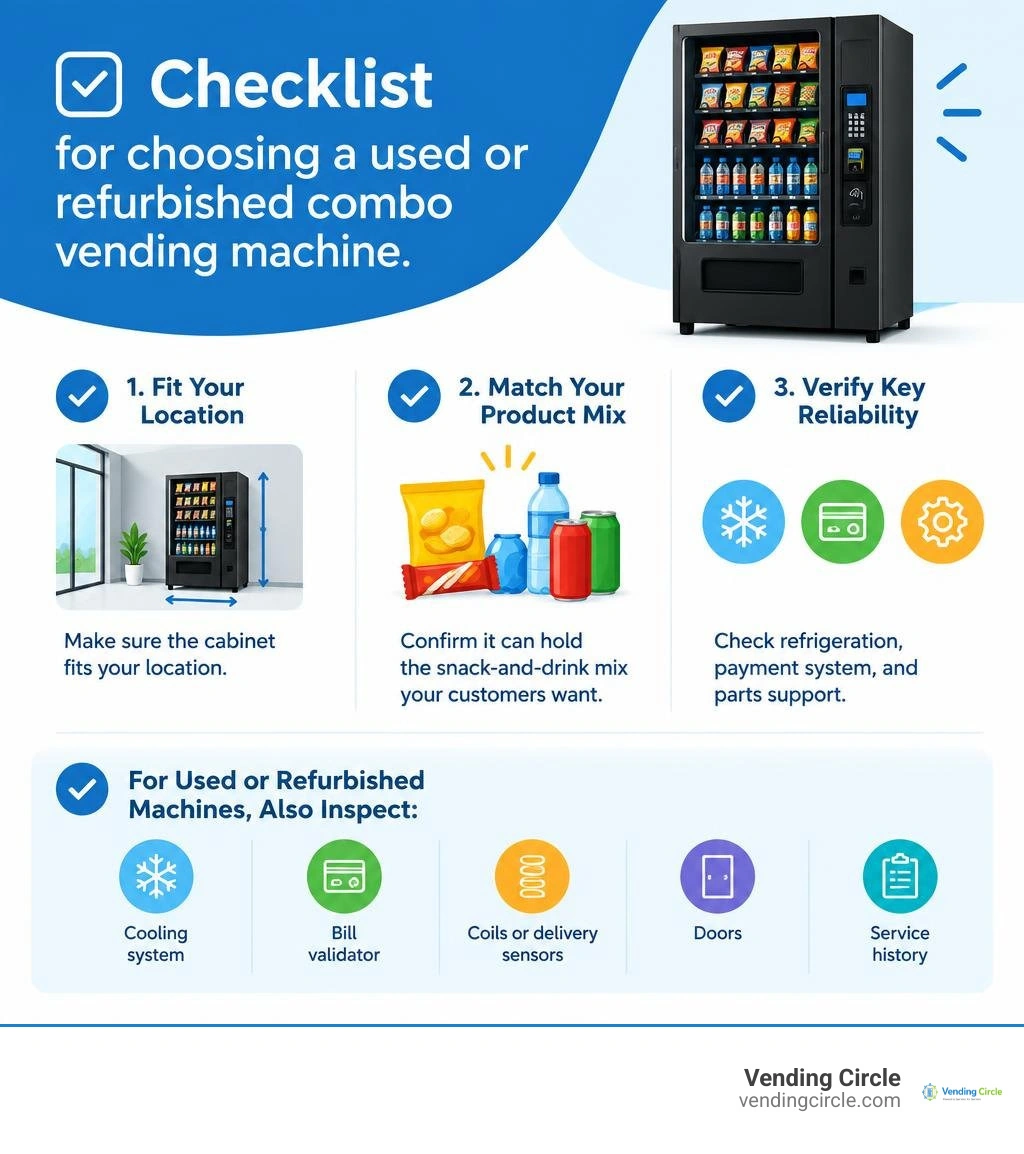
When comparing combo vending machines for sale, start with three checks: make sure the cabinet fits your location, confirm it can hold the snack-and-drink mix your customers want, and verify that its refrigeration, payment system, and parts support are dependable. For a used or refurbished machine, inspect the cooling system, bill validator, coils or delivery sensors, doors, and service history before you buy.
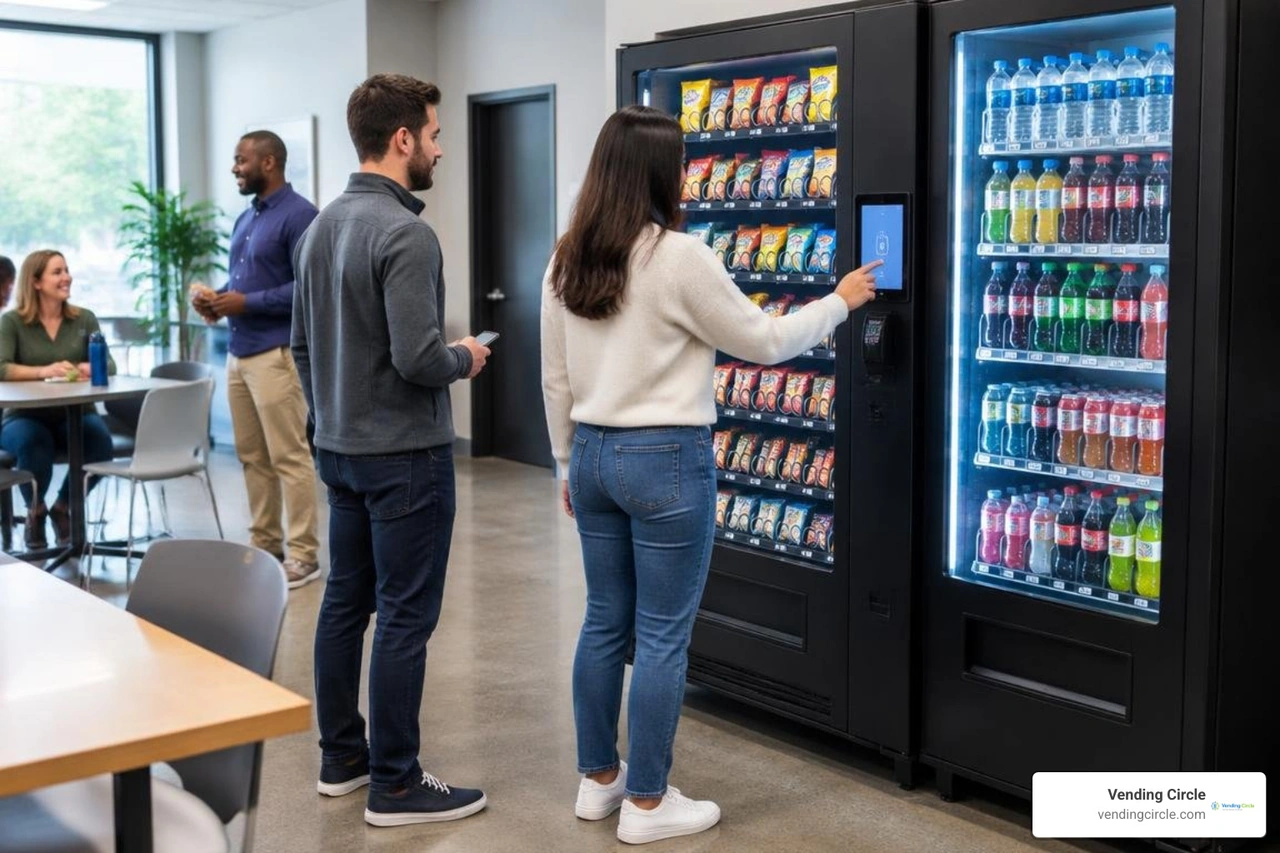
A combo machine puts snacks and cold drinks in one cabinet. That can reduce the floor space, power connections, and service complexity of operating separate snack and beverage machines. It can also encourage larger purchases when customers can grab a drink with a snack in the same stop.
The best choice is not always the biggest machine or the lowest-priced one. A small office may need a compact unit with roughly 20 snack and 9 drink selections, while a busy warehouse, apartment lobby, or medical facility may justify a higher-capacity machine with cashless payments and remote inventory alerts.
I am Manuel Mojica, founder of Vending Circle and an operator through MM Healthy Vending. I help operators evaluate combo vending machines for sale, source equipment and supplies, and build routes that are easier to stock, service, and scale.
Combo vending machines for sale terms to know:
For broader industry context, the vending machine entry on Wikipedia explains how combination units evolved from standalone snack and beverage equipment.
What to Look for in Combo Vending Machines for Sale
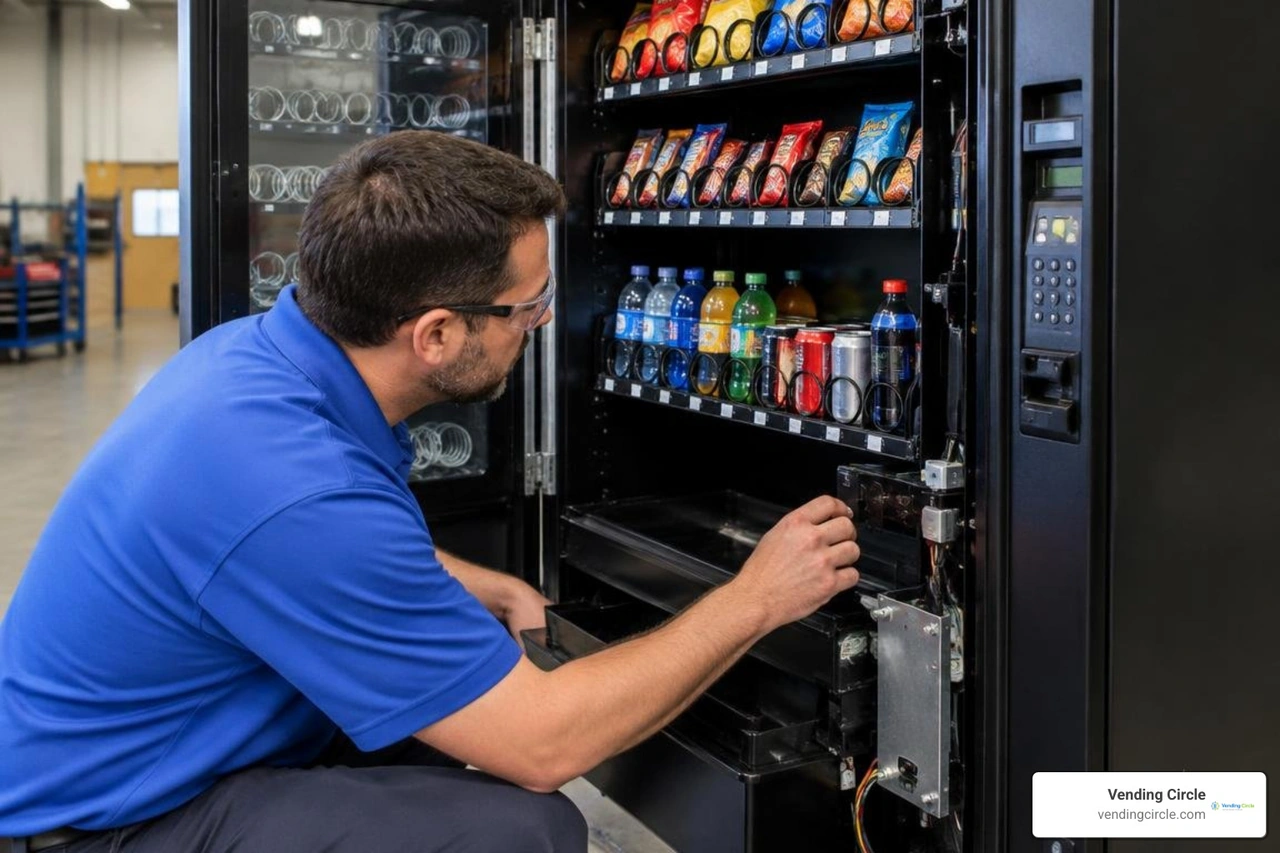
When we evaluate combination equipment for our routes, we look past fresh paint and examine the physical engineering of the cabinet. A reliable combo unit must perform two demanding jobs at once: keep carbonated beverages, waters, and dairy products cold while protecting ambient shelf-stable snacks from moisture, melting, or crushing.
The build quality starts with heavy-gauge industrial steel construction. Weak doors warp over time, leading to air leaks around magnetic gaskets that overwork the compressor. We also examine internal delivery systems. Modern combination hardware utilizes guaranteed delivery sensor beams across the drop bucket. If a customer orders a bag of chips and it gets caught on a coil, the optical sensors detect that no item crossed the beam, turning the coil an extra rotation or prompting the buyer to choose another item without eating their money.
Reviewing our vending machine pricing guide 2026 helps balance these physical features against purchase budgets.
Key Hardware Specifications and Dual-Zone Refrigeration
The heart of any refrigerated combo unit is its dual-zone thermal design. Unlike standard cold drink machines where the entire cabinet sits at 35°F to 38°F, a combination unit often separates ambient snack shelves at the top from a refrigerated lower drink compartment.
When selecting hardware, look for these foundational specifications:
- Thermal Barrier Integrity: Heavy-duty insulated dividers or dual-door configurations prevent chilled air from cooling upper pastry trays, avoiding unwanted condensation on packaging.
- Adjustable Trays and Rotational Coils: Configurable metal shelving allows you to swap dual-spiral wide trays for pastries or bags of chips with single-spiral narrow lanes for candy bars, energy drinks, and 12 oz cans.
- NAMA & Health Safety Controls: National Automatic Merchandising Association (NAMA) compliant controllers monitor internal temperatures. If internal cooling drops below health safety thresholds during a power outage, the unit automatically locks out perishable products to protect consumers.
- Efficient Cooling Units: Modern 1/3 to 1/2 HP deck-mounted compressors run on environmentally safe refrigerants (such as R290 or R134a) and slide out effortlessly on bottom rails for fast maintenance.
Sourcing New vs Used Combo Vending Machines for Sale
Deciding between brand-new hardware and pre-owned units comes down to upfront capital versus risk tolerance. New machines provide factory peace of mind and pristine aesthetics, but a thoroughly refurbished machine can yield identical revenue at a fraction of the initial cost.
When sourcing used or refurbished equipment, we recommend a strict 34-point inspection routine:
- Refrigeration Bench Testing: Run the cooling unit for a continuous 48 hours to ensure it reaches and holds 36°F without frosting the evaporator coils.
- Bill Acceptor & Coin Mech Diagnostics: Confirm currency validator belts are clean and firmware supports current currency designs.
- MDB Harness and Board Verification: Check that the main control board supports Multi-Drop Bus (MDB) standards so you can plug in card readers and telemetry systems seamlessly.
- Cosmetic and Structural Rehab: Ensure smooth cabinet panels, rust-free bases, new T-handles or high-security plug locks, and bright internal LED lighting.
For broader sourcing networks, check our wholesale vending machines guide 2026 to see how volume equipment purchases compare.
Payment Systems and Smart Remote Monitoring
Cash-only machines are obsolete. In the modern vending landscape, contactless payments represent the majority of point-of-sale volume across high-traffic properties.
Modern units integrate seamless cashless terminals, accepting chip cards, Apple Pay, Google Wallet, and QR mobile transactions. Selecting the correct telemetry hardware from our vending machine card readers guide ensures your equipment connects reliably to cellular networks.
Using an active vending machine network connection, the hardware transmits real-time telemetry into a cloud dashboard. You receive instant smartphone push alerts if a compressor faults, a coin tube jams, or popular cold brew cans drop below minimum stock levels.
Profitability and Product Capacity Analysis
The commercial advantage of combo vending machines lies in average basket size. Studies show that customers are significantly more likely to purchase both a snack and a beverage in a single visit when both options are presented together in the same machine.
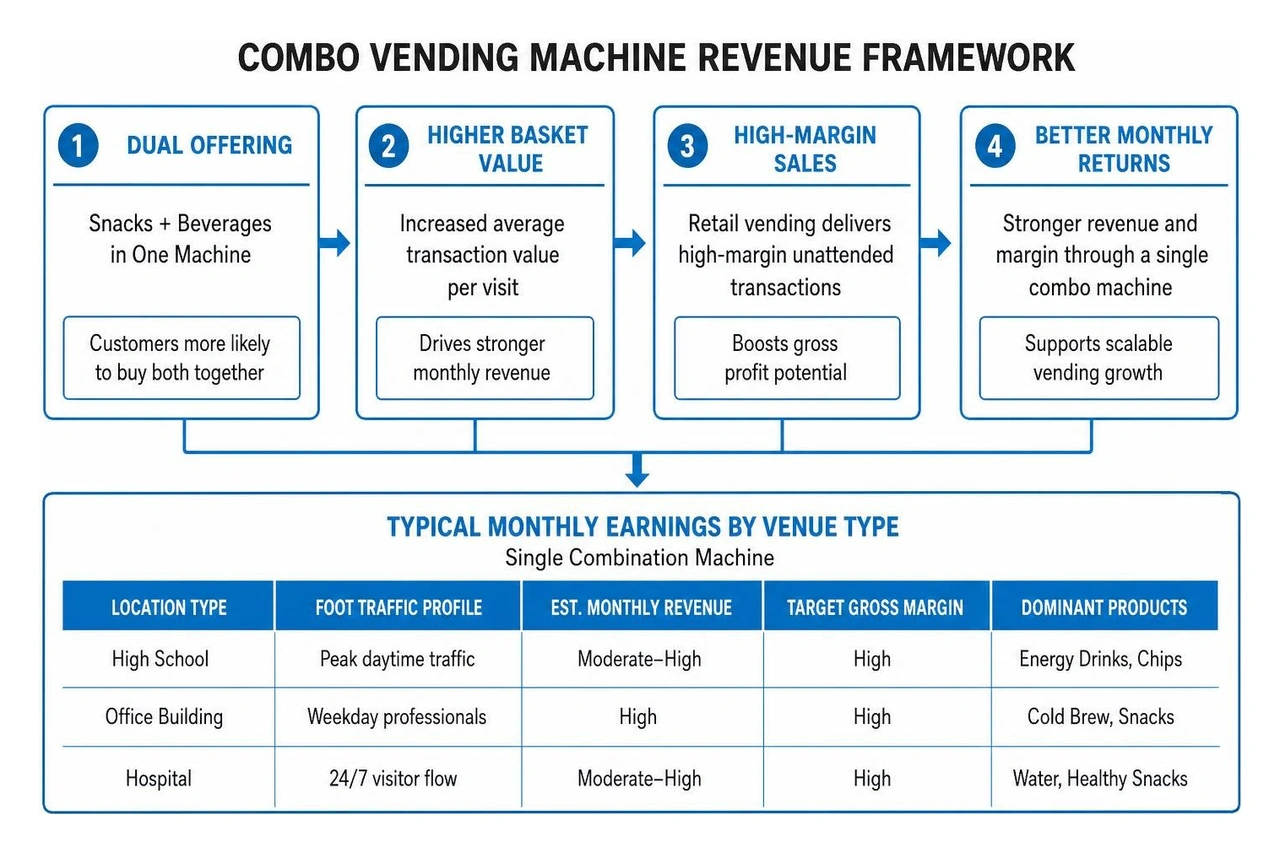
As demonstrated in recent vending machine industry statistics 2026, retail vending accounts for billions in high-margin unattended transactions.
Here is how typical monthly earnings break down by venue type for single combination machines:
| Location Type | Foot Traffic Profile | Est. Monthly Revenue | Target Gross Margin | Dominant Products |
|---|---|---|---|---|
| Medical Outpatient Clinic | High pause-time waiting rooms | $1,200 – $1,800 | 58% – 65% | Sparkling water, nuts, baked chips |
| Multi-Family Apartment Lobby | 24/7 resident foot traffic | $2,500 – $3,200 | 60% – 70% | Energy drinks, cookies, sodas |
| Multi-Shift Manufacturing Plant | Fast-paced 15-minute breaks | $4,500 – $5,200 | 62% – 72% | RTD coffee, protein bars, meat snacks |
| Commercial Corporate Office | Steady daytime staff | $900 – $1,500 | 55% – 62% | Cold teas, sparkling water, trail mix |
Stocking Strategies and Inventory Management
Maximizing revenue in a combination unit requires balancing fast-turning beverages against longer-shelf-life snacks. Beverage slots have higher turn rates, meaning drinks generate steady cash flow while premium snacks boost your overall basket margins.
We practice disciplined vending machine inventory management to prevent stockouts of high-velocity items:
- Bottom Drink Trays: Reserve these slots for standard 12 oz cans and 20 oz bottles. High-volume locations benefit from dynamic pre-cooling zones that drop chilled inventory into vend-ready slots quickly after restocking.
- Middle Candy & Bar Trays: Stock with shelf-stable candy, protein bars, and pastries. Explore our wholesale vending snacks guide 2026 to curate high-margin wholesale snacks that match your venue demographics.
- Top Chip Trays: Position light, bulky bags of chips and popcorn on upper shelves equipped with wider dual-spiral coils to prevent product hanging.
Top Location Strategies to Maximize Combo Machine Returns
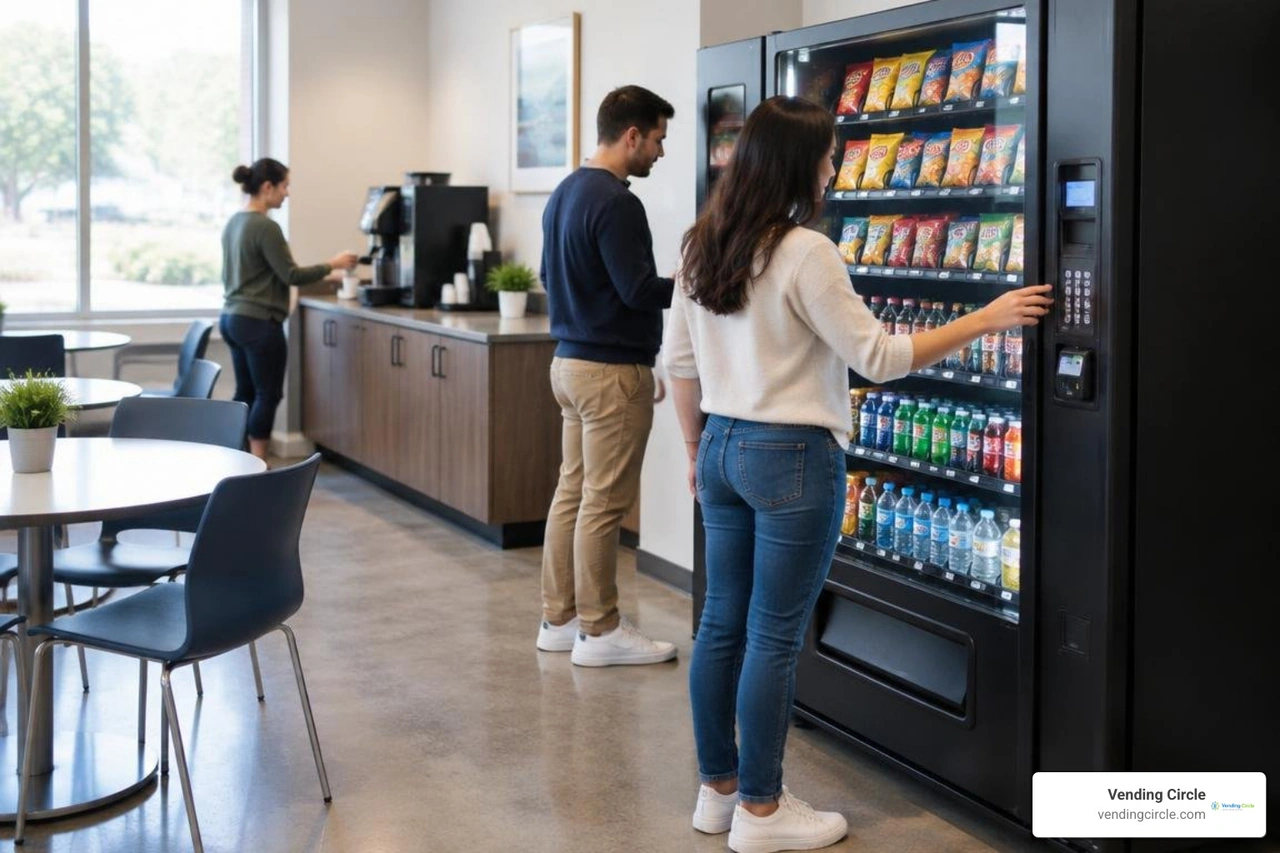
A top-tier machine in a poor location will fail, but a well-inspected combo machine placed at a high-pause intersection will generate consistent passive income. When scouting sites, prioritize foot traffic that pauses over traffic that simply walks past.
Focus your placement pitches on these proven venue categories outlined in our guide to great locations for vending machines:
- Healthcare & Outpatient Waiting Areas: Family members and patients often wait 45 to 90 minutes with zero immediate access to cafeterias. A quiet, clean combination machine provides immediate comfort.
- Manufacturing Facilities & Distribution Hubs: Shift workers on rigid 15-minute breaks do not have time to drive to off-site convenience stores. Offering cold energy drinks alongside hearty snacks directly in the break room drives high daily volume.
- Residential Multi-Family Buildings: Apartment mailrooms and clubhouse corridors offer 24/7 captive demand from residents seeking late-night refreshments.
Route Expansion and Evaluating Pre-Placed Equipment
If you plan to scale by acquiring existing equipment on site, analyze the location's service history and physical assets. Established routes typically trade at multiples around 24 to 30 times monthly net profit.
Before finalizing an acquisition, consult our vending machine routes guide 2026. Always audit 12 months of certified payment gateway statements, verify that existing location agreements transfer seamlessly to your entity, and test every coin mech, bill validator, and cooling unit on site.
Financing, Sourcing, and Procurement Options
Equipping a growing route with commercial vending machines does not require liquidating your operational cash reserves. Flexible capital equipment leasing and equipment financing programs allow you to spread upfront hardware investments across 24 to 60-month terms.
Review our complete vending machine financing guide 2026 to model your monthly cash flow. In many instances, a combination machine producing $1,500 in monthly gross revenue can easily cover a $140 monthly financing payment while leaving substantial operating margins for restocking and net profit.
Evaluating Commercial Warranties on Combo Vending Machines for Sale
Never purchase commercial vending hardware without a clear warranty and parts availability plan. When evaluating equipment, choose trusted partners referenced in our vending machine suppliers guide.
Key warranty factors to confirm include:
- Compressor Coverage: Seek at least a 2- to 5-year warranty on the sealed refrigeration deck.
- Component Replacement Guarantees: Ensure replacement motors, harness wiring, drop sensors, and spiral coils are stocked in domestic warehouses for 24- to 48-hour dispatch.
- Technical Hotline Access: Access to dedicated, experienced technicians reduces field downtime when troubleshooting control boards or clearing harness communication faults.
Frequently Asked Questions About Combination Vending
How much do used combo vending machines typically cost?
Refurbished combination vending machines generally cost between $2,500 and $4,500, depending on age, cosmetic condition, and installed cashless hardware. Brand-new standard and smart combo machines range from $3,500 to upwards of $8,000 for high-capacity, dual-zone multi-door systems. For a detailed breakdown of asset depreciation and entry capital, reference our vending machine costs guide 2026.
What power and site requirements are needed for a combo machine?
Most commercial combo machines run on a standard 115V AC, 60Hz single-phase circuit drawing 3 to 7 amps under active refrigeration cycles. Maintain at least 4 to 6 inches of clearance between the back of the cabinet and the wall to ensure proper airflow over the condenser coils. Ensure the installation footprint meets ADA accessibility guidelines, keeping payment slots and selection keypads below 48 inches from the floor.
How do combo machines compare to standalone snack and drink units?
A single combo machine cuts your required floor footprint in half and uses a single electrical outlet, significantly lowering utility draw for host properties. While separate standalone units offer larger total capacities for massive operations, combination units deliver higher return on investment in small to mid-sized spaces by offering a complete snack-and-drink experience in one cabinet.
Conclusion
Scaling a profitable vending route depends on selecting reliable equipment, matching your product capacity to site demand, and managing inventory with clear telemetry data. Combination vending machines deliver the product diversity modern consumers expect while optimizing valuable square footage.
At Vending Circle, we support operators at every stage of their business journey. Whether you need weekly live operational Q&As, practical courses on equipment repair, or direct procurement pricing on commercial hardware, our community helps you avoid costly operational mistakes and expand your route with confidence.
Ready to find your next reliable machine? Explore our curated inventory and browse quality vending machines to upgrade your route today.