Why Great Locations for Vending Machines Drive Profit
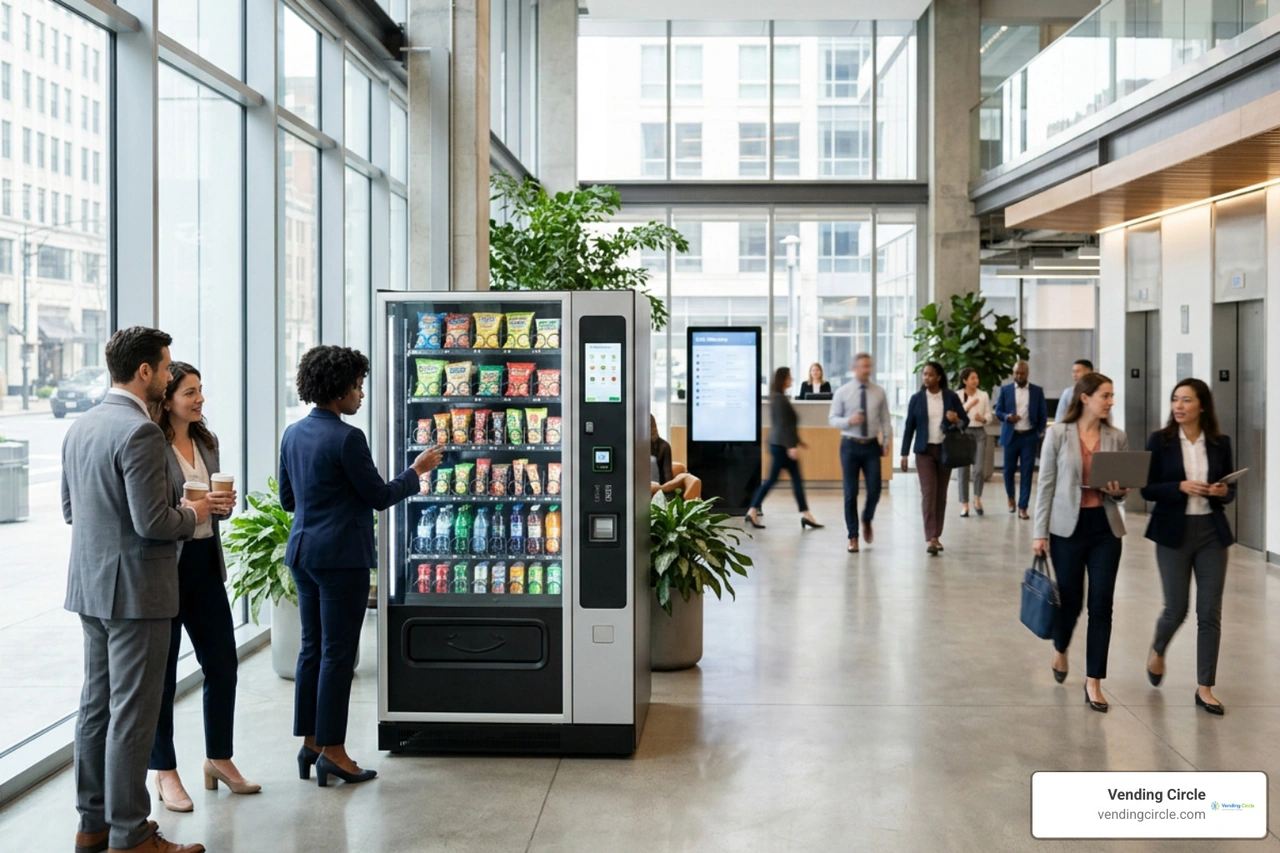
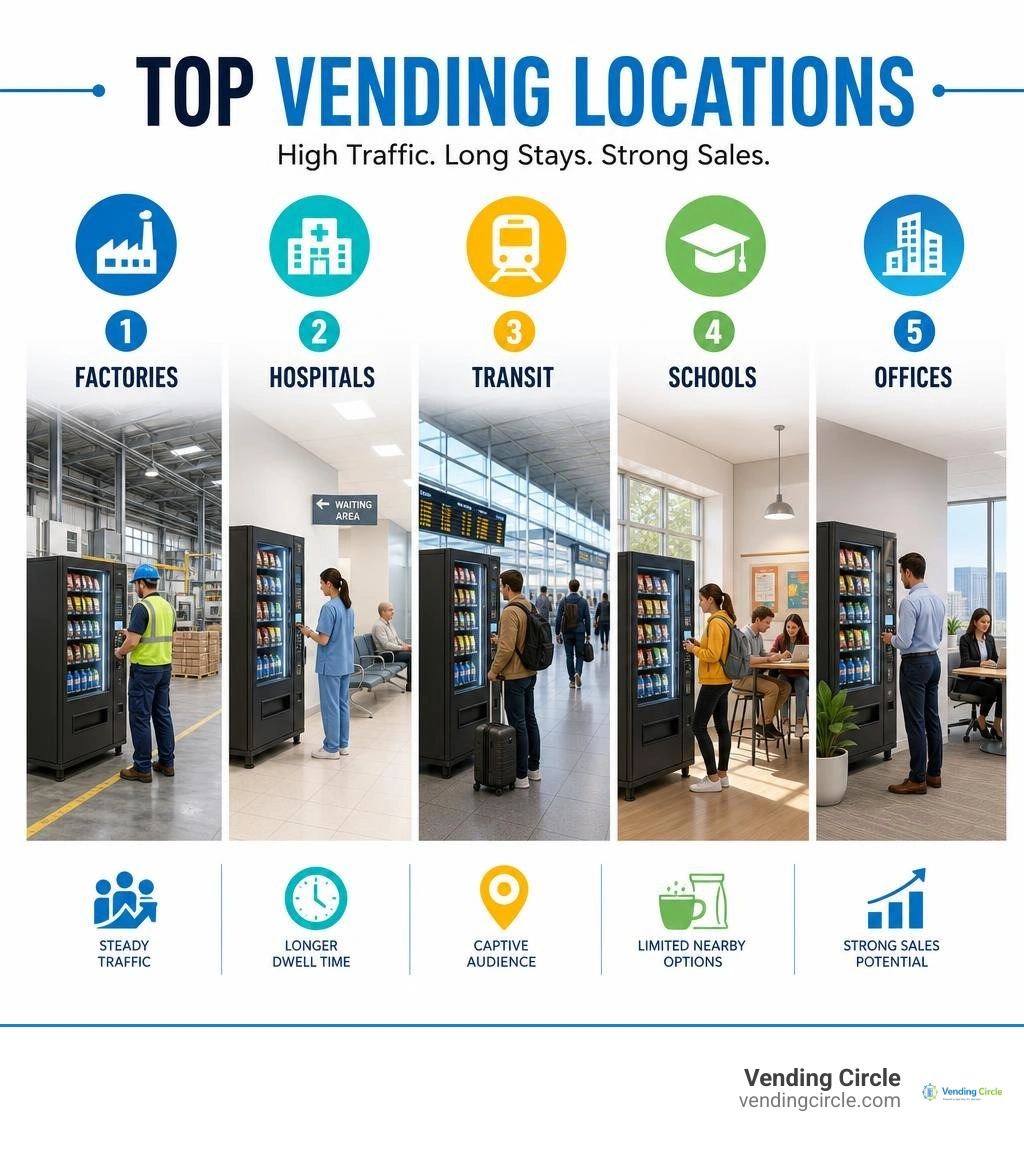
The great locations for vending machines combine steady traffic, long wait times, and few nearby food or drink options. For a quick answer, start with these five placement types:
- Manufacturing plants and distribution centers - Multi-shift teams and limited break options can create repeat daily sales.
- Hospitals and healthcare centers - Staff, patients, and visitors need convenient options, especially when cafeterias are closed.
- Transportation hubs - Airports, stations, and terminals can produce high sales volume, though rent and commissions may be higher.
- Schools, colleges, and residence halls - Students buy snacks and drinks between classes and late at night, but plan for school breaks.
- Large offices and call centers - Buildings with 100+ employees can support reliable break-room purchases and coffee demand.
A busy place alone is not enough. The strongest sites have a captive audience: people who stay long enough to want a drink, snack, meal, or essential item and cannot easily walk to a better option. That is why a hospital waiting room can outperform a crowded hallway where people rush past.
Location affects nearly every operating number that matters: sales, inventory turns, service trips, downtime costs, and route profitability. Industry data shows that machines in high-traffic, high-convenience spots can earn two to three times more than poorly placed machines. For wider market context, see Vending Circle's Vending Machine Industry Statistics 2026.
I am Manuel Mojica, founder of Vending Circle and owner of MM Healthy Vending, where I have applied route-building, sourcing, and operational experience to help operators identify great locations for vending machines and keep them profitable. Next, let's look at the location types that tend to produce the strongest results in 2026.
Key terms for great locations for vending machines:
Top 5 Most Profitable Great Locations for Vending Machines in 2026
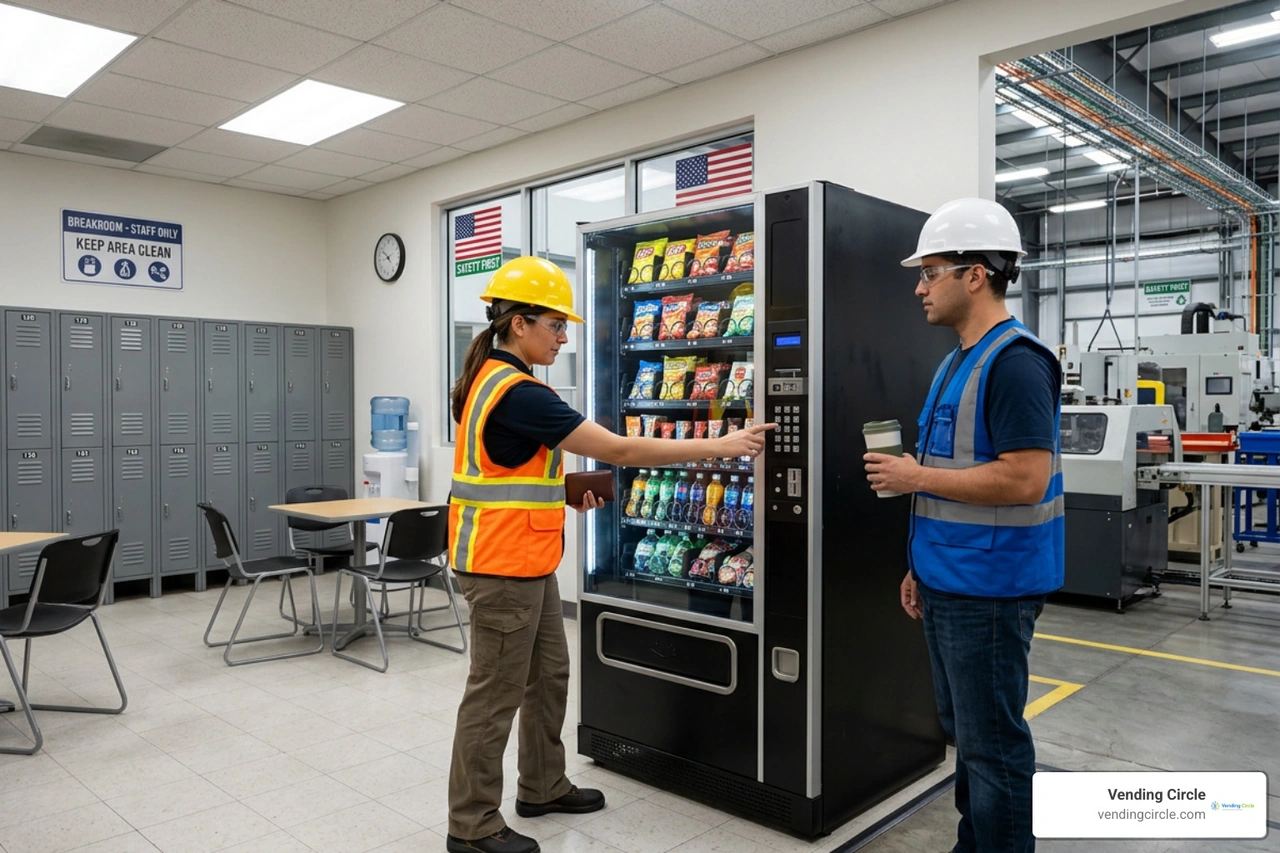
When we analyze performance across thousands of active placement records in 2026, consistent revenue patterns emerge. Choosing the right spot is rarely about luck; it is about matching user habits with immediate accessibility.
Here is our detailed breakdown of the top 5 location categories in the market today.
Manufacturing and Industrial Facilities
Manufacturing plants, industrial parks, and logistics distribution centers consistently rank as the top-performing locations per machine for independent operators. Workers are on their feet doing physical work across multi-shift schedules (including 24/7 operations). With strict 15-minute break windows, employees usually do not have time to leave the premises to buy food or drinks. Stocking energy drinks, cold bottled beverages, and heavy, hearty snacks creates immediate daily volume.
Healthcare Centers and Hospitals
Hospitals and emergency clinics provide continuous demand. Waiting rooms, staff break areas, and surgical centers operate continuously 365 days a year. Because hospital cafeterias usually close early in the evening or during weekends, night-shift nurses, doctors, and stressed visitors turn to vending equipment as their primary meal source. Typical placements in healthcare facilities bring in $800 to $2,500 monthly per machine when properly serviced.
Transportation Hubs and Transit Terminals
Airports, subway stations, train hubs, and bus terminals move high passenger volumes every hour. Passengers looking for quick snacks or beverages before boarding create high sales velocity. As highlighted in Cloudpick's Urban High-Traffic Vending Locations Study, high-density transit corridors allow operators to maximize transaction numbers, often reaching monthly earnings between $2,000 and $5,000 per machine placement.
Schools, Universities, and Residence Halls
College campuses, community colleges, and trade schools house a concentrated population of hungry, late-studying students. Placing glass-front combination machines in student centers, libraries, and dormitory common rooms creates high snack demand. Operators should note that while revenue can reach $800 to $2,000 monthly during term time, financial models must account for lower sales volume during winter and summer academic breaks.
Large Corporate Offices and Call Centers
Office environments with 100 or more employees offer steady, predictable sales. Employees visiting break rooms throughout the workday establish habitual buying patterns. Corporate locations generate an average of $300 to $800 per month. Modern workplaces often suit premium coffee dispensers or micro-market setups stocking fresh salads, high-end cold brews, and healthy snack alternatives.
How to Evaluate and Score Potential Vending Locations
Finding great locations for vending machines requires systematic site analysis before signing contracts or moving heavy equipment.
Measuring Daily Foot Traffic and Dwell Time
A core baseline for a viable vending machine location is at least 50+ people passing by daily. However, raw foot traffic counts can be misleading if you fail to measure dwell time.
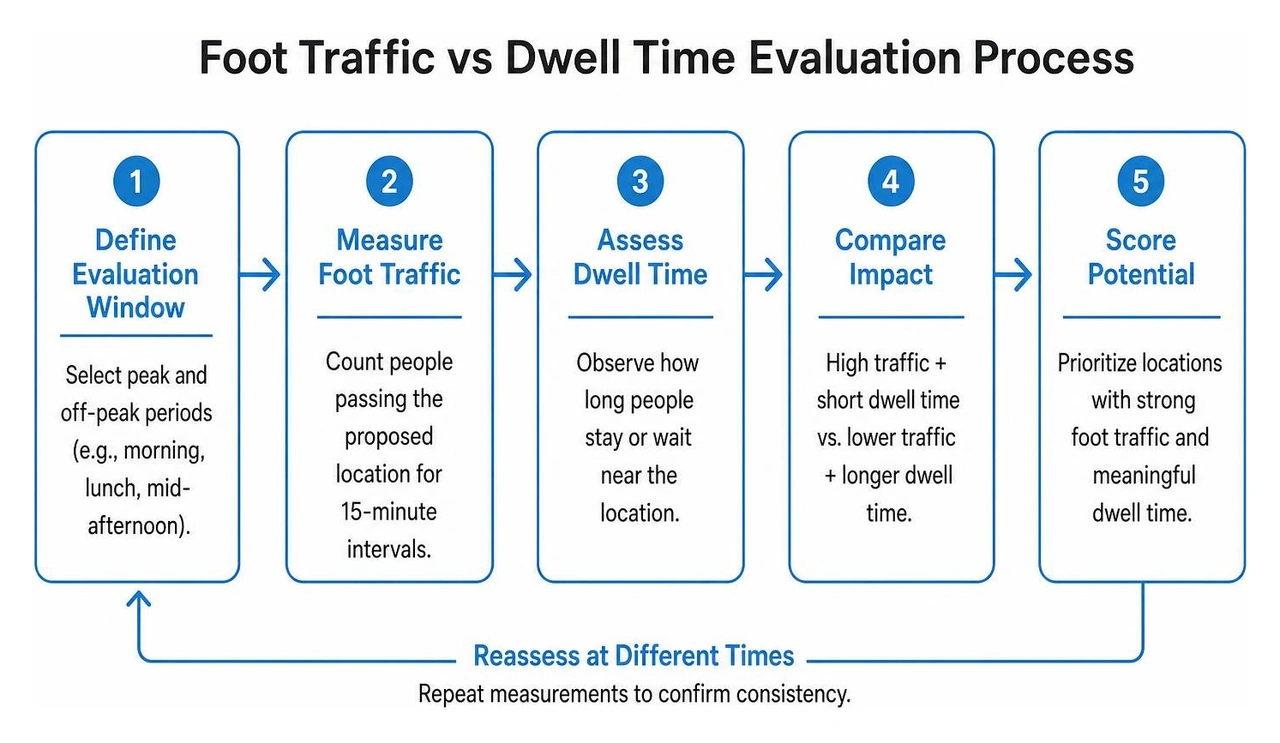
- Manual Traffic Counts: Stand near the proposed placement spot during peak and off-peak hours (e.g., morning shift changes, lunch, mid-afternoon breaks) for 15-minute windows and extrapolate daily passage.
- Evaluating Dwell Time: Compare rushed passersby (e.g., commuters hurrying through a subway entrance) to stationary audiences (e.g., mechanics waiting in an auto repair shop or family members sitting in a hospital waiting lounge). Longer dwell time directly increases buying intent.
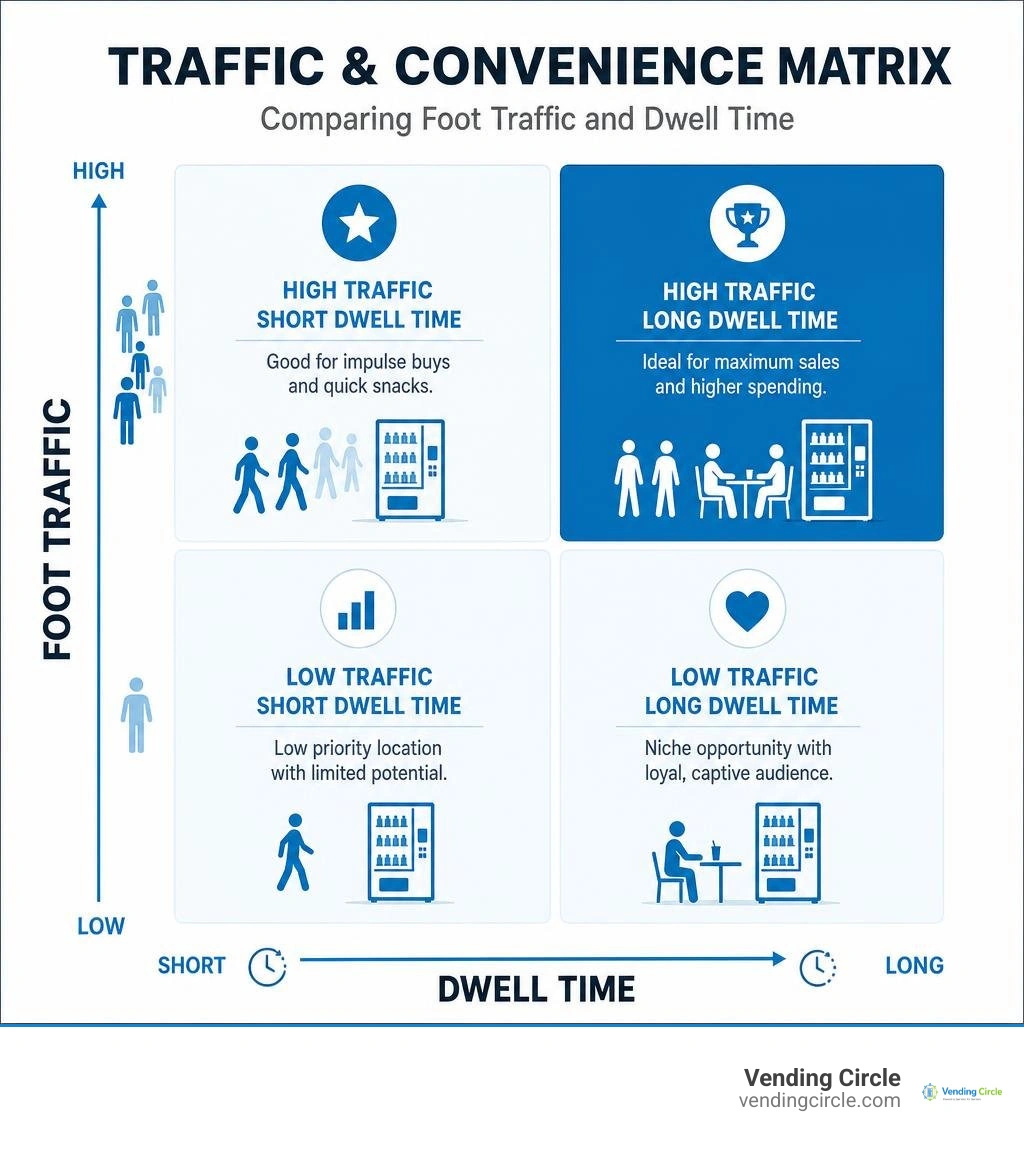
Using the Traffic & Convenience Matrix to Spot Great Locations for Vending Machines
We recommend scoring potential sites using a simple Traffic & Convenience Matrix:
- High Traffic + High Convenience (Target Zone): High foot traffic combined with extended dwell times and zero nearby food competition (e.g., a multi-shift factory break room).
- High Traffic + Low Convenience (Proceed with Caution): Rushed thoroughfares where people lack time or incentive to stop (e.g., busy downtown sidewalks outside grocery stores).
- Low Traffic + High Convenience (Niche Profitability): Places like 200-unit residential apartment laundry rooms, where resident convenience yields consistent sales despite modest headcount.
- Low Traffic + Low Convenience (Avoid Entirely): Low-density offices with nearby fast-food options. A machine here will likely yield under $50 per month.
Matching Product Mix and Demographics to Great Locations for Vending Machines
A classic error is stocking identical inventory across every location on your route. Tailor your selection directly to customer demographics:
- Gyms & Fitness Centers: Protein bars, zero-sugar hydration drinks, pre-workout supplements, and protein shakes.
- Corporate & Coworking Hubs: Premium sparkling water, healthy chips, specialty teas, and organic snacks.
- Industrial Break Rooms: High-calorie snacks, beef jerky, energy drinks, coffee, and traditional sodas.
To maximize sales volume, equip every machine with modern payment hardware. Installing card readers and contactless digital payment units usually increases machine sales by 25% to 40%. Learn how to upgrade your hardware through our guide on how to Buy a Vending Machine with Card Reader.
Legal Requirements, Contracts, and Pitching Property Owners

Securing great locations for vending machines requires professional pitching, clear negotiation, and full legal compliance.
Securing Permits, Licenses, and Liability Insurance
Before delivering hardware to a site, confirm you have all necessary operational permits in order:
- General Business License: Issued by your city or county to operate a commercial business locally.
- State Seller's Permit / Sales Tax License: Required to collect and remit applicable retail sales tax.
- Health Department Approvals: Required if your machine dispenses temperature-controlled, perishable foods (sandwiches, fresh meals, dairy products).
- General Liability Insurance: Most commercial property managers will demand proof of liability coverage (typically $1,000,000 coverage policy) naming them as an additional insured to protect against equipment damage or injury claims.
How to Pitch Decision-Makers and Negotiate Commission Rates
When approaching property managers or facility directors, focus on the value your amenity brings to their staff or tenants rather than your business revenue goals.
- Identify the True Decision Maker: Speak directly with the Property Manager, HR Director, or Facilities Manager, not front-desk security staff.
- Offer a Risk-Free 3-Month Trial: Reduce friction by proposing a short 90-day trial agreement. This gives property managers an easy out if they are hesitant to commit long term.
- Structure Commission Fairly: Standard industry commission rates range from 5% to 25% of gross sales. Low-traffic sites (100–200 daily foot traffic) should be pitched at 0% to 5% commission, while high-volume sites (airports, high-density transit hubs) command 15% to 25%.
- Highlight Hands-Off Service: Assure decision-makers that machine installation, stocking, maintenance, and customer service are 100% managed by your company at zero cost to their facility.
Managing, Optimizing, and Avoiding Common Location Mistakes
Once your machine is installed, continuous tracking helps ensure the location hits target performance metrics.
Revenue Expectations and Benchmarks by Location Type
To help evaluate potential placements, here is a revenue, traffic, and commission comparison across major location categories:
| Location Category | Estimated Monthly Net Revenue | Benchmark Daily Traffic | Typical Commission Share |
|---|---|---|---|
| Factories & Industrial Parks | $800 – $3,000+ | 150+ workers | 5% – 10% |
| Hospitals & Medical Centers | $800 – $2,500 | 200+ daily visitors/staff | 10% – 20% |
| Transit Hubs & Terminals | $2,000 – $5,000 | 1,000+ commuters | 15% – 30% |
| Colleges & Universities | $800 – $2,000 | 300+ students | 10% – 25% |
| Offices (100+ Employees) | $300 – $800 | 100+ daily staff | 0% – 10% |
| Apartment Complexes (200+ Units) | $200 – $500 | 200+ residents | 0% – 5% |
Avoiding Common Placement Pitfalls and Optimizing Uptime
- The 60-Day Review Rule: Track sales data daily via remote telemetry. If a machine produces less than $150/month after 60 days despite trying product mix adjustments, pull the machine and relocate it to a better site.
- Maintain High Machine Uptime: Keep equipment operating above 95% uptime. Bill validators or card reader failures cause immediate revenue loss and damage host business relationships.
- Master Inventory Management: Prevent out-of-stock items on top-selling SKUs. Streamline your refilling routes using our best practices on Vending Machine Inventory Management and establish protocols for a Vending Machine Emergency Restock.
Beginner vs. Experienced Operator Location Strategies
If you are just launching your business, start with accessible single-site placements like local gyms, auto repair shops, or medium-sized apartment complexes. These locations allow you to practice servicing, stocking, and revenue management without high contract pressure or complex bidding processes. Check out our foundational breakdown on Vending Machine Locations for beginner guidance.
As your route grows, target corporate facilities and multi-shift industrial parks. Experienced operators can purchase established routes or enter formal corporate bidding processes to scale quickly. For step-by-step expansion strategies, read our full Vending Machine Routes Guide 2026 and consider buying an established commercial footprint by evaluating Routes for Sale Vending Machine opportunities.
Connecting with seasoned operators can help you avoid costly site placement errors. Learn how to connect with experienced guidance by reading How to Find a Vending Machine Mentor, explore peer recommendations across Best Vending Machine Communities Forums Mentorship Programs, or weigh the advantages of structured support networks in our guide on Paid Vending Machine Community vs Free Forums.
Frequently Asked Questions About Vending Placement
How much monthly revenue can a vending machine generate in a good location?
A well-placed vending machine typically generates between $500 and $3,000 per month in net profit. High-density settings like major medical centers, industrial hubs, and transit stations can generate upwards of $5,000 per month, whereas low-traffic placements earn under $100 per month.
How do I legally place a vending machine on private or public property?
Placing a machine on private property requires explicit written permission from the property owner or authorized facility manager through a signed placement contract. Setting up on public property (municipal parks, city sidewalks, government facilities) requires local government permits, city licenses, and compliance with municipal vending guidelines.
What should I do if my vending machine is not making enough money?
Run a thorough 60-day performance review. First, check your remote telemetry data to identify slow-moving products and swap them for regional top-sellers. Second, adjust pricing if local competition is undercutting your rates. If foot traffic remains too low to cover operational costs after product adjustments, terminate the location contract cleanly and relocate the equipment to a higher-scoring site.
Conclusion
Finding great locations for vending machines is the foundation of building a profitable, scalable automation route. By focusing on captive audiences, evaluating foot traffic alongside dwell time, tailoring inventory to site demographics, and formalizing professional placement contracts, you set your business up for consistent cash flow.
Ready to secure high-margin machines, access manufacturer-direct pricing, and learn from top-producing operators? Explore commercial equipment and join our active operator network at Find Vending Equipment on Vending Circle.