Are Vending Machine Card Readers Safe to Use?
Are vending machine card readers safe? Generally, yes. A well-maintained reader can protect payments with encryption and chip or contactless technology. But no unattended reader is risk-free. Customers should use tap-to-pay when available and skip any reader that looks loose or damaged. Operators should inspect readers regularly and keep payment systems up to date.
The key is to protect both the payment and the machine. A secure transaction matters, but so do a reader that has not been tampered with and a network connection that is properly managed.
I'm Manuel Mojica, founder of Vending Circle and a former U.S. Air Force Cyber Operations Officer. My security background and experience as a vending operator shape how I answer "are vending machine card readers safe?"—starting with what happens when a customer pays.

Are vending machine card readers safe definitions:
Are vending machine card readers safe?
For most people, most of the time, the answer is yes. Cashless payment is now the norm: over 85% of newly deployed U.S. vending machines have a cashless reader, and cashless transaction volume grew more than 400% between 2019 and 2023. That is a lot of snacks bought without a single crumpled dollar.
Safety comes from several layers working together:
- Encryption scrambles card data inside the reader hardware.
- EMV chip technology creates a unique code for each purchase.
- NFC and tokenization let a phone or watch pay without sharing your real card number.
- Authorization happens with a payment processor, not on the machine itself.
Two risks remain. One is physical: someone tampers with the reader. The other is digital: the machine's network connection becomes a way in. Neither is common, and both are manageable. Our Vending Machine Card Reader Guide covers the basics if you want the full picture.
How a vending machine card transaction is protected
Here is what happens in the few seconds after you pay:
- You tap, insert, or swipe.
- The reader encrypts the payment data right away.
- The data travels over a cellular or Wi-Fi link to a payment processor.
- The processor asks your bank for approval.
- The bank approves or declines, and the machine dispenses your item.
Authorization usually takes about 2 to 5 seconds, and a tap often finishes in two to three. Each method protects you differently:
- Chip insertion: the chip generates a unique transaction code every time, so a copied code is useless for another purchase. It takes a few seconds longer than a swipe because of this real-time exchange.
- Contactless tap: this uses the same chip security, or a token if you use a phone.
- Swipe: the oldest method. The magnetic stripe carries static data, so it is the weakest option. If a chip card will not work when swiped, the machine is probably asking you to insert it.
Vending machines also have no PIN pad, so debit cards are processed over the credit networks. For more on the hardware side, see our Vending Machine Card Readers Guide.
Are vending machine card readers safe from skimming?
Skimming is when criminals hide a device on a reader to copy card data. The U.S. Secret Service notes that skimming causes hundreds of millions of dollars in losses every year, mostly at ATMs and point-of-sale terminals. Read the U.S. Secret Service guidance on ATM and POS terminal skimming for how those devices work.
Vending machines are a less attractive target, for good reasons:
- There is little room on the front of a machine to hide an overlay.
- Technicians open machines often, so a planted device is likely to be found quickly.
- The machine does not store a database of card numbers worth stealing.
That said, "less likely" is not "never." Compared with an ATM, a vending machine is rarely in a camera-monitored bank lobby. Compared with a gas pump, it is usually indoors and easier to spot-check. Before you pay, look for:
- Loose, wobbly, or misaligned bezels around the card slot
- Unusual stickers or glue marks
- A reader that looks bigger or different from the rest of the machine
- Damaged or blocked contactless symbols
- A card slot that feels tight or has extra parts attached
- A machine in a dim, unsupervised corner
Attackers have also been seen damaging contactless readers so customers are forced to insert a card and enter a PIN, with a skimmer waiting in the slot. So a broken tap reader is a reason for caution, not just annoyance.

Are vending machine card readers safe when connected to telemetry?
Most modern machines use telemetry to report sales and stock levels. That connection is a separate question from the reader itself. If a machine sits on a company's main network, a hacker who reaches it could in theory reach other systems on that network.
Good habits shrink that risk:
- Use a cellular connection or a dedicated line instead of shared office Wi-Fi.
- Keep vending machines on a segmented network, away from sensitive business data.
- Use a VPN where a public connection is unavoidable.
- Keep firmware and software current.
- Use unique passwords and per-user logins, never one shared password.
Our Vending Machine Network Connection article explains the options. For the compliance angle, this PCI DSS anti-tamper guidance shows why physical checks still matter even as contactless grows.
Which payment method is safest, and what happens to your data?
Contactless is winning. In the euro area, 83% of in-person card payments were contactless in the first half of 2025, and Mastercard reports that more than two thirds of its in-person global payments are contactless. Here is how the methods compare:
| Method | Data exposure | Fraud protection |
|---|---|---|
| Magnetic stripe swipe | Highest: static data on the stripe | Card issuer protections, but easiest to copy |
| Chip insertion | Low: unique code per purchase | Strong, resists counterfeiting |
| Contactless card | Low: same chip code, no insertion | Strong, and nothing slides into a slot |
| Mobile wallet | Lowest: token instead of card number | Strongest: token plus biometric unlock |
| Cash | None digital | None if lost or stolen; no dispute rights |
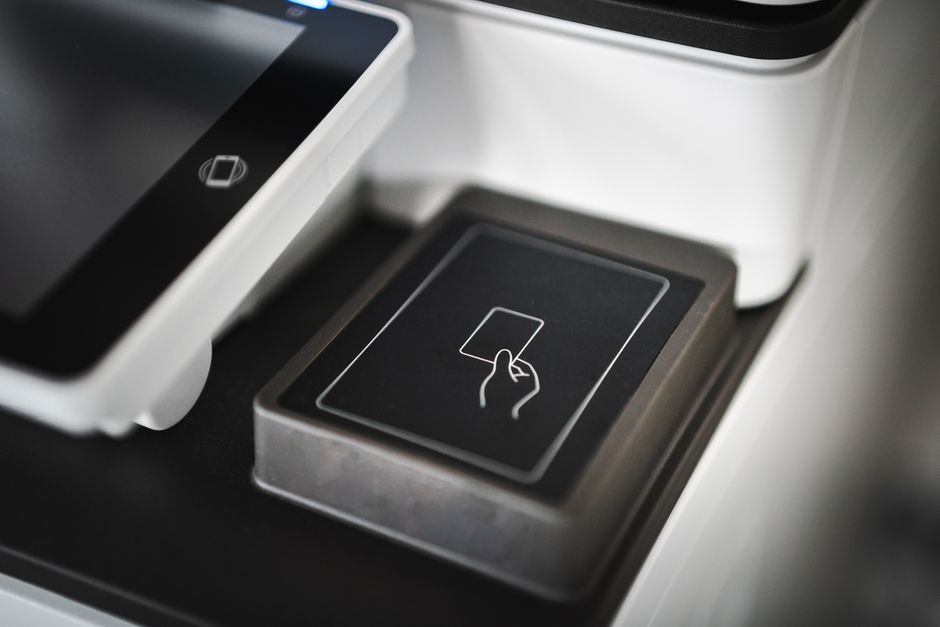
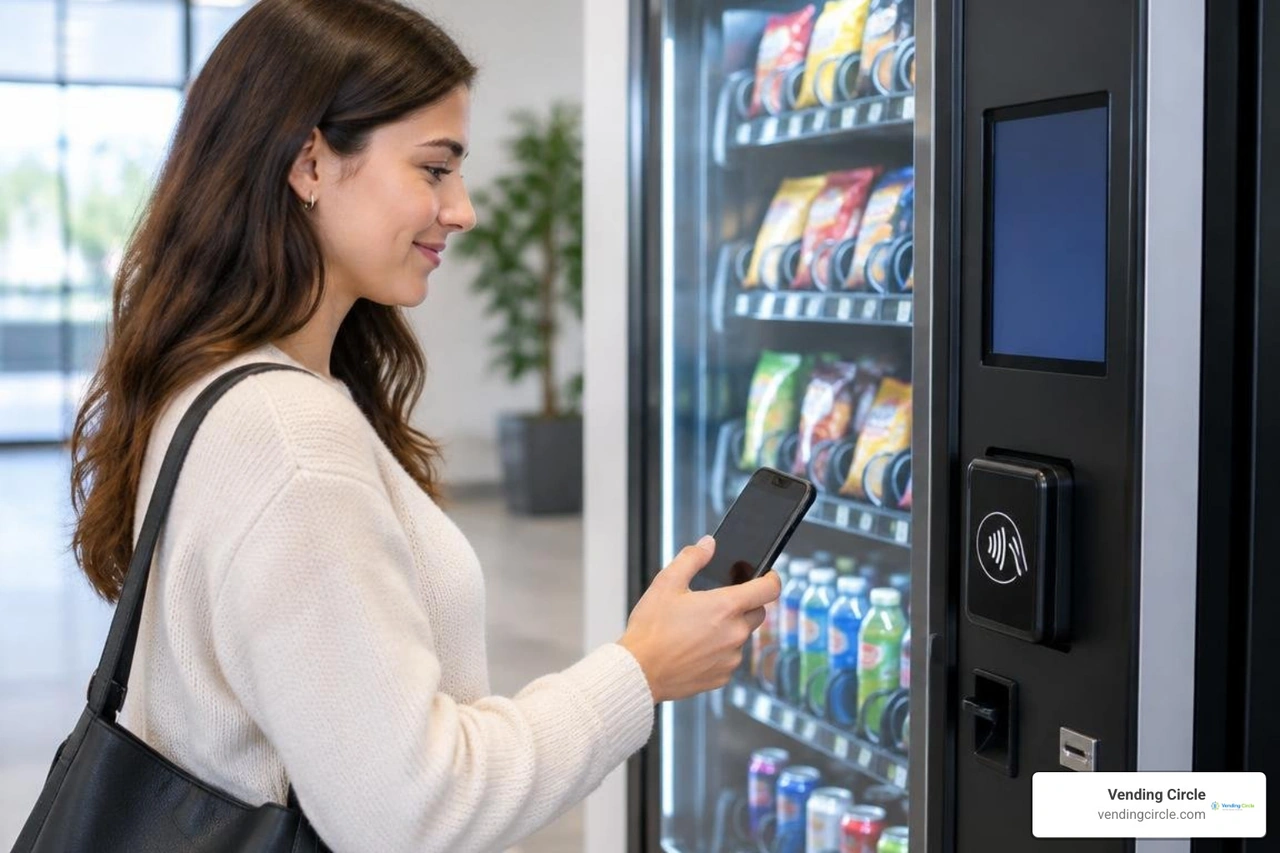
Look for the contactless symbol, four curved lines, on the reader. Apple Pay, Google Pay, and Samsung Pay all work on any NFC-enabled reader. Hold your phone or watch near it for a second or two until you hear the confirmation tone.
On credit versus debit: a credit card is the marginally safer choice in busy public spots. Credit cards come with strong zero-liability policies and faster disputes, while a debit fraud claim can take 5 to 10 business days to recover funds and touches your actual bank balance. Some processors also place a small pre-authorization hold, often about $1, that drops off within 24 to 72 hours. Seeing two line items is normal.
Is a mobile wallet safer than using a physical card?
Usually, yes. A wallet does not send your real card number. It sends a device-bound token that only works with that specific phone or watch. You also unlock the payment with your face, fingerprint, or passcode, so a lost phone is far less useful to a thief. Each tap carries a one-time cryptogram, so a captured transmission cannot be replayed.
What about contactless range? It is only a few centimeters, so someone would need to be practically touching your phone, and the transaction still needs your unlock. A tap on a legitimate reader is about the safest way to pay.
Do vending machines store credit card numbers?
Properly built systems do not. Card data is encrypted and tokenized, and approval happens at the payment processor. The machine keeps sales records, not raw card numbers, which is a big reason thieves find vending machines unrewarding. Reputable processors also avoid storing security codes (CVV).
Your bank statement will show a transaction record, and the processor keeps limited transaction data for a period set by its privacy policy and legal obligations. If you want specifics, check the policy of the processor named on your statement. If a processor ever suffers a breach, contact your card issuer and review guidance at IdentityTheft.gov. Even then, most issuers limit your liability for unauthorized charges.
What should customers and operators do to keep vending payments secure?
Security here is shared. Customers inspect the reader and choose a safe payment method. Operators keep the hardware certified, inspected, and patched. Our Vending Cashless Reader Guide 2026 helps operators choose equipment with PCI PTS-certified hardware, encryption, and anti-tamper features.
What should you do if a card is declined or a reader looks tampered with?
A decline is usually boring. For a $1 to $5 purchase it is almost never your credit limit. More often the cellular link dropped, a gift card is not registered with a billing zip code, or the reader is glitching. Wait 30 seconds and try again, or tap instead of inserting.
If something looks wrong, do this:
- Stop using the reader and avoid repeated attempts.
- Pay another way, or walk away. Snacks are not worth it.
- Note the machine's location and the number on its front panel.
- Contact the operator.
- Check your account activity over the next few days.
- Report unfamiliar charges to your card issuer, ask for a replacement card, and dispute the transaction.
What does PCI DSS require of vending machine operators?
PCI DSS is the security standard for anyone who accepts cards. Operators remain responsible even when a certified vendor handles most of the processing. In plain terms, that means:
- Understanding where payment data flows, known as scope
- Using a compliant provider and PCI PTS-certified readers
- Restricting access with strong, individual credentials
- Securely configuring devices and applying software updates
- Inspecting devices regularly (PCI DSS Requirement 9.5 covers anti-tamper checks)
- Separating vending networks from other business systems
- Keeping an incident plan ready
- Never storing raw card data in logs or dashboards
- Being clear about which responsibilities belong to the vendor and which to the operator
How should operators inspect and respond to suspected tampering?
Build checks into every service visit, and check more often after any warning. Look for loose parts, overlays, signs of forced entry, and pinhole cameras. Warning signs include customers struggling to insert cards and an unusual rise in declines.
If you suspect tampering, document it with photos, disable the terminal, notify your payment provider, and keep the machine out of card service until the device is cleared. Preserve any suspicious device as evidence and report it to law enforcement.
Frequently Asked Questions
Are vending machine card readers safer than ATM or gas pump readers?
In general, they are a less common skimming target. They offer little space for overlays, get frequent technician visits, and do not store card numbers. Still, stay alert and inspect any reader.
Should I use a credit card or debit card at a vending machine?
Choose a credit card or mobile wallet. Credit offers stronger fraud protection and keeps your checking account out of the picture. If you use debit and are asked to choose credit or debit, select credit, since there is no PIN pad.
Can a vending machine card reader be hacked through its network?
It is possible if the machine shares a poorly protected network. Using cellular or dedicated connections, network segmentation, unique passwords, and regular updates makes it very unlikely.
Conclusion
Vending card readers are safe enough for everyday use when layered security is in place: encryption, chip and tokenization, certified hardware, a protected network, and regular inspections. As a customer, tap to pay with your phone when you can, give the reader a quick once-over, and pick credit over debit. As an operator, treat inspections and updates as part of every route.
At Vending Circle, we bring operators together to share proven practices and buy equipment at manufacturer-direct prices. If you are ready to equip your route with modern cashless hardware, browse vending machines in our marketplace.