Why Vending Machine Energy Efficiency Matters to Your Bottom Line
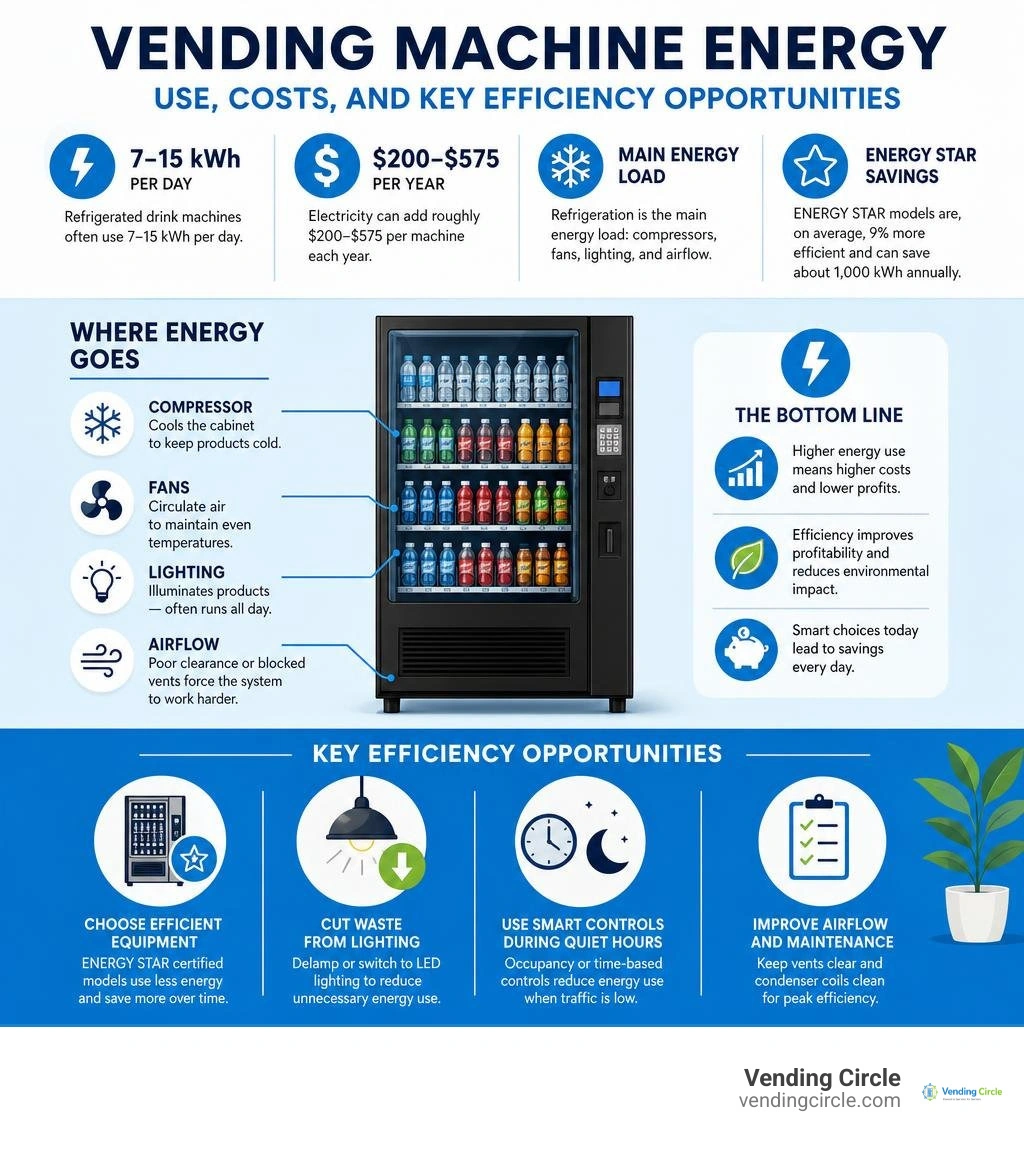
Vending machine energy efficiency lowers the cost of keeping products cold without reducing machine availability. For most operators, the biggest opportunities are simple: choose efficient refrigerated equipment, cut waste from always-on lighting, and use smart controls during quiet hours.
| Quick answer | What it means for operators |
|---|---|
| Refrigerated drink machines often use 7-15 kWh per day | Electricity can add roughly $200-$575 per machine each year, depending on local rates and conditions. |
| Refrigeration is the main energy load | Compressors, fans, cabinet lighting, and poor airflow can drive up your bill. |
| ENERGY STAR models reduce energy use | ENERGY STAR certified refrigerated beverage machines are, on average, 9% more efficient and can save about 1,000 kWh annually. |
| Existing machines can often be improved | Delamping, LED upgrades, and occupancy-based controls can cut meaningful energy waste without replacing the full machine. |
A refrigerated vending machine is easy to overlook because it runs quietly in the background. But it runs all day, every day. Older cold-drink machines measured in office settings have used roughly 7-11 kWh per day, while a typical refrigerated unit may draw about 400 watts on average.
That cost matters even more across a route. When the site pays the electric bill but an operator owns the machine, energy use can become a missed part of the placement or service agreement. Efficient equipment helps make a location more profitable, protects margins from rising utility rates, and reduces the machine's environmental footprint.
I'm Manuel Mojica, founder of Vending Circle and owner of MM Healthy Vending. Through operating machines and building a community for U.S. operators, I've seen how vending machine energy efficiency connects directly to route profitability, equipment choices, and better long-term sourcing decisions.
Basic vending machine energy efficiency terms:
Understanding Vending Machine Energy Efficiency and Power Draw
To optimize a vending fleet, we first have to understand how power is consumed across a typical 24-hour cycle. Vending equipment operates in distinct operational states: active dispensing, idle monitoring, and cooling recovery cycles. While an active purchase triggers payment processors and dispensing motors for just a few seconds, the background baseline draw—driven by refrigeration compressors, circulation fans, display lights, and controller boards—continues every single hour of the day.
A standard refrigerated cold drink unit maintains an average operational load of approximately 400 Watts. Over a full 24-hour period, this baseline translates into a daily power consumption of 7 to 15 kWh for refrigerated machines, or anywhere from 2,500 to 4,400 kWh annually. Non-refrigerated ambient machines, on the other hand, require significantly less power because they operate without a cooling system.
Understanding these baseline figures allows operators and facility management teams to model expected operating costs accurately and identify where power is being wasted.
Baseline Vending Machine Energy Efficiency Across Equipment Types
Energy requirements vary dramatically depending on product storage temperatures, lighting demands, and mechanical complexity. Non-refrigerated snack vendors draw minimal power—typically around 100 Watts continuous draw—to power display lights, payment systems, and internal mechatronics. Conversely, fresh food vendors and frozen product machines require heavy-duty refrigeration systems that run almost constantly to preserve safety standards.
| Vending Machine Type | Average Daily Draw (kWh/day) | Estimated Annual Consumption (kWh/yr) | Estimated Annual Electricity Cost ($0.12/kWh) |
|---|---|---|---|
| Non-Refrigerated Ambient Snack | 1.0 – 3.0 kWh | 300 – 800 kWh | $36 – $96 |
| Hot Beverage / Coffee | 1.5 – 2.5 kWh | 550 – 900 kWh | $66 – $108 |
| Refrigerated Beverage (Standard) | 7.0 – 15.0 kWh | 2,500 – 4,400 kWh | $300 – $528 |
| ENERGY STAR Refrigerated Beverage | 3.2 – 5.0 kWh | 1,170 – 1,800 kWh | $140 – $216 |
| Fresh Food & Frozen Vendors | 6.0 – 10.0 kWh | 2,200 – 3,650 kWh | $264 – $438 |
Empirical university field studies have confirmed these baseline variations across product categories. For example, sensor tracking at a Spanish university revealed average monthly power usage of 250 kWh for snack units, 200 kWh for cold beverage units, and 100 kWh for hot beverage machines. Selecting the right machine type for your site's specific inventory needs is the first step toward keeping utility bills under control.
Key Hardware Components Dictating Vending Machine Energy Efficiency
To understand where power goes inside a refrigerated drink machine, we have to look at the individual hardware components driving total energy consumption.
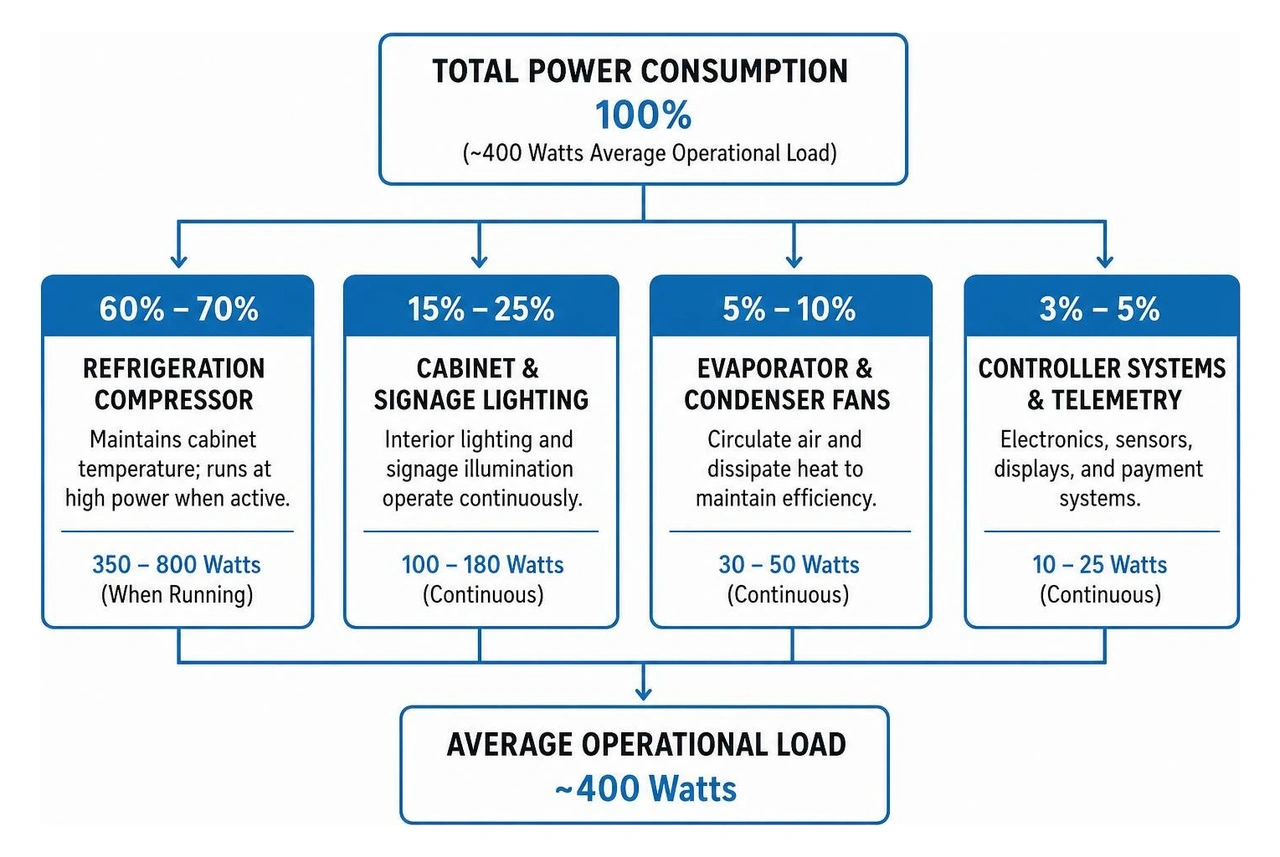
- Refrigeration Compressor (60% – 70% of total draw): The single largest energy consumer in any cold vending machine. Single-speed compressors kick on at full power whenever cabinet temperatures rise above the target setpoint, consuming anywhere from 350 to 800 Watts while running.
- Cabinet and Signage Lighting (15% – 25% of total draw): Legacy units equipped with two 50-Watt T-12 fluorescent bulbs and magnetic ballasts draw roughly 100 to 180 Watts continuously, generating extra internal heat that forces the compressor to work harder.
- Evaporator and Condenser Fans (5% – 10% of total draw): Condenser fans blow air over external coils to remove heat, while internal evaporator fans circulate chilled air throughout the cabinet. Standard shaded-pole fan motors draw 30 to 50 Watts constantly.
- Controller Systems and Telemetry (3% – 5% of total draw): Main logic boards, temperature sensors, digital displays, and modern Vending Card Readers consume 10 to 25 Watts of baseline standby power.
Detailed measurements in an Analysis of NREL Cold-Drink Vending Machines demonstrated that illuminated cold-drink machines holding approximately 500 cans historically consumed between 7 and 11 kWh per day under standard office conditions. Mechanical optimizations like tangential variable-speed fans, improved airflow delivery chutes, and liquid-to-suction heat exchangers can substantially lower this load. Furthermore, mechatronic research on dispensing systems, such as studies published on MODELLING AND SIMULATION OF A PICK&PLACE SYSTEM USING MODELICA MODELLING LANGUAGE AND AN INVERSE KINEMATICS APPROACH, highlights how optimizing internal mechanical delivery components reduces motor drag and extends equipment performance.
The Financial and Environmental Benefits of ENERGY STAR Vending Machines
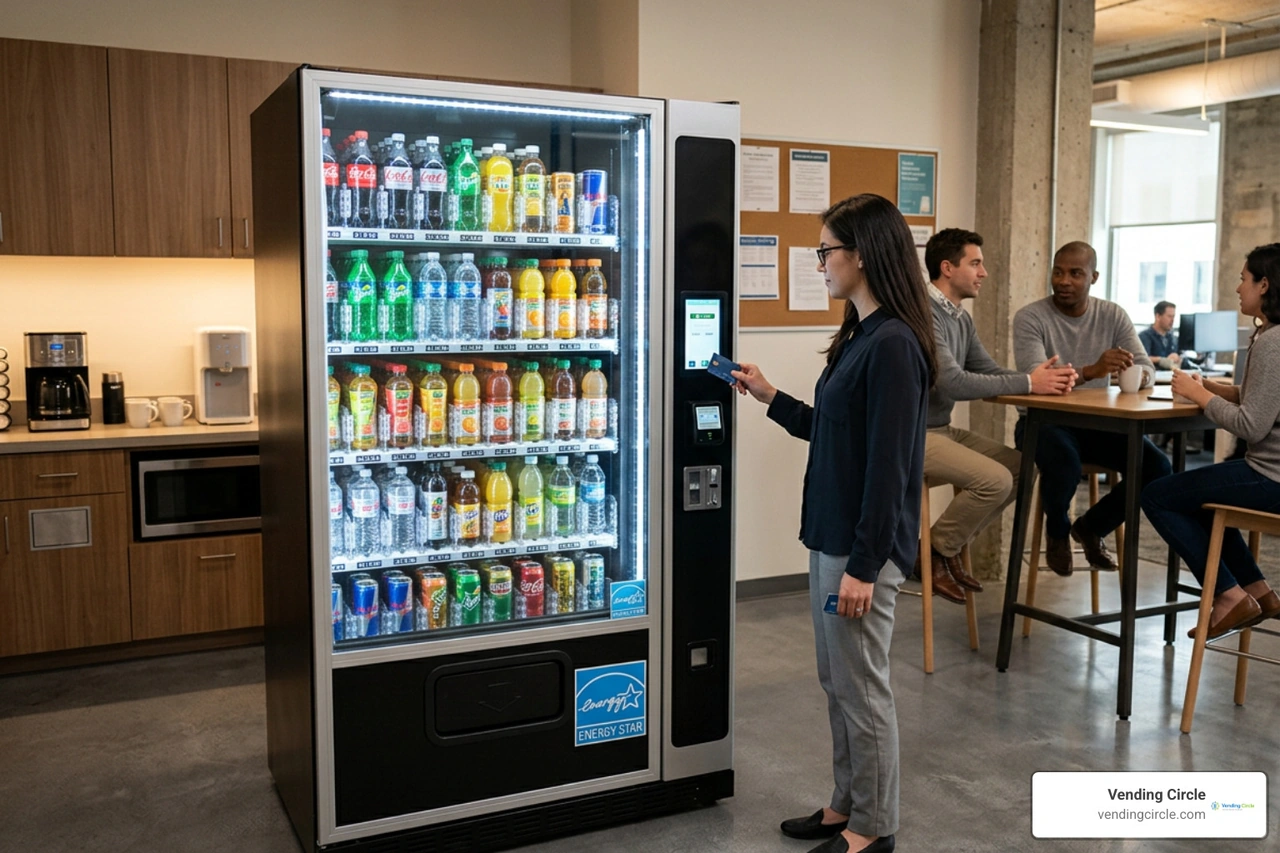
Upgrading to ENERGY STAR certified equipment is one of the most reliable ways to cut vending energy costs. ENERGY STAR certified refrigerated beverage vending machines are, on average, 9% more efficient than standard baseline units, saving approximately 1,000 kWh of electricity per year per machine.
For an operator managing a modest 20-machine route, switching to certified equipment saves 20,000 kWh annually. At standard commercial utility rates, that translates into thousands of dollars in direct electricity savings over the 12- to 15-year service life of the machinery.
Beyond lower electricity bills, ENERGY STAR equipment incorporates upgraded internal components—including ECM fan motors, high-efficiency compressors, enhanced cabinet insulation, and native LED lighting—that run cooler and experience less mechanical stress. This results in fewer service calls, reduced maintenance costs, and longer component lifespans.
Class A vs. Class B ENERGY STAR Specifications
When evaluating ENERGY STAR certified models, buyers encounter two primary operational classifications: Class A and Class B.
- Class A Vending Machines: These are indoor-only, glass-front machines where the entire internal cabinet volume is fully refrigerated and visible to the customer. Class A units utilize multi-pane insulated glass, soft-start variable compressors, and low-energy internal LED lighting arrays. Under federal procurement guidelines, top-tier Class A machines consume approximately 3.23 to 3.71 kWh/day (1,179 to 1,354 kWh/year).
- Class B Vending Machines: These are closed-front (solid-door) machines designed for indoor or outdoor placement. Class B units utilize "zone cooling," refrigerating only the products in the lower discharge area that are next in line to be vended, rather than chilling the entire upper inventory cabinet.
According to official EPA ENERGY STAR Guidance, ENERGY STAR standards require strict daily consumption limits—capping refrigerated beverage machines at 6.5 kWh/day or less depending on volume. Purchasing an ENERGY STAR qualified unit offers a clear financial payback, yielding up to $264 in lifetime utility savings over a baseline model. As detailed in our overview of Vending Machine Industry Statistics 2026, adopting high-efficiency hardware gives operators a crucial competitive advantage in securing corporate site placements.
Low-GWP Refrigerants and Sustainable Cooling Technologies
Energy efficiency is closely linked to the environmental impact of machine refrigerants. Traditional hydrofluorocarbon (HFC) refrigerants like R-134a feature a Global Warming Potential (GWP) thousands of times higher than carbon dioxide. If a leak occurs in an older machine, these gases escape into the atmosphere and contribute directly to greenhouse gas emissions.
Modern energy-efficient vending equipment uses natural and low-GWP hydrocarbon refrigerants:
- R-290 (Propane): Has an ultra-low GWP of 3 and excellent thermodynamic properties, allowing smaller, more efficient compressors to cool cabinet volumes faster.
- R-600a (Isobutane): Commonly used in smaller cold systems, offering low power draw and zero ozone depletion potential.
- R-744 (Carbon Dioxide / CO2): Has a baseline GWP of exactly 1. It is non-flammable, highly effective in cold environments, and recognized as an environmentally friendly refrigerant choice for commercial vending fleets.
In Europe, regulations like the Reference : 002025859 (Ecodesign Regulation EU 2019/2024 and Energy Labelling Regulation EU 2019/2018) have banned inefficient machines with an Energy Efficiency Index (EEI) of 80 or higher and established mandatory EN 50597 testing standards. Integrating natural refrigerants alongside advanced thermal designs—such as an automated Smart Air Cooler—ensures compliance with global environmental standards while keeping energy costs exceptionally low.
High-Impact Energy-Saving Retrofits for Existing Vending Machines
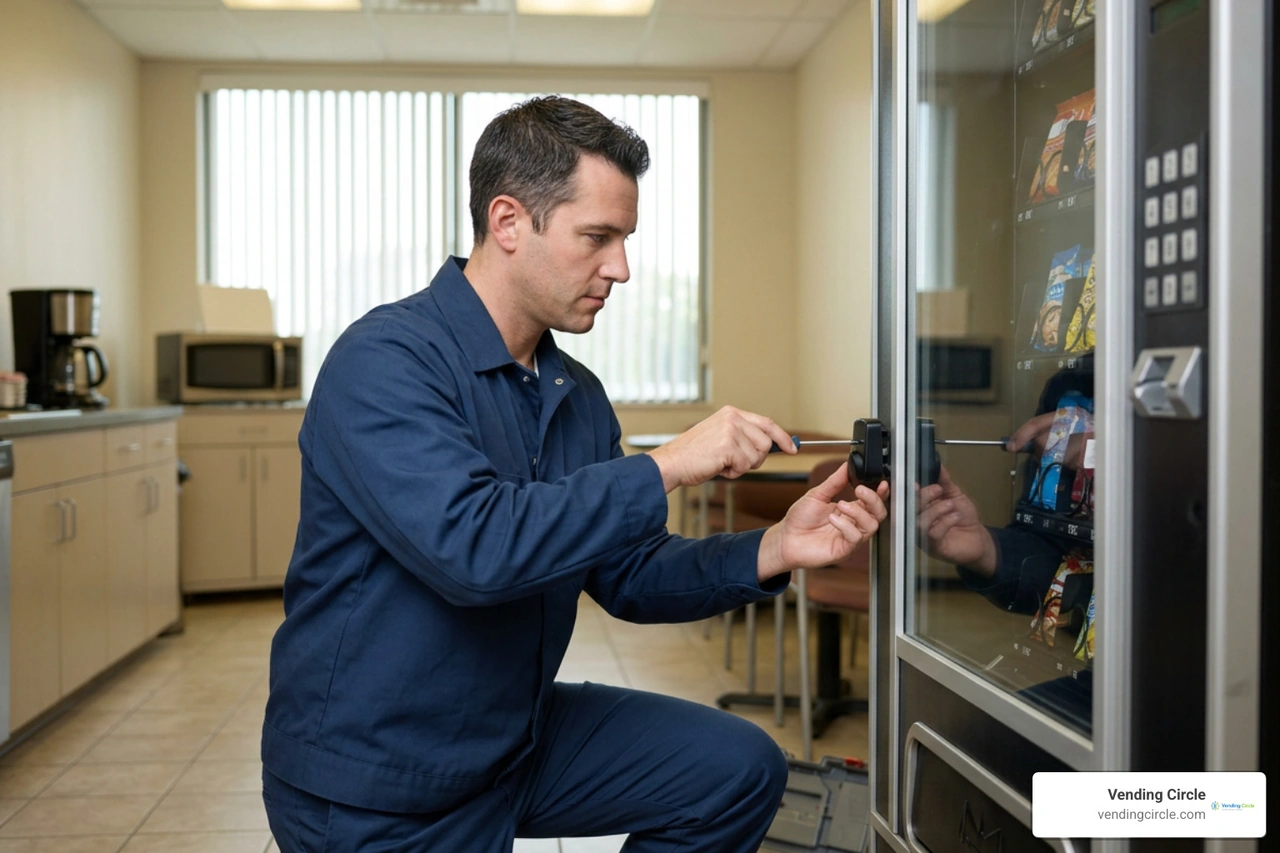
Replacing an entire fleet with brand-new ENERGY STAR equipment isn't always financially feasible right away. Fortunately, operators and facility managers can apply high-impact retrofits to existing machines to achieve immediate energy reductions at a fraction of the cost.
Retrofitting involves upgrading specific power-draining components—such as lighting ballasts, single-speed fans, and control boards—or adding external power controllers. These upgrades offer short payback periods (often between 12 and 24 months) and can be completed right on site without removing the machine from service.
Delamping and LED Lighting Retrofits
One of the quickest ways to reduce power consumption on legacy refrigerated drink machines is addressing the internal lighting system. Older machines rely on high-wattage fluorescent bulbs that stay lit 24 hours a day.
- Delamping: Completely removing internal fluorescent display bulbs and disconnecting their magnetic ballasts instantly cuts machine power draw by approximately 180 Watts. This simple action saves about $136 per machine every year in electricity costs. When delamping machines in public areas, operators should attach clear educational decals informing customers that the machine is intentionally unlit to save energy, preserving sales revenue while cutting power draw.
- LED Lighting Retrofits: If display lighting is necessary for product visibility, replacing fluorescent tubes with LED conversion kits reduces lighting energy consumption by 60% to 75%. LED lights draw only 15 to 30 Watts, generate virtually no internal heat, and last up to 50,000 hours, eliminating frequent bulb replacement calls.
Smart Occupancy Sensors and Low-Power Controls
Refrigerated vending machines do not need to maintain ice-cold product temperatures or keep full display lighting bright during empty office hours, weekend shutdowns, or overnight facility closures.
Installing external occupancy sensors (such as VendingMiser technology) or enabling built-in controller software creates automated low-power sleep modes during periods of inactivity.
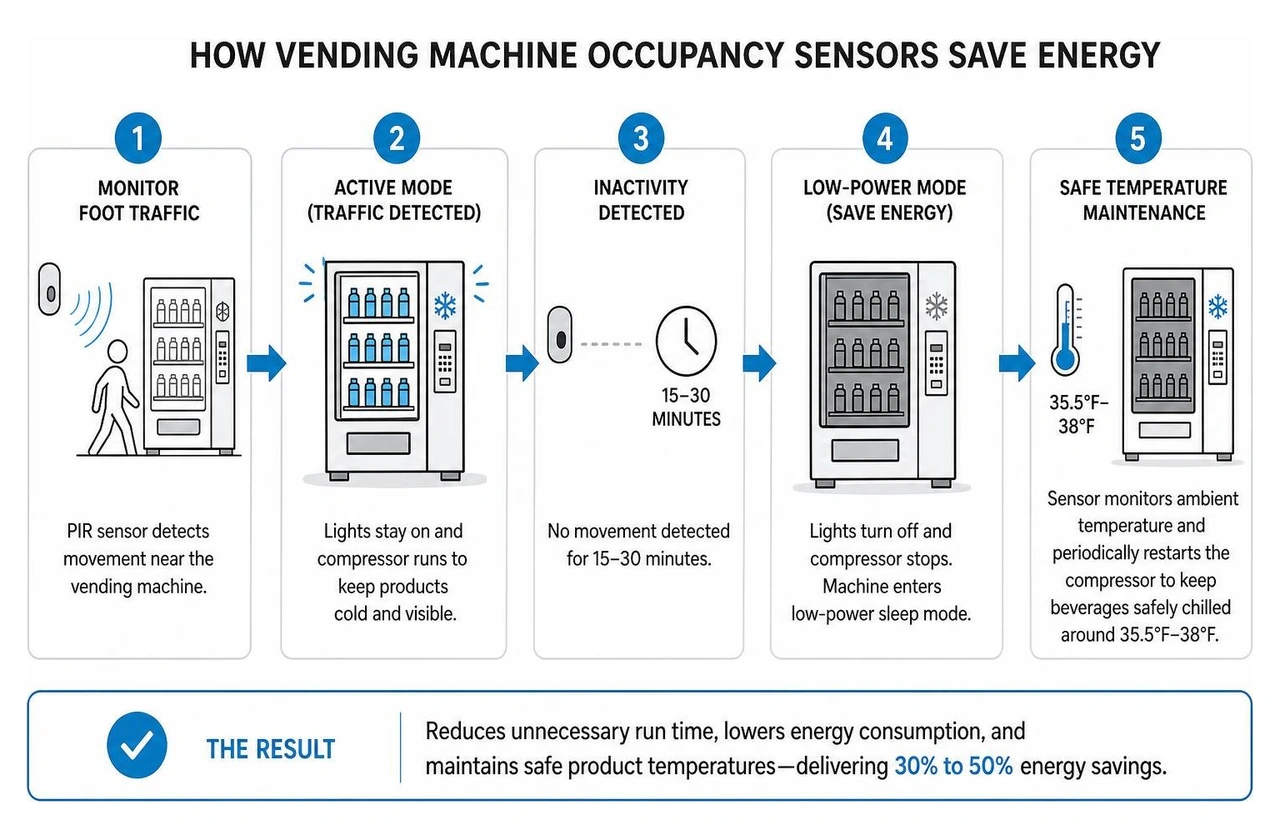
Occupancy controllers utilize passive infrared (PIR) sensors to monitor surrounding foot traffic. When no movement is detected for 15 to 30 minutes, the controller powers down the machine's lights and turns off the compressor. Crucially, smart sensors monitor ambient room temperature and automatically power up the compressor periodically to keep beverage temperatures safely chilled around 35.5°F to 38°F.
field evaluations detailed in the Next Generation Vending Machine Study demonstrate that occupancy sensors yield energy savings of 30% to 50% on refrigerated units. Furthermore, combining occupancy controllers with display delamping achieves up to 56% total energy reduction, cutting daily baseline energy usage from 8.3 kWh down to 3.7 kWh. Pairing smart power managers alongside cellular telemetry units and modern Vending Card Readers gives operators complete remote visibility over equipment power states and inventory sales patterns.
Location Placement and Procurement Strategies for Vending Operators
A machine's physical placement significantly impacts its daily power consumption. Even high-efficiency equipment will consume excessive electricity if placed in direct sunlight or poorly ventilated enclosures. Optimizing equipment placement and establishing clear service agreements are key strategies for managing operating costs.
Climate Factors and Location Optimization
Environmental conditions directly dictate how hard a vending machine's refrigeration compressor must work. For every 10°F increase in ambient room temperature, a refrigerated machine's energy draw increases by 8% to 12%. Placing a machine outdoors in direct summer sunlight can cause energy consumption to spike by 20% to 35% compared to an indoor climate-controlled corridor.
To maximize vending machine energy efficiency, follow these placement best practices:
- Avoid Direct Solar Radiation: Never place glass-front or solid-door beverage machines where direct sunlight strikes the cabinet. Solar heat gain forces the compressor to run continuously.
- Maintain Adequate Wall Clearance: Ensure at least 4 to 6 inches of clearance between the back condenser coils and adjacent walls to prevent heat build-up around the cooling fans.
- Choose Climate-Controlled Spaces: Whenever possible, position machines indoors near stable room temperatures.
- Match Traffic and Inventory Demand: Position high-capacity machines in high-traffic areas where product turnover matches cooling loads, and utilize advice from Vending Machine Locations to secure prime placements. Efficient route management guided by sound Vending Machine Inventory Management prevents unnecessary restocking trips, saving fuel and operational time across your entire business.
Regional commercial electricity rates also affect total operating costs. Rates range from roughly 7.0¢ per kWh in states like North Dakota to over 40¢ per kWh in states like Hawaii. A machine consuming 3,000 kWh annually costs just $210 per year to run in low-cost states, but over $1,200 per year in high-cost regions.
RFP Language and Vendor Contract Best Practices
A common hurdle in vending machine efficiency is the "split incentive" problem: the vending operator owns the machine, but the host facility pays the electric bill. Because the facility covers utility costs, operators may lack immediate financial motivation to invest in higher-priced ENERGY STAR equipment. Conversely, facility managers may hesitate to grant prime placements without guarantees of energy-efficient operation.
Facility managers and building owners can solve this by including mandatory energy efficiency clauses in vendor requests for proposals (RFPs) and placement contracts:
- Specify ENERGY STAR Requirements: Insert Federal Acquisition Regulation (FAR 52.223-15) language requiring all vendor-provided refrigerated beverage equipment to be ENERGY STAR certified.
- Mandate Low-Power Sleep Modes: Require operators to enable software-driven night setback controls that turn off cabinet lighting and allow temporary off-hour temperature setbacks.
- Include Retrofit Provisions: If existing machines remain on site during contract renewals, require the operator to install LED lighting retrofits or occupancy sensor controls.
- Leverage Off-Grid Innovations: For outdoor parks or remote public spaces lacking power outlets, consider specialized off-grid mechatronic designs. Advanced engineering research, such as studies on ENERGETICALLY EFFICIENT MECHATRONIC SYSTEMS FOR DOSE DELIVERY IN ENERGETICALLY INDEPENDENT VENDING MACHINE FOR COLD PRODUCTS, demonstrates how low-power 12V DC dispensing mechanisms and optimized internal product stacking can cut motor power requirements by up to 230%, making solar-powered off-grid vending fully practical.
Frequently Asked Questions About Vending Machine Energy Efficiency
How much electricity does a typical refrigerated vending machine consume daily?
A standard refrigerated beverage vending machine consumes between 7 and 15 kWh per day, which equates to roughly 2,500 to 4,400 kWh per year. Exact consumption depends on cabinet size, ambient temperature, door design (glass-front vs. solid-front), lighting type, and machine age. In contrast, ENERGY STAR certified refrigerated beverage machines typically draw only 3.2 to 5.0 kWh per day (about 1,170 to 1,800 kWh annually), cutting daily electricity usage nearly in half.
What is the typical payback period for energy-efficient vending upgrades?
Payback periods vary depending on local commercial electricity rates and the type of upgrade:
- Delamping Fluorescent Bulbs: Immediate payback (zero capital cost, saving ~$136/year per machine).
- LED Lighting Retrofits: 12 to 18 months payback period based on energy savings and reduced maintenance calls.
- Occupancy Sensors (e.g., VendingMiser): 14 to 24 months payback period (costing ~$180 per unit while saving 30–50% on annual power bills).
- Purchasing ENERGY STAR Certified Machines: 2 to 3 years payback period through reduced utility costs and long-term component reliability.
How do low-power sleep modes work on smart vending equipment?
Low-power sleep modes rely on internal firmware settings or external occupancy controllers to manage machine energy during off-peak hours. When a machine detects inactivity (e.g., overnight or on weekends), the controller automatically turns off cabinet display lights and adjusts the internal cabinet temperature setpoint upward by 3 to 9 degrees. Turning off display lights for 12 hours overnight saves roughly 22% in daily energy consumption, while a slight temperature setback provides an additional 3% savings. Smart controllers track foot traffic patterns over time, ensuring the refrigeration system returns beverages to optimal temperature right before normal business hours resume.
Conclusion
Focusing on vending machine energy efficiency is one of the most effective ways to lower operational costs, extend machine lifespans, and make your vending operations more sustainable. Whether you are an operator managing a large route or a facility manager looking to cut building utility expenses, simple measures like installing LED lighting, adding occupancy sensors, optimizing machine placement, and choosing ENERGY STAR certified models offer clear financial returns.
At Vending Circle, we support vending operators with practical insights, supplier networks, and peer-to-peer strategies to help build a more profitable, energy-efficient business. Ready to upgrade your fleet with reliable, high-efficiency equipment? Explore Energy-Efficient Vending Machines today to find the best solutions for your locations.