Buy Wholesale Vending Machine Snacks With Less Waste and More Margin
The simplest way to buy wholesale vending machine snacks is to use a dependable supplier with vending-size cases, compare the landed cost per unit rather than sticker price alone, and order a proven mix of fast-selling staples plus a few higher-margin specialty items.
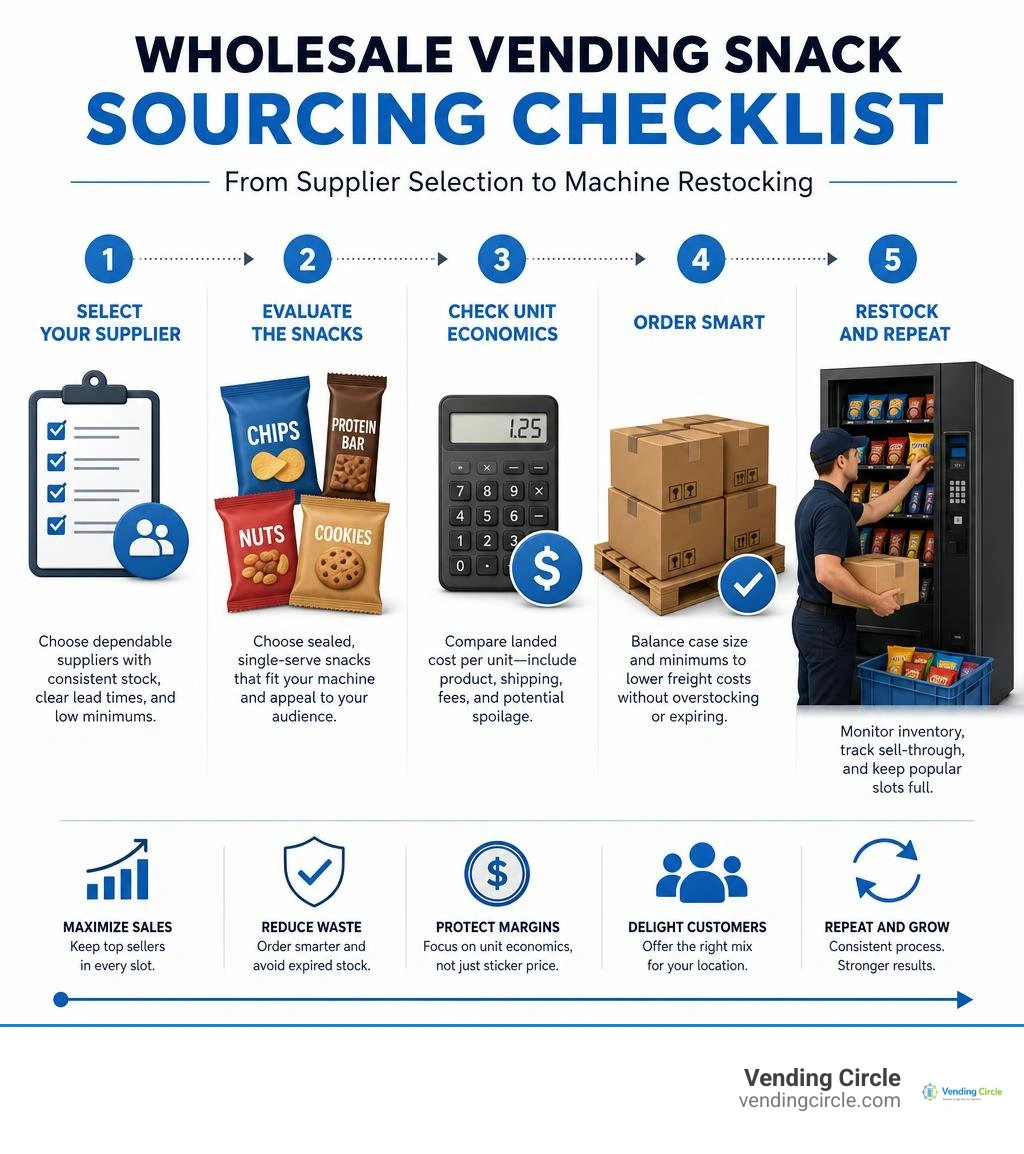
Before you place an order, check these five things:
- Package fit: Choose sealed, single-serve products that fit your machine's coils or trays. Most vending snack bags are about 1 oz to 2.5 oz.
- Unit economics: Include product cost, shipping, membership fees, and spoilage when setting prices.
- Case size and minimums: Buy enough to lower freight costs, but not so much that products expire before they sell.
- Sell-through by location: Chips, candy, cookies, and crackers are dependable anchors. Add protein bars, trail mix, jerky, spicy snacks, or regional favorites where the audience supports them.
- Reliable replenishment: Favor suppliers with consistent stock, clear delivery times, and low enough order minimums to support your route.
That discipline matters. Snacks and cold beverages account for more than 70% of vending sales revenue, while traditional vending operators reported median gross margins of roughly 50% in 2022. The goal is not to find the cheapest case of chips. It is to keep popular slots full, avoid stale inventory, and protect cash flow across every stop.
I am Manuel Mojica, founder of Vending Circle and owner of MM Healthy Vending. I help operators make smarter decisions about wholesale vending machine snacks through practical route experience, operator education, and manufacturer-direct purchasing options.
Know your wholesale vending machine snacks terms:
- vending machine products wholesale
- wholesale vending machine supplies
- vending machine inventory management
Where to Source Wholesale Vending Machine Snacks
Every profitable route starts with smart procurement. When we source inventory, our primary goal is securing favorable unit costs without tying up working capital in slow-moving pallets. Finding the right suppliers requires balancing minimum order quantities (MOQs), shipping freight, and case pack configurations.

Before purchasing wholesale goods, obtain a state resale certificate (reseller's permit). Presenting a valid tax certificate to distributors exempts you from paying local sales tax on inventory meant for resale, instantly preserving 6% to 10% of your operational margin.
Understanding freight thresholds is equally critical. Sourcing wholesale snacks online can seem cost-effective until shipping costs erase your profit. Look for distributors offering free shipping thresholds (for example, ground shipping included on orders over $85) or regional pallet delivery terms. For detailed vendor vetting, consult our vending machine suppliers guide.
Finding Reliable Distributors for Wholesale Vending Machine Snacks
National broadline distributors and specialized vending wholesalers are the backbone of large-scale operations. These suppliers provide master cases tailored specifically for automated merchandising spirals, including single-serve chips (typically 24- to 64-count cases) and confectionery display caddies (12- to 36-count boxes).
When evaluating route distributors, prioritize three criteria:
- Consistent Delivery Lead Times: Predictable 2- to 4-day delivery windows prevent costly machine stockouts.
- Manageable Minimums: Suppliers offering low minimum order sizes allow you to turn inventory rapidly without risking product expiration.
- Turnkey Bundle Deals: Bundled packages—such as a curated starter bundle like the Ultimate Snack & Drink Package - $3000 Bulk Deal for Convenience Store – POPS DISTRO INC. - WHOLESALE—can simplify inventory setup when onboarding new locations.
For a broader look at equipment and supplier requirements, check out our wholesale vending supplies guide 2026.
Comparing Wholesale Clubs vs Online Master Distributors
New and growing operators often debate whether to buy from local wholesale membership clubs (such as Sam's Club or Costco) or order directly through commercial master distributors. Both play specific roles in an efficient supply chain:
| Factor | Wholesale Membership Clubs | Online Master Distributors |
|---|---|---|
| Best Used For | Emergency restocks, entry-level volume, zero lead time | Full-route scaling, specialty SKUs, automated delivery |
| Minimum Order Quantity | 1 individual retail box | Typically $250+ or full pallet tiers |
| Product Selection | Mainstream consumer brands, large multipacks | Broadline vending sizes, specialty healthy/ethnic SKUs |
| Landed Unit Cost | Moderate (includes club fees & travel fuel) | Low at scale (wholesale tiered pricing) |
| Fulfillment Method | In-person store runs (time-intensive) | Direct-to-door freight / parcel delivery |
Wholesale clubs are unbeatable for immediate inventory runs when a machine sells out unexpectedly over the weekend. However, as your route expands, hauling cases in personal vehicles consumes valuable time. Migrating to scheduled deliveries via specialized suppliers allows you to focus on route management and machine expansion.
Most Profitable Snack Categories and Planogram Strategy
Achieving healthy returns requires pricing discipline and smart slot allocation. In the vending industry, operators target a median gross profit margin of approximately 50%, which translates to a standard 100% markup (keystone pricing) over landed wholesale unit costs.
Single-serve snack bags ranging from 1 oz to 2.5 oz represent the industry sweet spot. They fit standard machine spirals cleanly and hit impulse-friendly price points (typically $1.50 to $2.50 per unit). Merchandising these items effectively on your planogram—placing premium items at eye level and high-demand staples right below them—directly accelerates sell-through.
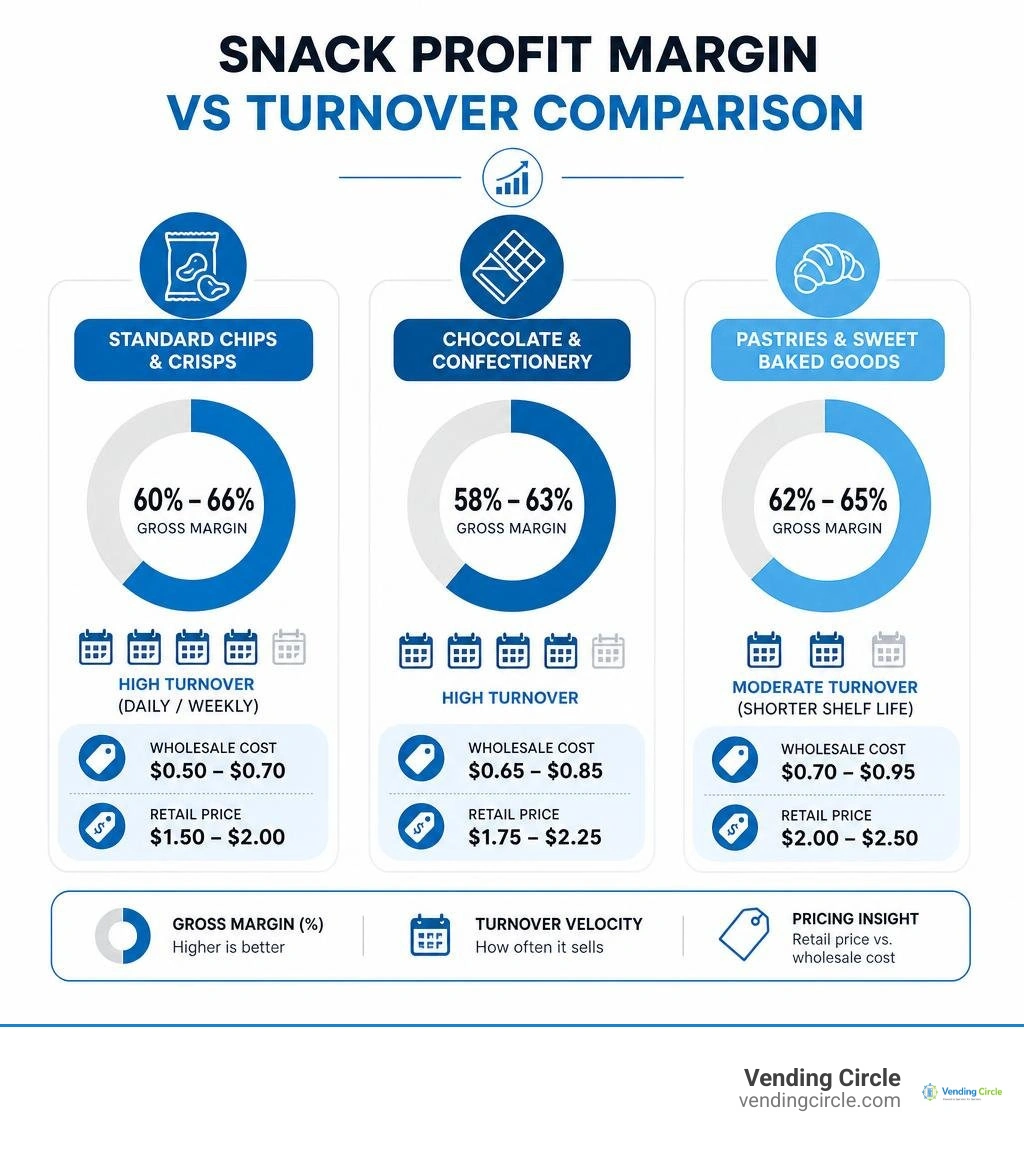
| Snack Category | Average Wholesale Cost | Retail Price Point | Gross Margin (%) | Turnover Velocity |
|---|---|---|---|---|
| Standard Chips & Crisps | $0.50 – $0.70 | $1.50 – $2.00 | 60% – 66% | High (Daily / Weekly) |
| Chocolate & Confectionery | $0.65 – $0.85 | $1.75 – $2.25 | 58% – 63% | High |
| Pastries & Sweet Baked Goods | $0.70 – $0.95 | $2.00 – $2.50 | 62% – 65% | Moderate (Shorter shelf life) |
| Meat Snacks & Beef Jerky | $1.50 – $2.10 | $3.75 – $4.95 | 55% – 60% | Moderate |
| Protein & Energy Bars | $1.10 – $1.45 | $2.75 – $3.50 | 58% – 62% | Moderate to High |
| Nuts & Trail Mixes | $0.60 – $0.90 | $1.75 – $2.50 | 64% – 67% | Moderate |
High-Volume Anchors vs High-Margin Specialty Snacks
A profitable machine balances "penny profit" items with "dollar profit" items.
- Penny Profit (High Volume, Moderate Dollar Margin): Name-brand potato chips, tortilla crisps, and standard chocolate bars sell reliably every day. A chip bag generating $1.00 in gross margin sells 40 times a week, yielding $40.00 in gross cash flow.
- Dollar Profit (Lower Volume, High Dollar Margin): Premium beef jerky, meat sticks, and specialty gourmet cookies turn slower, but each purchase nets $2.00 to $2.75 in margin. Selling just 15 units generates roughly the same gross profit as 40 bags of chips while taking up fewer restock slots.
If you operate dedicated confections, review our guide to bulk candy machines for sale to align your hardware with appropriate candy packaging.
Incorporating Healthy Options and Ethnic Flavors
Consumer snacking patterns continue to diversify. Modern breakrooms and public spaces increasingly expect better-for-you alternatives alongside traditional indulgence snacks. Stocking protein bars, baked crisps, raw trail mixes, and yogurt-coated nuts captures health-conscious consumers who would otherwise walk past a machine.
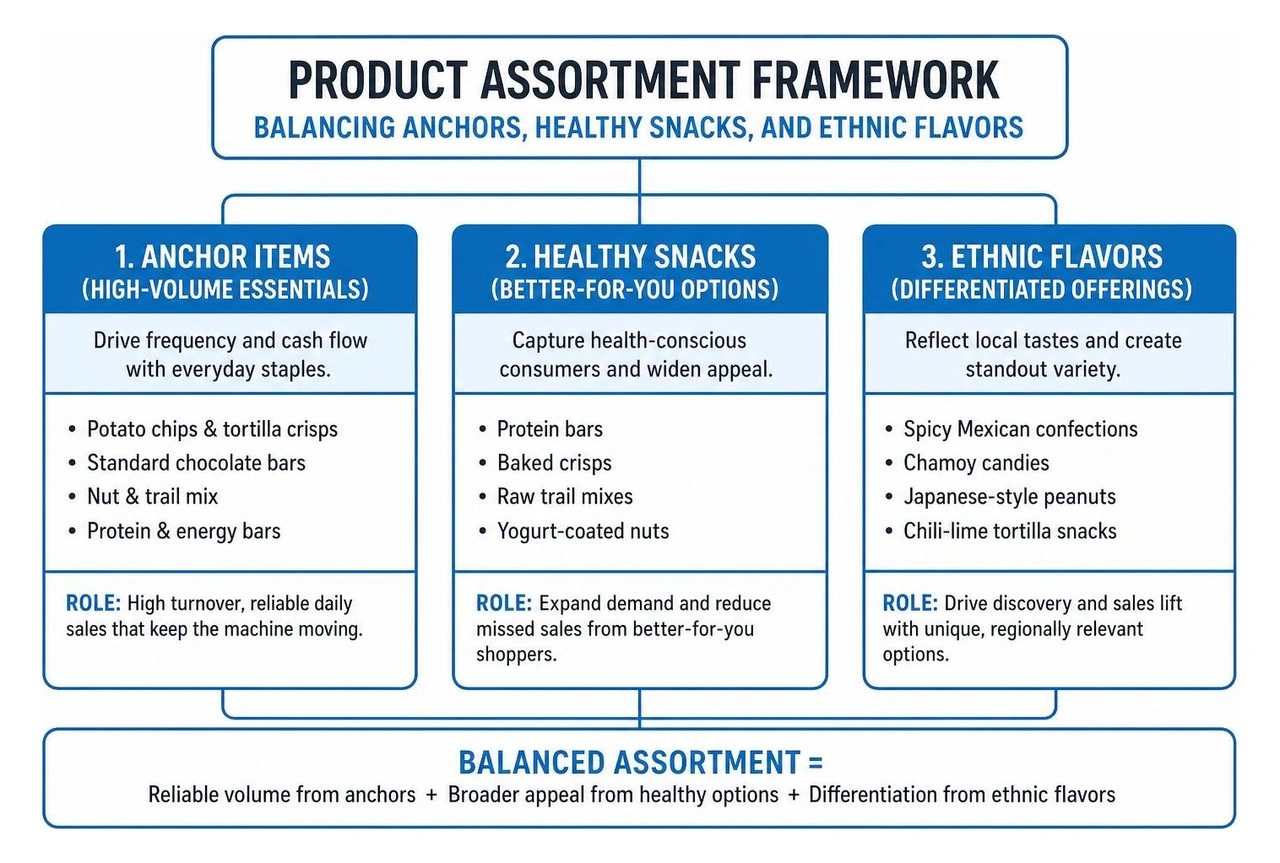
Furthermore, regional and ethnic snacks offer strong sales lift when matched to local demographics. Sourcing spicy Mexican confections, chamoy candies, Japanese-style peanuts, and chili-lime tortilla snacks creates product differentiation that generic operators overlook. For high-volume loose components, visit our breakdown of bulk vending machine supplies.
Matching Machine Selections to High-Traffic Locations
A product assortment that excels in a high school break area will struggle in a corporate headquarters. Tailoring your product mix to location demographics, dwell time, and operating hours is the single fastest way to increase sales per stop.

For a complete strategic blueprint on location contracts and placement, read our vending machine wholesale ultimate guide 2026.
Curating High-Margin Wholesale Vending Machine Snacks by Location
Different commercial environments require targeted inventory profiles:
- Office Parks & Corporate Breakrooms: Office workers seek midday energy boosts and afternoon treats. Stock protein bars, premium roasted nuts, sparkling waters, cold brew cans, and upscale chocolate bars.
- University Dorms & Student Centers: Students study late and look for budget-friendly indulgence. Prioritize large-size spicy chips, gummy candies, instant noodles, and high-caffeine energy drinks.
- Hospital Waiting Areas & Staff Breakrooms: These 24/7 environments demand substantial grab-and-go nutrition. Feature meal-replacement bars, trail mixes, pastries, and premium ready-to-drink teas.
- Laundromats & Auto Repair Waiting Rooms: Customers have extended dwell times. Stock classic, recognizable brand-name chips, cookies, and traditional sodas to capture spontaneous impulse sales.
Equipping venues with versatile machines like the Smart Combo Vending Machine | Best For Snacks and Drinks allows you to vend ambient snacks alongside chilled beverages within a single, space-efficient footprint.
Capacity Planning and Flex-Tray Hardware Specs
Modern snack equipment utilizes adjustable flex-trays to fit varied package dimensions. A standard full-size model, such as the 32 Selection Snack Vending Machine - Crane Vend, holds roughly 474 individual items across 32 unique selections:
- Top Trays (Wide Coils): 8 to 12 slots for bagged chips, pretzels, and pastries (typically 1 oz to 2.5 oz bags).
- Middle Trays (Narrow Coils): 12 to 16 selections for candy bars, cookies, and fruit snacks.
- Bottom Trays / Gum & Mint Units: High-density narrow spirals for mint tins, gum packs, and snack bars.
Adjustable spiral widths, pull-out tilt trays, and guaranteed drop sensors ensure that items drop reliably, preventing coin jams and refund calls.
Inventory Management, Restocking, and Cashless Tech
Inventory management is the engine of a successful vending route. Unsold, out-of-date stock erodes operating margins, while empty coils represent lost revenue. Implementing structured inventory controls keeps your capital turning predictably.
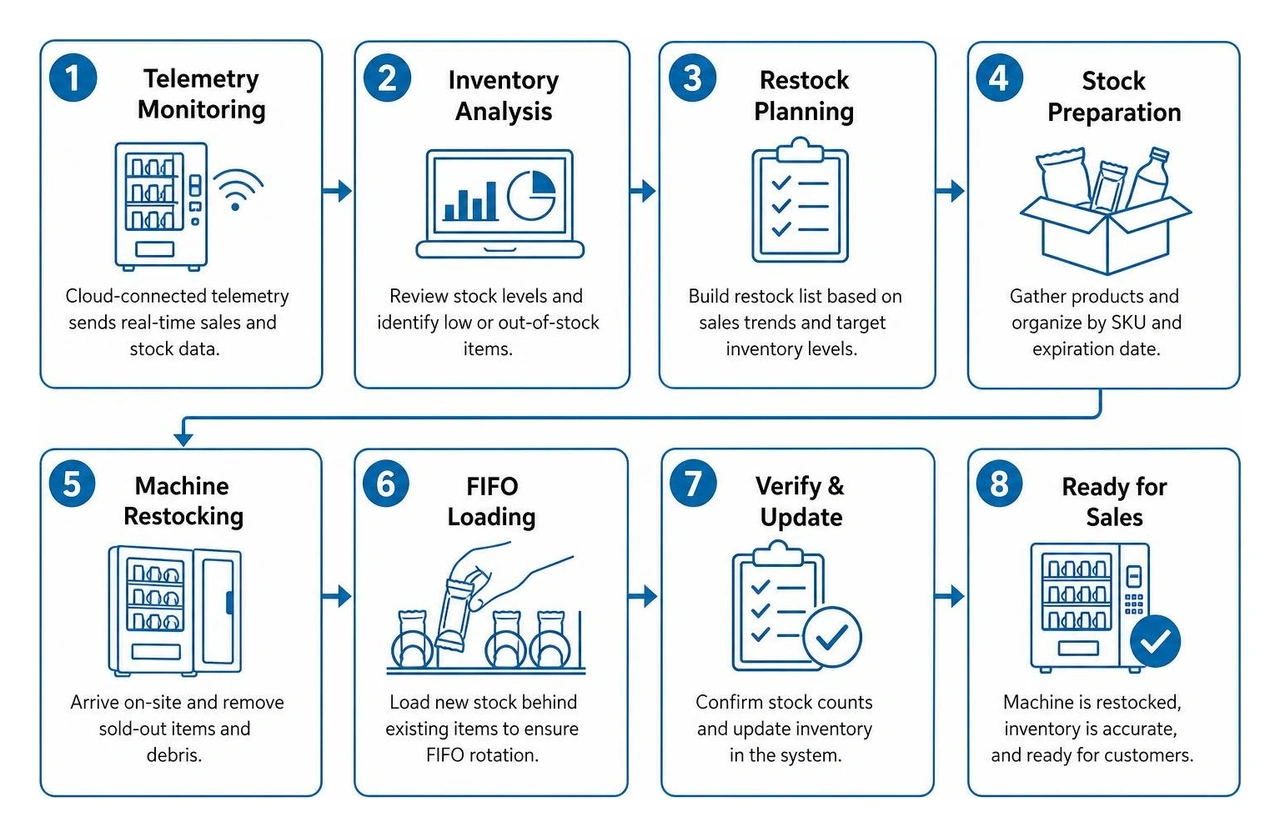
To scale efficiently, adopt First In, First Out (FIFO) inventory rotation: always load fresh stock behind older inventory so that items near their expiration date sell first. For an in-depth operational framework, read our guide on vending machine inventory management.
Remote Telemetry and FIFO Inventory Controls
Modern vending machines rely on cloud-connected telemetry systems. Telemetry hardware transmits real-time sales data and stock counts directly to your phone or laptop.
Using telemetry eliminates guesswork:
- Pre-Kitting Restock Runs: Pack the exact cases and counts needed for each stop before leaving your storage space, cutting route visit times in half.
- Automated Reorder Triggers: Receive notifications when specific high-volume snack coils drop below 20% capacity.
- Shrinkage & Spoilage Tracking: Identify slow-moving SKUs weeks before they reach their best-by dates, allowing you to rotate them into higher-volume machines.
Cashless Payment Readers and Mobile Wallets
Cash-only machines are obsolete. Cashless telemetry readers compatible with Apple Pay, Google Pay, and contactless tap-to-pay cards consistently increase machine revenue by 20% to 30%. With over 70% of consumers preferring electronic payments, cashless hardware removes purchase friction, making multi-item transactions far more common.
If you are sourcing new equipment, explore our wholesale vending machines guide 2026 to ensure your fleet supports the MDB (Multi-Drop Bus) communication protocol required for modern cashless card readers.
Common Sourcing and Stocking Pitfalls to Avoid
Even experienced operators can lose margin to basic logistical mistakes. Avoid these common operational traps:
- Buying Unknown or Generic Brands to Save a Few Cents: Consumers hesitate to put money into automated machines for off-brand snacks they don't recognize. Name-brand recognition drives impulse sales.
- Letting Popular Coils Sit Empty: An empty spiral is guaranteed lost revenue that can never be recovered. If a machine sells through an item faster than scheduled restock visits, double-slot that item across two adjacent spirals.
- Over-Ordering Short-Shelf-Life Goods: Pastries, fresh baked items, and certain snack cakes often carry shelf lives of 30 to 45 days. Order these in smaller, frequent batches to prevent discard losses.
- Neglecting Heat Sensitivity During Transit and Storage: Confectionery and chocolate melt quickly during summer months. Use temperature-controlled shipping methods and insulated storage bins during warm weather routes.
- Failing to Track Landed Costs: Always account for shipping fees, pallet surcharges, and municipal taxes when calculating per-unit margins. A low case price means little if freight charges add 25% to your unit cost.
Frequently Asked Questions About Vending Snacks
How much initial inventory do I need to stock a vending machine?
A typical snack machine holds between 300 and 470 items. Initial inventory costs usually range between $500 and $1,000, depending on your product mix (chips, premium jerky, or confections). Maintaining a 20% safety backstock at your storage area ensures you can handle fast-moving replenishment without delay.
What is the average monthly profit generated by a snack vending machine?
A well-placed machine in a reliable location generally generates between $300 and $1,500 in gross monthly revenue. At an average gross margin of 50%, an operator nets $150 to $750 in gross profit per machine monthly, before location commissions and processing fees. Top-performing venues with heavy foot traffic can exceed these figures.
How often should vending machine snack coils be restocked?
Restock frequencies depend on location foot traffic and machine capacity. High-traffic industrial facilities and transit hubs often require weekly or twice-weekly restocking. Typical office environments turn over reliably on a bi-weekly cycle. Using real-time telemetry allows you to restock based on live inventory levels rather than arbitrary schedules.
Master Your Sourcing with Vending Circle
Building a profitable route comes down to repeatable systems: sourcing high-demand items at sustainable landed costs, maintaining disciplined FIFO inventory controls, and equipping machines with reliable payment tech.
At Vending Circle, we help operators scale through our comprehensive learning community and direct procurement marketplace. Whether you are adding your second machine or managing dozens of stops across the city, our network provides the strategies, weekly live Q&A sessions, and vendor partnerships needed to keep margins high.
Ready to expand your route with proven commercial hardware? Explore our complete collection to browse commercial equipment and launch packages today.