What a Vending Machine Under $500 Actually Buys
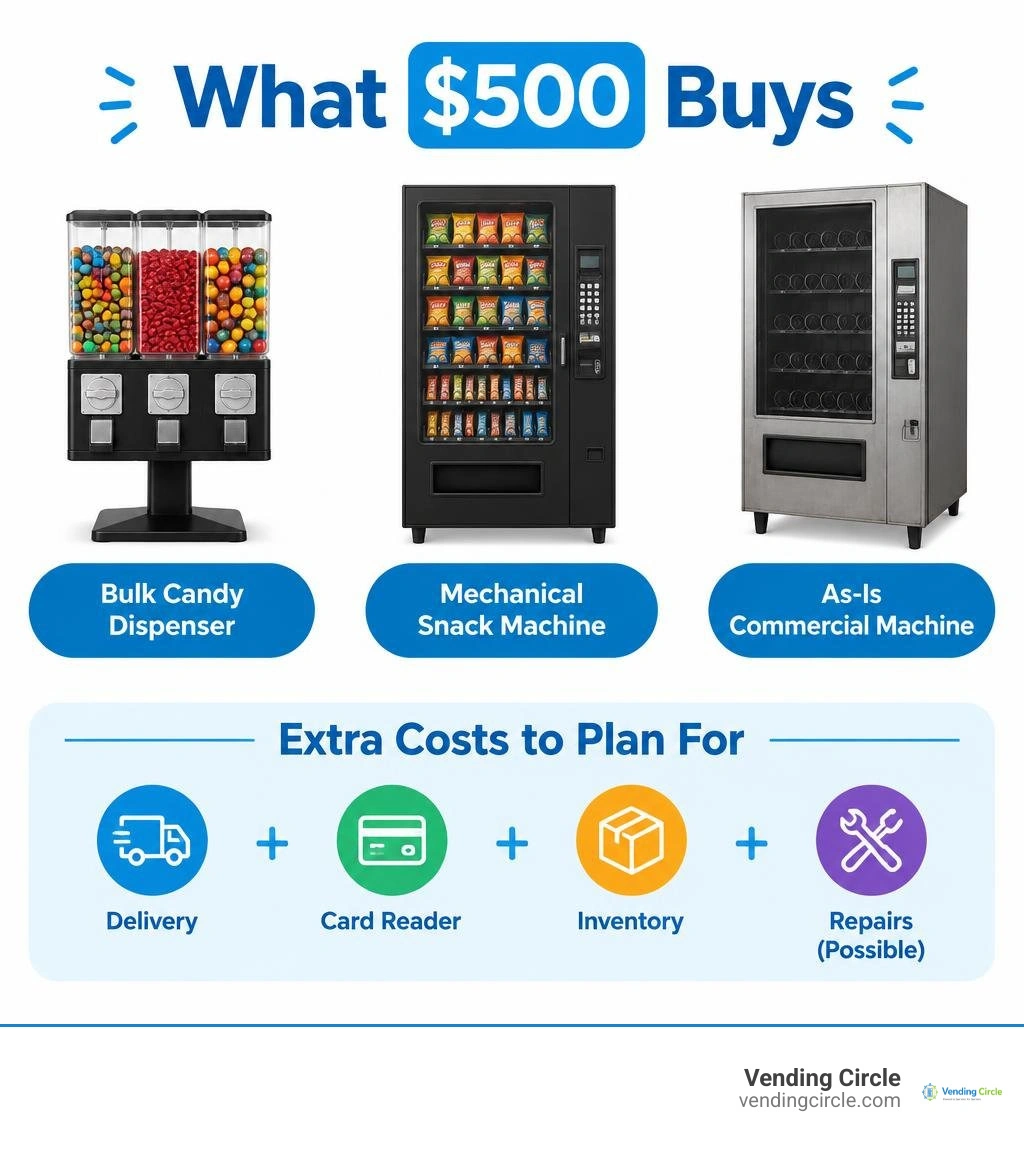
A vending machine under $500 is usually a mechanical candy or gumball dispenser, a non-electric snack machine, or an older commercial machine sold as is. For a low-risk start, look at bulk candy machines. If you want a full-size snack machine, inspect a local listing in person and budget beyond the asking price for moving, stock, and possible repairs.
The purchase price is not the total startup cost. A $500 used machine can cost $1,350 to $2,750 to put into service once you add delivery, a card reader, and inventory. This guide sorts the cheap finds from the expensive mistakes.
I’m Manuel Mojica, founder of Vending Circle and a former vending business owner. I’ll use that operator experience to help you judge whether a vending machine under $500 is worth buying for your location.
Vending machine under $500 further reading:
Top Hardware Categories for a Vending Machine Under $500
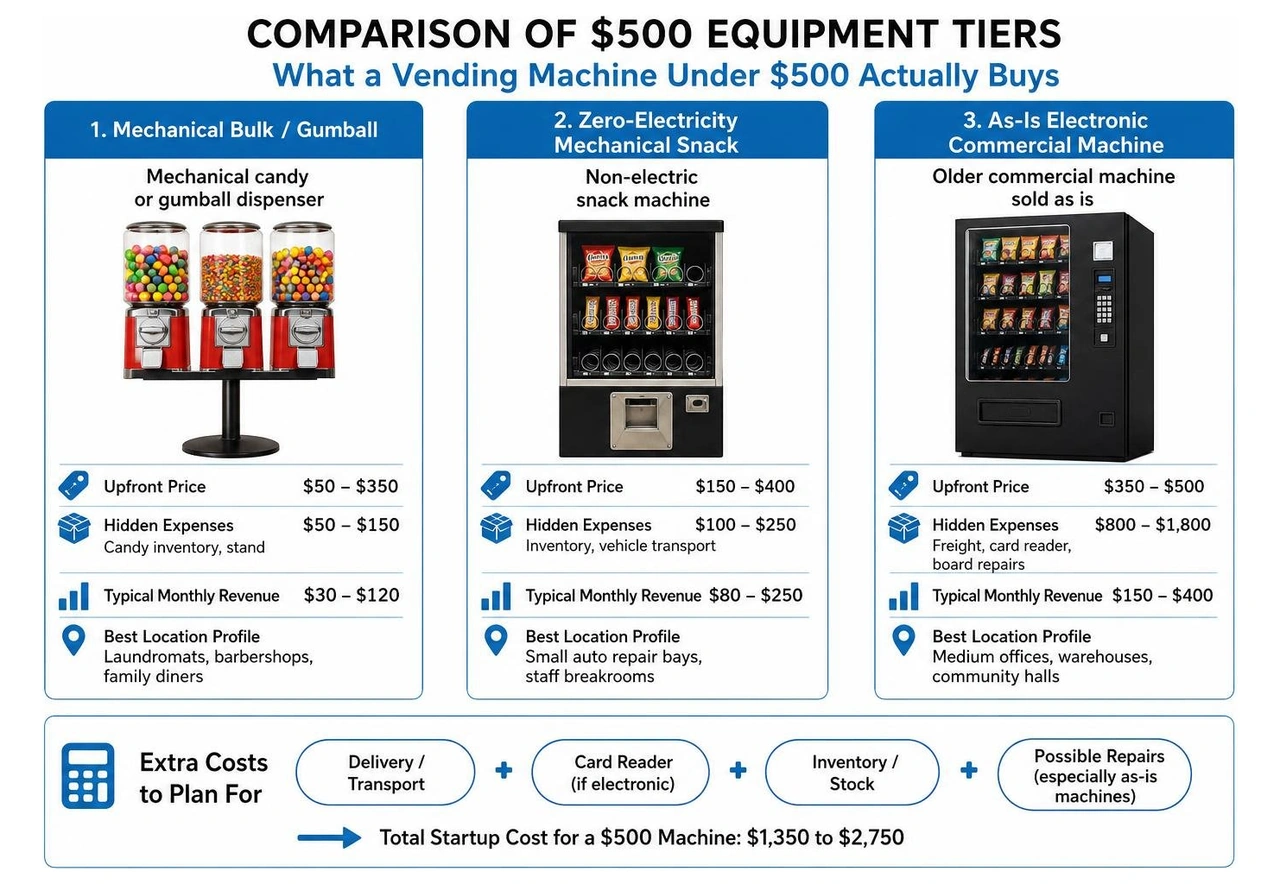
When scouring secondary marketplaces, classified listings, and local liquidations, you will quickly notice that the sub-$500 category divides cleanly into three distinct hardware groups. Understanding what each tier provides—and where its operational limits lie—prevents you from buying equipment that fails on day one.
| Equipment Category | Average Upfront Price | Hidden Setup Expenses | Typical Monthly Revenue | Best Location Profile |
|---|---|---|---|---|
| Mechanical Bulk / Gumball | $50 – $350 | $50 – $150 (Candy inventory, stand) | $30 – $120 | Laundromats, barbershops, family diners |
| Zero-Electricity Mechanical Snack | $150 – $400 | $100 – $250 (Inventory, vehicle transport) | $80 – $250 | Small auto repair bays, staff breakrooms |
| As-Is Electronic Commercial Snack | $350 – $500 | $800 – $1,800 (Freight, card reader, board repairs) | $150 – $400 | Medium offices, warehouses, community halls |
Best Mechanical Bulk and Candy Vending Machine Under $500
Mechanical bulk machines represent the most reliable hardware you can buy on a strict budget. These classic dispensers rely entirely on internal springs, coin cogs, and turning wheels. Because they require zero electricity, control boards, or drop sensors, there are virtually no sensitive electronics that can malfunction.
Local private listings may offer similar units for around $200. Triple-head configurations allow you to vend three distinct items—such as gumballs, chocolate candies, and pressed sugar sweets—from a single cast-iron or steel stand.

To make these units profitable, partner with reliable bulk candy suppliers who sell volume cases of non-melting sweets. Placing a triple-head head in high-dwell locations like self-service laundromats, barbershops, and local pizza parlors lets you capture steady quarters from waiting families without worrying about power outlets or software glitches. If you want to scale this model, our buying candy machine route guide breaks down how to bundle multiple locations together.
Zero-Electricity Mechanical Snack Merchandisers
If you want to sell packaged chips, cookies, and pastries without paying for an electronic commercial cabinet, mechanical snack merchandisers offer a smart middle ground. These units use pull-knobs or manual drop cranks coupled to mechanical coin slides.
Similar units are often available from local private sellers for roughly $200. Because they require no wall outlet, you can place them in awkward hallway nooks, covered outdoor break benches, or small automotive garages where electrical cords pose safety hazards.
Most manual snack dispensers feature adjustable coin mechanisms that allow you to set different prices across distinct columns (for instance, $1.00 for chips and $0.75 for gum). While they lack digital displays and cashless swipers, their sheer simplicity keeps maintenance close to zero.
As-Is Full-Size Commercial Snack Cabinets
The third category consists of genuine, full-size commercial snack cabinets sold by retiring route operators or property owners looking to clear storage space. Occasionally, you can find comparable models listed for $475.
When buying used commercial machines at this price point, expect cosmetic blemishes, worn trim, or physical patch jobs from past break-in attempts. As long as the internal wiring harness, delivery coils, and keypad remain structurally sound, an older cabinet from workhorse brands like Automatic Products (AP), Crane National, or USI can form the backbone of a starter location.
The Real Cost Math: $500 Used Machine vs. Financing a New Commercial Unit
Buying an entry-level cabinet for $500 feels like an incredible bargain until you map out the required line items to make it operational. In modern automated retail, an offline, cash-only machine leaves substantial revenue on the table.
| Expense Item | $500 As-Is Used Cabinet | Financing a New $1,900 Unit |
|---|---|---|
| Upfront Machine Hardware | $500 | $0 – $200 down payment |
| Freight / Rigging Delivery | $250 – $600 | $150 – $350 (Often subsidized) |
| Card Reader & Telemetry Hardware | $450 | Included or pre-installed |
| MDB Control Board Upgrade | $200 – $400 | $0 (Factory installed) |
| Initial Snack & Drink Inventory | $300 – $500 | $300 – $500 |
| Replacement Locks & Keys | $50 – $120 | $0 (Includes factory master set) |
| Parts Warranty Protection | $0 (Sold strictly as-is) | 1 to 2 Years Full Factory Warranty |
| Total Real Out-of-Pocket Setup | $1,750 – $2,570 | $450 – $1,050 (Initial cash outlay) |
Hidden Retrofit Expenses: Compressors, MDB, and Freight
The biggest pitfall for beginners is failing to understand the Multi-Drop Bus (MDB) standard. Modern telemetry units and cashless readers communicate with the internal computer through an MDB connection. If you purchase an older machine manufactured prior to standard MDB implementation, you cannot simply plug in a card reader; you must purchase a logic board conversion kit for $200 to $400.
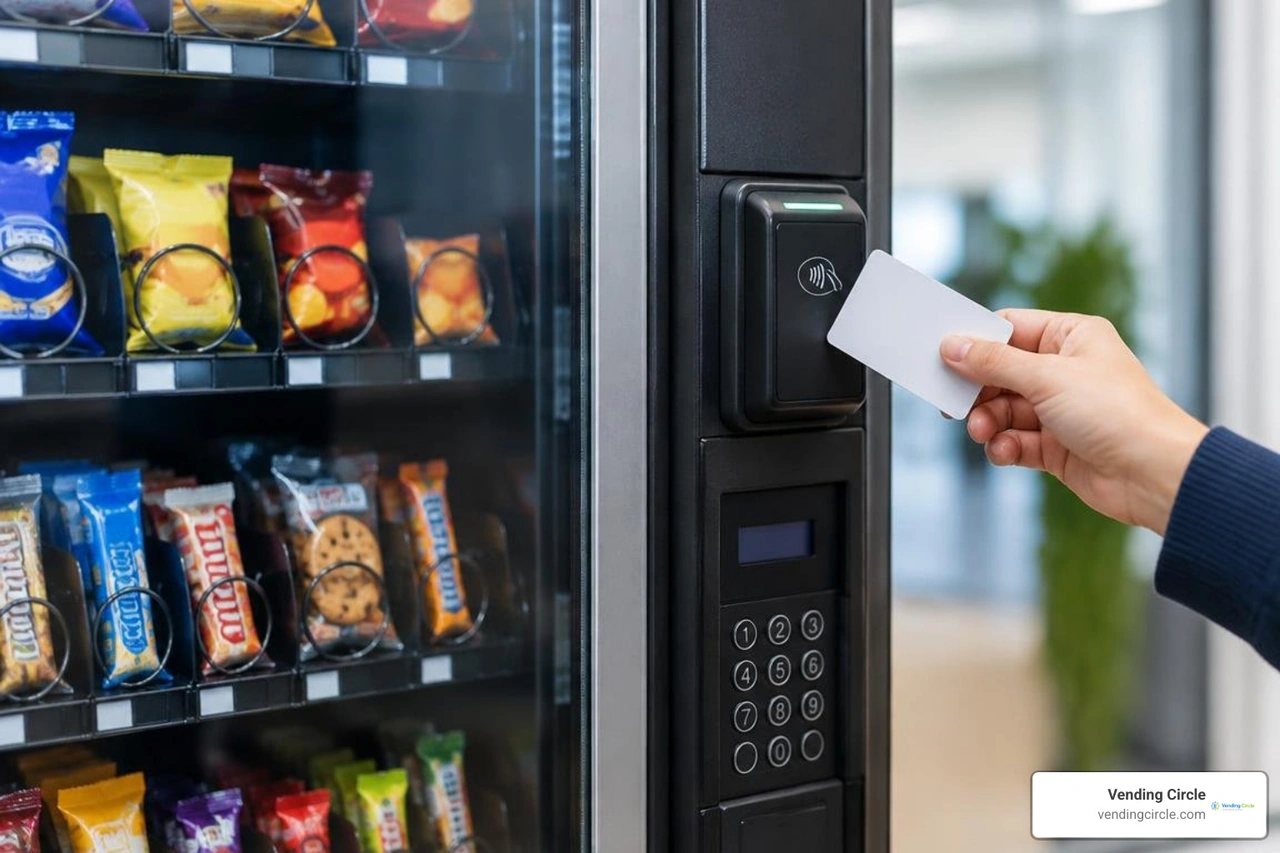
Adding modern payment options is essential: 78% of all vending transactions in 2025 were cashless, and the average cashless spend hit $2.45 compared to just $1.57 for cash. Before putting any machine on location, plan for retrofitting a card reader to capture that higher transaction volume. You can also review our vending machine card reader guide to evaluate monthly connection fees and processor charges.
Beyond electronics, moving a 600-pound steel box requires dedicated transport. Professional freight delivery with lift-gate service typically costs between $200 and $1,000 depending on distance and stairway logistics.
Comparing $500 Cash Outlay to Commercial Machine Financing
Instead of sinking $1,850 in cash into an unverified, 20-year-old machine, smart operators often leverage equipment financing. A brand-new commercial countertop or compact cabinet starts around $1,900. By reviewing vending equipment financing options, you can spread that equipment cost over 24 to 48 months, resulting in predictable payments of $75 to $120 per month.
For example, specialized compact combo vending machines in this price range can provide modern LED presentation, factory drop sensors, and multi-category trays right out of the box. Financing modern units keeps your working capital free for marketing, securing premium locations, and buying bulk stock at wholesale margins.
Red Flags, Scams, and Refrigeration Traps in Cheap Listings
The secondary market has plenty of genuine bargains, but it also attracts deceptive sellers looking to offload broken commercial appliances onto unsuspecting beginners.
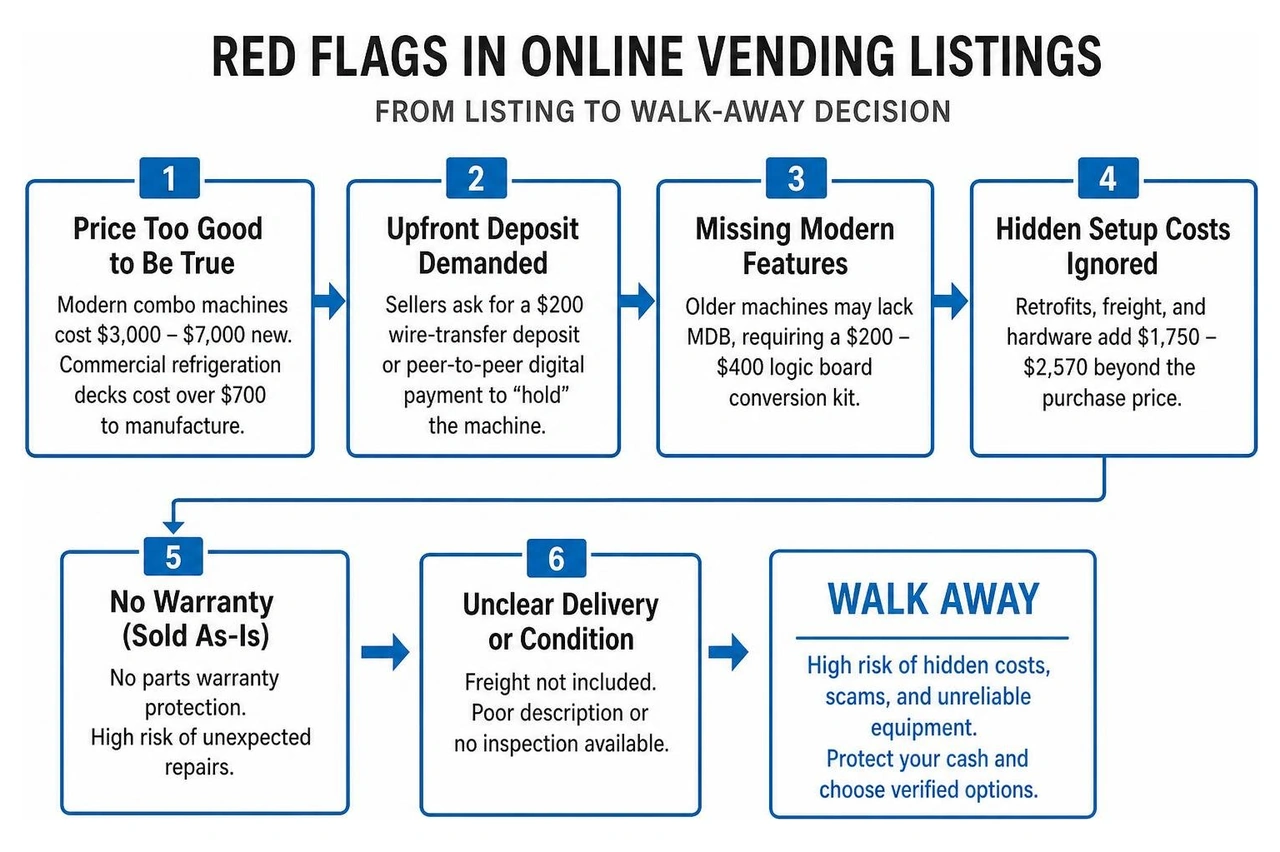
Be wary of online listings advertising modern glass-front combo machines for exactly $500. A standard commercial combo costs between $3,000 and $7,000 new, while commercial refrigeration decks alone cost over $700 just to manufacture. If a seller demands a $200 wire-transfer deposit or peer-to-peer digital payment to "hold" a pristine machine for delivery, walk away immediately.
Always verify that sellers offering business opportunity packages comply with federal rules by reviewing our vending machine agreements guide before signing contracts or transferring non-refundable funds.
The Specific Risks of Buying Sub-$500 Refrigerated Drink or Combo Machines
If you are looking to buy a drink machine or a combo unit on a shoestring budget, proceed with extreme caution. Refrigerated cabinets house sealed refrigeration loops, evaporator coils, and heavy compressors.
Federal environmental laws under EPA Section 608 require certified technicians to handle refrigerant recovery and charging. A certified repair technician charging $120 to $180 per hour can turn a $500 bargain into a financial sinkhole in a single afternoon. Furthermore, vintage cooling units draw significant power. Review our vending machine maintenance guide to see how modern R290 hydrocarbon cooling decks cut utility bills compared to obsolete systems.
Checklist to Inspect a Vending Machine Under $500 in Person
Never hand over cash for an electronic vending machine without plugging it in and testing every major subsystem. Use this field checklist during your on-site inspection:
- Power Up and Temperature Drop: Plug the machine in and let it run for at least 45 minutes. Ensure the evaporator fan spins smoothly and the cabinet pulls down to appropriate beverage temperatures (36°F to 42°F).
- Test Motor Cycles on Every Tray: Enter the internal service mode and run a diagnostic motor test. Ensure every single spiral completes a full 360-degree rotation without sticking or grinding.
- Bill Validator & Coin Mech Acceptance: Insert both crisp and crinkled $1 and $5 bills. Feed nickels, dimes, and quarters into the coin slot, confirming the display credits the funds correctly and drops accurate change from the internal payout tubes.
- Inspect Harnesses and Logic Boards: Look inside the main door for signs of burnt electrical traces, chewed wires, water stains, or bypassed safety switches.
- Physical Cabinet and Lock Integrity: Check that the T-handle screw assembly turns freely and that the door seals seal tightly against the frame without air gaps.
Step-by-Step Strategy to Start Vending on a $500 Budget
If $500 represents your total startup capital, you can still launch a viable automated retail venture. The secret is executing a lean launch that prioritizes low-cost hardware and smart placement.
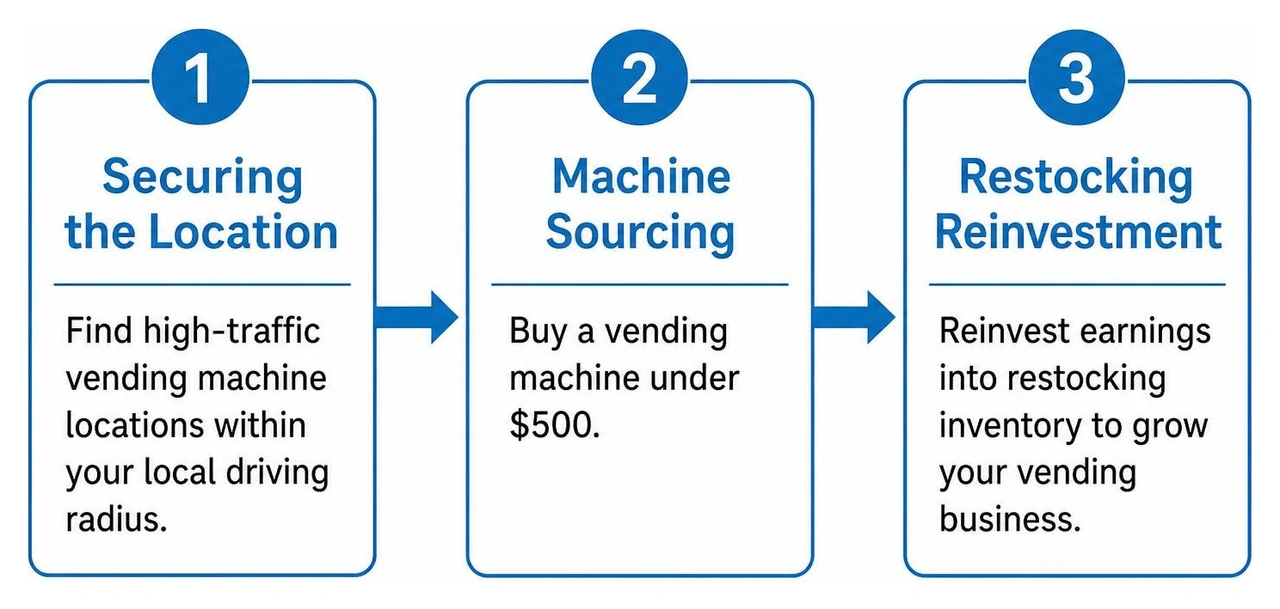
Securing the Location Before Purchasing Hardware
The most common beginner mistake is storing a cheap vending machine in a home garage without having anywhere to plug it in. Hardware produces zero revenue without foot traffic. Before spending money on equipment, focus on finding high-traffic vending machine locations within your local driving radius.
Target neighborhood businesses with steady customer dwell times, such as:
- Independent tire shops and oil-change waiting rooms
- Multi-chair barbershops and beauty salons
- Laundromats operating without existing snack options
- Small industrial assembly shops with 15 to 40 floor employees
Present the owner with a clean, professional vending location placement agreement. Frame your service as an employee amenity that costs the host business nothing while providing fresh refreshments on demand.
Allocating $500 for Maximum ROI: Telemetry and Initial Stock
Once you have secured permission for a placement, allocate your $500 budget across high-velocity assets rather than expensive metal:
By stocking high-margin items from wholesale snack inventory distributors, a mechanical setup can yield gross margins between 60% and 80%. Reinvest those weekly coin collections directly into your equipment fund until you have saved enough cash to acquire your first full-size refrigerated snack and beverage machine.
Frequently Asked Questions About Cheap Vending Machines
What types of vending machines can you actually buy for under $500?
A strict $500 budget realistically purchases mechanical bulk gumball and candy dispensers (new or used), non-electric countertop snack merchandisers, toy capsule machines, or older full-size electronic commercial cabinets sold as is through local private classifieds. Functional refrigerated soda machines or glass-front combo units under $500 are extremely rare and almost always require immediate, costly component replacements.
What is the realistic monthly earning potential of a $500 machine?
A mechanical bulk candy machine placed in an average barbershop or laundromat typically generates between $30 and $120 per month in gross coin revenue, with product costs running roughly 20% to 35%. A used commercial snack cabinet placed in a business with 25 to 50 daily workers can generate $150 to $400 per month. Upgrading an electronic cabinet with a cashless card reader generally increases gross sales by 25% to 40% over cash-only setups.
Is it better to buy a machine first or secure a location first?
Always secure your location first. Vending machines are heavy, difficult to transport, and take up valuable space. If you buy a machine before securing a host site, you risk owning hardware that does not fit the physical doorways, electrical capacity, or product needs of the location you eventually find. Securing a signed location agreement beforehand lets you match the exact machine type to the client's space and traffic profile.
Conclusion
Starting an automated retail route on a budget is entirely achievable when you understand equipment costs, maintenance risks, and market math. While hunting for a vending machine under $500 can turn up dependable mechanical workhorses, attempting to buy complex refrigerated units at that price point often leads to unexpected repair bills and costly freight hurdles.
Whether you launch with a simple mechanical candy head or finance a brand-new, card-ready commercial cabinet, your long-term success comes down to strong location agreements, smart inventory buying, and proactive equipment maintenance.
Join our active community of operators at Vending Circle to access manufacturer-direct equipment pricing, weekly live training sessions, and proven route growth playbooks. When you are ready to expand your route, explore our comprehensive vending guides and operator resources to scale your business with confidence.