Find a Profitable Vending Machines Route for Sale Near Me
To find a vending machines route for sale near me that is worth buying, look beyond the asking price. Request sales records, verify each machine and location in person, review operating costs, and confirm that the seller will introduce you to account managers.
A turnkey route can range from a few machines at a handful of accounts to dozens of machines across a wider area. Recent listings show small routes priced around $15,000 to $65,000, while established routes with more locations, equipment, and documented cash flow can cost far more. The right purchase is the one with verifiable net cash flow, reliable machines, and locations you can service efficiently.
Your first inspection should answer four questions:
- Are the reported sales supported by card-reader reports, cash records, and bank deposits?
- Do the machines work, accept modern payments, and have manageable repair needs?
- Are the locations stable, busy, and willing to continue after the ownership change?
- After inventory, fuel, payment fees, repairs, and your labor, is there enough profit left?
I am Manuel Mojica, founder of Vending Circle and an operator through MM Healthy Vending, where I have learned how machine uptime, purchasing costs, and route planning affect real results. In this guide, I will show you how to inspect a vending machines route for sale near me before you commit your cash and time.

Vending machines route for sale near me vocab to learn:
Finding and Evaluating a Vending Machines Route for Sale Near Me
When you begin your search for an established operation, you are essentially buying two things: existing customer foot traffic and working hardware. Instead of spending months knocking on doors to place individual units, acquiring an established business gets your cash flow moving immediately. However, knowing how to buy vending machine routes safely requires a methodical approach to evaluating opportunities.
How to Find a Vending Machines Route for Sale Near Me
Locating routes in your immediate geography involves several channels. Start by exploring dedicated online business broker portals and classified marketplaces. Many opportunities appear on regional brokerage sites such as The Route Exchange or national platforms like BusinessesForSale.com, as well as business broker listings through firms like VR Business Brokers.
Local networking is another powerful avenue. Contacting commercial property managers, attending regional small business meetups, and checking out our finding vending machines ultimate guide will help you spot operators looking to retire or downsize before their listings go public.
Due Diligence Checklist for Any Vending Machines Route for Sale Near Me
Before signing a purchase agreement or wiring a deposit, run through a strict verification process:
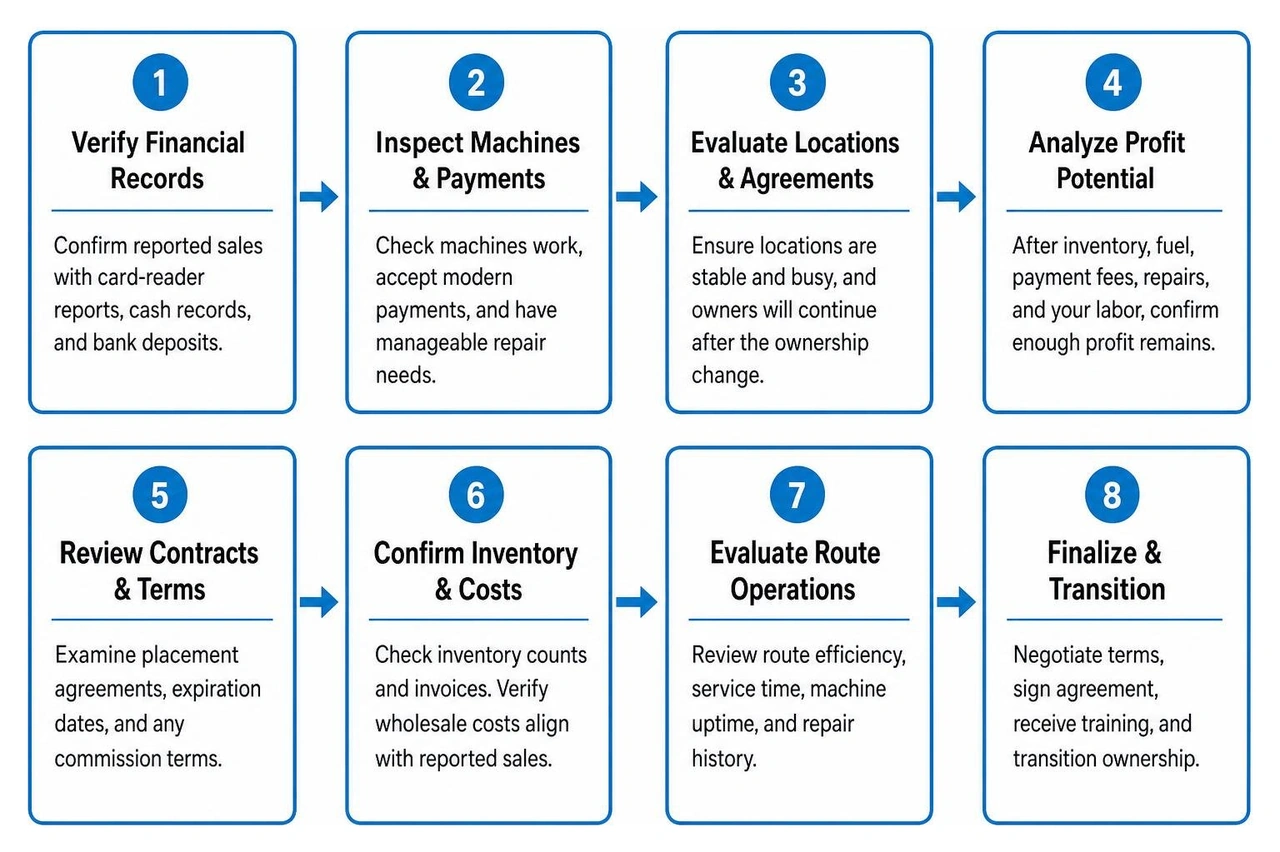
- Sign a Non-Disclosure Agreement (NDA): Sellers require confidentiality before sharing account names, specific addresses, and revenue sheets.
- Audit Telemetry and Cashless Sales: Modern units transmit live card transaction data. Ask for remote monitoring logs from systems like Cantaloupe, Nayax, or AirVend to verify digital transaction volumes.
- Examine Inventory Invoices: Compare wholesale product receipts against reported gross earnings. If wholesale costs do not align with industry-standard product margins, investigate the discrepancy.
- Inspect Location Agreements: Determine whether placement contracts exist, when they expire, and whether the venue owner receives a commission percentage.
Financial Benchmarks: Route Valuation, Pricing, and Profit Margins
Evaluating asking prices requires understanding standard revenue benchmarks across the industry. A turnkey operation is typically valued based on a combination of physical asset value and a multiple of discretionary cash flow.
| Route Profile & Location | Machine Count | Account Count | Weekly Gross Sales | Annual Cash Flow / Net | Asking Price |
|---|---|---|---|---|---|
| Micro Route (Waterville/Northwood, OH) | 4 combo machines | 2 accounts | $260 | ~$9,880 (est.) | $15,000 |
| Starter Route (King of Prussia, PA) | 3 combo (+1 spare) | 3 accounts | $300 | ~$7,800 | $20,000 |
| Compact Route (Delaware County, PA) | 11 machines | 5 accounts | $1,064 | ~$26,000 | $40,000 |
| Mid-Tier Route (College Station, TX) | 7 machines | 5 accounts | $850 | $24,400 | $65,000 |
| Regional Route (Fond du Lac/Oshkosh, WI) | 55 machines | 32 accounts | $1,269 | $29,600 | $69,000 |
| Commercial Scale Route (Montgomery County, TX) | 38 machines | 20 accounts | ~$3,364 ($174.9k/yr) | $42,962 | $190,000 |
| Bulk Vending Network (Charlotte, NC Area) | 1,436 gumball | 661 accounts | $1,300 | ~$38,740 | $63,000 |
| Multi-State Bulk Portfolio (MN & ND) | 409 machines (714 heads) | 355 accounts | Semi-annual route | $47,000 – $114,000 | $215,000 |
Machine Counts and Typical Valuation Multiples
As shown across live listings—from a small setup in Waterville and Northwood, Ohio to an established commercial network in Montgomery County, Texas—pricing scales according to verified cash flow and equipment age.
Smaller starter routes generally trade between 1.5x and 2.5x net annual earnings, plus wholesale inventory on hand. When exploring various routes for sale vending machine opportunities, keep in mind that high-performing accounts generating $150 to $250+ per week per machine command higher multiples than routes requiring heavy mileage between low-volume stops.
Operating Expenses and Net Cash Flow
Operating expenses directly dictate your net take-home profit. On a standard snack-and-drink route, your primary cost centers include:
- Cost of Goods Sold (COGS): Inventory typically consumes 45% to 55% of gross revenue for traditional snacks and cold drinks.
- Card Processing and Telemetry Fees: Merchant processing and wireless connection fees generally range from 5% to 7% of cashless transactions.
- Fuel and Transportation: Depending on route density, vehicle fuel accounts for $30 to $100+ weekly.
- Commissions: Some high-traffic corporate or industrial facilities charge a 5% to 15% commission on gross sales for placing equipment on-site.
For example, a route in College Station, Texas generates $850 in weekly gross revenue, incurs $380 in operating expenses, and delivers $470 in net weekly income to the operator.
Comparing Route Models: Traditional Combo Routes vs. Bulk Vending
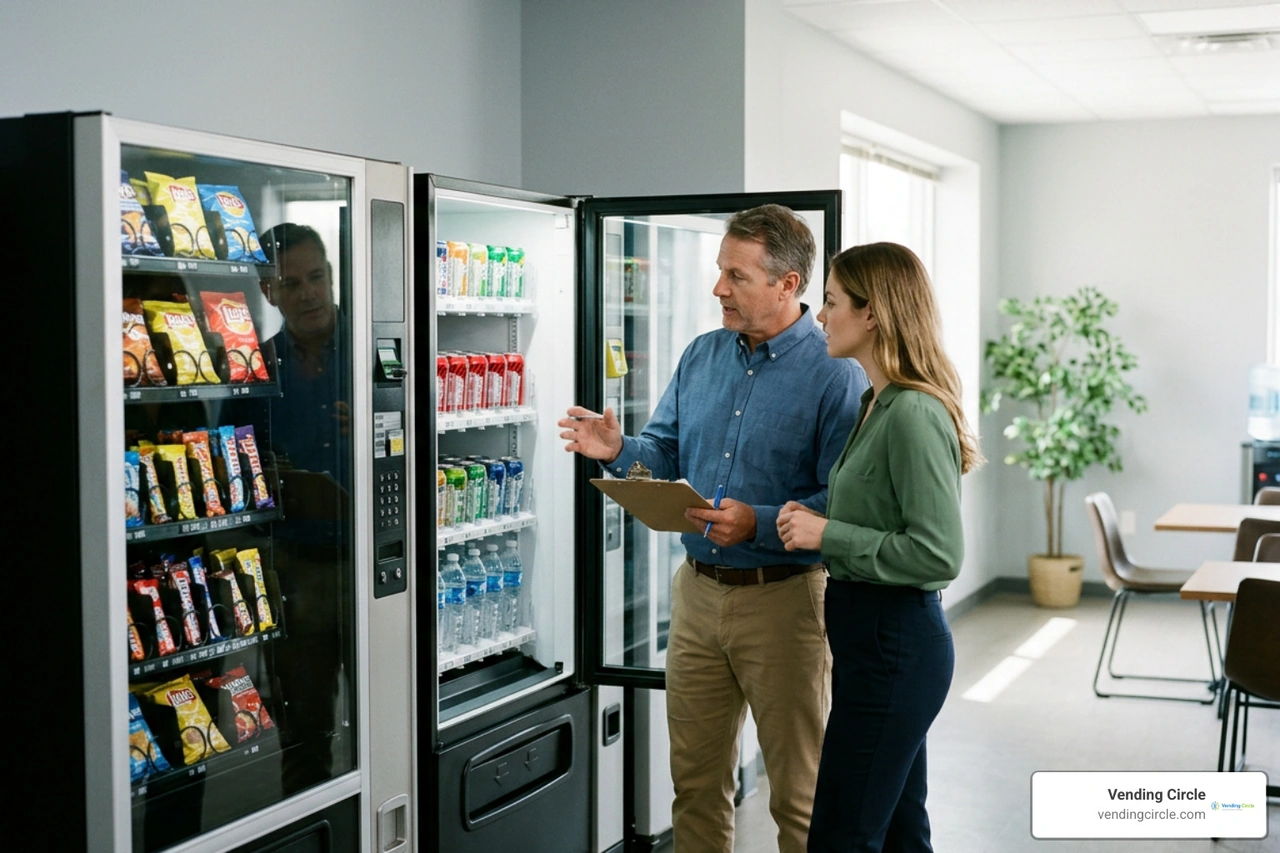
When reviewing local listings, you will generally encounter two distinct operational structures: traditional snack/beverage operations and bulk vending routes.
Traditional Snack and Beverage Routes
Traditional routes utilize glassfront snack machines, refrigerated beverage vendors, and combination units. These setups deliver higher gross revenue per customer interaction. However, cold beverages and fresh snacks carry strict expiration dates, requiring weekly or bi-weekly visits to replenish stock, rotate inventory, and audit bill validators. Reviewing our vending machine routes guide 2026 offers a detailed look at balancing these operational schedules.
Bulk and Gumball Vending Routes
Bulk vending relies on mechanical, non-electric machines dispensing gumballs, wrapped candy, capsules, or novelty toys. As seen in extensive portfolios like the Charlotte-area gumball route with over 1,400 heads, or multi-state routes across Minnesota and North Dakota, bulk vending features product margins averaging 78% to 80%.
Because confections have extended shelf lives and mechanical coin mechanisms require no electricity, operators often service these accounts once every 4 to 8 weeks. This structure allows some owners to run hundreds of machines in as few as 40 to 50 operating days per year.
Inspecting Route Assets, Machine Hardware, and Location Quality
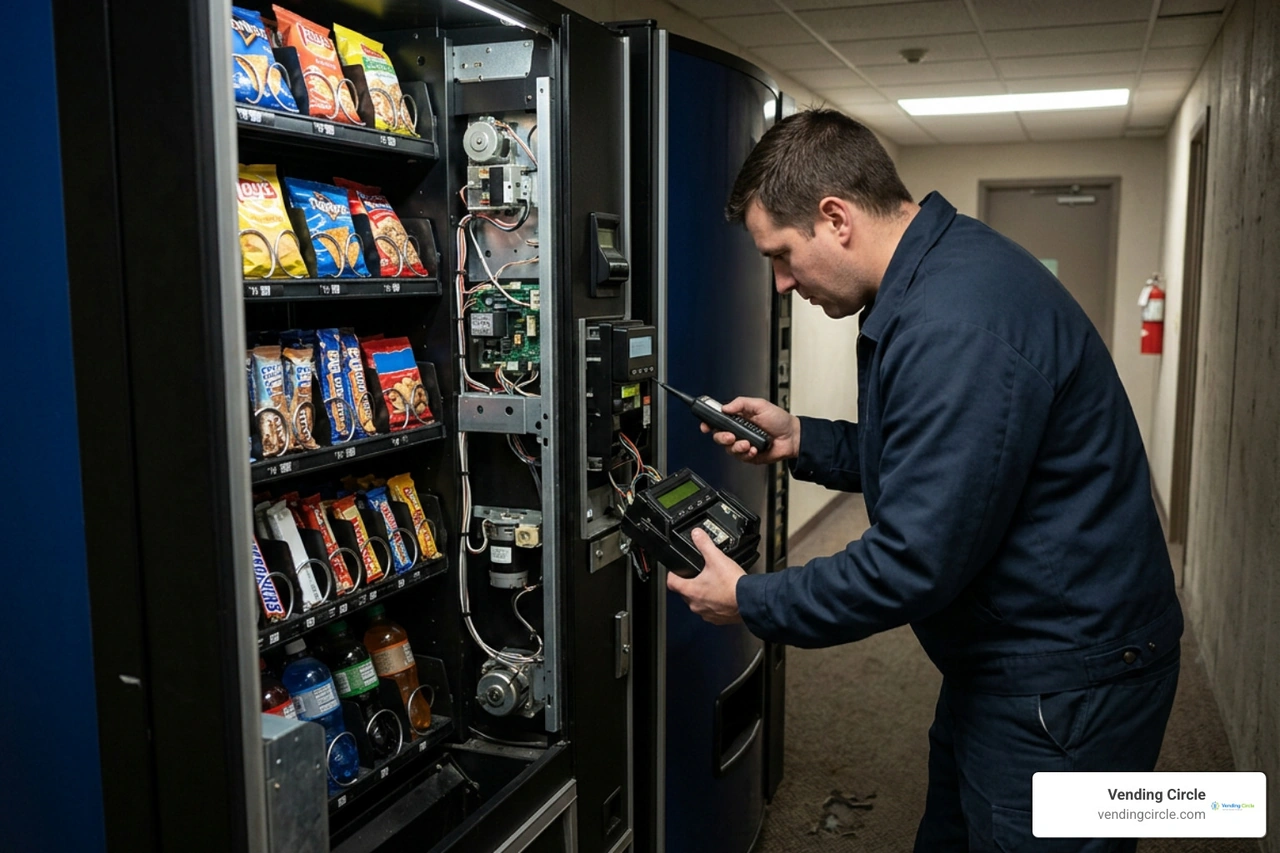
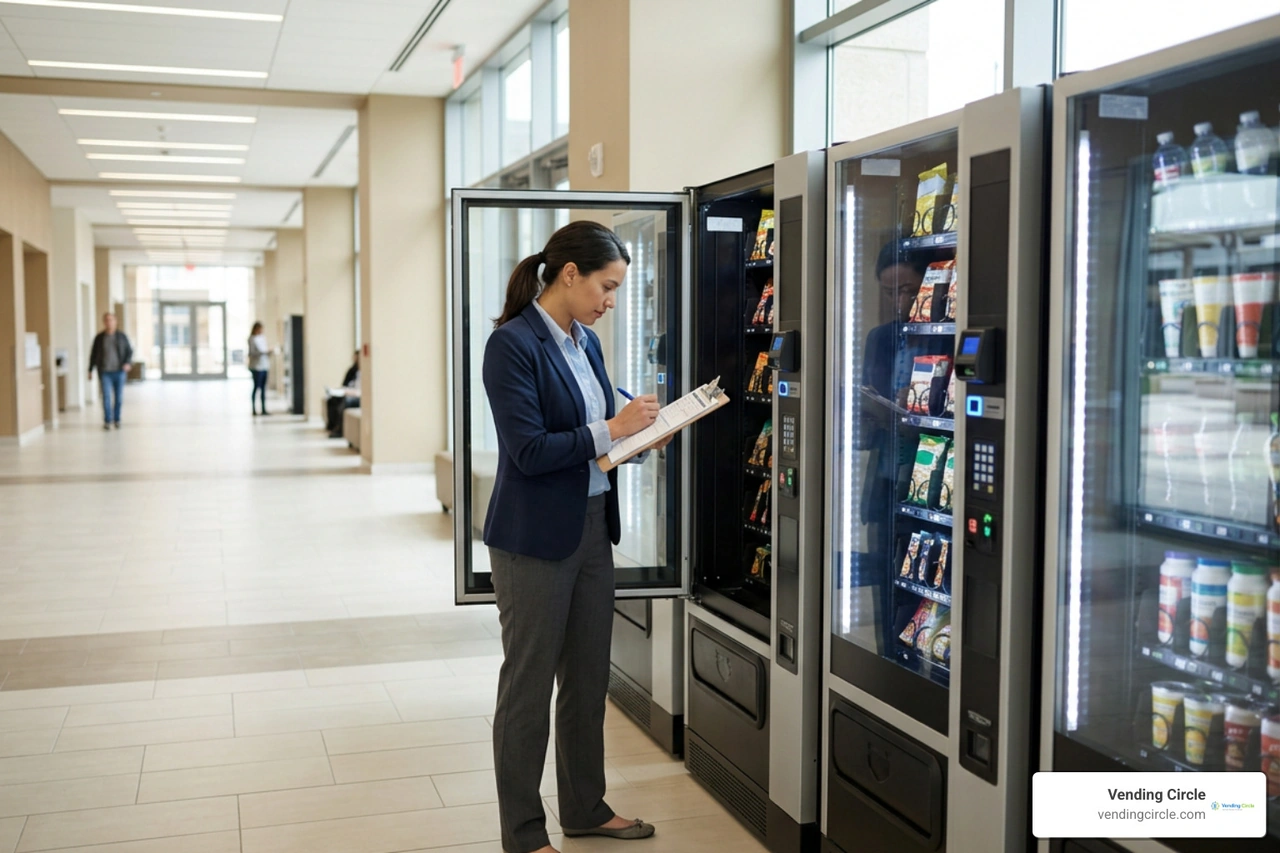
Physical inspections are critical to avoid buying outdated, unserviceable equipment. During your walk-through:
- Test Payment Hardware: Verify that card readers accept tap-to-pay, Apple Pay, Google Pay, and chip cards seamlessly. Cashless adoption continues to drive modern transaction volume.
- Inspect Cooling Systems: Open refrigerated drink and combo units. Ensure compressor coils are clean, fans spin smoothly, and temperatures remain consistently between 35°F and 38°F.
- Check Internal Mechanics: Test coin mechs, bill validators, drop sensors, and spiral motors across all snack shelves.
- Confirm Included Vehicles: Some route listings, such as established regional setups in Wisconsin, include dedicated cargo vans (like a Dodge Ram work van) in the purchase price. Inspect vehicle maintenance records alongside machine hardware.
Evaluating Foot Traffic and Account Stability
A vending machine is only as profitable as the foot traffic passing in front of it. While auditing accounts, evaluate the quality of the placement within the facility. Review our guides on vending machine locations and great locations for vending machines to assess whether the accounts have strong foot traffic characteristics:
- Break Rooms and Warehouses: Blue-collar facilities, distribution centers, and manufacturing plants with 50+ on-site staff create consistent daily demand.
- Customer Waiting Areas: Auto repair shops, medical clinics, and laundromats offer captive audiences looking for quick refreshments.
- Hours of Operation: Accounts operating 24/7 or multiple shifts generate significantly higher sales velocity than standard 9-to-5 offices.
Onboarding, Owner Training, and Growth Strategies
A smooth ownership handover protects your investment. Insist that the seller includes 1 to 2 weeks of hands-on route training. This transition should cover:
- Wholesale Supplier Introductions: Connecting you directly with local warehouse clubs, wholesale distributors, and beverage delivery reps.
- Software Setup: Handing over master credentials for remote monitoring platforms, card processor accounts, and machine lock keys.
- Expansion Planning: Identifying underperforming machines that can be relocated to higher-traffic areas, or adding card readers to cash-only units to boost overall revenue.
Frequently Asked Questions About Turnkey Vending Routes
How many hours per week does running a turnkey vending route take?
Time commitment depends on route size and density. A small micro-route of 3 to 7 machines typically requires only 3 to 5 hours of service per week, making it an ideal side business. Larger regional routes with 30 to 55 machines generally require 15 to 25 hours weekly, or roughly 2 to 3 full service days every other week.
What assets and equipment should be included in the purchase price?
A standard turnkey route sale includes all placed vending machines, location placement agreements, card readers and telemetry units, extra product inventory on hand, machine keys, and spare parts. In some listings, a dedicated service vehicle or an established local marketing website is also transferred to the buyer.
How can I verify the seller's actual weekly revenue and cash flow?
Never rely solely on handwritten logs or verbal estimates. Request raw merchant processing reports from the card reader portal, wholesale inventory purchasing receipts for the past 6 to 12 months, and matching business bank deposit records. Cross-referencing inventory purchases against retail sales prices confirms true gross margins.
Conclusion
Acquiring an established vending operation provides an immediate, cash-flowing shortcut into business ownership. By verifying telemetry logs, inspecting machine cooling systems, evaluating foot traffic stability, and securing structured training from the seller, you protect your capital and set up your operation for sustainable growth.
To connect with experienced route owners, access manufacturer-direct equipment pricing, and master day-to-day route operations, explore our comprehensive Vending Circle masterclasses and courses.