Choosing the Right Ice Machine Scale Remover
Buy an ice machine scale remover that your machine's manual approves. For any ice maker, check both the cleaner label and the machine manual before buying. If the evaporator is nickel-plated, confirm the cleaner is nickel-safe and follow the exact dilution instructions.
A descaler removes mineral buildup; it does not sanitize the machine. The right product can help clear scale without putting sensitive parts at risk.
I'm Manuel Mojica, founder of Vending Circle and a former vending business owner. My experience helping operators source supplies informs this guide to choosing an ice machine scale remover that fits the equipment and the maintenance plan.

Explore more about ice machine scale remover:
Why Mineral Scale Forms and How Descaling Works

Water quality is the single largest variable determining whether your ice equipment runs smoothly or breaks down mid-shift. Inside any commercial or countertop unit, water undergoes a continuous freezing cycle. Water naturally freezes in its purest state first. As pure water molecules crystallize into ice cubes or nuggets, naturally occurring dissolved minerals—such as calcium carbonate and magnesium—remain behind in the unfrozen, recirculating water.
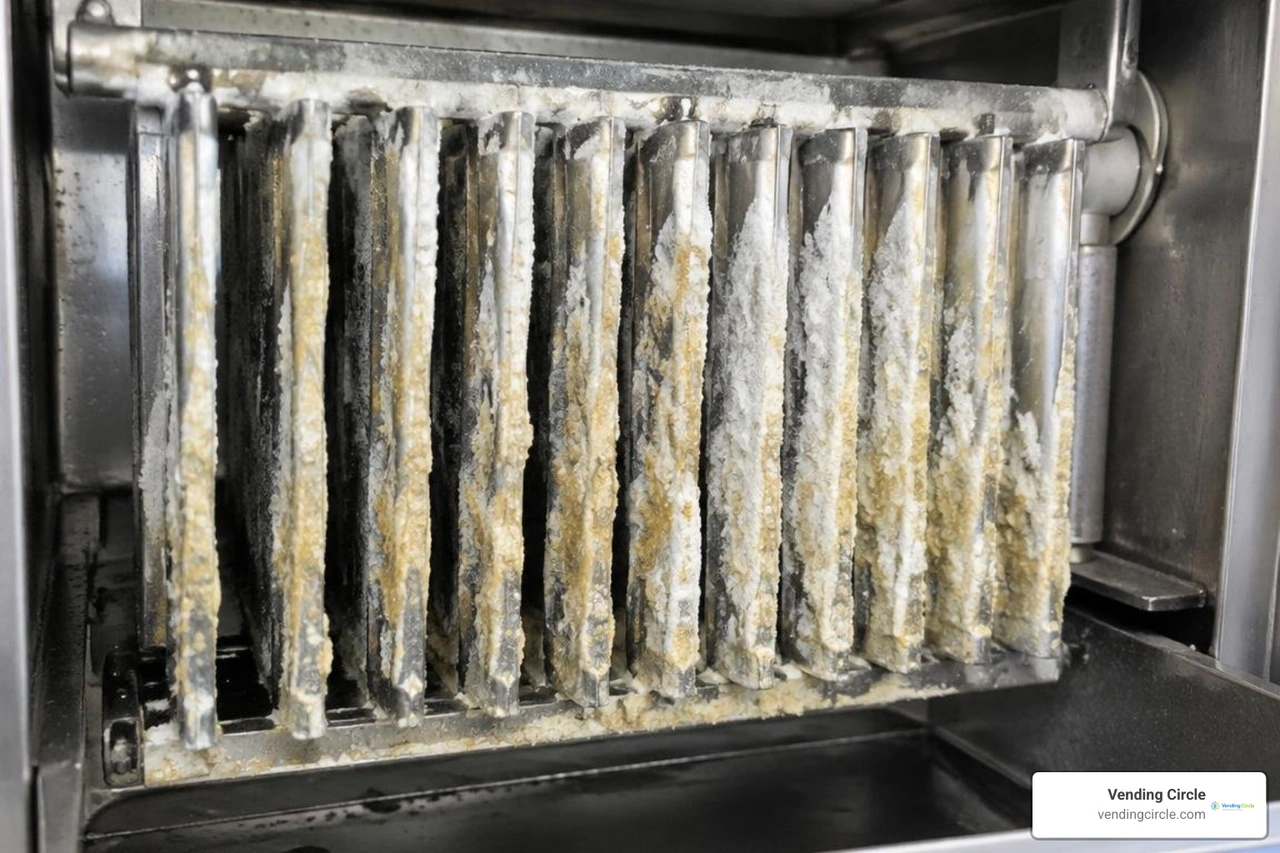
Over dozens of harvest cycles, this leftover water becomes super-saturated with minerals. Eventually, these minerals precipitate out of solution and bond to metal surfaces, creating stubborn, chalky lime scale.

When lime scale coats the metal evaporator plates, it acts like an unwanted thermal insulator. Because heat cannot transfer efficiently between the refrigerant lines and the water, the refrigeration system must work harder and longer to produce a single batch of ice. Scale also narrows internal water pathways, putting excessive strain on the ice machine water pump and clogging distribution weep holes.
Applying an acidic ice machine scale remover with a concentrated pH below 1.0 chemically breaks the ionic bonds of these alkaline mineral deposits, turning solid calcium into soluble salts that flush easily down the drain. Incorporating this routine into your broader machine maintenance tips for 2026 protects your operational bottom line.
What Nickel-Safe Means for Evaporator Protection
Many commercial ice maker evaporators are constructed from copper or brass and coated with a thin layer of nickel or tin plating. This plating provides superior heat conductivity while protecting base metals from corrosion. However, harsh industrial acids can quickly strip or pit this delicate protective coating.
A "nickel-safe" cleaner is formulated with specific food-grade acids—primarily high-purity phosphoric acid and citric acid blends, or sodium bisulfate—along with specialized corrosion inhibitors. These compounds dissolve tough calcium and lime scale without attacking or peeling the underlying nickel plating. If you use an unapproved, aggressive acid on a nickel-plated grid, you risk flaking the metal, permanently ruining the evaporator, and facing thousands of dollars in replacement costs. For an example of a manufacturer-labeled option, see Nu-Calgon’s Nickel-Safe Ice Machine Cleaner.
Signs Your Ice Machine Needs Immediate Descaling
Do not wait for a complete system breakdown to address scale. Watch for these clear operational warning signs:
- Cloudy, Soft, or Misshapen Ice: Minerals trapped within the freezing grid prevent clear crystal formation, resulting in brittle, cloudy cubes.
- Extended Harvest Times: Scale buildup insulates the freezing plate, making it difficult for the machine to release the ice slab during the defrost cycle.
- Reduced Production Yield: The machine produces significantly fewer pounds of ice per day than its rated capacity.
- Squealing Auger Motors: In flaker and nugget ice makers, mineral crust inside the freezing cylinder creates mechanical friction against the auger, causing high-pitched noises and gearbox stress.
- Restricted Water Distribution: Uneven water flow across the evaporator grid or dry spots caused by plugged weep holes.
If you notice these symptoms recurring rapidly despite regular maintenance, consulting a seasoned commercial ice machine expert can help determine if water pre-treatment or mechanical repairs are required.
The Best Ice Machine Scale Remover Options for 2026

Selecting the right chemical comes down to machine type, evaporator metallurgy, and manufacturer guidelines. Choose a manufacturer-approved scale remover that matches the equipment and its maintenance instructions.
Descaling vs. Sanitizing: Critical Differences for Ice Equipment
One of the most dangerous maintenance mistakes operators make is treating descaling and sanitizing as interchangeable tasks. They are fundamentally distinct chemical processes that target entirely different contaminants:
- Descaling (Acid Wash): Removes inorganic mineral deposits, calcium, rust, and lime scale. It restores heat transfer and unblocks water lines. Descalers do not kill biological pathogens, bacteria, or mold.
- Sanitizing (Antimicrobial Disinfection): Destroys organic biological contaminants, including slime, algae, mold spores, and biofilm. Sanitizers do not dissolve mineral scale.
To maintain proper hygiene and equipment function, these tasks must be performed sequentially. Always descale first to remove mineral crusts where bacteria hide, flush completely with fresh water, and then run a dedicated food-safe sanitizer, following the equipment manufacturer's instructions. Similar clean-then-sanitize principles apply across all commercial beverage systems, as outlined in our guide on beverage and ice machine maintenance.
Why Vinegar and Bleach Fail on Commercial Machines
When trying to save on operating costs, some operators turn to household vinegar or bleach. Both create serious risks on commercial equipment:
- Household Vinegar: Vinegar contains weak acetic acid (typically 4% to 5% concentration). It lacks the strength to dissolve heavy commercial scale efficiently and lacks the corrosion inhibitors required to protect nickel plating during extended exposure.
- Bleach (Sodium Hypochlorite): Bleach is an oxidizer, not a descaler; it has zero ability to dissolve lime scale. Furthermore, chlorine bleach aggressively pits stainless steel and strips nickel plating off evaporators. Mixing residual acid descaler with bleach also produces deadly chlorine gas.
Relying on improper household substitutes risks voiding your warranty and turning a cost-effective cheap ice machine into an expensive scrap metal repair.
The Role of Water Filtration in Scale Prevention
While no filtration system permanently eliminates the need for chemical descaling, proper pre-treatment drastically slows scale buildup. Standard sediment and carbon filters remove suspended solids and chlorine taste, but they do not remove dissolved calcium or magnesium.
To combat mineral scale, install a commercial filter system equipped with a polyphosphate scale inhibitor cartridge. These cartridges slowly release food-grade phosphate compounds that bind to dissolved mineral ions, inhibiting their ability to crystallize onto hot or cold metal surfaces. In areas with extreme total dissolved solids (TDS), reverse osmosis or dedicated water softening systems may be necessary to protect equipment and extend descaling intervals.
Step-by-Step Maintenance and Dilution Guide
Follow this standardized procedure to safely descale your commercial or freestanding ice maker:
Required Safety Gear and Supplies
- Chemical-resistant rubber gloves
- Safety goggles or splash shield
- Manufacturer-approved nickel-safe scale remover
- Clean plastic bucket and soft-bristle nylon brush
- Fresh potable water source
Descaling Procedure
- Purge the Ice Storage Bin: Turn the machine control switch to OFF. Empty all ice from the storage bin and discard it to prevent chemical contamination.
- Drain the Water System: Disconnect or shut off the incoming water supply. Pull the drain plug to empty the water reservoir trough, then replace the plug.
- Mix Chemical Solution: In a clean bucket, mix your scale remover according to label directions (for example, 3 fluid ounces of cleaner per gallon of warm water for manual part soaking).
- Clean Removable Components: Remove the water curtain, distribution tubes, splash shields, and bin probes. Submerge them in the cleaning solution, scrub away stubborn scale using a soft nylon brush, rinse thoroughly with fresh water, and reinstall.
- Run the Clean Cycle: Restore the water supply. Add the manufacturer-specified amount of concentrated scale remover (typically 5 fluid ounces per gallon of trough capacity) directly into the water sump. Set the unit switch to the WASH or CLEAN position.
- Circulate and Soak: Allow the solution to circulate for at least 10 to 15 minutes. Heavy scale deposits may require circulating for up to 30 minutes until distribution holes flow freely.
- Drain and Flush: Turn the machine off, drain the chemical solution from the reservoir, and flush the entire water circuit with fresh potable water for at least 30 to 60 seconds.
- Sanitize Separately: Prepare an approved antimicrobial ice machine sanitizer and repeat the wash cycle to disinfect the internal food zones.
- Return to Service: Reassemble all panels, switch the unit back to ICE mode, and allow the machine to run two complete freeze-and-harvest cycles. Discard all ice produced during these first two cycles to guarantee no chemical trace remains in customer ice.
Frequently Asked Questions About Ice Machine Scale Removers
How often should a commercial ice machine be descaled?
Many manufacturers recommend performing a comprehensive descaling and sanitizing cycle at least once every six months. However, if your business operates in an area with hard municipal water, relies on well water, or runs in high-yeast environments (such as bakeries or microbreweries), you may need to descale every 60 to 90 days. Freestanding and countertop units should be descaled whenever the "Clean" indicator illuminates or when ice harvest slows down.
Can generic ice machine cleaner be used in any brand?
Not always. Some cleaners are broadly compatible with nickel-plated and stainless steel units, but using an unapproved generic acid can void specific manufacturer warranties. Always verify that a third-party cleaner is explicitly certified as food-grade and nickel-safe before adding it to your water system.
Does water filtration eliminate the need for chemical descaling?
No. Water filtration cartridges and scale inhibitors slow down the rate of scale formation, but they do not eliminate dissolved minerals completely. Over time, heat transfer and continuous evaporation will still cause mineral accumulation. Think of filtration as a way to extend your cleaning intervals and keep ice tasting fresh, rather than a permanent replacement for regular chemical descaling.
Conclusion
Regular descaling is the cornerstone of commercial refrigeration maintenance. By dissolving hard mineral scale every six months, you protect delicate nickel evaporators, prevent premature compressor failure, and ensure your customers receive clear, great-tasting ice. Always match your chemical cleaner to your machine's exact metal plating requirements, measure your dilutions accurately, and never skip the separate sanitizing step.
At Vending Circle, we support operators through every stage of business ownership—from peer-led operational strategies to sourcing essential maintenance supplies. If you are looking to expand your footprint or optimize route maintenance, check out our commercial ice machine locator to find dependable equipment solutions tailored to your operational needs.