What Does a Popcorn Vending Machine Cost in 2026?
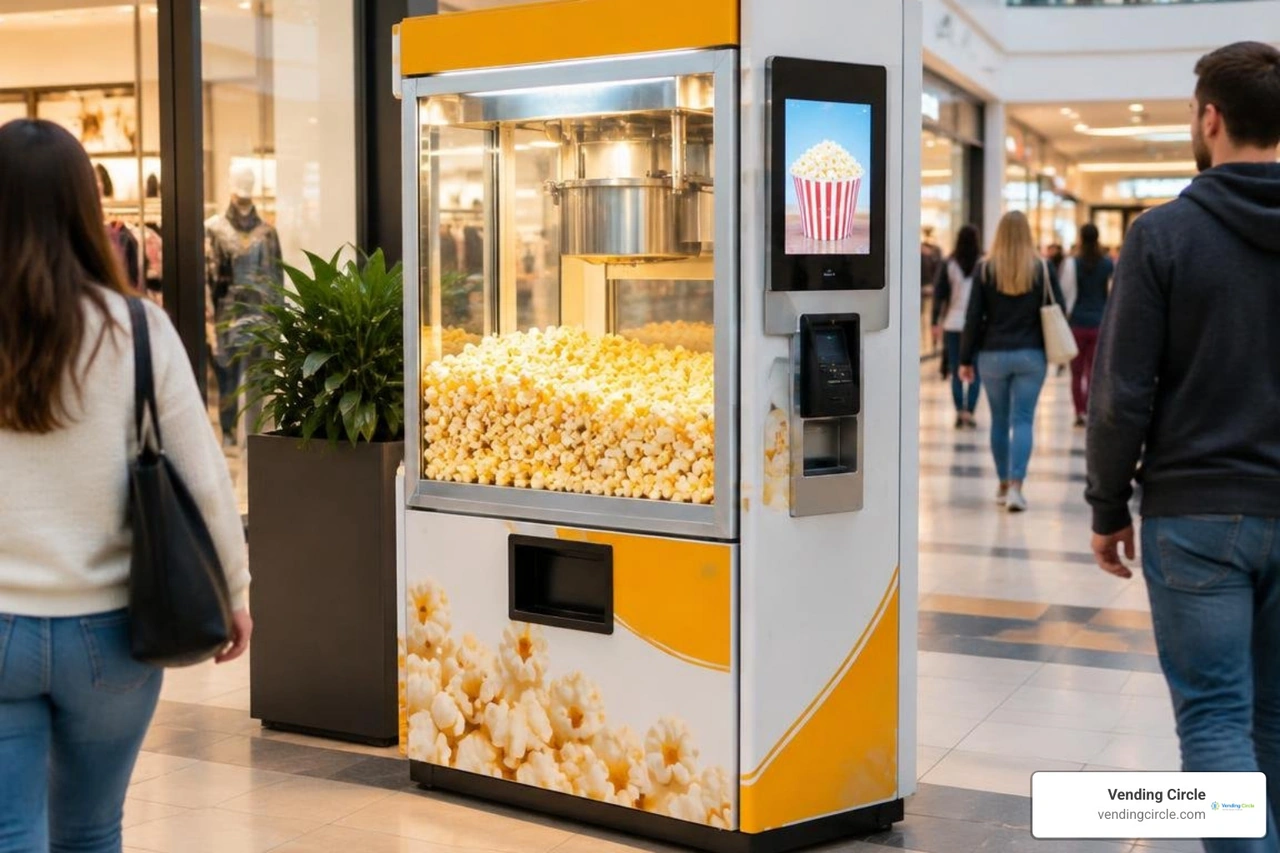
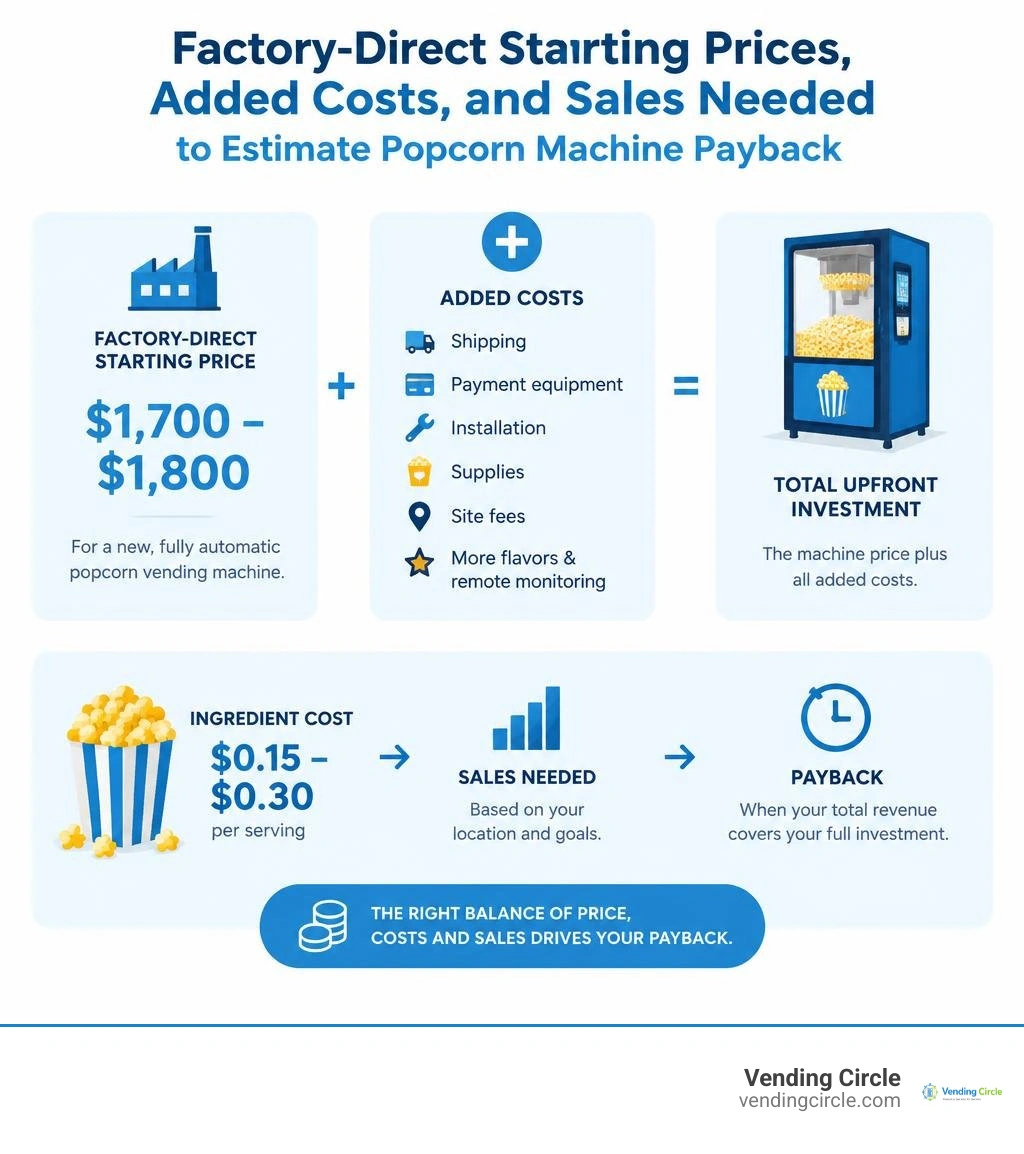
A new, fully automatic popcorn vending machine can start around $1,700 to $1,800 from a factory-direct supplier. That is an advertised machine price, not the total cost to put it to work. Shipping, payment equipment, installation, supplies, and site fees can raise your upfront spend. More flavors and remote monitoring may also change the quote.
Popcorn ingredients can cost about $0.15 to $0.30 per serving, but that figure alone will not tell you your profit. Compare machines by delivered cost, warranty, refill capacity, and expected sales at your location.
I’m Manuel Mojica, founder of Vending Circle and a vending operator. I use that experience to help buyers put popcorn vending machine price alongside the supply costs and upkeep that shape payback.
Popcorn vending machine price vocabulary:
Popcorn Vending Machine Price Ranges and Core Cost Drivers
When budgeting for automated snack equipment, machine hardware acquisition costs vary based on component quality, internal storage capacity, and geographic manufacturing origin. Overseas factory-direct supply models have dramatically lowered the barrier to entry, while regional domestic distributors often charge a premium for localized warehousing and pre-configured support. Understanding our baseline hardware figures is straightforward when referencing our detailed vending machine pricing guide.
| Machine Class | Typical Price Range (USD) | Cup Capacity | Heating Power | Standard Warranty |
|---|---|---|---|---|
| Compact Factory-Direct | $1,720 – $1,800 | 40 – 70 Cups | 1900W – 2200W | 1 Year (Parts) |
| Multi-Flavor Commercial | $1,800 – $2,800 | 70 – 100+ Cups | 2200W – 3000W | 1–2 Years |
| Western Turnkey / Heavy Duty | $3,500 – $5,500+ | 80 – 120 Cups | 3000W | 2 Years + Local Tech |
Hardware price tiers correlate directly with continuous production ability, internal bin engineering, and external chassis materials. Factory-direct models like the Poco PC-612A enter the market around $1,720, whereas commercial European models like the VENDY1 Popcorn Automatic P10 retail near €2,500 (approximately $2,700–$2,800 USD before shipping and import tariffs).
Understanding Popcorn Vending Machine Price by Automation Level
Modern automated popcorn units use high-velocity hot-air popping mechanisms rather than traditional submerged-oil kettles. These units pop kernels on demand in a rapid 90 to 120-second cycle.
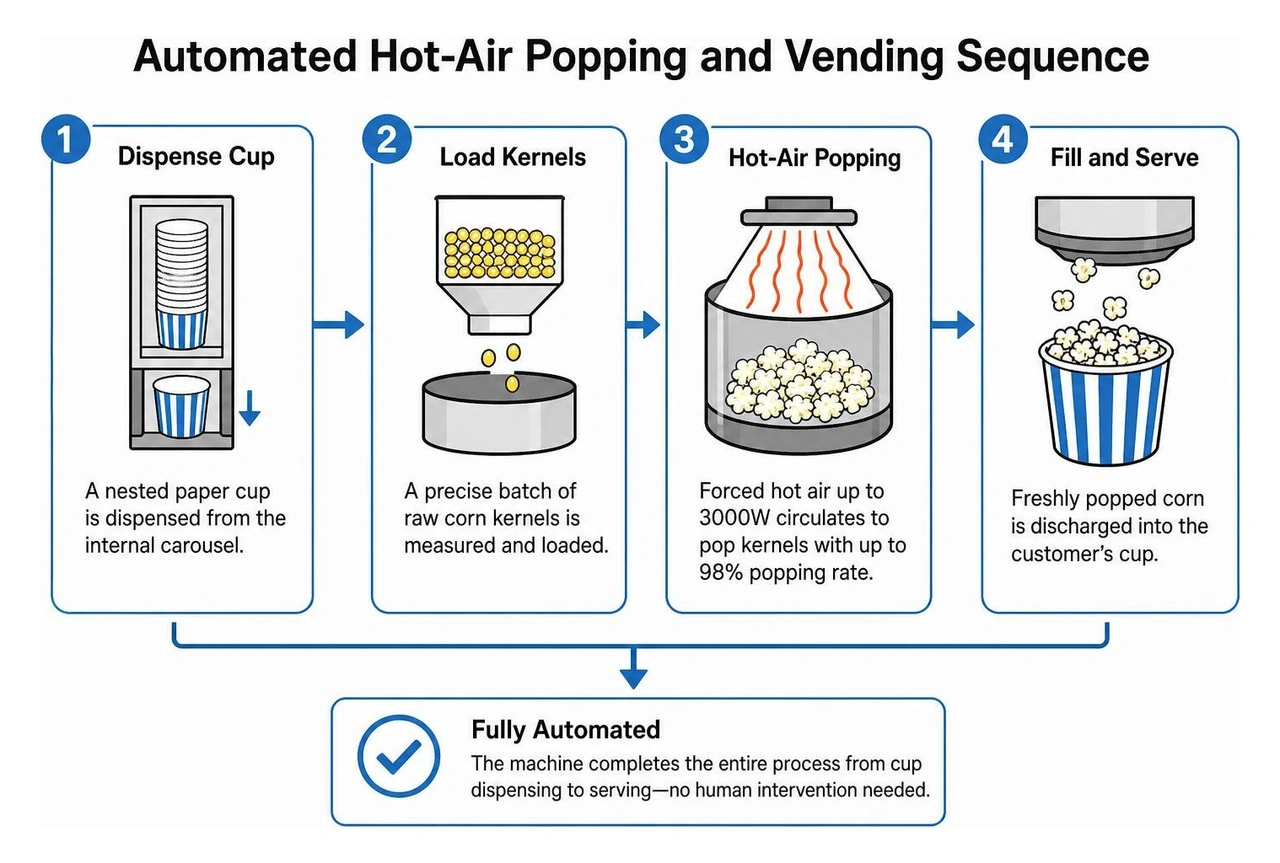
A fully automated unit handles every step without human intervention:
- Dispenses a nested paper cup from an internal carousel.
- Measures a precise batch of raw corn kernels into the popping chamber.
- Circulates forced hot air (reaching up to 3000W output) to achieve a 98% popping rate.
- Discharges the freshly popped corn directly into the customer's cup.
Higher-end units integrate IoT telemetry to report chamber temperatures, mechanical motor cycles, and ingredient levels to your mobile device in real time. For an in-depth review of component layouts, check out the technical specifications of fully automated multi-flavor units to see how automated dispensing assemblies operate under continuous commercial use.
Multi-Flavor vs. Single-Bin Machine Configurations
Choosing between a single-flavor hopper and a multi-flavor system influences both the initial purchase price and customer retention. Single-bin machines pop one profile (typically lightly salted or butter-flavored corn), making them mechanically simpler and less expensive to produce.
Multi-flavor machines feature dual or quad internal storage bins, allowing customers to select between sweet, savory, caramel, cheddar, or spicy varieties via an interactive touchscreen. Multi-flavor hardware uses automated seasoning injection dies or distinct dual-chamber hoppers to prevent cross-contamination. While adding $300 to $800 to the baseline unit quote, multi-flavor flexibility aligns with modern consumer habits explored in our overview of vending machine market trends, generating higher average order values and stronger impulse sales in family-oriented venues.
Impact of Safety Certifications on Equipment Pricing
Never cut corners on regulatory compliance when sourcing food-dispensing hardware. Equipment certified under CE, RoHS, UKCA, or ISO 9001 standards undergoes electrical load testing and material verification to guarantee that food-contact surfaces utilize certified food-grade stainless steel.
Uncertified units may appear cheaper on export listings, but commercial venue property managers often mandate documented electrical safety and sanitation certifications before allowing equipment onto their floors. Incorporating these standards adds minor manufacturing overhead, but it protects operators against municipal health code violations, electrical hazards, and liability disputes.
Total Cost of Ownership: Hidden and Ongoing Operational Expenses
Evaluating equipment costs requires factoring in recurring operational expenses. While the physical hardware requires an initial investment, ongoing supplies, site commissions, and payment processing fees shape your monthly cash flow. Review our comprehensive breakdown of vending machine operating expenses to accurately build your operating budget.

Additional planning insights can be found in this automated popcorn vending procurement guide, which highlights the importance of budgeting for freight, import duties, and routine servicing.
Raw Material and Consumable Costs per Cup
Popcorn features some of the lowest Cost of Goods Sold (COGS) in the entire food and beverage sector:
- Mushroom or Butterfly Corn Kernels: Bulk commercial kernels cost roughly $0.08 to $0.12 per serving.
- Food-Grade Paper Cups: Branded or generic 32oz–44oz vending cups range from $0.07 to $0.12 per unit depending on order volume (e.g., ordering 1,000 vs. 10,000 units).
- Seasoning & Glazes: Powdered seasonings add $0.02 to $0.06 per serving.
Because hot-air popping systems eliminate cooking oil, operators save significantly on recurring oil purchases and avoid greasy residue cleanup. The total direct consumable cost sits between $0.15 and $0.30 per cup. Sourcing bulk ingredients through dependable wholesale vending supply distributors keeps your cost per serving predictable.
Payment Processing, Power Consumption, and Site Placement Costs
Beyond raw ingredients, three core operational expenses require regular budgeting:
- Cashless Telemetry & Card Readers: Integrating modern payment hardware (such as Nayax or custom cashless terminals) incurs an upfront hardware fee of $300–$500 plus a standard monthly cellular processing fee ($8–$12/month) and transaction cuts (typically 2.5% to 4%).
- Electrical Utilities: Machines pull 120W during idle standby and spike to 1900W–3000W during the 120-second popping phase. Averaging roughly 4 kWh per operational day, electricity costs run between $0.60 and $1.50 daily depending on local utility rates. Ensure the venue provides appropriate 110V/220V electrical circuits to support the machine's thermal heating elements.
- Location Commissions: High-traffic venues (cinemas, family entertainment centers, malls) generally charge either a fixed monthly footprint rent ($100–$300/month) or a percentage-based revenue share (10% to 20% of gross monthly sales).
Profitability Modeling and Return on Investment (ROI)
The financial appeal of automated popcorn vending lies in its exceptional gross profit margins, which routinely range from 85% to 95%. Selling a serving for $3.00 to $6.00 against a $0.30 consumable cost generates $2.70 to $5.70 in gross margin on every vend.
Unlike traditional packaged snack machines where wholesale margins hover around 40% to 50%, popping fresh corn on-site transforms an inexpensive agricultural staple into a high-value novelty purchase. The enticing aroma acts as a sensory marketing beacon, drawing foot traffic from up to 50 meters away. Check our broader collection of vending industry performance benchmarks to see how fresh-prepared snack concepts outpace conventional ambient vending categories.
Break-Even Timelines and Profit Simulations
To understand payback timelines, we evaluate three standard commercial performance tiers based on daily vend counts:
| Foot-Traffic Tier | Daily Vends | Retail Price | Gross Daily Revenue | Est. Monthly Net Profit | Payback Period ($1,800 Unit) |
|---|---|---|---|---|---|
| Moderate (Laundromat/Lobby) | 30 Cups | $3.00 | $90.00 | ~$2,100 – $2,500 | 25 – 30 Days |
| High (Mall/Transit Hub) | 50 Cups | $4.00 | $200.00 | ~$4,800 – $5,200 | 12 – 15 Days |
| Premium (Cinema/Theme Park) | 100 Cups | $6.00 | $600.00 | ~$14,000 – $16,000 | 4 – 6 Days |
Under high-volume conditions (50 cups daily at $3.00 net margin), an operator can clear the baseline $1,800 machine purchase in approximately two weeks of continuous operation. Even under conservative estimates factoring in location rent and utility expenses, most operators achieve full capital recovery within 6 to 12 months.
Evaluating Equipment Financing vs. Outright Purchase
For operators scaling routes across multiple locations, financing hardware preserves liquid cash flow. Equipment leasing structures allow operators to deploy machines for monthly payments starting between $89 and $150 per unit.
If a machine generates $1,500 in monthly net profit, financing costs are covered within the first two to three days of monthly sales. Explore standard commercial vending machine financing options to structure your capital expenditures while protecting emergency operating reserves.
Procurement Strategies: Sourcing for Maximum Value
Sourcing directly from manufacturing plants provides significant cost advantages. For example, commercial models like the Wider Matrix WM680 cost approximately $1,800 for 1 to 5 units, but drop to $1,500 per unit when ordering 6 to 10 units.
For broader sourcing frameworks, consult our wholesale equipment sourcing guide. When negotiating with manufacturers, always request:
- Factory-applied custom vinyl cabinet wraps to match your brand.
- Spare wear-and-tear parts kits (extra heating elements, optical sensors, motor belts).
- Clarification on factory warranty terms, technical ticketing workflows, and international air-shipping timelines for replacement modules.
New vs. Used Popcorn Vending Machine Price Differences
Purchasing used vending equipment from secondary marketplaces might save $400 to $700 on the initial sticker price, but it introduces operational risks:
- Worn Heating Elements: Aging air blowers and heating coils may cause inconsistent popping temperatures, leading to unpopped kernels and customer refund requests.
- Degraded Sensors: Jammed cup-drop mechanics and sticky coin mechanisms require immediate troubleshooting.
- Missing Warranties: Used units rarely include active manufacturer warranties or software updates for internal IoT modems.
Given that brand-new, factory-direct machines start around $1,720 to $1,800, buying new equipment provides a clean maintenance history, manufacturer warranty protection, and modern cashless compatibility.
Key Features to Verify Before Purchasing
Before finalizing your equipment procurement order, confirm the following core specifications:
- Food-Grade Construction: The popping kettle and food-contact chutes must be manufactured from 304 food-grade stainless steel.
- Optical Cup Sensors: Infrared drop sensors ensure the machine only dispenses popped corn if a cup has dropped correctly into the loading bay.
- Shortage Alerting: Built-in IoT indicators must notify your mobile device when cups or corn levels fall below 15% capacity.
- Universal Voltage Support: Verify that the internal power supply accommodates your regional outlet standards (110V vs 220V) without requiring external heavy transformers.
Frequently Asked Questions About Popcorn Vending Machines
How much does a commercial popcorn vending machine cost on average?
A standard fully automatic hot-air popcorn vending machine costs between $1,720 and $2,800 USD when purchased factory-direct. High-end turnkey Western models or large-footprint multi-flavor robotic kiosks range from $3,500 to over $6,000 depending on screen customization, integrated bill acceptors, and localized warranty terms.
What is the expected profit margin per serving of vended popcorn?
Profit margins typically range from 85% to 95%. Direct ingredients (kernels, seasoning, and paper cups) cost roughly $0.15 to $0.30 per serving, while retail vend prices run from $3.00 to $6.00 per cup, yielding a net profit of $2.70 to $5.70 per transaction before location fees.
How difficult is the daily cleaning and maintenance for hot-air machines?
Because modern automatic machines pop kernels using oil-free forced hot air, cleaning is straightforward. Maintenance requires wiping down the stainless-steel serving bay and sweeping kernel chaff from the collection tray during routine restocks. Restocking cups and kernels takes roughly 15 minutes per week per machine.
Conclusion
Investing in automated popcorn vending offers high gross margins, low initial equipment costs, and fast return on investment. With factory-direct prices starting near $1,720 to $1,800, entering automated snack retail requires significantly less upfront capital than full-line beverage or frozen food routes.
Maximizing profitability comes down to securing high-foot-traffic locations, sourcing quality bulk supplies, and deploying reliable, certified equipment. If you want to refine your operational strategy, source equipment at discounted rates, and connect with experienced route operators, explore our comprehensive vending guides and industry insights across the Vending Circle platform.