Vending Machine Financing Options That Protect Your Cash Flow
The best vending machine financing options depend on what you need to fund. Use an equipment loan or direct vendor financing when buying machines, an SBA loan for a larger route purchase or expansion, and a business line of credit for repeat inventory, repairs, and other operating costs. Before applying, compare the down payment, term length, total borrowing cost, payment schedule, and whether you will own the machine when the agreement ends.
A new vending machine commonly costs about $3,000 to $5,000, and financing can spread that expense over time rather than draining the cash you need for inventory, card readers, delivery, and maintenance. Typical terms run from 6 to 48 months, though some programs extend longer or offer a short payment deferral period.
The right deal should fit the machine's expected sales, not just offer the lowest monthly payment. With roughly $0.50 in profit per item, a well-placed machine may cover its financing payment with sales of about 7 to 10 snacks or drinks per day. But location traffic, product cost, commissions, downtime, and service expenses still determine whether that math works for your route.
The vending market is substantial: U.S. consumers put more than $46 billion into vending machines, with cold beverages and snacks among the largest categories. For more context on the market behind those sales, see our vending machine industry statistics 2026.
I'm Manuel Mojica, founder of Vending Circle and owner of MM Healthy Vending, where I have worked with operators building and growing vending routes. In this guide, I will help you compare vending machine financing options with the practical realities of machine costs, inventory needs, and route profitability in mind.
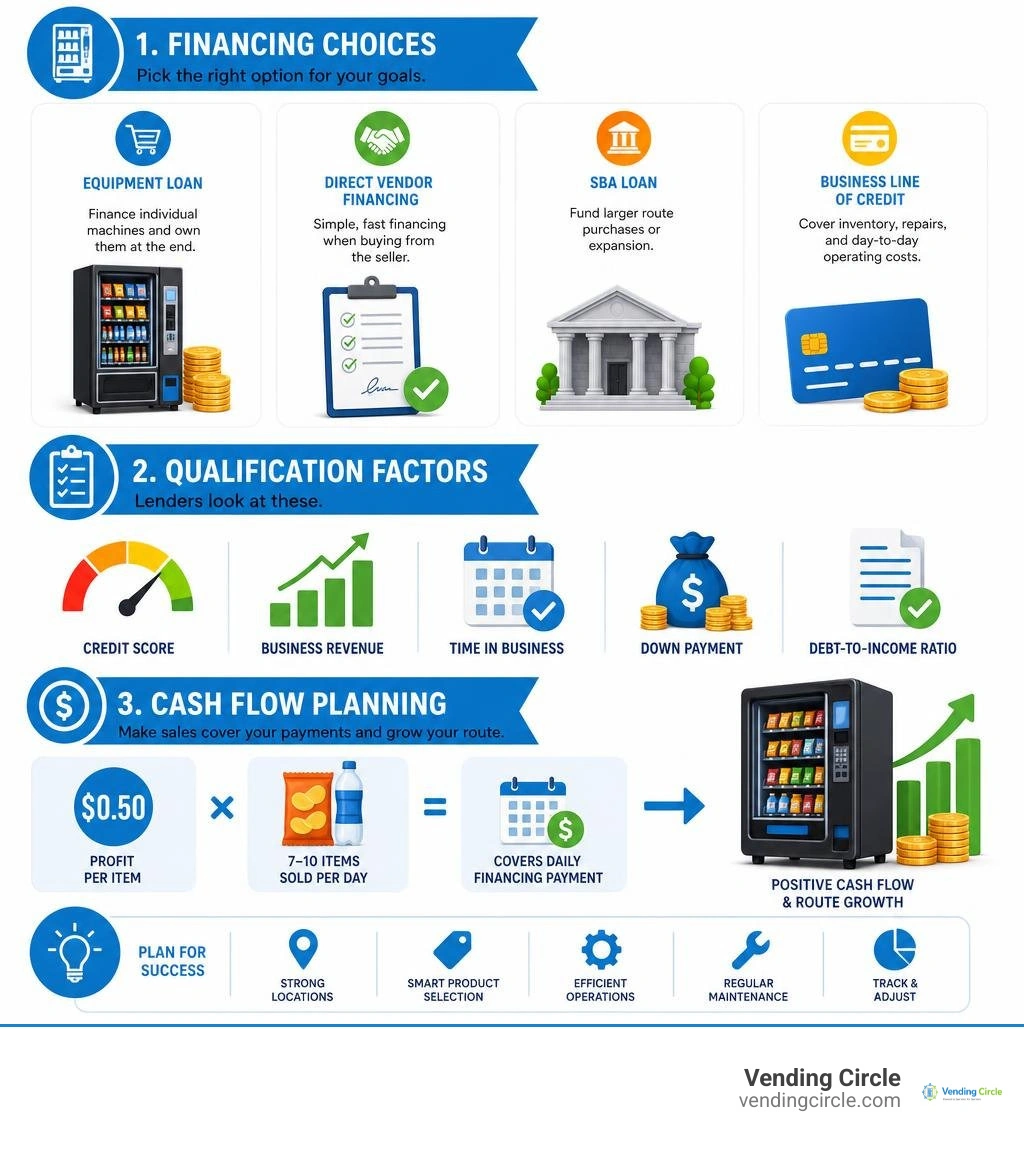
Vending machine financing options vocab explained:
How Vending Machine Financing Works and Key Mechanics
At its core, vending machine financing is an asset-backed funding strategy designed to help operators install revenue-generating equipment without sacrificing large amounts of upfront capital. When you finance a vending machine, the hardware itself serves as the primary collateral for the loan or lease. Because the lender holds a security interest in the physical unit, the risk profile is significantly lower than that of an unsecured personal or commercial loan.
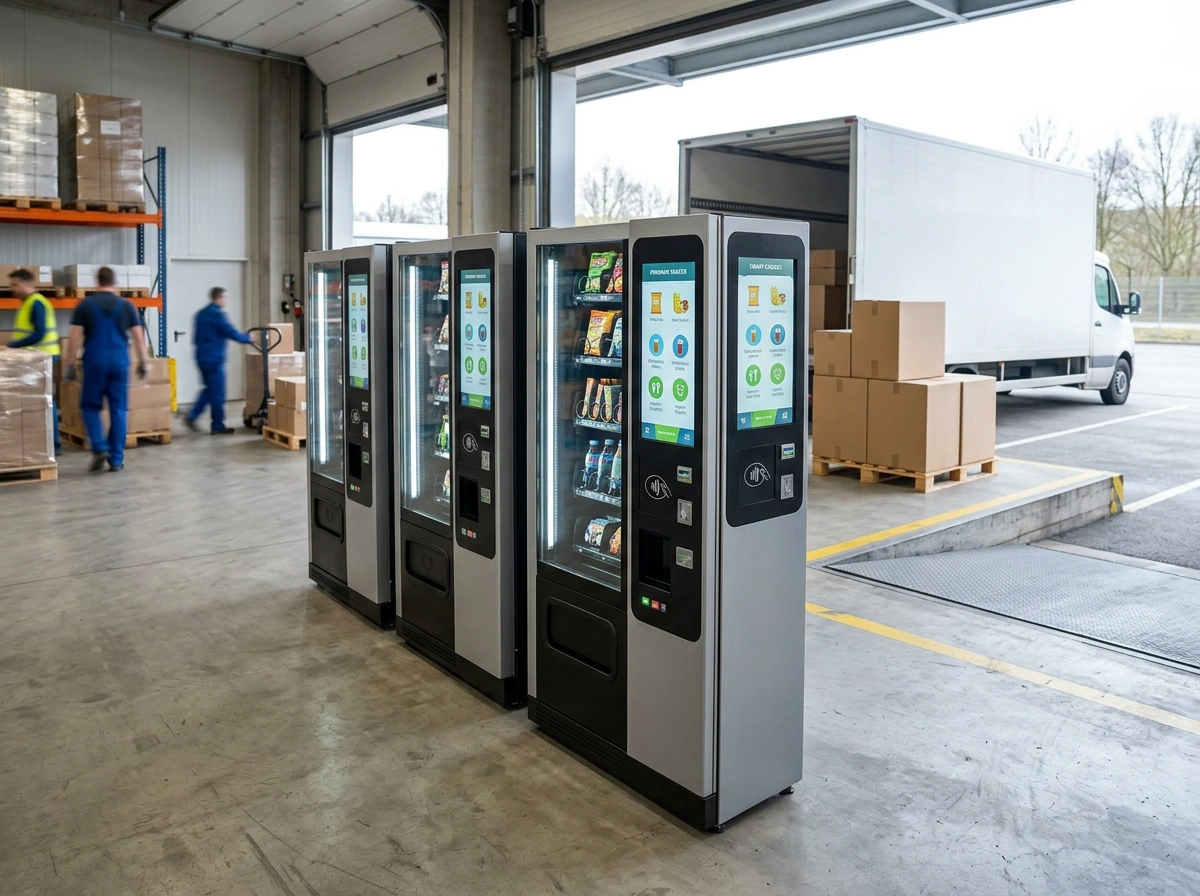
This structure allows operators to protect their liquid cash reserves. Rather than wiping out working capital on a single upfront purchase, you can use structured vending machine equipment financing to acquire combination drink-and-snack units, AI smart coolers, or micro-market kiosks while retaining enough liquidity to stock shelves, purchase adding a card reader to a vending machine modules, pay delivery fees, and handle unexpected site repairs.
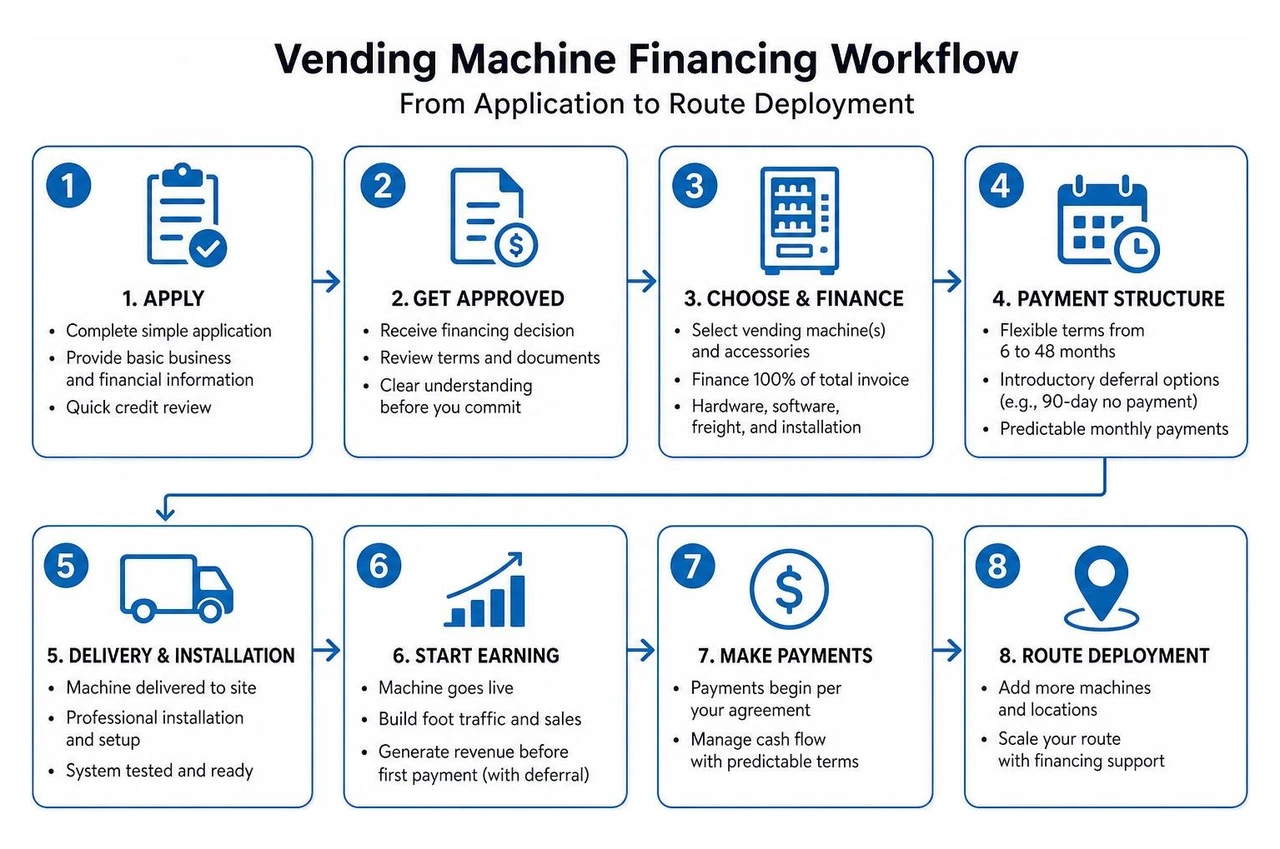
Many specialized programs allow you to bundle 100% of your total initial invoice. This means you can roll machine hardware, remote monitoring software, specialized shelving, graphics wraps, freight delivery, and installation into one predictable monthly installment. Furthermore, leading equipment programs frequently offer introductory payment deferrals—such as 90-day "no payment" or "same-as-cash" grace periods. These structures let you position the machine on-site, establish foot traffic, and build recurring revenue before your first debt payment comes due.
Equipment Loans vs. Equipment Leasing Models
Understanding whether an equipment loan or an equipment lease fits your growth plan is critical to managing your balance sheet. Both methods preserve cash, but they treat ownership equity, tax depreciation, and end-of-term obligations differently.
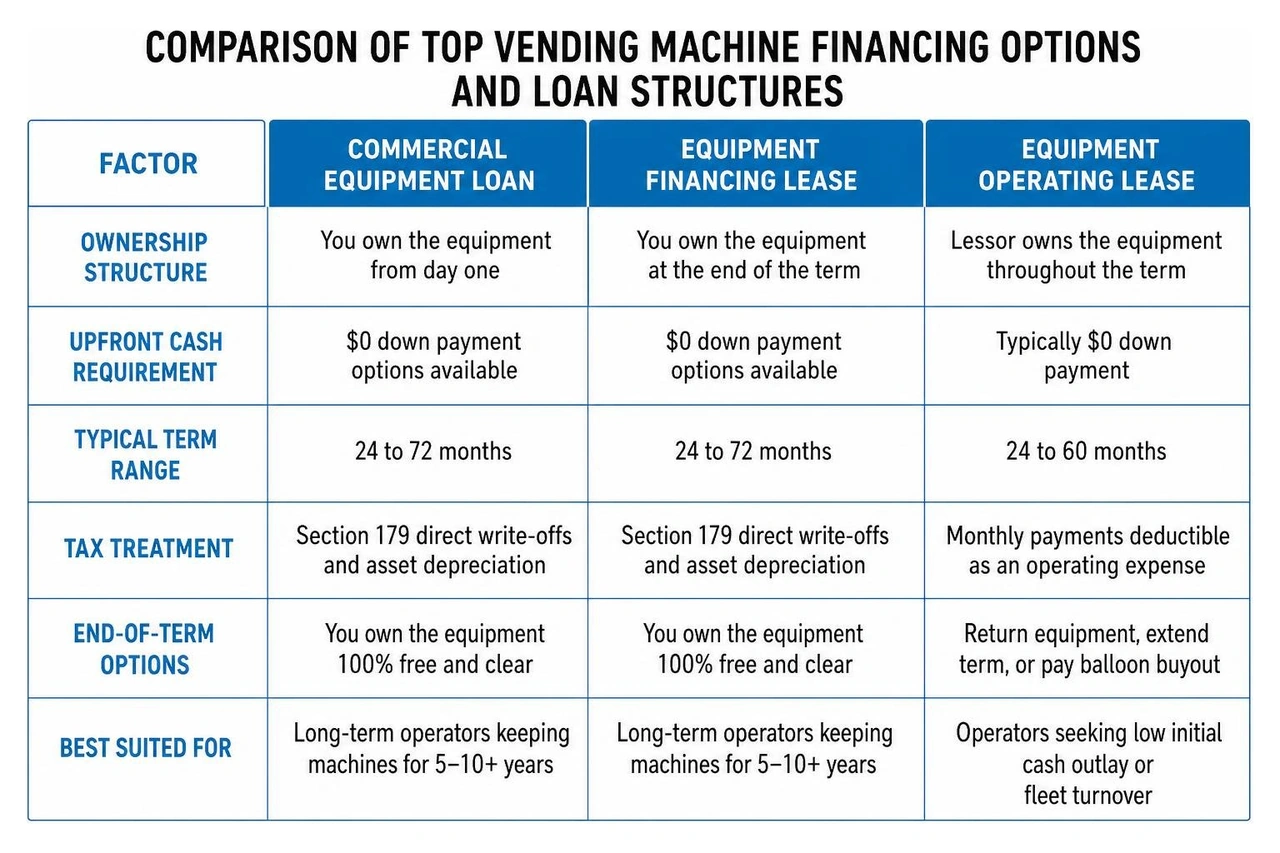
With a standard equipment loan, you borrow capital to purchase the machine outright. As you make monthly principal and interest payments, you build direct equity. Once the loan term concludes (typically 24 to 48 months), you own the machine free and clear. Equipment loans also unlock powerful federal tax advantages: under IRS Section 179 depreciation rules, eligible businesses can often write off the entire purchase price of qualifying machinery during the tax year it is placed into service, rather than depreciating it slowly over several years.
Conversely, a commercial equipment lease acts more like a long-term rental contract. You pay lower monthly fees for the operational right to use the hardware. At the end of the term, you generally face three distinct pathways: return the machine, renew the lease, or purchase the unit by paying an agreed-upon balloon payment (or a $1 buyout option, depending on the contract). While leasing keeps monthly out-of-pocket expenses lower, you do not build equity during the lease cycle unless you execute a formal purchase option.
| Feature | Equipment Loans | Equipment Leases |
|---|---|---|
| Ownership Status | Full ownership transferred immediately or upon payoff | Lessor owns hardware; option to buy at term end |
| Upfront Down Payment | Typically $0 to 20% depending on credit tier | Often 0% down or first/last month advance payment |
| Monthly Payment Size | Moderate to standard amortization schedules | Often lower than standard loans |
| Tax Treatment | Section 179 direct write-offs and asset depreciation | Monthly payments deductible as an operating expense |
| End-of-Term Options | You own the equipment 100% free and clear | Return equipment, extend term, or pay balloon buyout |
| Best Suited For | Long-term operators keeping machines for 5–10+ years | Operators seeking low initial cash outlay or fleet turnover |
For a broader breakdown of commercial equipment leasing structures, check out vending machine finance & leasing guides.
Cash Flow Dynamics and Daily Breakeven Units
The fundamental advantage of automated retail is that your debt service can be directly covered by your machine's daily volume. Instead of treating financing as fixed overhead, top operators view each machine as an independent profit center where daily sales amortize the capital cost.
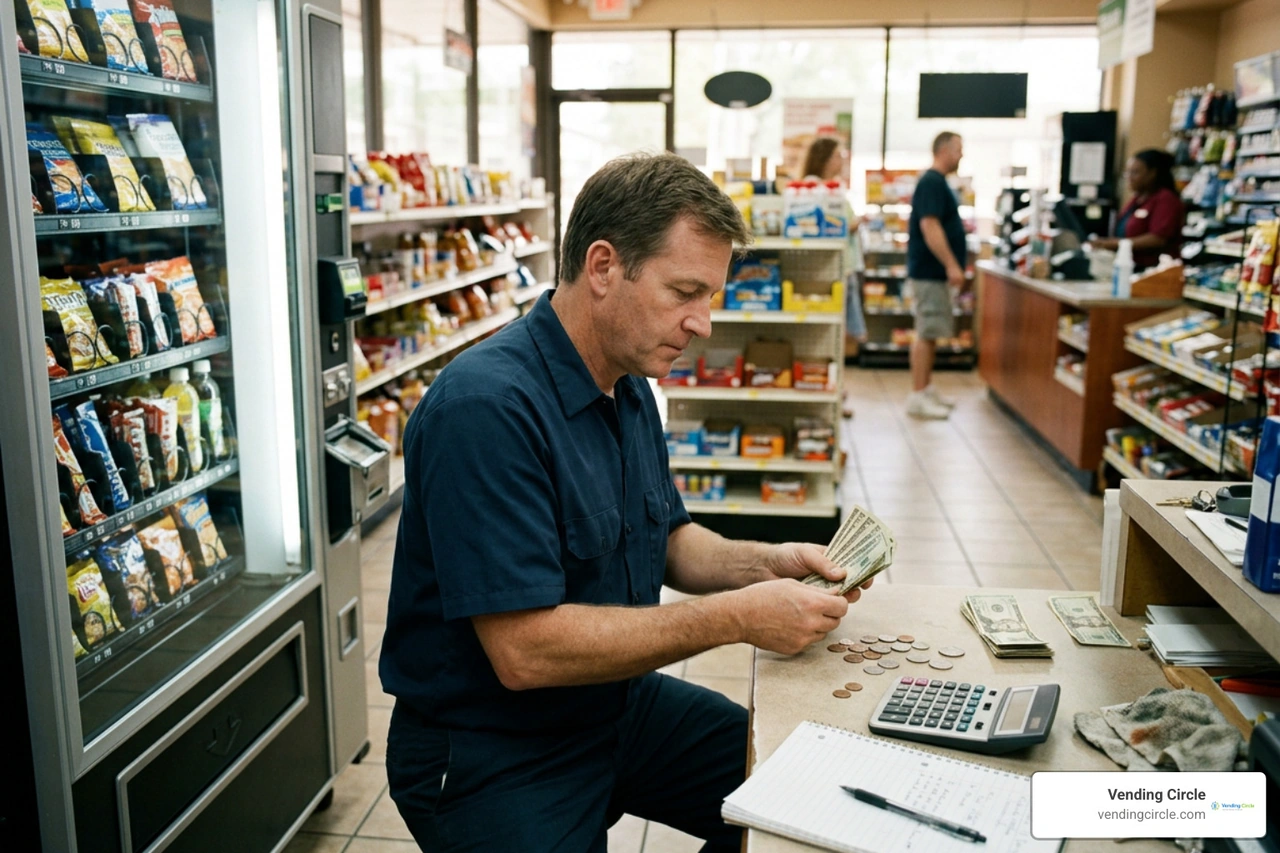
Consider the unit economics of a modern combination machine financed on a standard 36-month term at a monthly payment of $120 to $150:
- Average Retail Vend Price: $1.75 to $2.50 per item
- Average Cost of Goods Sold (COGS): $0.75 to $1.25 per item
- Net Profit Margin Per Unit Sold: ~$0.50 to $1.00
With an average net profit of $0.50 per vend, your financed machine needs to sell only 7 to 10 items per day to completely cover its monthly payment obligations:
$$\text{Daily Breakeven} = \frac{\text{Monthly Payment}}{\text{Net Margin Per Item} \times 30 \text{ Days}} = \frac{\$135}{\$0.50 \times 30} = 9 \text{ items/day}$$
When you combine this modest volume requirement with a 90-day introductory payment deferral, your route generates positive net cash flow from day one. You use the initial 90 days to capture pure operational profit, buffer your working capital reserves, and refine your inventory mix before regular loan amortization begins.
Top Vending Machine Financing Options for Operators
Navigating the commercial finance landscape requires matching your business stage, route size, and credit history to the appropriate lending vehicle.
Commercial Equipment Loans and Direct Vending Machine Financing Options
Direct equipment loans from specialized automated retail lenders or manufacturer programs remain the gold standard for buying new hardware. Because these loans are strictly designated for machinery, lenders leverage the equipment as collateral, offering more competitive rates and streamlined underwriting compared to traditional unsecured loans.
Funding amounts for commercial equipment loans range anywhere from $10,000 for small route expansions up to enterprise credit facilities exceeding $1,000,000 for commercial fleets. Many direct financing programs offer $0 down payment structures for qualified applicants, with terms spanning from 24 to 72 months.
Specialized platforms provide initial decisions via soft credit inquiries, allowing you to pre-qualify without affecting your personal credit rating. For customized route packages, review flexible financing solutions for vending operators and direct manufacturer financing options.
SBA Loans and Working Capital Lines of Credit
When your vision extends beyond buying a single machine to acquiring established routes or building a regional enterprise, government-backed Small Business Administration (SBA) loans provide unmatched terms and capital access.
- SBA Microloans: Providing up to $50,000 in capital, microloans are distributed through non-profit community lenders. They are ideal for early-stage vending entrepreneurs who need combined capital for machinery, initial inventory, location deposit fees, and transport equipment.
- SBA 7(a) Loans: Designed for large-scale operations, the 7(a) program offers funding up to $5,000,000 with repayment terms extending up to 10 years for equipment and working capital. These loans feature low interest rate caps tied directly to the prime rate, though they require comprehensive documentation and a longer underwriting cycle (often 30 to 90 days).
- Business Lines of Credit: A revolving credit facility functions like a commercial safety net. You only pay interest on the funds you draw. This makes a line of credit particularly effective for smoothing out inventory purchases, managing emergency refrigeration repairs, or optimizing your vending machine inventory management without disrupting monthly route profits.
Evaluating Alternative Vending Machine Financing Options for Startups
If you are launching a brand-new business without established balance sheets or a multi-year tax history, traditional bank loans can be challenging to secure. Fortunately, alternative fintech solutions have made entering the industry easier than ever.
Digital point-of-sale platforms, micro-lease structures, and commercial Buy Now, Pay Later (BNPL) providers (such as Clicklease, Shop Pay, Affirm, and PayPal Credit) provide instant financing decisions directly at checkout for invoices ranging from $500 up to $20,000. These programs often feature:
- Low or $0 initial down payments
- Micro-installments starting as low as $10 to $84 per month for smaller hardware
- Soft credit check approvals that accommodate emerging entrepreneurs and credit scores in the mid-500s
- Rapid, same-day electronic document signing
While alternative underwriting structures and merchant cash advances carry higher effective APRs than prime equipment loans, they give startups the operational agility to lock down machines and claim prime locations immediately. You can discover more about equipment procurement pathways in our vending machine wholesale ultimate guide 2026. For additional operational funding strategies, explore vending financing made simple.
Qualification Criteria and Application Requirements

Getting approved for vending machine financing is typically much simpler than applying for standard commercial real estate or corporate debt. Because the machinery itself serves as loan security, underwriting is primarily focused on your personal credit history, operational stability, and the verifiable value of the equipment being purchased.
To position your application for tier-1 interest rates and $0 down terms, understand the key qualification benchmarks lenders evaluate:
- Credit Score Benchmarks: Most prime commercial equipment lenders look for a personal FICO score of 640 or higher. However, alternative digital lenders and micro-lease platforms frequently approve applicants with credit scores ranging between 550 and 620, offsetting subprime credit with slightly higher factor rates or modest down payments.
- Time in Business: Established lenders prefer operators who have been active for at least 6 to 24 months. If you are launching a brand-new startup, you can still easily qualify through vendor-direct financing programs, soft-check fintech platforms, or by providing a strong personal guarantee.
- Down Payment Requirements: While qualified applicants can access $0 down structures, standard commercial loans typically ask for 10% to 20% down. Putting down a cash deposit reduces your monthly debt service and significantly improves approval odds if your credit history is limited.
- Document Preparation: Most modern online equipment financing applications take under five minutes to complete. For basic micro-financing under $20,000, you often only need a driver’s license, an active business checking account, and a preliminary equipment invoice.
When preparing your funding package, having clean documentation ready will accelerate your underwriting turnaround to the same business day:
- Government-Issued Photo ID: Driver’s license or passport.
- Business Registration Details: Articles of Organization (LLC), EIN confirmation letter, and operating agreement.
- Recent Bank Statements: 3 to 6 months of business checking records demonstrating consistent cash flow (or personal bank statements for sole proprietorships).
- Preliminary Bill of Sale / Equipment Quote: An itemized equipment quote from your distributor detailing model numbers, add-ons (such as vending card readers), software licenses, and freight costs.
- Location Agreement Summary: While not always mandatory, showing a signed location placement agreement or letter of intent from a host venue drastically strengthens your application.
Securing strong locations before your machines arrive is critical to early success. For location scouting templates and contract negotiation frameworks, review our comprehensive vending machine routes guide 2026.
Maximizing ROI on Financed Vending Equipment
Securing an affordable payment plan is only the first half of the equation; executing on-site operations is what turns that hardware into long-term wealth. To maximize return on investment (ROI) on financed machinery, your primary goal is to maximize daily transaction volume while preventing operational downtime.
Modern vending machines are sophisticated, automated retail hubs. If a machine experiences a bill jam, power trip, or mechanical failure, your direct cash flow halts immediately—while your monthly loan payment stays the same. Protecting your route ROI requires integrating modern connectivity and telemetry tools right from the start:
- Equip Cashless and Contactless Payment Systems: Over 70% of modern vending transactions take place via contactless credit cards, debit taps, and mobile wallets (Apple Pay, Google Wallet). Equipping every financed unit with a modern reader like Nayax or Cantaloupe is essential. If you are acquiring hardware, make sure to read our detailed guide on how to buy a vending machine with card reader integration ready on day one.
- Maintain 24/7 Telemetry and Remote Monitoring: Remote inventory monitoring systems provide real-time sales visibility, temperature alerts, and error diagnostics directly to your smartphone. Using a reliable vending machine network connection allows you to restock based on actual demand, track best-selling SKUs, and spot mechanical issues before your host location even notices.
- Strategic Location Positioning: Ensure your financed machine is situated in high-foot-traffic, well-lit spaces such as manufacturing break rooms, logistics distribution centers, fitness centers, residential complexes, and hospital waiting rooms. Pairing cold beverage machines with high-margin snack units in the same location creates immediate cross-purchasing opportunities that boost gross daily margins.
- Reinvest Cash Flow for Route Compounding: Use the surplus cash generated by your early machines to build a dedicated capital reserve. Once your initial financed machine builds an established revenue history, use your improved business credit and retained earnings to finance subsequent machines, compounding your overall route revenue.
Frequently Asked Questions About Vending Machine Financing
Can I get vending machine financing with bad credit or as a startup?
Yes, you can secure vending machine financing with bad credit or as a brand-new startup. Because equipment financing uses the physical machine as collateral, lenders face lower risk than with unsecured loans. Startups and operators with personal credit scores in the mid-500s can leverage specialized fintech lenders, merchant cash advances, or micro-lease platforms (like Clicklease) that utilize soft credit checks and focus on cash flow potential rather than strict credit profiles.
How quickly can financing be approved so I can deploy my machine?
Digital equipment financing applications can be approved on the same business day—often within minutes. Once you submit basic contact and business details alongside an itemized equipment quote, modern lenders issue instant digital pre-qualifications. After electronically signing loan agreements, funds are typically disbursed directly to the equipment vendor within 24 to 48 hours, initiating prompt freight delivery to your target location.
Can a vending machine really pay for itself through daily sales?
Yes. Based on an average product profit margin of $0.50 to $1.00 per item and a standard 36-to-48-month equipment financing payment of roughly $100 to $150 per month, selling just 7 to 10 drinks or snacks per day completely covers your monthly equipment debt. Any additional units sold beyond this daily breakeven volume generate positive net operating cash flow for your business.
Build Your Vending Business With Smart Financing
Financing is one of the most effective strategic levers available to modern automated retail operators. By breaking down heavy capital expenditures into predictable, low monthly payments, you protect your liquid capital, secure prime retail locations before competitors can, and deploy cutting-edge smart machines that generate immediate daily revenue.
Whether you utilize a 48-month commercial equipment loan, an SBA microloan, a flexible business line of credit, or introductory 90-day deferred vendor financing, matching your financing terms to your route's cash flow turns machine debt into a self-funding asset.
At Vending Circle, we empower entrepreneurs and operators at every stage of their journey. As a combined learning platform and community, our members gain exclusive access to weekly live Q&A sessions, step-by-step masterclasses, and an active nationwide network of vending professionals. Check out our pricing to discover our full suite of operator tools, or explore what is vending circle to see how our members build profitable routes.
Ready to deploy your next high-performing machine? Explore our complete vending machine catalog and equipment procurement network to secure quality hardware with flexible, operator-friendly financing today!