Why a Trading Card Vending Machine Can Build a Profitable Route
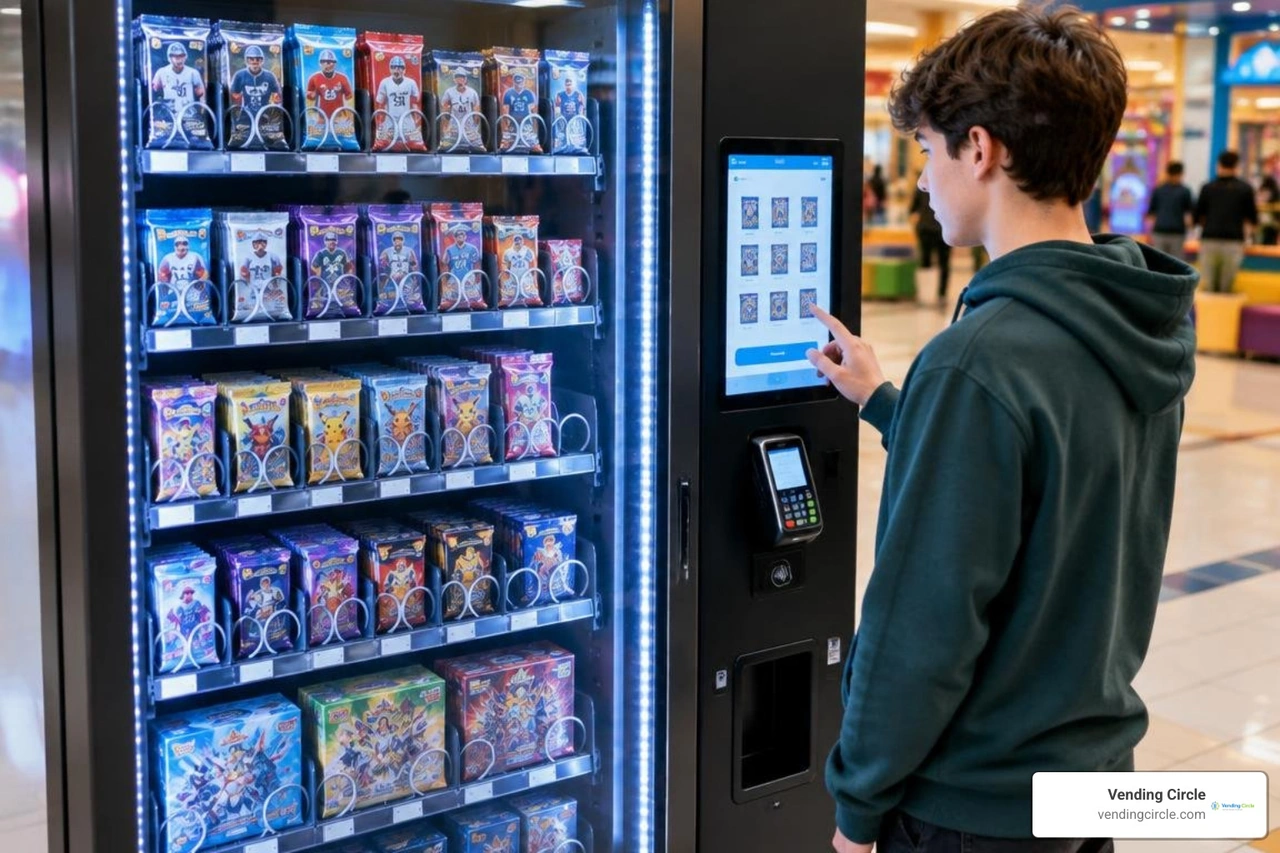
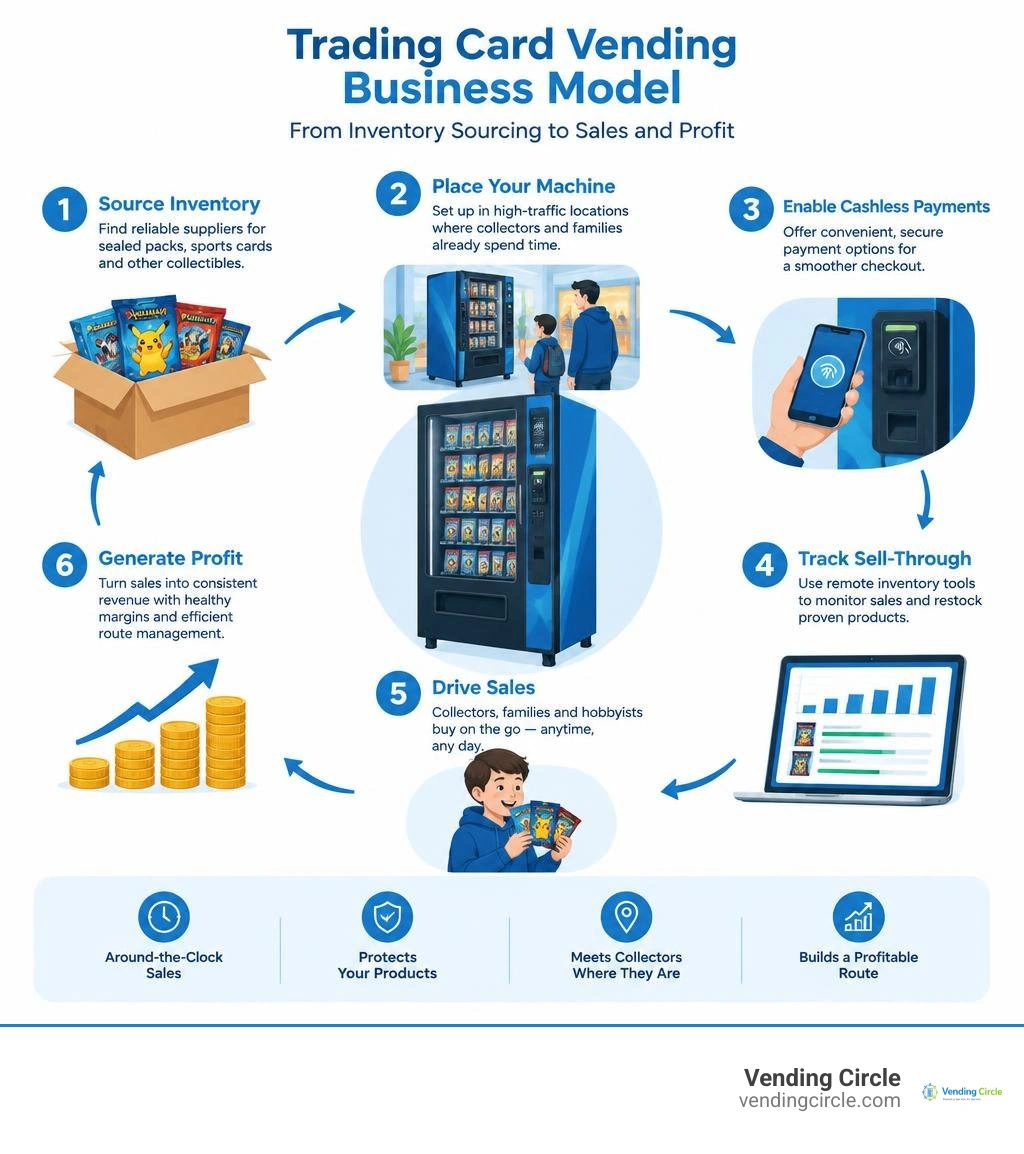
A trading card vending machine can turn sealed booster packs, sports cards, and other collectibles into around-the-clock sales. To launch one successfully, start with a machine that protects your products, place it where collectors and families already spend time, use cashless payments, and track sell-through so you restock proven products instead of tying up cash in slow inventory.
Well-placed machines can generate $1,000 to $1,500 or more in monthly sales, though results depend heavily on location, pricing, product mix, and uptime. With typical gross margins around 40% to 50%, card vending can be a strong addition to an existing route - especially when remote inventory tools reduce unnecessary service trips.
The opportunity is not just about selling Pokemon packs. It is about offering a fast, fun purchase at the right moment: near an arcade, hobby shop, family entertainment center, mall, or convenience store. The operators who win protect card condition, avoid stockouts, price for processing fees and location commissions, and treat each machine like a small retail store.
I'm Manuel Mojica, founder of Vending Circle and an experienced vending operator who has built businesses around practical route management, sourcing, and machine security. In this guide, I will show you how to evaluate, launch, and operate a trading card vending machine without overlooking the costs and operational details that determine profit.
Trading card vending machine word guide:
Choosing the Right Trading Card Vending Machine for Your Route
Entering the collectible vending space requires a careful look at dispensing mechanics. Traditional snack machines drop broad bags of chips into a bottom bin with little consequence, but trading card products require extreme delicacy. A single bent corner, creased foil pack, or crushed cardboard box can destroy the "Gem Mint" grading potential of a chase card, cutting its collector value by up to 30%.
Understanding how do pokemon vending machines work comes down to evaluating two primary dispensing systems: coil-driven mechanisms and sensor-guided elevators.
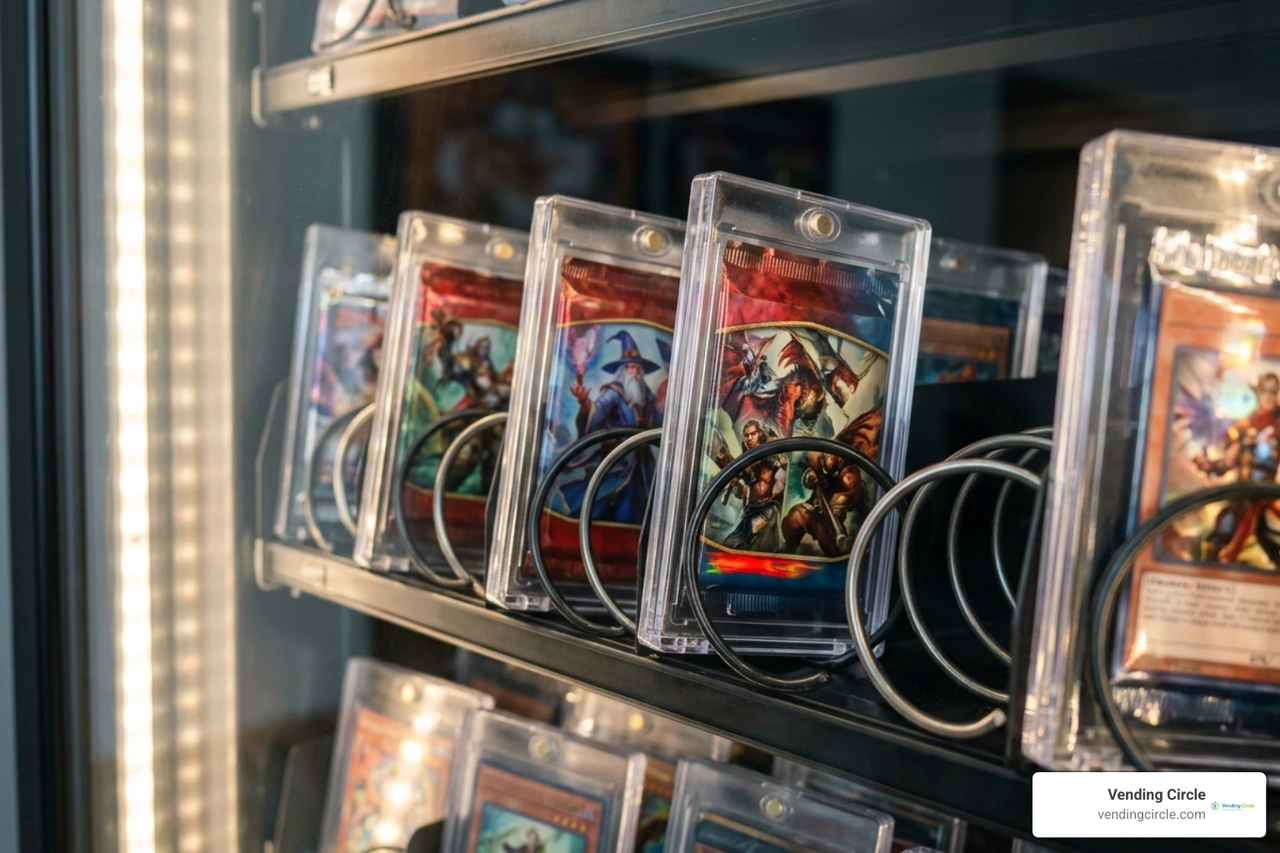
Coil systems rely on horizontal spirals (typically 22mm coils tailored for pack thickness) that rotate forward to drop items. To prevent flexible foil packs from folding between the metal rings or jamming against the housing, operators place each booster pack inside a rigid acrylic top-loader shell. These reusable shells ensure smooth, friction-free movement.
Elevator-based machines take protection a step further. When a customer makes a selection, a motorized platform glides up to the designated slot, receives the item gently, and lowers it to the delivery hatch. This zero-drop mechanism eliminates impact entirely, making it ideal for high-ticket items like graded slabs, blister hangers, and premium collection tins.
| Feature | Coil-Based Dispensing System | Elevator-Based Dispensing System |
|---|---|---|
| Delivery Mechanism | Gravity drop via rotating 22mm coils | Motorized lifting platform with zero-drop lowering |
| Packaging Requirements | Requires rigid acrylic cases for standard booster packs | Vends loose foil packs, blister packs, and slabs directly |
| Inventory Flexibility | Best suited for individual packs and small tins | Handles variable shapes, multi-pack boxes, and graded slabs |
| Initial Hardware Cost | Generally lower ($2,800 – $5,000) | Mid to high tier ($6,000 – $9,500+) |
| Mechanical Simplicity | Fewer moving parts; fast field servicing | Advanced sensors; requires precision calibration |
Sizing Your Trading Card Vending Machine: Compact vs. Floor-Standing
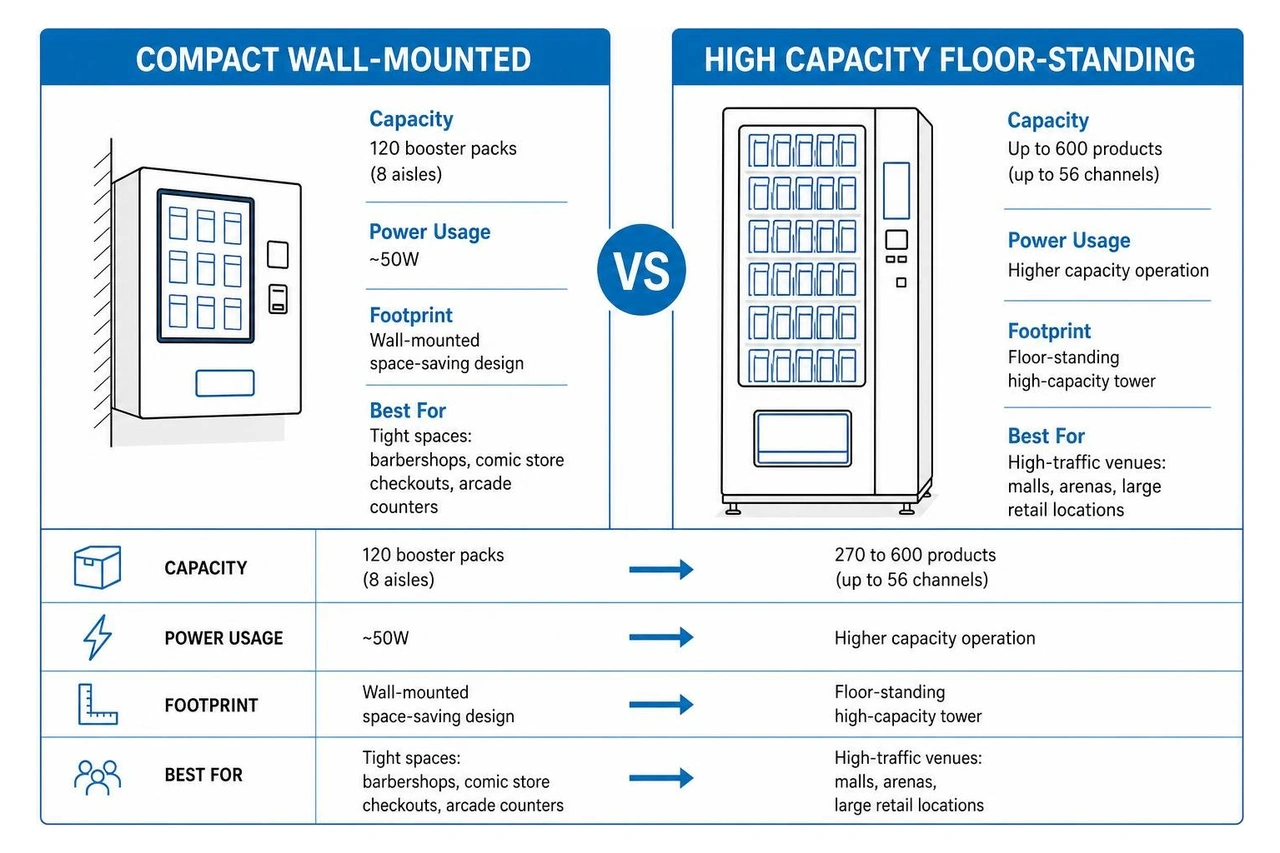
When selecting hardware, your physical footprint dictates which host locations you can target. Machines generally fall into two broad form factors: compact wall-mounted kiosks and full-sized floor-standing towers.
Compact, wall-mounted units—such as the Mini TCG: Compact Smart Trading Card Vending Machine—hold around 120 booster packs across 8 dedicated aisles (15 packs per aisle). These units have a minimal profile, drawing roughly 50W of power. They mount easily in tight spaces where floor space is at a premium, such as barbershops, comic store checkout lines, or behind arcade prize counters.
Alternatively, specialized countertop units like a generic card dispenser made for arcade use compact metal frames to dispense individual raw cards or custom token rewards directly onto checkout counters.
Floor-standing towers maximize inventory turnover in high-traffic venues. Larger models, like the Pokemon Vending Machine: Slim Pack Tower 2.0, hold up to 456 booster packs across 24 aisles. Other heavy-duty industrial units, like the Trading Card Vending Machine - MightyBot, offer 10 high-capacity lanes configured for up to 160 packs or graded slabs.
For maximum volume, multi-tray elevator giants like the commercial Trading Card Vending Machine For Sale accommodate up to 600 products across 56 adjustable channels, while specialized solutions like the WEIMI Pokémon & Sports Card Vending Machine with Elevator System handle 270 to 720 items using precision software.
Key Features of a Modern Trading Card Vending Machine
Today's collectible retail relies on interactive features that turn passive passersby into paying customers. When evaluating machines, prioritize these essential features:
- Interactive High-Definition Touchscreens: Large front-facing touchscreens (ranging from 32 to 43 inches) turn the vending cabinet into a dynamic digital storefront. Operators can showcase high-resolution pack art, stream set trailer videos, display complete card checklists, and highlight high-value "chase cards" contained within the sets.
- Infrared Drop Sensors: Reliable drop-detection sensors confirm that an item has completely cleared the vending tray and arrived in the delivery bin before finalizing the payment capture. If a product fails to drop, the transaction automatically cancels, protecting customer trust and eliminating chargebacks.
- Commercial-Grade Anti-Vandal Locks: High-value inventory demands robust security. Look for reinforced steel enclosures, 3-point locking bars, shatterproof polycarbonate glass panels, and anti-pry cash/chassis doors.
- Cloud Telemetry & Dynamic Pricing: Integrated IoT modems allow you to adjust pack prices remotely across your fleet, run limited-time flash promotions, bundle multi-pack discounts, and monitor live sales data right from your smartphone.
Equipment Costs, Pricing Strategy, and Profit Projections
Getting started requires understanding upfront capital expenditures and ongoing unit economics. Reviewing our comprehensive vending machine costs guide 2026 gives you a solid foundation on general equipment budgets.
For trading cards, compact wall-mounted machines typically range between $2,800 and $3,500. Mid-size touchscreen towers run from $4,500 to $5,500, while commercial elevator machines equipped with multi-tray storage can range from $7,000 to $9,400.
To maintain healthy operations, apply our standard card vending pricing formula:
$$\text{Retail Price} = (\text{Wholesale Pack Cost} \times 1.2) + \$5.00 \quad (\text{rounded up to the nearest dollar})$$
For example, if you source a modern booster pack at a wholesale cost of $3.50, your retail price calculation is $(\$3.50 \times 1.2) + \$5.00 = \$4.20 + \$5.00 = \$9.20$, which rounds up to an even $10.00.
This formula ensures you achieve robust 40% to 50% profit margins, cleanly absorbing location revenue-share commissions (typically 10% to 15%), merchant processing fees, and software subscriptions while leaving strong net profits.
Revenue Potential and Break-Even Timelines
Well-placed card vending kiosks commonly average between $1,000 and $1,500+ in monthly gross sales, with premier family entertainment centers and prime mall corridors generating $2,500 to $3,000 or more during peak holiday cycles and major card set release windows.
At a standard 45% profit margin generating $1,250 per month in revenue, a machine nets roughly $562 per month after inventory costs. With a compact machine investment of approximately $2,850, the baseline payback period is roughly 3 to 6 months. High-capacity floor towers breaking $2,000 monthly can recoup an initial $5,000 to $9,000 investment within 6 to 10 months of consistent operation.
Securing High-Traffic Locations and Route Placement
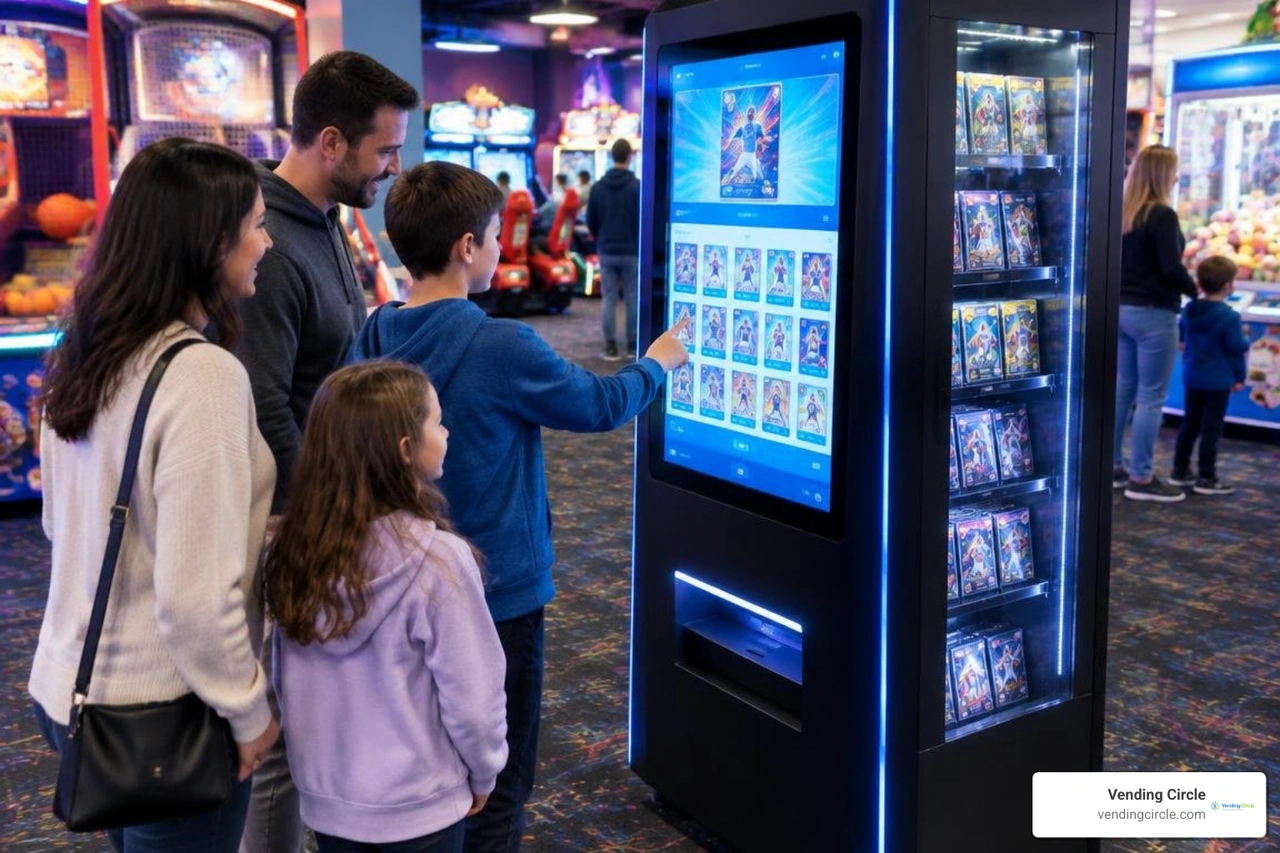
Finding the right home for your machine is the single biggest factor in your route's long-term success. You are selling high-impulse entertainment products, meaning you need foot traffic that includes kids, nostalgic adults, and dedicated hobbyists.
When evaluating potential spots, explore our directory of great locations for vending machines and focus on these top-performing environments:
- Family Entertainment Centers & Arcades: Venues where visitors are already in a spending mindset, looking for fast fun and tangible rewards.
- Hobby Shops & Local Card Stores (LGS): Placing a machine outside or inside an LGS lets the owner vend sealed packs after retail counter hours, capturing after-hours tournament traffic without requiring staff.
- Malls & Shopping Centers: High-density corridors near food courts, video game retailers, movie theaters, or collectible stores capture steady weekend impulse sales.
- Barbershops, Laundromats, and Diners: High-dwell-time waiting areas give customers time to browse the interactive touchscreen menu and make spontaneous purchases.
- Convenience Stores & Gas Stations: Positioning a compact unit near checkout registers drives high average order value impulse buys from commuters.
When approaching property owners, present professional vending machine agreements that outline power requirements (typically standard 110V outlets drawing under 100W), liability coverage, and competitive placement structures.
Most venue hosts prefer either a flat monthly footprint rental ($50 to $150 per month) or a revenue-share model (10% to 15% of net profits). Emphasize that trading card machines require no refrigeration, generate zero food waste, and create an engaging visual display that attracts foot traffic.
Sourcing Inventory and Managing Stock Remotely
A vending machine is only as profitable as the inventory inside it. Sourcing authentic, unweighed, factory-sealed products from verified distributors is essential for building local buyer trust.
When building out your product catalog, draw from a diverse mix of collectible card games (TCGs) and sports franchises:
- Pokémon TCG Booster Packs: The undisputed volume leader in trading cards. Always stock a mix of the newest core sets alongside popular specialty expansion sets.
- One Piece Card Game & Disney Lorcana: Fast-growing modern TCGs with massive collector followings and strong pack-ripping demand.
- Magic: The Gathering & Yu-Gi-Oh!: Core gaming staples with loyal adult competitive player bases who buy packs regularly.
- Licensed Sports Cards (NFL, NBA, MLB, Soccer): Panini, Topps, and Bowman booster packs and multi-pack value hangers.
- Graded Slabs & Mystery Repacks: Protective acrylic slabs (PSA, BGS, or CGC graded cards) and custom mystery packs priced at $15 to $30 generate high margin spikes and customer excitement.
You can learn the ins and outs of commercial procurement through our guide to vending machine products wholesale.
Connecting your fleet to a unified cloud dashboard allows for efficient vending machine inventory management. Telemetry software gives you real-time visibility into each individual coil or slot.
You can configure automated SMS or email low-stock alerts that trigger when an aisle drops below three packs, group your restocking visits efficiently, and review sales velocity data to eliminate slow-moving items.
Navigating Operational Challenges and Common Pitfalls
Operating a collectible card route comes with specific technical nuances that differ from standard snack and beverage operations. Avoiding common operational mistakes early protects your equipment, your stock, and your bottom line.
- Preventing Foil Pack Jams: Never load raw, flexible foil booster packs directly into standard vending coils. The loose crimped edges of foil packaging easily catch in rotating metal springs, causing frustrating jams. Always load booster packs into precision-sized rigid acrylic cases before stocking them on 22mm coils.
- Respecting Intellectual Property & Trademarks: While you are entirely free to vend authentic, legally purchased trading card products under the first-sale doctrine, never paint or wrap your physical machine with official, trademarked corporate logos (such as the official Pokémon, Nintendo, or NFL logos) without explicit licensing. Use sleek, generic modern hobby graphics, dynamic LED lighting, or custom route branding.
- Physical Machine Anchoring: High-value collectibles can attract unwanted attention. Floor-standing machines should always be firmly bolted to the concrete floor using heavy-duty L-brackets or secured with industrial-grade tamper-proof security cable locks.
- Reliable Connectivity: Card readers and inventory dashboards require consistent internet access. Ensure your machines are equipped with a dual-SIM 4G cellular modem or connected to a reliable local Wi-Fi network to avoid dropped transactions during peak foot-traffic hours.
Frequently Asked Questions About Card Vending
Do trading cards require age-verification or special operator licenses?
No. Unlike lottery tickets, tobacco, or gaming devices, trading cards are classified as general consumer novelty goods and collectible toys. They are unregulated and not age-restricted. You do not need special municipal gaming licenses to vend trading cards. You simply need a standard business operating license and a state sales tax certificate to collect and remit local sales taxes.
How do machines prevent card damage during vending?
Card vending machines protect product condition in two ways. Coil-based machines require operators to house each booster pack inside a rigid, protective acrylic top-loader case that absorbs friction and physical impact. Elevator-based machines feature motorized platforms that ascend to the shelf, receive the card or slab gently, and lower it smoothly to the delivery bin without any drop impact.
What ongoing monthly fees should operators expect?
Operators should typically account for two recurring operational fees:
- Cashless Card Reader & Cellular Telemetry Fee: Usually around $9.99 per month per machine for cellular data connectivity, plus standard payment processing fees (typically 3.5% + $0.20 per transaction).
- Cloud Software Subscription: Cloud-based remote inventory platforms often include the first year free with hardware purchase, then run between $15 and $29 per month per machine for ongoing remote monitoring, dynamic pricing updates, and digital signage control.
Conclusion
Trading card vending machines represent one of the fastest-growing niches in modern unattended retail. By merging high-margin collectible products with modern, touchscreen-enabled automation, operators can build high-performing routes with minimal weekly maintenance.
Protecting card condition with the right hardware, positioning your kiosks in busy entertainment and retail hubs, and using remote telemetry tools lets you scale a profitable, passive hobby enterprise.
Equipping your machines with modern vending card readers ensures fast, tap-to-pay checkout that captures spontaneous purchases from today's cashless consumers. At Vending Circle, our community, training courses, and direct procurement channels give you the exact operational frameworks you need to launch, scale, and protect your vending business. Explore our resources today and start building your trading card vending route.