Vending Machine Costs: The Full Picture Before You Buy
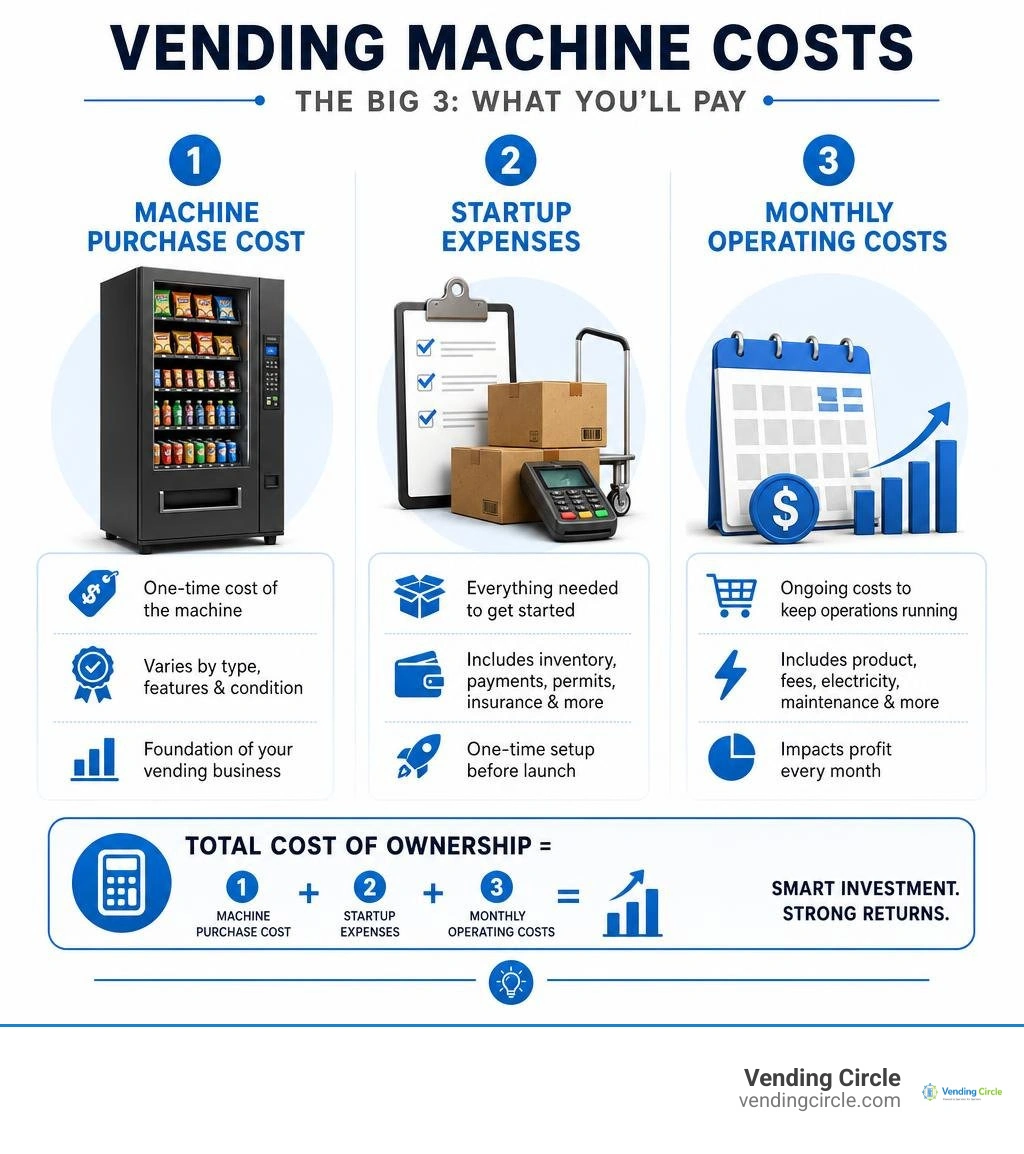
In 2026, vending machine costs range from about $1,200 for a basic used unit to $12,000 or more for a new smart machine. For most operators, a standard new snack, drink, or combo machine lands between $3,000 and $7,500. But the machine price is only the starting point.
A realistic one-machine startup budget is usually $4,500 to $7,000 for a basic setup after inventory, freight, payment equipment, permits, and insurance. Smart setups commonly reach $6,500 to $10,000 before recurring software fees.
The important comparison is not just new versus used. It is total cost of ownership: product costs, card fees, electricity, repairs, location commissions, and the lost sales that come with downtime. A low-price machine can become expensive fast if it needs a compressor, a card-reader upgrade, or frequent service visits.
I am Manuel Mojica, founder of Vending Circle and an operator behind MM Healthy Vending, where I have worked through the real decisions behind vending machine costs, sourcing, maintenance, and growth. This guide will help you compare the numbers that matter before adding, replacing, or upgrading machines on your route.
Breakdown of Vending Machine Costs by Hardware Type
When you start shopping for hardware, the price tag is largely driven by three factors: the machine's footprint, its physical capacity, and the internal complexity of its dispensing mechanisms. Sizing your equipment correctly to your location prevents two major headaches: running out of inventory mid-week or overpaying for massive capacity in a low-traffic breakroom.
To help you get your bearings, our comprehensive wholesale vending machines guide explores distributor purchasing dynamics. Here is a clear breakdown of average equipment pricing across major hardware categories in 2026:
| Machine Type | Average Price (New) | Average Price (Refurbished / Used) | Ideal Target Location |
|---|---|---|---|
| Ambient Snack | $3,000 – $5,000 | $1,200 – $2,500 | Small offices, auto repair waiting rooms, staff lounges |
| Cold Beverage | $3,500 – $6,000 | $1,500 – $3,000 | Warehouses, gym facilities, manufacturing floors |
| Standard Combo | $3,500 – $7,500 | $1,800 – $4,000 | Mid-sized offices, apartment lobbies, trade schools |
| Smart Cooler / AI | $6,000 – $15,000+ | $3,000 – $6,000 | Corporate HQs, hospital wings, high-end residential |
| Specialty / Hot Food | $15,000 – $100,000+ | $7,000 – $30,000 | College campuses, transit hubs, 24/7 venues |
Ambient Snack and Cold Beverage Units
Standalone ambient snack machines are the most straightforward pieces of equipment in automated retail. Because they do not require refrigeration compressors, insulated cabinet walls, or complex condenser fans, new snack units run comfortably between $3,000 and $5,000 (with used models trading between $1,200 and $2,000). Modern units feature infrared drop sensors near the delivery bin to guarantee product delivery or refund the buyer's payment instantly.
Cold beverage units require heavy-duty refrigeration systems and reinforced shelving to handle the substantial weight of canned sodas, bottled waters, and energy drinks. A new commercial beverage machine costs $3,500 to $6,000. Because drink compressors cycle constantly to keep liquids between 34°F and 38°F, energy efficiency and cooling reliability are top priorities when budgeting for these units.
Combo Drink and Snack Machines
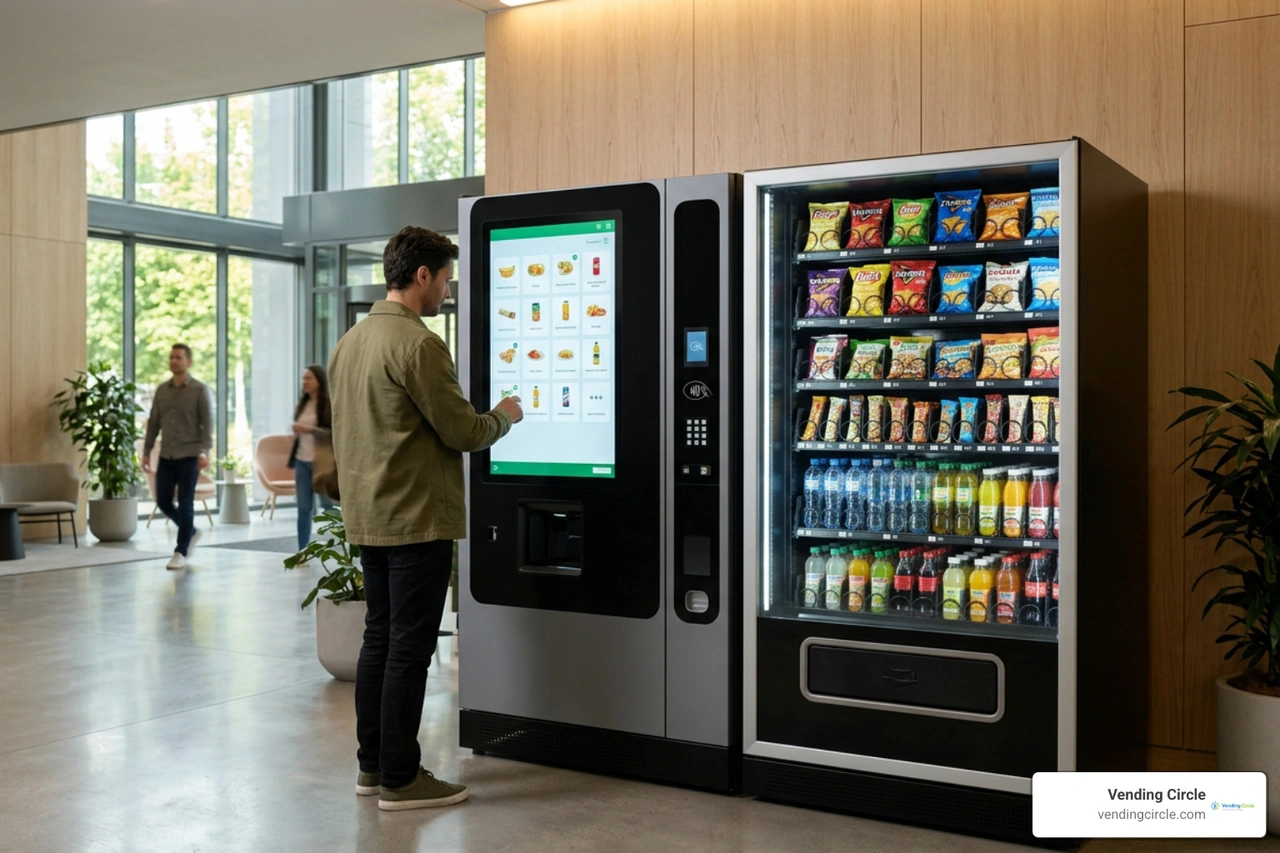
If you are placing a single machine in a location with limited floor space, a combination machine is often the smartest play. Dual-zone cooling systems chill beverages on the bottom trays to roughly 36°F while maintaining ambient or mildly chilled temperatures (around 55°F to 60°F) on top snack shelves to prevent candy bars from melting.
Brand-new combo machines cost between $3,500 and $7,500, depending on width and selection density (typically offering 24 to 40 selections across 300 to 400 total items). They maximize revenue per square foot by satisfying multiple cravings from a single cabinet.
High-Tech Smart Coolers and Micro-Markets
Smart coolers and computer-vision micro-markets represent the fastest-growing segment of automated retail. Instead of turning metal coils, these units use shelf weight sensors, RFID tagging, or multi-camera computer vision to track items. Customers swipe a payment card to unlock the glass door, grab multiple products, and close the door, completing the transaction automatically.
New smart coolers range from $6,000 to $12,000, with specialized hot-food automated kiosks (such as automated pizza systems) running anywhere from $75,000 to over $100,000. Operators looking into tailored finishes and branding can consult custom machine pricing data to evaluate custom vinyl wraps and specialized user-interface modifications.
Hidden Operational and Recurring Ownership Expenses
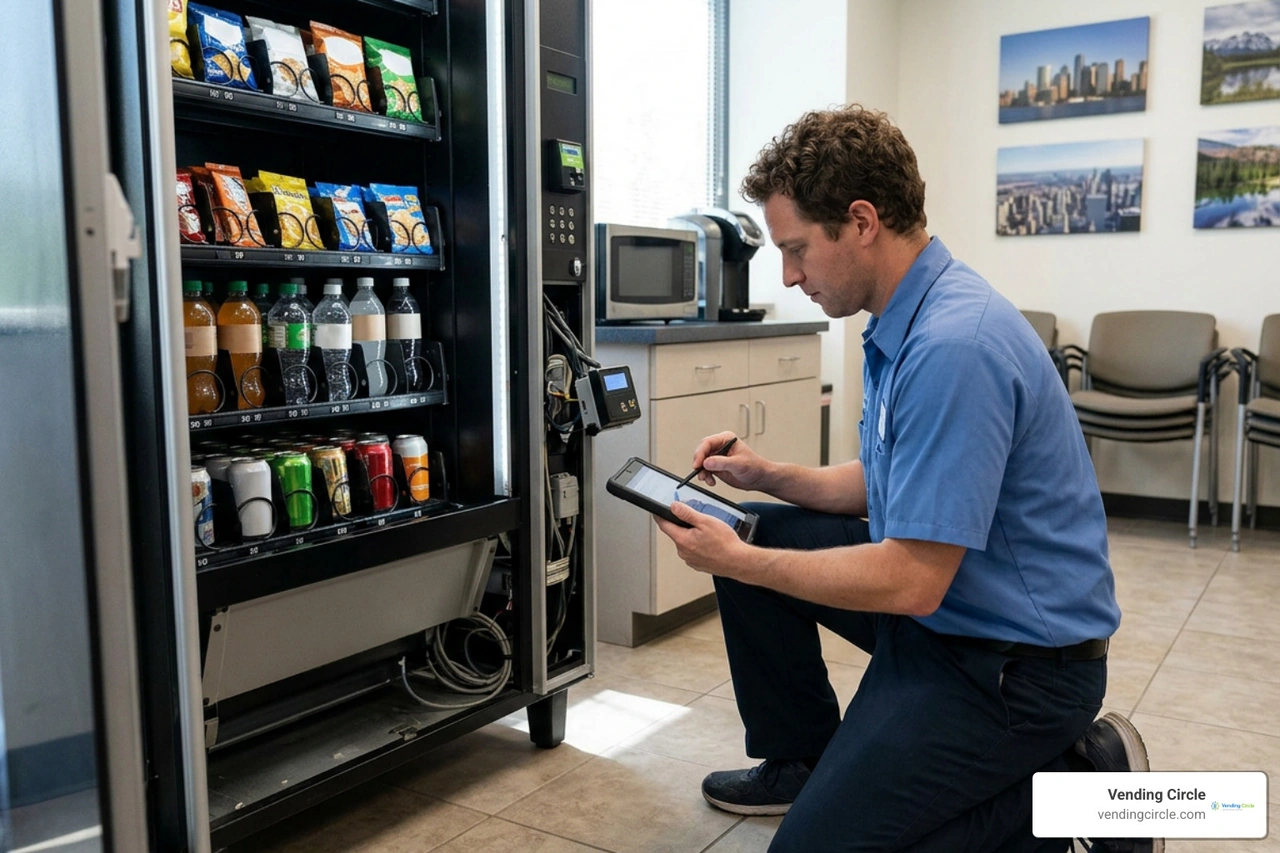
Many beginners make the mistake of budgeting only for the machine purchase price. In reality, recurring operating overhead shapes your bottom-line profitability every single month.
Telemetry, Card Processing, and Software Fees
With over 70% of consumers preferring cashless payments, equipping modern vending card readers on every unit is no longer optional—it regularly increases gross machine revenue by 20% to 30%. However, this payment layer introduces three distinct fees:
- Hardware Acquisition: Cashless reader devices run $300 to $500 per unit.
- Monthly Telemetry / SaaS Fees: Maintaining a cellular data SIM card and real-time cloud management dashboard costs $10 to $30 per month for standard machines and $50 to $150+ per month for AI smart coolers.
- Transaction Processing: Credit card merchant processing fees average 3.5% to 6% plus $0.10 to $0.25 per transaction.
Ensuring secure network connections keeps your remote inventory data accurate and prevents dropped cashless authorizations.
Location Commissions and Placement Rent
Property hosts provide the foot traffic, and in exchange, they often expect a revenue share. Standard location commissions range between 5% and 25% of gross sales (averaging roughly 7% to 15% in commercial spaces). Some landlords request a fixed monthly rent fee (e.g., $50 to $150 per month), but we always recommend negotiating a percentage-based revenue share so your expenses scale directly with sales volume.
Energy Consumption and Maintenance Reserves
Refrigerated machines consume electricity around the clock. Prioritizing vending machine energy efficiency helps keep utility expenses under control:
- Ambient Snack Machines: $5 to $15 per month
- Modern Energy Star Beverage/Combo Units: $25 to $45 per month
- Older Refrigerated Machines (pre-2015): $50 to $80+ per month
In addition to utility costs, always set aside a contingency reserve of $200 to $500 per machine annually (roughly $15 to $40 per month) to handle coin validator jams, harness wiring repairs, fan motor replacements, or cosmetic touch-ups.
Machine Condition: Buying New vs Used vs Refurbished
Comparing New vs Refurbished Vending Machine Costs
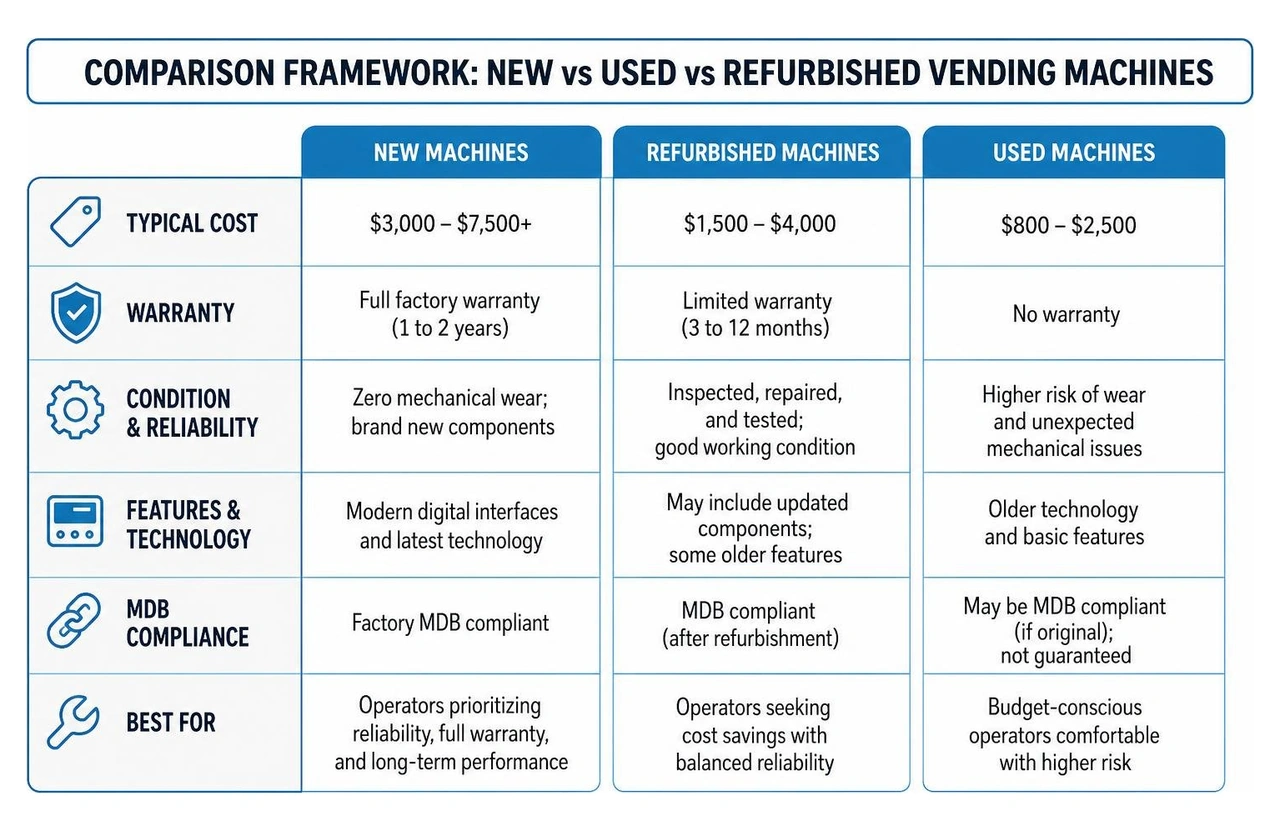
Choosing equipment condition requires balancing upfront capital preservation against unexpected mechanical failure risks:
- New Machines ($3,000 – $7,500+): Full factory warranties (1 to 2 years), modern digital interfaces, factory MDB compliance, and zero mechanical wear.
- Refurbished Machines ($2,000 – $4,000): Inspected, rewired, cleaned, and tested by professional technicians. Often equipped with rebuilt cooling decks and backed by a 60-day to 1-year limited warranty. This is frequently the best balance of cost and reliability for new operators.
- Used / 'As-Is' Units ($1,200 – $2,500): Sourced from private sellers or secondary marketplaces. Offers low entry cost, but carries high risk of unaddressed mechanical issues.
Key Inspection Points for Secondhand Equipment
If you are evaluating used units to conserve capital, never buy sight-unseen. Verify these four critical areas:
- Cooling Deck & Refrigerant Lines: Ensure the compressor cycles smoothly, reaches operating temperature (under 40°F) within 30 minutes, and shows no oil residue on copper lines indicating a freon leak.
- MDB Protocol & Control Board: Confirm the mainboard supports modern Multi-Drop Bus (MDB) standards, which are required for adding a card reader to a vending machine. Older logic boards can cost $300 to $600 to upgrade.
- Bill Validators and Coin Mechs: Run multiple currency denominations through the validators to check acceptance rates and test coin dispenser tubes.
- Cabinet Seals and Cosmetic Condition: Check door gaskets for cracks that cause cold air leaks, and ensure the exterior panels are free of severe rust or vandalism.
Smart vs Traditional Technology and ROI Analysis

The transition toward automated retail has opened a debate between traditional spiral machines and modern smart systems.
Upfront vs Ongoing Vending Machine Costs for Smart Fleets
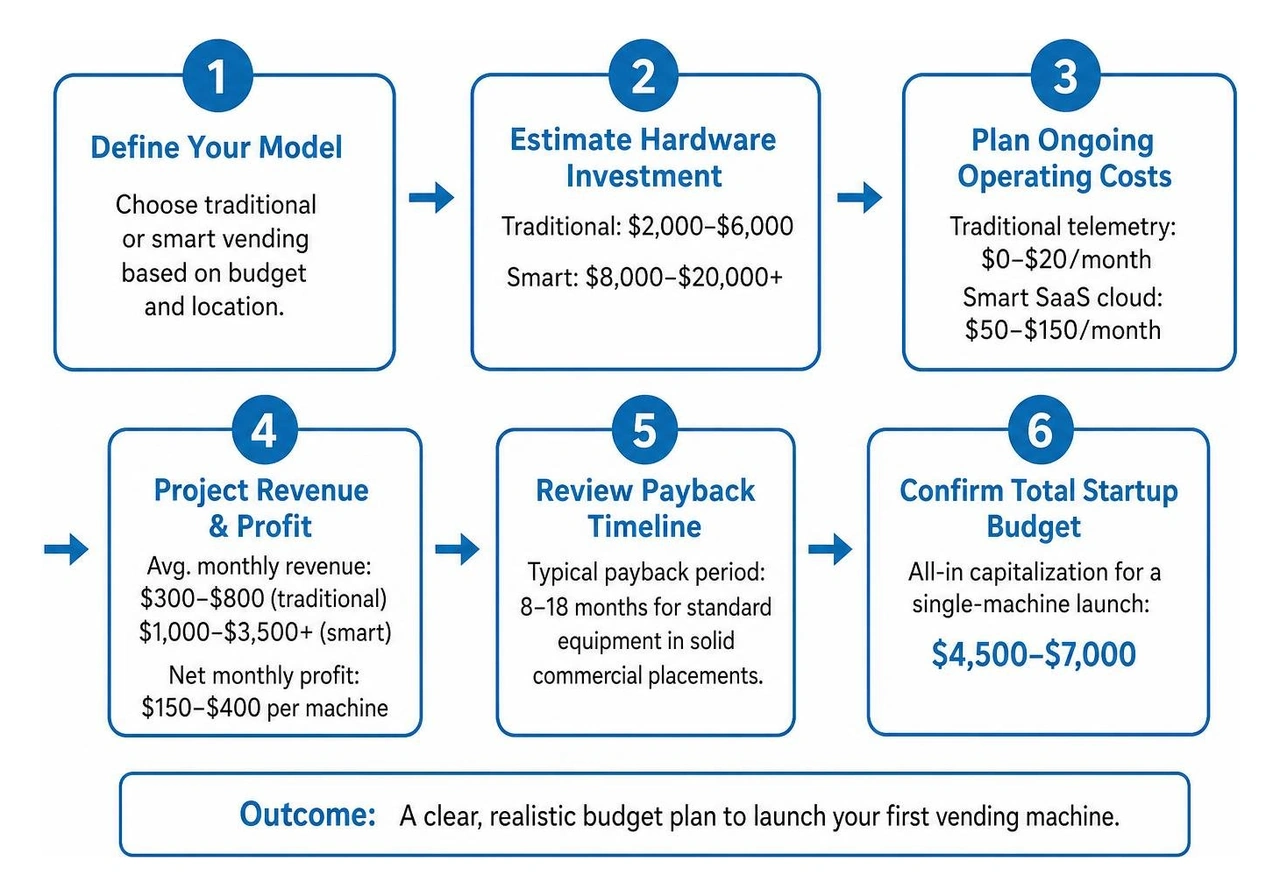
Traditional coil machines cost $2,000 to $6,000 upfront with minimal software overhead ($0 to $20/month for telemetry). In contrast, smart vending systems cost $8,000 to $20,000+ upfront and require $50 to $150 monthly SaaS cloud subscriptions.
As explored in our vending machine AI forecasts, smart machines unlock higher revenue potential. Open-door smart coolers allow consumers to physically handle products, driving average transaction sizes from $1.50–$3.00 on traditional machines up to $6.00–$14.00+ on smart coolers by supporting multi-item basket purchases like gourmet meals, craft kombuchas, and premium protein packs.
Realistic Revenue, Margins, and Payback Timelines
Sound route management relies on disciplined vending machine inventory management to protect unit profit margins:
- Wholesale Snack Margins: 40% to 60% gross profit margin
- Wholesale Beverage Margins: 30% to 50% gross profit margin
- Average Monthly Gross Revenue: $300 to $800 (traditional); $1,000 to $3,500+ (smart/high-traffic)
- Net Monthly Profit Per Machine: $150 to $400 after all COGS, commissions, card fees, and utilities
- Typical Payback Period: 8 to 18 months for standard equipment in solid commercial placements
Complete Startup Budget for a New Vending Operation
Launching your first machine means planning beyond hardware. According to commercial startup cost benchmarks, the realistic all-in capitalization for a single-machine launch falls between $4,500 and $7,000.
Equipment, Permits, and Initial Inventory Stack
Here is an itemized breakdown for launch day:
- Hardware (New or Refurbished Combo): $3,000 – $4,500
- Freight Logistics (Liftgate & Inside Delivery): $300 – $600
- Cashless Card Reader & Setup: $300 – $500
- Initial Inventory Fill: $350 – $800 sourced via wholesale vending supplies
- Business Licensing, LLC Setup & Local Vending Permits: $100 – $400
- Commercial General Liability Insurance (Annual): $350 – $700
Financing, Leasing, and Route Acquisition Models
You do not need to fund every machine with cash. Many distributors offer equipment leasing or lease-to-own arrangements running $100 to $300 per month, allowing you to pay for the asset using incoming cash flow. Equipment financing loans carry typical interest rates of 6% to 12% over 24- to 60-month terms.
Operators looking to scale rapidly can also learn how to buy vending machine routes, acquiring existing equipment and established location contracts in a single package.
Frequently Asked Questions About Vending Machine Costs
How much money does a single vending machine make per month?
A typical commercial vending machine generates $300 to $600 in gross revenue per month, with high-traffic locations (such as distribution warehouses, large manufacturing plants, and fitness centers) regularly clearing $1,000 to $2,000+. After product costs, card processing, commissions, and utilities, net profit typically lands between $150 and $450 per month.
What is the true all-in cost to launch one vending machine?
The complete all-in cost to launch an entry-level traditional combo machine is $4,500 to $7,000. This covers the machine purchase, commercial freight shipping with liftgate delivery, payment processing hardware, initial wholesale inventory, local vending permits, and annual liability insurance.
Is it better to buy or lease vending equipment when starting out?
Leasing ($100 to $300/month) is useful if you have limited working capital or want to test a speculative location for 6 to 12 months with lower upfront risk. However, if you plan to operate for more than two years, buying equipment outright or using equipment financing is much cheaper in total cost of ownership, building equity and eliminating perpetual monthly lease fees.
Conclusion
Understanding the financial side of automated retail helps you look past sticker prices and evaluate the true lifetime cost of every machine. Matching the right hardware to the foot traffic of your location protects your margins and helps your route scale sustainably.
At Vending Circle, our mission is to support operators at every stage of their business. As a member of our community, you gain direct access to weekly live Q&A sessions, practical training courses, discounted wholesale inventory, and a supportive network of operators sharing real-world strategies.
Explore our full library of Vending Circle operator resources to find the guides, tools, and pricing insights you need to build a profitable vending route.