The Practical Framework for Finding Vending Machine Locations That Profit
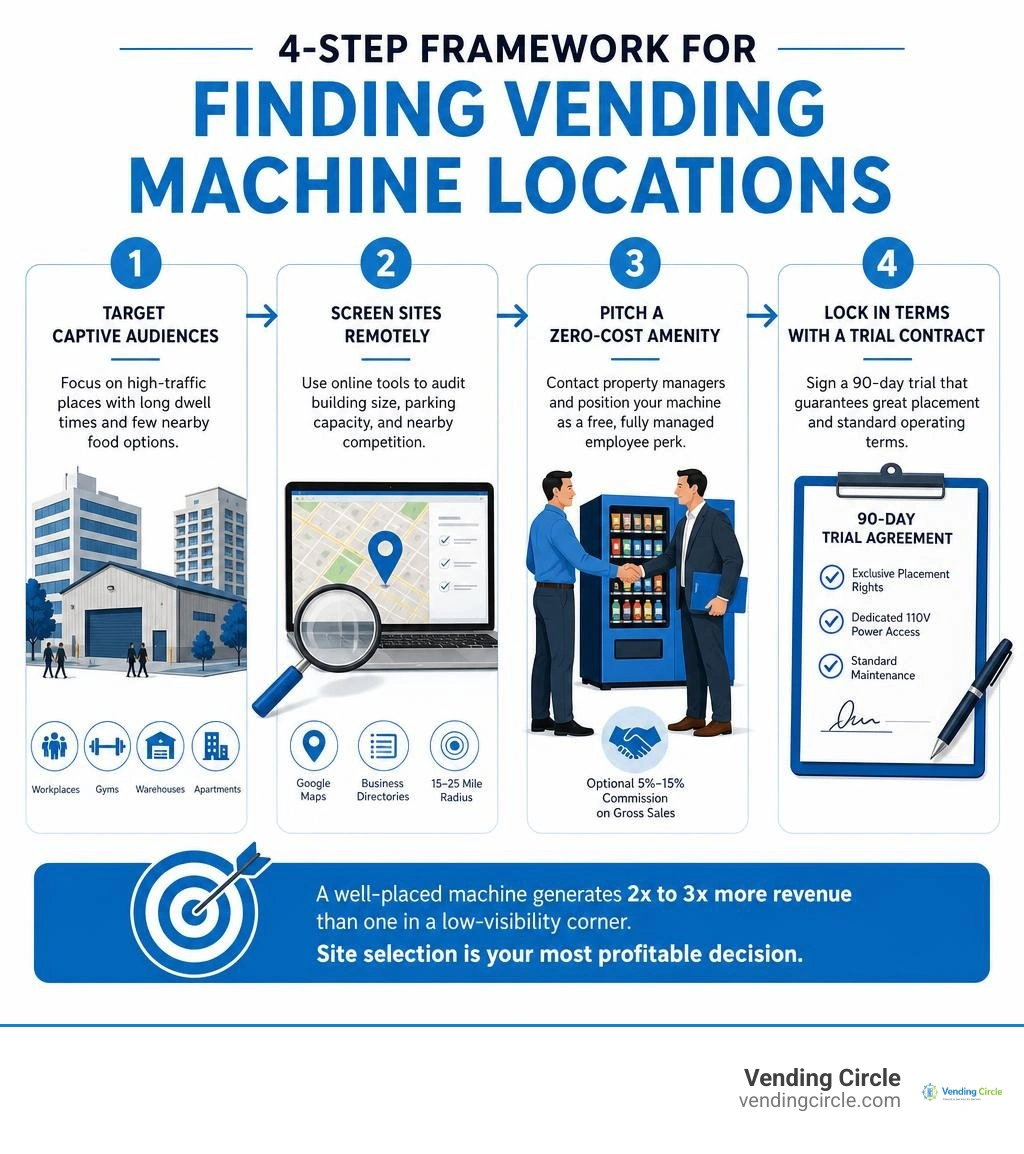
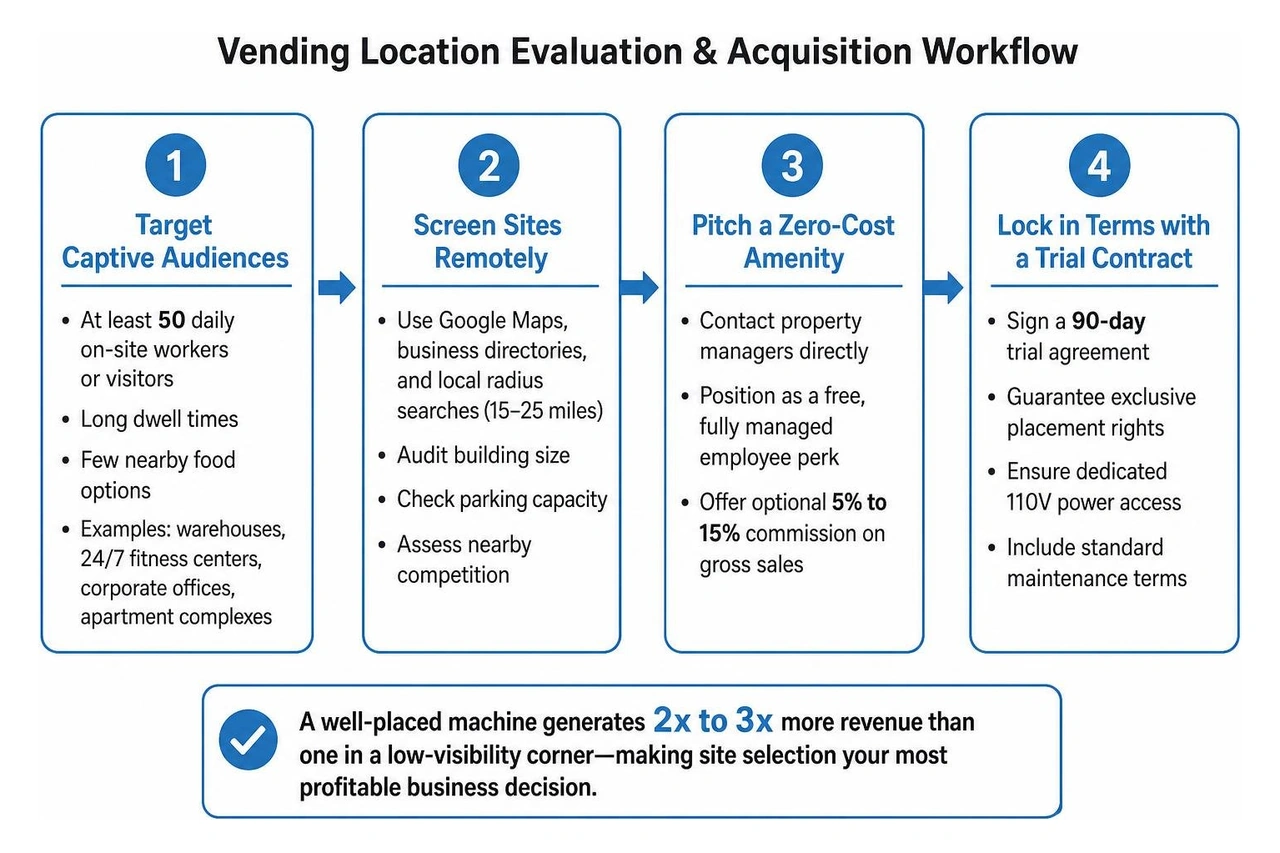
To succeed when finding vending machine locations, follow this four-step strategy to secure high-traffic, high-yield placements:
- Target captive audiences: Focus on venues with at least 50 daily on-site workers or visitors with long dwell times and few nearby food options (such as warehouses, 24/7 fitness centers, corporate offices, and apartment complexes).
- Screen sites remotely: Use Google Maps, business directories, and local radius searches (15 to 25 miles) to audit building size, parking capacity, and nearby competition.
- Pitch a zero-cost amenity: Contact property managers directly and position your machine as a free, fully managed employee perk, offering an optional 5% to 15% commission on gross sales.
- Lock in terms with a trial contract: Sign a 90-day trial agreement that guarantees exclusive placement rights, dedicated 110V power access, and standard maintenance terms.
A well-placed machine generates 2x to 3x more revenue than one in a low-visibility corner, making site selection your most profitable business decision.
I'm Manuel Mojica, founder of Vending Circle and former operator of MM Healthy Vending, where I spent years developing proven systems for finding vending machine locations across competitive markets. From my background as a U.S. Air Force Cyber Operations Officer, I help operators turn location scouting from random guesswork into an efficient, repeatable route-building engine.
Finding vending machine locations terminology:
The Operator's Blueprint for Finding Vending Machine Locations
Securing profitable spots is the single most important lever in your vending business. You can own the most advanced hardware in the world, but if your machine sits in an empty hallway where three people walk past each day, it will gather dust instead of cash.
According to recent vending machine industry statistics 2026, the global vending machine market continues to expand rapidly after crossing $51.91 billion. However, top-performing operators capture the lion's share of revenue by focusing on placement quality rather than sheer machine count. A well-placed unit in a high-traffic, high-dwell facility regularly generates 2x to 3x more revenue than a sub-optimal placement. In prime corporate or industrial locations, individual machines can generate $1,200 to $1,600 or more in monthly gross revenue with an annual return on investment between 24% and 36%.
To achieve those returns, we look at prospective sites through two primary lenses: foot traffic volume and dwell time. High foot traffic means a steady flow of potential buyers, while high dwell time—such as employees stuck in breakrooms or clients waiting in service lounges—creates a true captive audience.
Step-by-Step Process for Finding Vending Machine Locations Locally
When we build out a new territory, we treat location scouting as a structured pipeline rather than driving around hoping for luck.
- Define Your Anchor Radius: Set a tight search radius of 15 to 25 miles around your home or warehouse. Keeping your accounts clustered prevents excessive fuel costs and driving time during weekly restocking runs.
- Prioritize Target Zip Codes: Look for commercial, industrial, and high-density residential zip codes. We focus on business parks, manufacturing corridors, and multi-tenant office complexes.
- Screen Leads via Satellite and Street View: Open Google Maps and switch to Street View. Check the size of the parking lot, look at employee vehicle volume, assess building entrances, and see if there is a convenience store or fast-food drive-through directly next door. If workers can walk 30 seconds to a gas station, vending demand drops.
- Identify Qualified vending machine locations: Use local business directories, chamber of commerce listings, and LinkedIn to verify business categories and headcount.
- Apply the 50-Person Baseline: As a general operational rule, target facilities with at least 50 full-time on-site employees or constant daily visitor turnover. This captive population ensures enough daily transactions to turn over fresh inventory and hit your profit margins.
Modern Tools and Software for Finding Vending Machine Locations
Today's operators don't have to rely entirely on yellow pages and guesswork. We leverage digital tools to uncover location gaps and manage outreach:
- Digital Mapping Apps: Consumer-facing tools like VendMap: Find Vending Machines allow operators and consumers to track active machines, check community reports, and see where vending density is sparse.
- Specialized Route Intelligence Platforms: Using software like VendBuddy — Vending Route Intelligence helps operators analyze zip-code demographics, score foot traffic potential, discover verified contact records, and organize follow-up cadences.
- Telemetry and Remote Monitoring: Modern machines equipped with telemetry allow us to track sales velocity per SKU in real time, giving us concrete data on whether an installed location is meeting its revenue targets.
Most Profitable Placement Categories and Demographics in 2026
Matching the right inventory to the right venue demographic is essential for high inventory turnover. Let's look at how the top vertical categories perform across foot traffic, customer dwell time, and long-term stability when scouting great locations for vending machines.
| Location Vertical | Foot Traffic Density | Average Dwell Time | Profitability Potential | Churn / Turnover Risk | Recommended Product Assortment |
|---|---|---|---|---|---|
| Manufacturing & Warehouses | Very High (50–300+ staff) | High (8–12 hr shifts) | ⭐️⭐️⭐️⭐️⭐️ (High) | Low | Energy drinks, cold sodas, pastries, chips, beef jerky, PPE |
| Corporate Offices & Call Centers | Moderate to High | High (4–8 hrs) | ⭐️⭐️⭐️⭐️ (Mod-High) | Moderate (Hybrid shifts) | Sparkling water, cold brew, healthy snacks, protein bars, fresh meals |
| Multi-Family Apartments | Moderate (Constant) | High (Residents) | ⭐️⭐️⭐️⭐️ (Mod-High) | Very Low | Quick snacks, sodas, essentials, micro-market quick bites |
| Gyms & Fitness Centers | High (Active flow) | Moderate (1–2 hrs) | ⭐️⭐️⭐️⭐️ (Mod-High) | Low to Moderate | RTD protein shakes, pre-workout drinks, electrolyte water, protein bars |
| Hospitals & Medical Centers | High (24/7 shifts) | Very High (Patients/Staff) | ⭐️⭐️⭐️⭐️⭐️ (High) | Very Low | Cold coffee, fresh sandwiches, chips, energy drinks, healthy snacks |
| Auto Repair & Service Lounges | Low to Moderate | Moderate (45–90 min) | ⭐️⭐️⭐️ (Moderate) | Low | Canned beverages, candy bars, classic snack packs |
Corporate Offices, Call Centers, and Coworking Spaces
Office parks, call centers, and coworking hubs house white-collar professionals looking for mid-day energy boosts and healthy alternatives. Because professionals prioritize convenience during quick breaks, you can introduce modern micro markets and smart AI coolers with computer-vision checkout.
Data shows that AI-powered machines with open-door computer vision checkout average $4.50+ per transaction, compared to roughly $1.50 on traditional closed-door spiral machines. Office workers are happy to pay premium prices for iced matcha, cold brew coffee, kombucha, artisan salads, and gourmet protein bars.
To capture this tech-forward demographic, make sure you buy a vending machine with card reader capabilities that support Apple Pay, Google Wallet, and contactless credit cards, as cashless transactions make up over 75% of modern vending revenue.
Warehouses, Manufacturing Facilities, and Industrial Parks
Industrial plants, distribution centers, and manufacturing facilities remain some of the highest-grossing placements in the industry. These environments feature:
- High employee headcounts working 8- to 12-hour shifts.
- Strict break schedules (often 15 to 30 minutes) that make leaving the building for food impossible.
- 24/7 multi-shift operations where the third shift has zero open cafeteria or restaurant options.
In our vending machine routes guide 2026, we highlight how industrial placements benefit from high-calorie, quick-energy items: energy drinks, bottled juices, pastries, nuts, salty chips, and hearty microwavable noodles. Some operators also generate consistent margins by dedicating bottom trays to safety glasses, work gloves, and earplugs.
Residential Communities, Gyms, and Healthcare Settings
- Multi-Family Apartment Complexes: Placing a combination snack and drink machine inside an apartment clubhouse or residential laundry room creates an immediate convenience hub. Residents waiting for wash cycles or returning late from work appreciate late-night access to quick drinks and snacks.
- Gyms and Fitness Facilities: 24/7 fitness centers and boutique athletic clubs offer captive audiences focused on performance and recovery. Stock these machines with ready-to-drink whey isolate shakes, branched-chain amino acids (BCAAs), zero-sugar hydration drinks, and clean protein bars.
- Healthcare Facilities and Urgent Cares: Hospitals never sleep. Between doctors, nurses working 12-hour shifts, and visiting family members in waiting rooms, machines in hospital corridors generate steady, around-the-clock volume.
How to Pitch Property Managers and Negotiate Placement Agreements
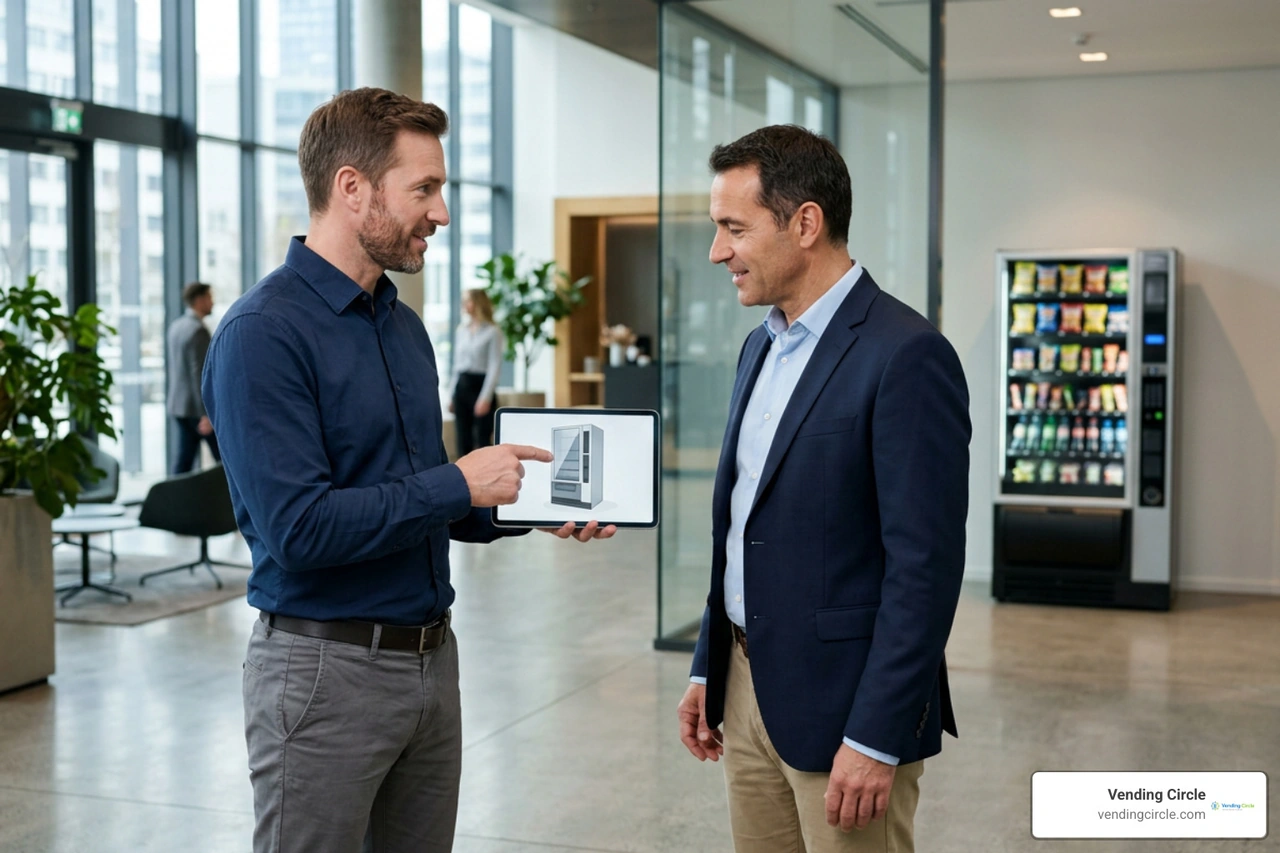
When pitching property managers and business owners, avoid approaching them like a salesperson trying to extract money. Instead, frame your machine as a free, full-service employee amenity.
Property managers want happy tenants, and business owners want productive staff who don't spend 20 minutes driving to a corner store for an afternoon soda. When you present a modern, spotless vending setup that costs them nothing, handles all maintenance, and improves worker satisfaction, the decision becomes straightforward.
Negotiation Framework and Revenue Sharing
When formalizing terms in your vending machine agreements, keep these financial models in mind:
- The Zero-Commission Amenity Model (Preferred): For locations with 50 to 150 employees, pitch the machine as a 100% free amenity. Explain that you cover machine investment, delivery, repairs, inventory, and insurance. The property provides the 110V wall outlet, and their employees get reliable refreshments.
- Standard Revenue Share (5% to 15%): If a high-volume location (such as a busy warehouse or apartment complex) requests a financial return, offer a tiered commission of 5% to 15% of gross sales paid quarterly.
- Large Retail & Chain Accounts (10% to 20%): Corporate chain stores or massive regional facilities often mandate 10% to 20% gross revenue splits to grant space.
- The 90-Day Trial Period: If a property manager is hesitant or worried about clutter, propose an initial 90-day trial period. This lowers their perceived risk: if they are unhappy with the machine or service after three months, you remove the unit at zero cost to them.
- Exclusivity Clauses: Always include an exclusivity clause in your placement agreement stating that your business is the sole provider of unattended vending or micro-market services in that designated space.
Overcoming Common Objections and Unseating Competitors
Many great locations already have a vending machine on site. However, existing operators frequently neglect their routes, leaving behind broken bill acceptors, expired snacks, and empty shelves.
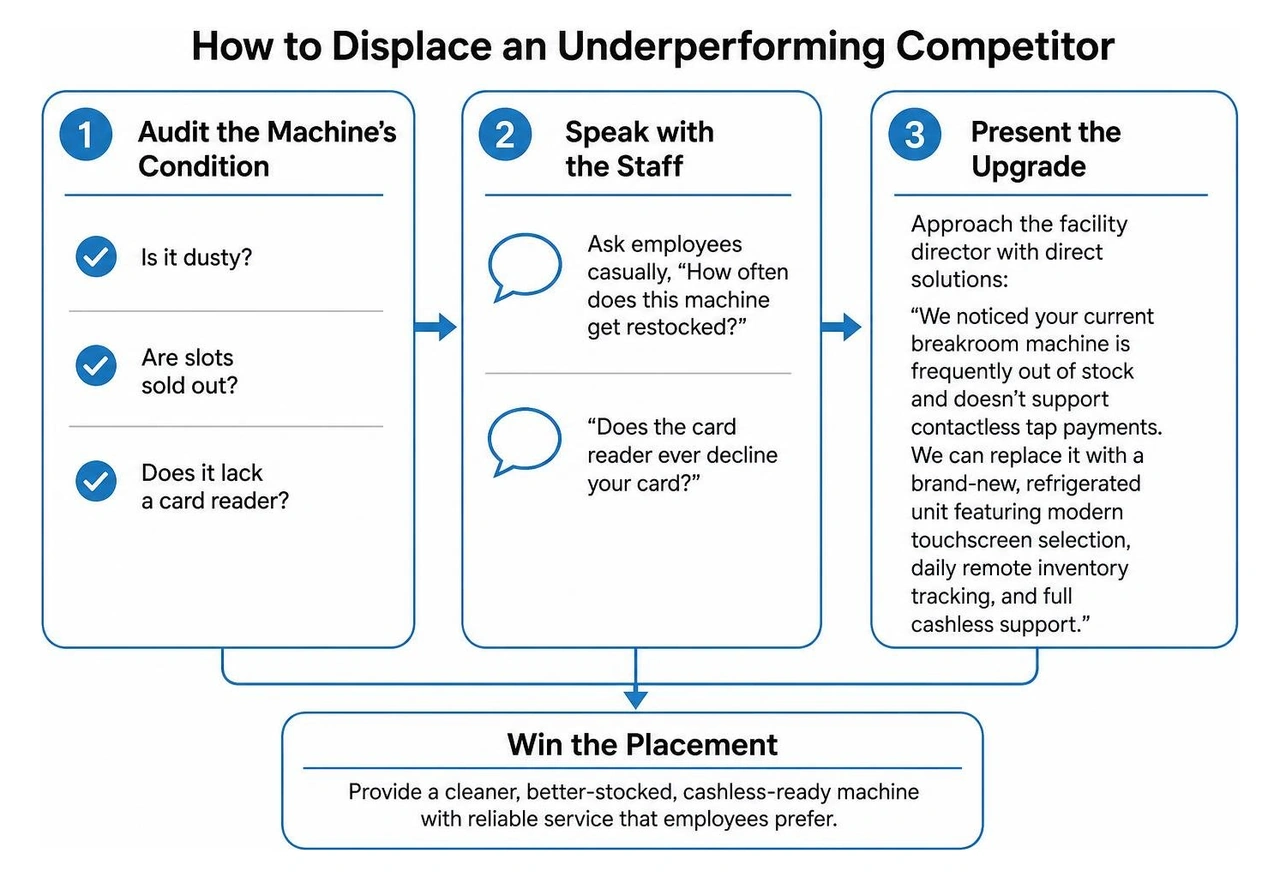
When you spot an incumbent machine:
- Audit the Machine's Condition: Is it dusty? Are slots sold out? Does it lack a card reader?
- Speak with the Staff: Ask employees casually, "How often does this machine get restocked?" or "Does the card reader ever decline your card?"
- Present the Upgrade: Approach the facility director with direct solutions: "We noticed your current breakroom machine is frequently out of stock and doesn't support contactless tap payments. We can replace it with a brand-new, refrigerated unit featuring modern touchscreen selection, daily remote inventory tracking, and full cashless support."
- Offer Seamless Transitions: Explain that if they provide notice to their current vendor, you can deliver and install your equipment on the exact day the old machine is picked up, eliminating breakroom downtime.
If you are upgrading an older mechanical machine yourself, adding a card reader to a vending machine can lift overall sales by 30% to 50% overnight by capturing cashless consumers who don't carry physical paper currency.
Sourcing Strategy: DIY Outreach vs. Professional Locators
Operators generally secure accounts using one of two acquisition models:
- DIY Cold Outreach & In-Person Walk-Ins: This method involves compiling local zip-code business lists and reaching out through direct phone calls, targeted emails, and walk-in visits. While it requires time and consistency, DIY outreach builds strong direct relationships with property managers and costs very little. Data shows an operator who conducts consistent daily outreach secures an average of 3 or more new locations after 30 days.
- Third-Party Locator Services: Professional locators or curated lead-list platforms charge flat fees (ranging from $50 to $500+ per qualified lead or placement) to match operators with interested property owners. If you use a locator service, verify that their placement agreements include written exclusivity and guaranteed minimum foot-traffic requirements.
- Buying Existing Routes: Instead of scouting from scratch, some operators prefer buying an active route with established cash flow. You can learn how to buy vending machine routes safely by auditing past tax returns and reviewing existing routes for sale vending machine listings.
Legal Requirements, Permits, and Site Evaluation Logistics
Before rolling a 700-pound refrigerated machine into a building, make sure you complete your legal and logistical checklist:
- Business Entity & Licensing: Register your business entity (such as an LLC) with your state and obtain a general local business license.
- Seller's Permit & Sales Tax ID: Obtain a sales tax permit through your state's department of revenue to collect and remit sales tax on beverage and snack sales.
- Health Department Compliance: If you operate open-food micro markets or machines selling perishable items (like fresh deli sandwiches or dairy products), verify whether your local county health department requires an operating permit or specific machine temperature lockouts.
- General Liability Insurance: Most commercial landlords mandate proof of insurance before granting building access. Maintain a commercial general liability policy ($1,000,000 to $2,000,000 coverage limits) naming the property owner as an additional insured.
- ADA Accessibility Compliance: Ensure that buttons, coin slots, card readers, and delivery bins are positioned between 15 and 48 inches from the floor to meet Americans with Disabilities Act (ADA) guidelines in public spaces.
- Physical Site Survey:
- Electrical Access: Standard vending machines require a dedicated, grounded 110V–120V outlet on a 15–20 amp circuit. Avoid running long extension cords across open walkways.
- Doorway Clearances: Measure all exterior doorways, elevators, and narrow interior hallways. Standard combination machines are 30 to 39 inches deep and need wide clearances to move into place safely.
Troubleshooting, Optimizing, or Relocating Underperforming Placements
Every operator encounters a location that fails to hit revenue expectations. The key is catching underperformance early rather than absorbing monthly losses.
Understand the "Novelty Effect"
When a brand-new vending machine arrives at an office or warehouse, sales spike during the first 30 to 60 days as employees explore the new items. After two months, sales settle into a sustainable baseline. If a machine struggles to break even during its initial 60-day honeymoon period, it is unlikely to succeed long-term without major changes.
The 60-Day Optimization Audit
Before pulling a machine, run through this four-step diagnostic:
- Audit Product Mix: Are certain items sitting until their expiration dates? Pull slow-moving SKUs and replace them with proven high-margin staples (like cold energy drinks, well-known chips, and chocolates).
- Review Pricing Strategy: Aim for a gross product margin between 60% and 70%. If margins are compressed, reprice lower-margin candy bars and specialty drinks upward.
- Improve Micro-Positioning: Is the machine hidden around an obscure corner? Speak with the facility manager about relocating the machine adjacent to the main breakroom entrance, cafeteria line, or central elevator lobby.
- Add QR Feedback Codes: Place a bright sticker on the machine glass with a QR code stating, "Want your favorite snack stocked? Scan here to tell us!" Giving staff a direct voice in inventory selection builds immediate loyalty.
If a machine consistently generates under $300 in gross monthly revenue after 90 days and optimization attempts fail, exercise your contract exit clause, pull the machine, and redeploy it to a higher-potential location on your list. If you want ongoing advice on managing tricky placements, learning how to find a vending machine mentor can help you avoid costly operational mistakes.
Frequently Asked Questions About Finding Vending Locations
How do I legally secure permission to place a vending machine?
You secure permission by having the property owner or authorized facility director sign a written vending location placement agreement. On private property (offices, residential buildings, warehouses), written authorization from the owner or property management firm is legally sufficient. For public property (such as city parks, municipal transit stations, or public school campuses), you must apply for designated municipal permits or participate in official local government vendor bidding processes.
What is the typical commission paid to property owners?
Commission rates generally range from 0% to 15% of gross machine sales. Smaller businesses and office environments (50–100 employees) typically receive 0% commission in exchange for the machine being provided as a free employee amenity. High-traffic residential complexes and industrial plants usually negotiate between 5% and 15%, while large national retail chains often require 10% to 20% of gross revenue.
How many daily visitors does a location need to be profitable?
A profitable traditional vending placement generally requires a captive audience of at least 50 full-time on-site employees or a steady daily flow of 100+ visitors with extended dwell time (such as car service lounges or medical clinic waiting rooms). High customer dwell time increases transaction conversion rates, allowing machines to thrive even with moderate foot traffic.
Conclusion
Building a profitable vending route comes down to disciplined site selection, clear value propositions, and continuous inventory optimization. By targeting facilities with high dwell times, screening prospective buildings remotely, and presenting your equipment as a clean, reliable, zero-cost amenity, you can secure placements that produce consistent cash flow for years to come.
Whether you are placing your very first machine or scaling a multi-vehicle route, having the right industry resources, supplier discounts, and operator community behind you makes all the difference. Explore our selection of modern commercial vending machines and join the Vending Circle network to access direct equipment pricing, location pitch templates, and ongoing weekly mentorship.