Starting a Vending Business: Build the Route Before You Buy the Machine
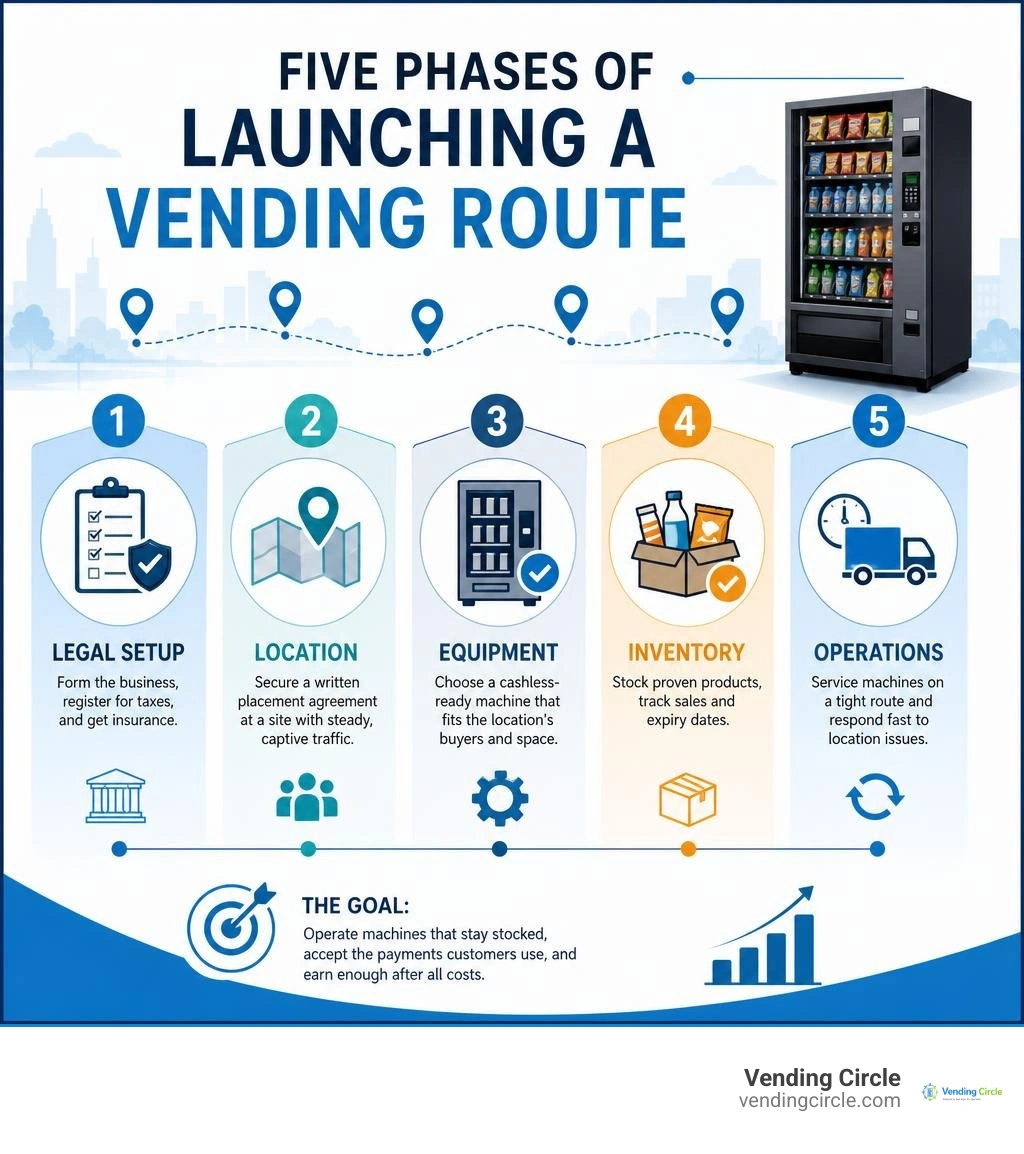
Starting a vending business is simplest when you follow the right order: choose a legal setup, prove the location, match the machine and products to demand, then build a repeatable restocking system. Do not buy equipment first and hope a good location appears later.
A practical first route looks like this:
- Form the business, register for required tax accounts, and get insurance.
- Secure a written placement agreement at a site with steady, captive traffic.
- Choose a cashless-ready machine that fits the location's buyers and available space.
- Stock proven products, track sales and expiry dates, and service machines on a tight route.
Vending can be a solid small business, but it is not passive income. Machines need inventory, cleaning, repairs, payment monitoring, and fast responses when a location has a problem. The upside is that a well-run route can scale: typical machines may generate roughly $300 to $500 in monthly sales, while the broader U.S. convenience services industry generated an estimated $31.1 billion in 2025.
The goal is not to own the most machines. It is to operate machines that stay stocked, accept the payments customers use, and earn enough after product costs, commissions, travel, and downtime.
I'm Manuel Mojica, founder of Vending Circle and owner of MM Healthy Vending. My experience with starting a vending business, sourcing supplies, and operating machines helps inform this guide's focus on practical decisions that keep a route profitable.
Starting a vending business word list:
Essential Steps for Starting a Vending Business Legally
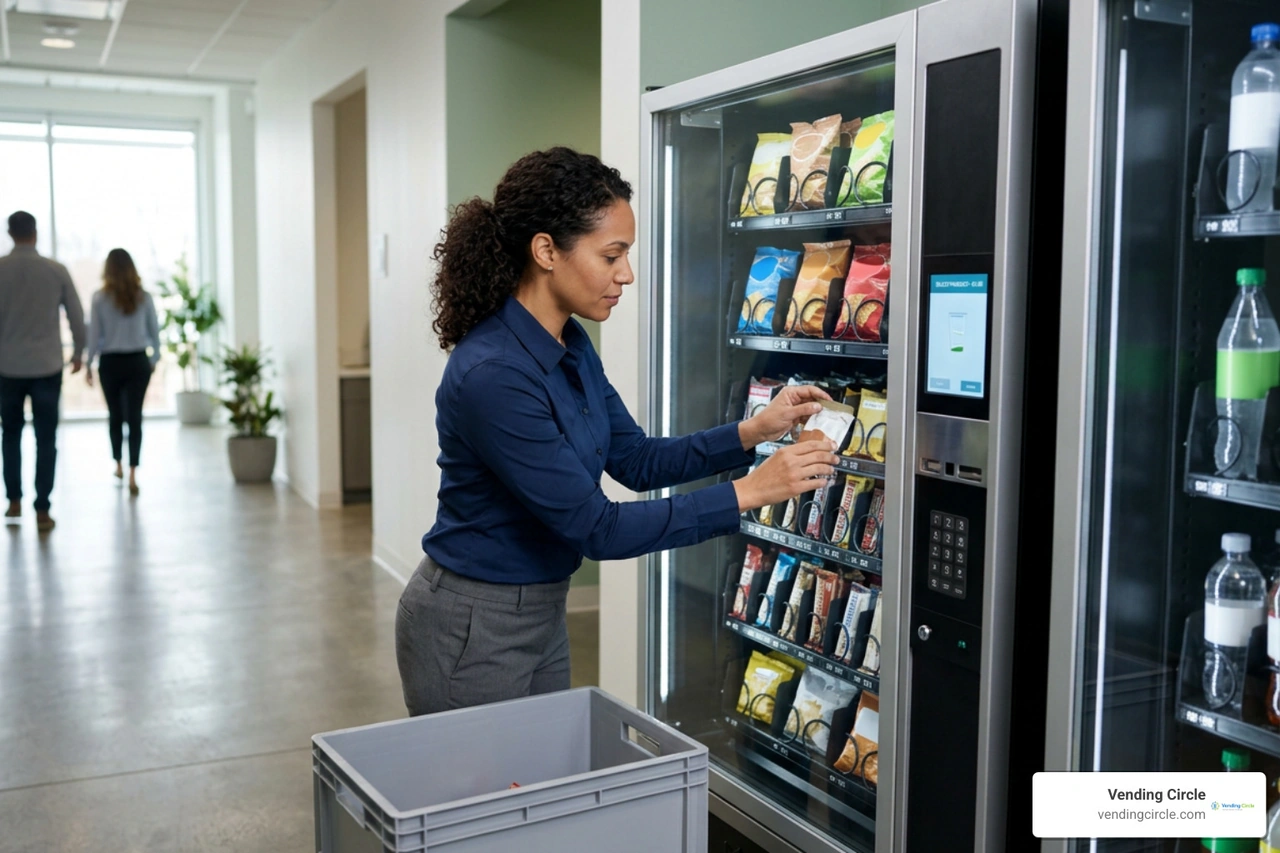
Getting the administrative structure dialed in early prevents costly fines, forced equipment removals, and personal liability exposure. Setting up your business properly typically costs between $250 and $800 during your first year. Taking shortcuts on corporate filings or operating without clear permits undermines your credibility when approaching established commercial properties. Following a structured guide like How to Start a Vending Machine Business Step by Step | Stripe ensures you do not miss foundational compliance items.
Choosing an LLC vs. Sole Proprietorship
While operating as a sole proprietorship might seem simple, placing heavy mechanical equipment on third-party commercial property makes a Limited Liability Company (LLC) the sensible choice. An LLC establishes a legal boundary separating your personal assets (such as your home, vehicle, and personal savings) from business debts and slip-and-fall claims.
State LLC formation filing fees average $132 nationally, ranging from $35 in Montana up to $520 in Massachusetts. Always register your entity in your home state where the machines physically sit to avoid paying duplicate foreign entity fees. Maintain this liability shield by opening a dedicated business bank account and avoiding any mixing of personal and commercial funds. Reviewing current vending machine industry statistics 2026 highlights how structured operations consistently outperform informal setups across commercial venues.
Licensing, Permits, and Business Insurance
Operating legally requires obtaining basic federal, state, and municipal registrations:
- Federal Employer Identification Number (EIN): Obtain this nine-digit tax identifier for free directly via the official IRS portal to open commercial bank accounts and establish vendor accounts.
- State Seller’s Permit: Register with your state revenue department to collect and remit local sales taxes on retail transactions.
- Local Business Licenses & Decals: Most city or county clerk offices require a general operating permit, along with specific per-machine registration decals in select jurisdictions.
- Health Department Permits: Selling pre-packaged snack foods and sealed canned drinks rarely requires a commercial food handler's license, though fresh perishable items or open-cup coffee makers demand local health inspection clearance.
Commercial property managers require a Certificate of Insurance (COI) naming them as an additional insured before allowing equipment on-site. Securing a Business Owner Policy (BOP)—combining general liability ($1M per occurrence / $2M aggregate) and commercial property coverage—averages a median cost of $58 per month according to Insureon data.
Intellectual Property and Placement Contracts
Under the legal principle known as the First Sale Doctrine, you have the right to resell authentic, legally purchased packaged goods (such as canned sodas and brand-name snacks) at whatever price point you choose. However, you cannot use proprietary trademark logos, character illustrations, or copyrighted branding on your machine’s exterior vinyl wrap or digital display screens without explicit licensing permissions. Keep your aesthetic clean with neutral themes or your own distinct brand.
Never place equipment based on a verbal handshake. Every location requires written vending machine agreements outlining:
- Detailed revenue-share commission structures or flat fee agreements.
- Clear electrical utility and access rights.
- Explicit statements verifying your ownership of the equipment.
- Exclusivity clauses barring direct competitor machines on the same floor.
- A standard 30-to-60-day early termination notice window.
Scouting and Securing High-Profit Vending Locations
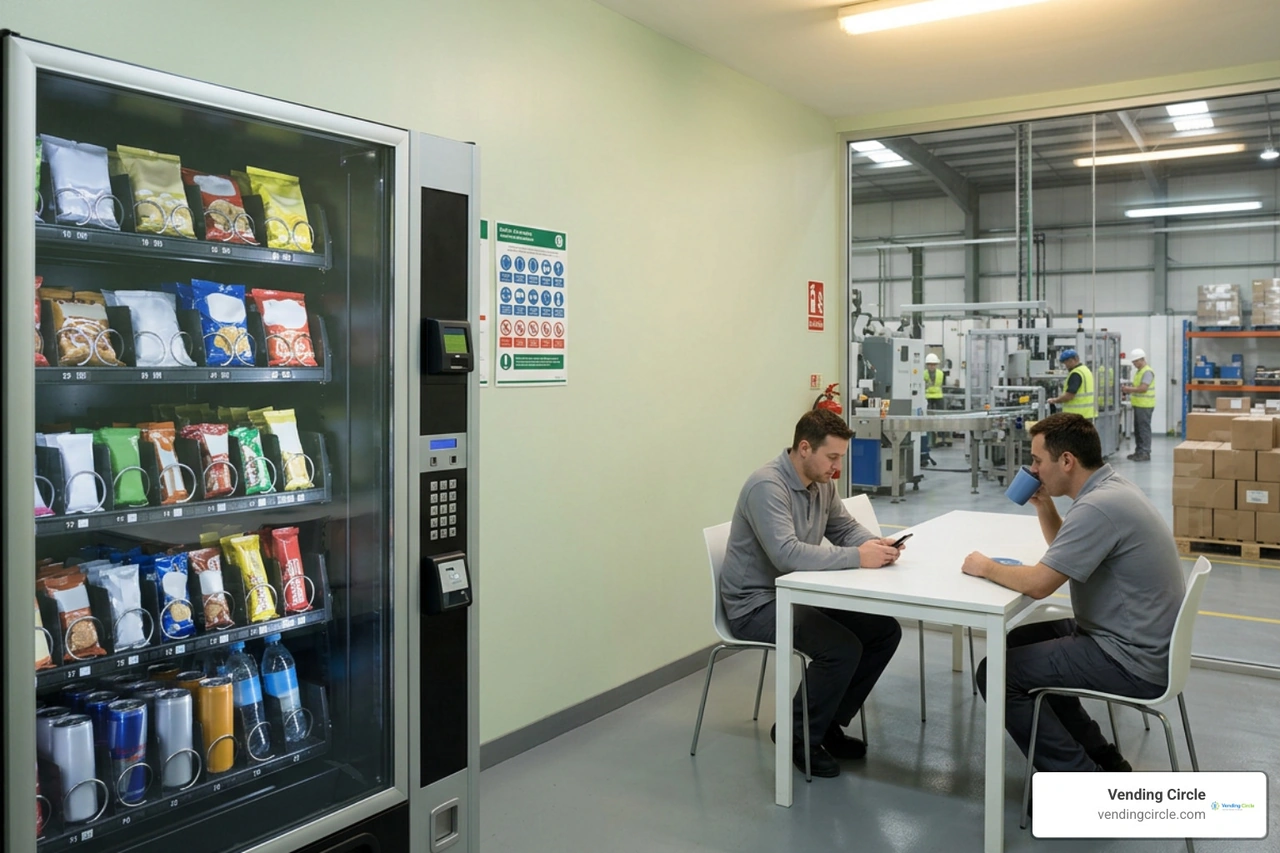
A top-tier machine placed in an empty corridor will generate losses, while a modest refurbished unit inside a bustling warehouse breakroom can turn steady profits. The core metric is captive foot traffic: spaces where people remain on-site for extended hours with limited walk-out alternatives.
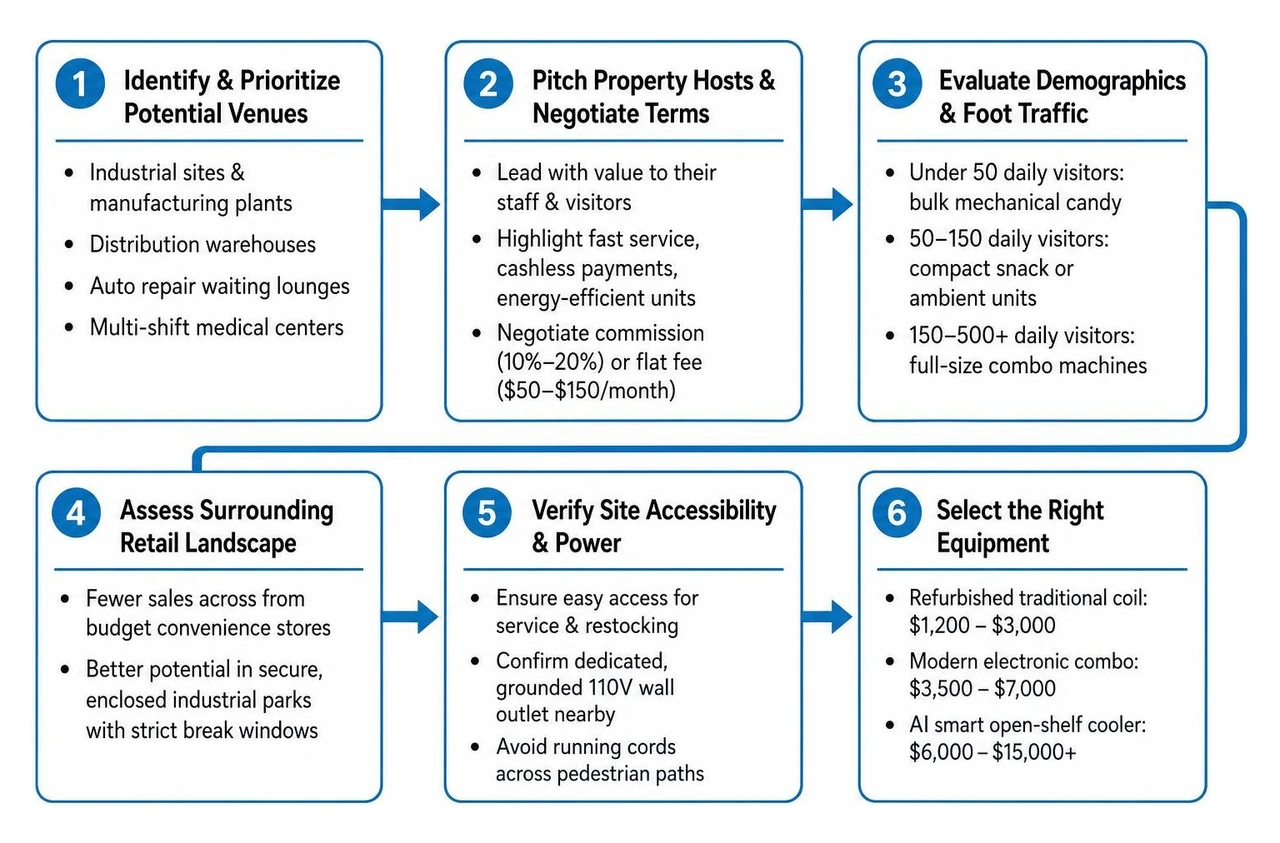
Prioritize industrial sites, manufacturing plants, distribution warehouses, auto repair waiting lounges, and multi-shift medical centers. For a deep dive into high-traffic site categories, review our guide on great locations for vending machines.
Pitching Property Hosts and Negotiating Commission Terms
When pitching prospective venues, lead with the value you bring to their staff and visitors rather than focusing on your own equipment. Emphasize fast service response times, cashless card readers, and modern, energy-efficient units.
Standard industry commission rates range between 10% and 20% of monthly gross sales, while smaller venues often prefer a steady flat placement fee between $50 and $150 per month. Some blue-collar breakrooms may not demand commissions at all if they view the machine as an employee amenity. Prepare a professional single-page pitch document covering your insurance certification, product variety, and maintenance guarantees. You can refine your venue search using our breakdown of vending machine locations.
Evaluating Venue Demographics and Foot Traffic
Examine foot traffic density, visitor dwell times, and site accessibility:
- Under 50 daily visitors: Rarely profitable for traditional refrigerated combo machines; best suited for bulk mechanical candy dispensers.
- 50 to 150 daily visitors: Viable for compact snack or ambient dry-goods units.
- 150 to 500+ daily visitors: The prime sweet spot for full-size snack, cold drink, and fresh food combination hardware.
Check the surrounding retail landscape. If a budget convenience store sits directly across the parking lot, your sales will be lower than in a secure, enclosed industrial park with strict 15-minute break windows. Ensure the site features a dedicated grounded 110V wall outlet within reasonable distance so you never have to run power cords across pedestrian paths.
Equipment Selection, Wholesale Sourcing, and Technology
Selecting equipment requires balancing upfront hardware costs with operational reliability.
| Machine Category | Typical Cost Range | Best Suited For | Key Advantages | Maintenance Considerations |
|---|---|---|---|---|
| Refurbished Traditional Coil | $1,200 – $3,000 | Entry-level routes, dry snacks, standard soda cans | Low upfront capital, simple mechanics | Inspect coin validator, motor spirals, and bill drop |
| Modern Electronic Combo | $3,500 – $7,000 | Mixed breakrooms, drinks & snacks combined | Maximizes small footprints, accepts card readers natively | Monitor dual-temperature zones and drop sensors |
| AI Smart Open-Shelf Cooler | $6,000 – $15,000+ | High-end corporate suites, premium fresh meals | High transaction values, frictionless user checkout | Requires active internet and solid camera/shelf calibrations |
Startup Costs and Capital Planning for Starting a Vending Business
Launching a vending route generally requires between $2,000 and $10,000 in startup capital per machine, depending on whether you purchase used equipment or brand-new smart hardware. With typical machines generating $300 to $500 per month, standard break-even timelines range from 6 to 18 months.
Startup capital planning resources like the How to Start a Vending Machine Route Business | ZenBusiness guide and our vending machine pricing guide 2026 help track these upfront capital figures.
Sourcing Inventory and Maximizing Margins
Source pre-packaged snacks and drinks through wholesale warehouse clubs (such as Sam’s Club or Costco) or regional food distribution networks. Aim for gross profit margins between 50% and 65% by applying a 2x to 2.5x markup over wholesale unit acquisition costs.
For example, purchasing 20 oz soda bottles at $0.85 and pricing them at $2.00 delivers solid margins that comfortably absorb payment processing fees, site commissions, and fuel overhead. Keep inventory fresh by reviewing our sourcing methods for vending machine products wholesale.
Modern Telemetry, Cashless Readers, and Network Connections
Cashless payment devices ($200 to $400 per unit) are essential. Modern consumers rarely carry loose change, and card-ready units routinely show 30% to 50% higher sales volume compared to cash-only machines.
Integrating telemetry hardware allows you to monitor inventory levels, track real-time revenue, and catch mechanical errors from your smartphone. If you are shopping for hardware, look to buy a vending machine with card reader pre-installed, and ensure your deployment site maintains a steady vending machine network connection via internal 4G/5G cellular modems.
Route Operations, Restocking Logistics, and Maintenance
Running a successful vending operation depends on building repeatable field routines. Cluster machine locations within tight geographic radiuses—ideally within a 15-to-20-minute drive of one another—to minimize vehicle fuel costs, traffic delays, and vehicle wear. Keep a dedicated tool bag in your route vehicle containing basic spare parts: extra coil spirals, replacement drop sensors, basic wiring harnesses, cleaning supplies, and a multimeter.
Route Optimization and Expiration Management
Apply strict First-In, First-Out (FIFO) stocking procedures during every restock visit. Move older stock to the front of the coils while loading fresh inventory into the rear slots to minimize waste.
Use dedicated route management software alongside our practical methods for vending machine inventory management to plan your driving routes based on live machine inventory alerts rather than rigid calendar guesses. Wipe down the exterior glass, clean card readers, and vacuum cooling condenser coils every quarter to keep refrigeration units running efficiently.
Key Mistakes to Avoid When Starting a Vending Business
Avoid these operational pitfalls:
- Equipment-First Trap: Buying machines before securing location contracts leaves you with idle hardware taking up garage space.
- Unwritten Handshake Deals: Operating without signed agreements leaves you vulnerable to sudden removals or aggressive commission disputes.
- Ignoring Telemetry Data: Failing to track sales data remotely leads to unnecessary travel for near-empty machines or lost revenue from stockouts.
- Overlooking Emergency Restocks: Running out of high-margin items over long weekends hurts customer loyalty; implement a reliable system for vending machine emergency restock situations.
Frequently Asked Questions About Starting a Vending Route
How much money does an average vending machine generate monthly?
A traditional vending machine placed in a solid commercial or industrial location averages between $300 and $500 in gross monthly revenue. Top-tier, high-foot-traffic sites can generate upwards of $1,000 monthly, while low-traffic placements might struggle to reach $150. Net margins generally fall between 40% and 55% after accounting for wholesale product costs, location commissions, payment processing charges, and route travel.
Do you need a special food license to operate snack and drink machines?
Standard pre-packaged snacks (chips, candy) and sealed beverages (soda cans, bottled water) generally do not require specialized food preparation licenses or commercial kitchen permits. However, you will still need a general local business license, a state sales tax permit, and, in some jurisdictions, a county health department decal. Dispensing open fresh food, salads, sandwiches, or open-cup drinks does require formal local health department approval.
Can a vending route be operated as a part-time side hustle?
Yes. A small route of 2 to 5 machines can be operated during evenings and weekends alongside a regular full-time job, requiring roughly 3 to 6 hours of labor per week for inventory purchasing, restocking, and machine cleaning. Expanding beyond 10 to 15 machines generally transitions the business into a full-time venture requiring structured weekday service schedules and dedicated route transportation.
Conclusion
Scaling a vending machine route requires a steady focus on high-traffic locations, reliable cashless hardware, and well-organized restocking routines. By securing locations first and relying on real-time data to drive inventory decisions, you protect your startup capital and build predictable monthly cash flow.
At Vending Circle, we support operators through every phase of route expansion—from weekly live Q&A sessions and practical operational guides to manufacturer-direct equipment pricing. If you are ready to expand your route with dependable hardware, explore our commercial machines to find the right fit for your target locations.