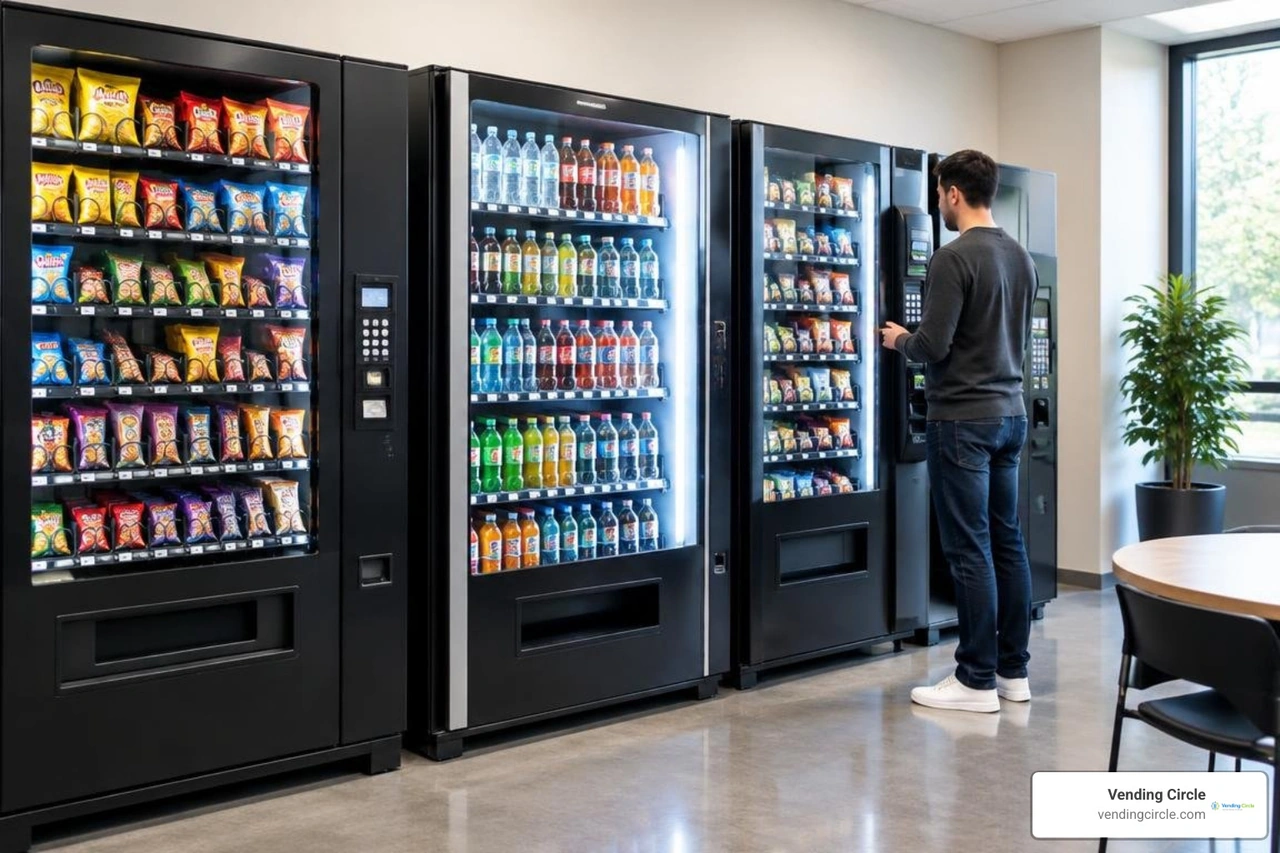
How to Find Wholesale Vending Machine Products Without Overpaying
To find reliable wholesale vending machine products, start with case prices from commercial food distributors, wholesale clubs, and manufacturer-direct programs. Compare the cost per item after shipping, minimum order size, expiration dates, and delivery times. Then buy a small test order of snacks and drinks that fit your machines and your customers. A low case price is no bargain if products expire before they sell.
I’m Manuel Mojica, founder of Vending Circle and former owner of MM Healthy Vending. My work sourcing wholesale vending machine products shaped Vending Circle’s focus on helping operators share practical advice and access manufacturer-direct pricing.
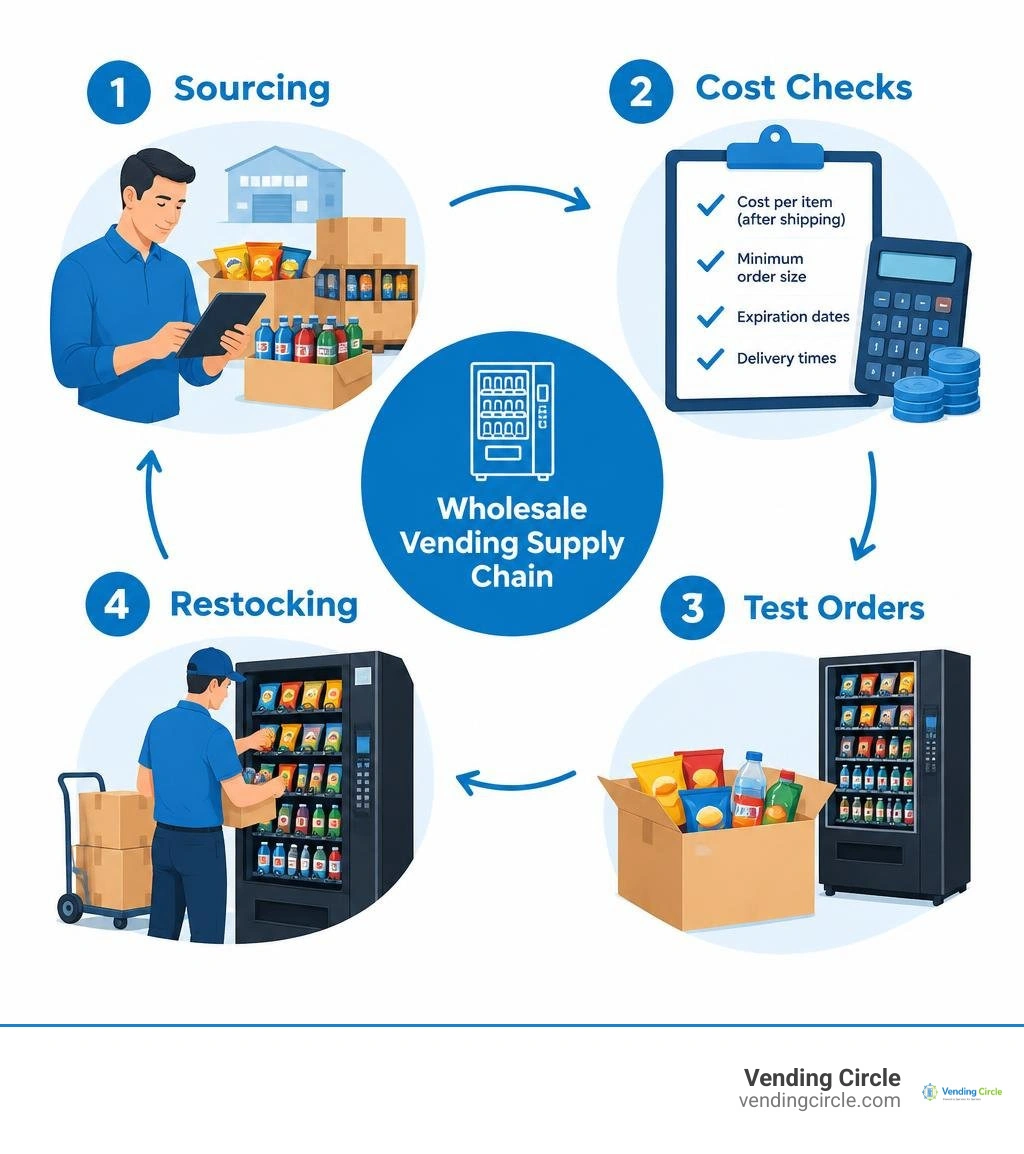
Simple wholesale vending machine products glossary:
Top Categories of Wholesale Vending Machine Products to Stock
Building a profitable route starts with selecting product categories that balance customer demand with healthy profit margins. Vending machines thrive on impulse purchases. When someone approaches a machine in a breakroom or waiting area, they want an immediate treat or quick hydration. Catering to these cravings requires a strategic mix of individually wrapped snacks, bottled drinks, and confections.
Every product category carries distinct shelf-life profiles and margin expectations. While drinks generate consistent daily sales volume, bulk confections and novelty items often provide the highest percentage return per unit sold.
| Product Category | Typical Wholesale Cost Per Unit | Average Vend Price | Gross Margin Range | Average Shelf Life |
|---|---|---|---|---|
| Bottled Beverages & Energy Drinks | $0.60 – $1.40 | $2.00 – $3.50 | 50% – 65% | 6 to 12 months |
| Individually Wrapped Salty Snacks | $0.35 – $0.65 | $1.25 – $2.00 | 55% – 70% | 2 to 4 months |
| Packaged Candy & Pastries | $0.45 – $0.80 | $1.50 – $2.50 | 55% – 68% | 6 to 12 months |
| Bulk Candy & Gumballs | $0.03 – $0.08 | $0.25 – $0.50 | 75% – 88% | 12 to 18 months |
| Novelty Capsules & Toys | $0.10 – $0.25 | $0.50 – $1.00 | 70% – 85% | 24+ months |
Reviewing our deep dive into vending machine products wholesale will help you understand how product dimensions and packaging styles dictate your helix coil setups. Balancing these product categories allows you to capture steady beverage volume while securing higher-margin transactions from your wholesale vending snacks selection.
Salty Snacks and Packaged Beverages
Salty snacks and cold drinks form the financial foundation of traditional vending routes. Name-brand potato chips, tortilla chips, pretzels, and roasted nuts consistently drive turn rates because consumers instantly recognize their favorite flavors. For salty snacks, standard variety packs—such as 30-count or 64-count single-serve chip cases—allow operators to stock multiple flavors without over-committing capital to a single SKU.

Beverages require careful slot allocation. Traditional 12-ounce soda cans deliver steady volume at entry-level price points, but 20-ounce resealable bottles and 16-ounce energy drinks command higher retail pricing and stronger dollar margins. Major commercial distributors list hundreds of bottled beverage options and packaged confections, giving operators extensive variety. Stagger your drink selections across carbonated sodas, flavored seltzers, ready-to-drink teas, and functional energy beverages to satisfy varying consumer preferences throughout the workday.
Sourcing Bulk Candy and Wholesale Vending Machine Products
Bulk vending offers an accessible, low-overhead entry point into the automated retail industry. Unlike full-line snack and beverage units that require complex refrigeration and electrical access, bulk mechanical machines run purely on coin mechanisms or simple cashless retrofits.
When stocking bulk machines, top revenue generators include:
- Gumballs and Pressed Candies: Hard-shell coated candies and standard 1-inch gumballs deliver extended shelf life and resist melting in climate-controlled indoor settings. Sourcing from specialized bulk candy suppliers ensures proper case sizes and uniform sizing to prevent dispenser jams.
- Bouncy Balls: Available in sizes ranging from 27mm to 44mm, high-bounce balls are perennial favorites in family-friendly venues like arcades, laundromats, and bowling alleys.
- Toy Capsules and Novelties: 1-inch and 2-inch filled capsules containing mini figurines, puzzle erasers, temporary tattoos, and jewelry assortments produce exceptional margins.
- Refillable Bulk Supplies: Maintaining a direct supply line for empty capsules, display cards, and replacement coin wheels keeps maintenance downtime low, as outlined in our overview of bulk vending machine supplies.
Rotating novelty themes every few weeks maintains customer interest, transforming a simple mechanical dispenser into an engaging, repeat-purchase fixture.
Sourcing Strategies: Where to Buy Wholesale Vending Supplies Without Overpaying
Procuring inventory efficiently requires understanding the wholesale landscape. Buying individual cases from standard grocery retailers erodes margins, whereas buying full truckloads too early ties up operating cash and risks product expiration.

When establishing your procurement pipeline, evaluate vendors using the core criteria detailed in our wholesale vending supplies guide. Your landed cost per unit—the base wholesale price plus freight, taxes, and handling fees—must leave enough margin to cover location commissions, equipment depreciation, and operating labor. Working with trusted vending machine suppliers who understand route logistics helps ensure your delivery schedules match your machine service cycles.
Direct Wholesale Distributors and Case-Quote Purchasing
For regional and growing routes, case-quote purchasing through commercial food distributors offers an ideal balance of variety and wholesale pricing. Rather than paying immediate retail rates upfront, operators can assemble digital quote lists based on case quantities. This workflow allows distributors to apply tier-based volume discounts before finalizing the order.
Look for distribution partners that offer fast turnaround times, providing confirmed quotes within one business day. When requesting quotes, compare:
- Tiered Volume Breaks: The per-case savings unlocked when ordering 10, 25, or 50 cases simultaneously.
- Minimum Order Quantities (MOQs): The threshold required to qualify for free commercial freight or warehouse dock pickup.
- SKU Availability: Access to core brand staples alongside emerging better-for-you snack lines and specialty beverages.
Consolidating orders with a central distributor simplifies invoicing and minimizes split-shipment freight costs that cut into route profitability.
Managing Expiration Dates and Inventory Velocity
The cardinal rule of vending inventory is simple: unsold, expired stock is a direct loss of profit. Salty snacks typically carry shelf lives between 60 and 120 days, requiring tight tracking and strict First-In, First-Out (FIFO) rotation practices.
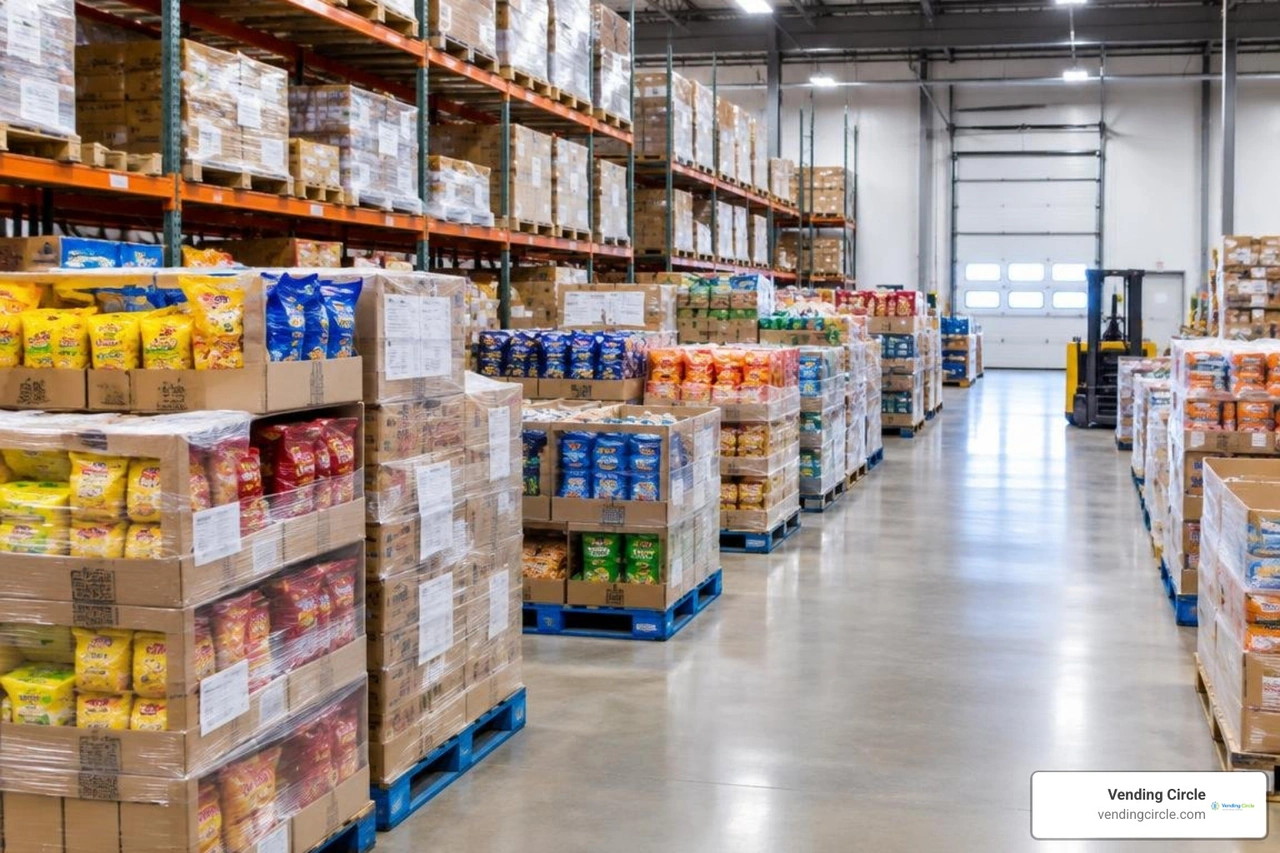
Always place newer stock behind older inventory in both your storage area and inside the machine's helix coils. Maintain tight control over SKU performance by implementing structured vending machine inventory management protocols. Identify your fastest-moving items—your "A-grade" SKUs—and replenish them weekly, while ordering slower-moving specialty items in smaller quantities to avoid dead stock.
Matching Wholesale Products to Modern Vending Equipment
Your product selection must align with the mechanical and technological capabilities of your vending hardware. Traditional glass-front snack machines, cold beverage stack units, combo merchandisers, and smart micro-markets each require specific packaging dimensions, weight profiles, and cooling configurations.
When evaluating machine purchases, consult our wholesale vending machines guide to assess helix pitch, tray adjustments, and dual-zone temperature controls. Factoring equipment amortisation into your overall vending machine costs ensures your product pricing strategy covers both inventory outlay and equipment overhead.
How AI Smart Coolers Handle Wholesale Vending Machine Products
The vending sector has expanded beyond traditional drop-sensor coil machines with the rise of autonomous AI-powered retail coolers. These smart units feature transparent glass doors secured by electronic locks that open only after a customer taps a credit card, debit card, or mobile payment device.
Inside the cooler, computer vision cameras and shelf-weight sensors track items in real time. When the customer takes a cold brew, a fresh sandwich, or a yogurt parfait and closes the door, the system automatically bills their account for the exact items removed.
This technology offers distinct advantages for product sourcing:
- Unrestricted Product Packaging: You are no longer limited to items that fit through mechanical drop chutes or helix coils. You can merchandise fresh salads, glass bottled drinks, meal prep bowls, and odd-shaped snack bags.
- Automated Inventory Telemetry: Machine software continuously reports exact stock levels remotely, alerting you when specific SKUs run low so you pack only what is needed for restock trips.
- Frictionless Consumer Experience: Shoppers can inspect nutritional labels before purchasing, boosting buyer confidence and increasing average transaction sizes.
Bulk Vending vs. Full-Line Merchandisers
Choosing between bulk mechanical machines and full-line electronic merchandisers depends on your available startup capital, technical expertise, and location footprints.
Mechanical triple-head candy and toy dispensers offer exceptional capital efficiency. A triple-section bulk setup requires no electricity, has minimal moving parts, and can often be acquired at accessible price points. When paired with high-margin bulk candy or novelty capsules, these units generate consistent cash flow with minimal maintenance overhead.
Conversely, full-line glass-front snack and beverage machines require larger floor space, dedicated electrical outlets, and higher initial capital investments. However, full-line merchandisers generate significantly higher gross revenue per location by catering to full-meal and daily refreshment needs in high-density office buildings, manufacturing plants, and healthcare facilities. For an in-depth breakdown of mechanical unit economics, read our bulk vending machine wholesale guide.
Essential Operational Steps for New Vending Operators
Launching a sustainable vending route requires balancing product sourcing with location logistics, legal compliance, and daily servicing routines. Operators who treat their routes as systematic logistics operations achieve faster growth and higher route valuations.
Before placing equipment and purchasing inventory by the pallet, work through the core foundations outlined in our guide on starting a vending business. Establishing your pricing formulas early using our vending machine pricing guide protects your profit margins against wholesale price fluctuations. Additionally, operators merchandising perishable dairy, fresh meals, or cold sandwiches must follow safe food storage and temperature holding standards established by public health agencies like the U.S. Food and Drug Administration (FDA).
Securing High-Traffic Locations and Placement Agreements
The profitability of your wholesale inventory depends directly on foot traffic density and customer dwell time. Prime locations include:
- Employee Breakrooms: Warehouses, call centers, manufacturing plants, and distribution hubs where workers have scheduled, short break periods.
- Customer Waiting Areas: Auto repair shops, car dealerships, laundromats, and medical clinics where visitors spend extended periods waiting.
- Recreational and Educational Venues: Bowling alleys, sports complexes, community colleges, and trade schools with high daily foot traffic.
When approaching property managers, use professional placement agreements that define utility access, service frequency, liability coverage, and any agreed-upon revenue-share commissions. Clear agreements protect your placement rights and establish professional expectations from day one.
Maintenance, Servicing, and Free Machine Programs
Operational success requires consistent equipment uptime. A machine that is out of order or failing to accept payments cannot sell inventory, leading to lost revenue and frustrated site managers.
Many commercial locations prefer partnering with operators who provide full-service placement programs. In these arrangements, the operator supplies, installs, stocks, and maintains the vending equipment at no upfront cost to the host facility. To keep host locations satisfied, maintain a rapid response time—ideally resolving mechanical issues, coin jams, or bill validator faults within 24 hours of notification.
Keeping spare parts on hand—including bill validators, card reader wiring harnesses, refrigeration fans, and universal coil motors—ensures you can complete repairs in a single service visit.
Frequently Asked Questions About Wholesale Vending Products
What wholesale vending products deliver the highest profit margins?
Bulk novelty items, gumballs, and toy capsules offer the highest percentage gross margins in the vending industry, frequently yielding 75% to 85% profit per dispense. For full-line refrigerated machines, bottled water and energy drinks generate the highest combined dollar and percentage margins, with wholesale costs often below $0.50 per unit for water and retail vend prices ranging from $1.50 to $2.50.
Where can new operators purchase wholesale snacks by the case?
New vending operators can source case-quantity snacks and beverages through membership wholesale clubs, regional food service distributors, online bulk marketplaces, and manufacturer-direct procurement programs. Joining industry networks like Vending Circle provides access to manufacturer-direct pricing tiers, educational courses, and weekly live Q&A sessions designed to help route owners optimize inventory costs.
How do AI-powered vending coolers track inventory automatically?
AI smart coolers use a combination of high-resolution computer vision cameras, weight sensors, and intelligent shelf trays. When an authorized customer unlocks the cooler via card or mobile tap, the internal sensors identify which items are removed from the shelves. As soon as the door closes, the software tallies the selections, bills the customer's card, and updates your remote inventory management system automatically.
Conclusion
Building a profitable route relies on disciplined product selection, strategic wholesale sourcing, and consistent inventory rotation. By understanding landed unit costs, monitoring shelf life, and tailoring your snack and beverage selections to the specific demographics of each location, you protect your operating margins and drive steady repeat sales.
Whether you run mechanical bulk candy dispensers, traditional combo units, or advanced AI smart coolers, having reliable access to wholesale supplies and practical equipment guidance is critical. To explore reliable hardware configurations and expand your route operations, browse top-rated vending machines and hardware to find the right equipment for your locations.