How Vending Software Solutions Make Routes Easier to Manage
Vending software solutions bring machine sales, inventory, service needs, and route plans into one place. When comparing platforms, look for warehouse-to-machine stock tracking, pick lists, mobile tools for drivers, cash and card reporting, and support for both connected and offline machines.
That shared view can replace scattered spreadsheets and help you decide what to load, which machines to visit, and where stockouts or downtime need attention. It also gives you a clearer way to measure whether saved time and fewer wasted trips outweigh the software cost.
I'm Manuel Mojica, founder of Vending Circle and owner of MM Healthy Vending. My work with vending operators shapes how I evaluate vending software solutions: by whether they make everyday route decisions simpler.
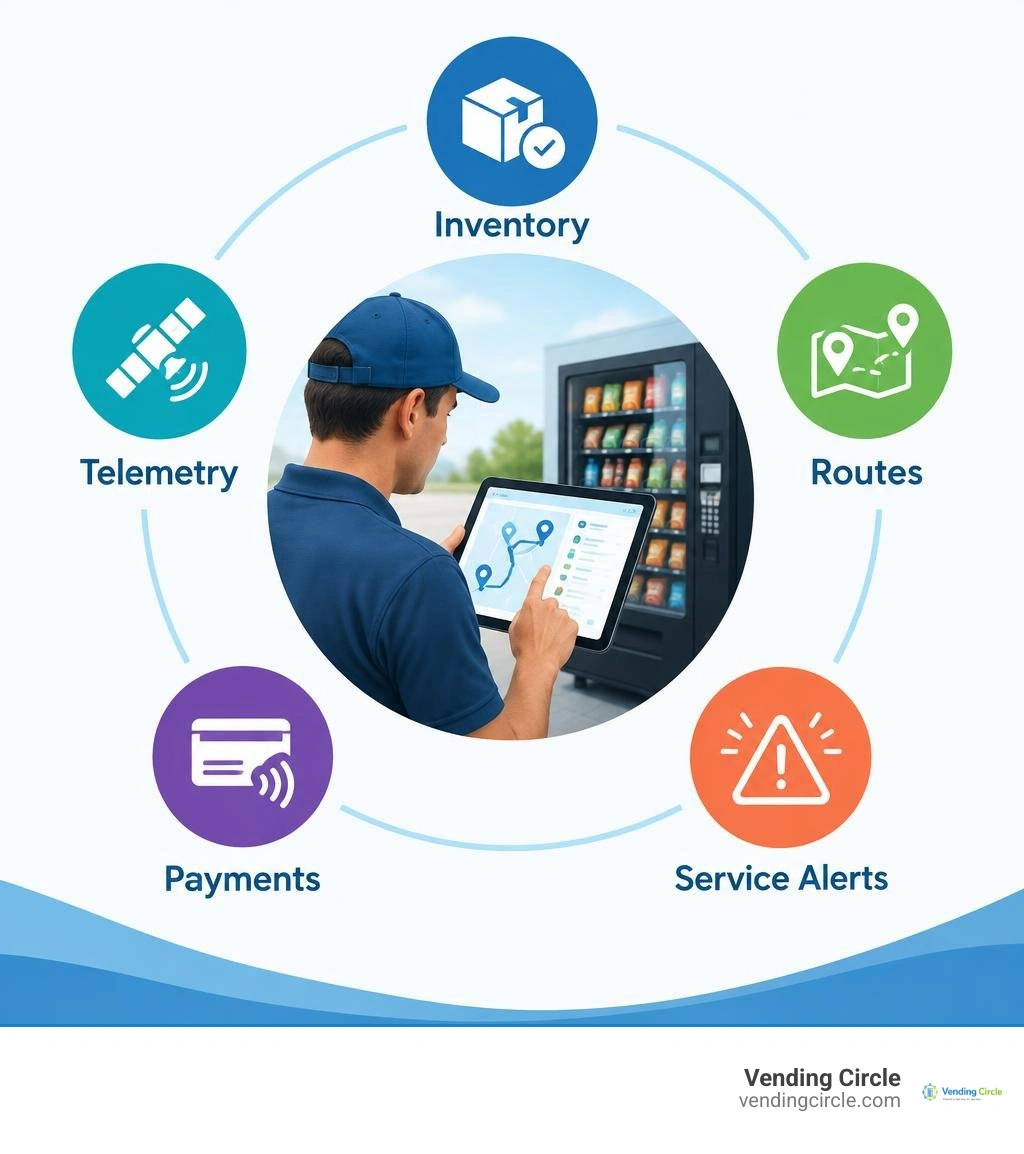
Vending software solutions terms at a glance:
Core Capabilities of Modern Vending Software Solutions
Running a route on manual notebooks or multi-tab spreadsheets feels manageable when you service three machines around the corner. Once your fleet expands, however, tracking product flow becomes complex. Modern management systems solve this by maintaining a strict, three-tier custody model: warehouse inventory, truck inventory, and machine-level stock.

When product moves from your central storage into a service van, the platform logs the transfer. As items dispense through customer purchases, machine balances decrement automatically. Maintaining this continuous chain of custody makes streamlined vending machine inventory management practical at scale. Instead of guessing how many bags of chips remain in spiral B4, you establish automated par levels and low-stock alerts that notify you before a column empties entirely.
Software systems also generate precise pick lists based on digital machine planograms. Rather than walking into a client location blind, your drivers pack exactly what is missing. Real-world operator data shows that utilizing live product maps and pick lists can reduce physical machine fill time by up to 20%, cutting labor hours and eliminating mid-route inventory guesswork.
Real-Time Telemetry and Remote Diagnostics
At the heart of connected vending operations is the pairing of hardware protocols with cloud software. Through internal machine standards like Multi-Drop Bus (MDB) and Data Exchange (DEX), machines capture transaction-level events and operational diagnostics. Telemetry modems collect this data and transmit it over a reliable vending machine network connection straight to your central dashboard.
This live connectivity transforms how you handle maintenance. Instead of waiting for a host location manager to call about an out-of-order error, the software flags compressor temperature spikes, coin jams, or bill validator faults instantly. Furthermore, automated sales reconciliation allows you to continuously audit machine-reported dispenses against card transactions and cash meter movements without manual data entry.
Cashless Payments and Financial Accountability
Managing cash collections across multiple drivers and dispersed routes requires rigorous accountability. Without digital tracking, unaccounted cash shrinkage can easily hide behind inventory spoilage or unrecorded machine tests.
A robust software platform tracks collections at the driver level, comparing the physical cash deposited into collection bags against the machine's internal DEX cash meters. Paired with data from secure vending machine card readers, you gain a unified view of your true gross revenue per point of sale.
| Operational Area | Manual Spreadsheet Tracking | Dedicated Vending Software |
|---|---|---|
| Inventory Tracking | Manual counts entered after the route | Real-time multi-tier tracking (Warehouse, Truck, Machine) |
| Route Prep | Guessing truck stock; loading excess cases | Dynamic warehouse pull sheets and pre-kitting totes |
| Cash Auditing | High risk of unrecorded shrinkage | Automated cash meter vs. collection bag reconciliation |
| Error Detection | Relies on customer or client phone calls | Instant alerts for bill jams, drops, and temperature faults |
| Location Commissions | Hours of manual calculation each month | Automated statements and instant payout reports |
These platforms also streamline host commissions. If your contract requires paying a property owner 5% of gross cashless sales or 10% after sales tax, the software compiles monthly statements automatically, eliminating hours of end-of-month manual math.
Operational Route Optimization and Warehouse Pre-Kitting
The traditional "truck-as-a-warehouse" model—where drivers haul full master cases of every single SKU in a heavy vehicle—is inefficient. It burns excessive fuel, clutters the van, increases product damage, and forces drivers to spend time walking back and forth between the customer's breakroom and the parking lot.

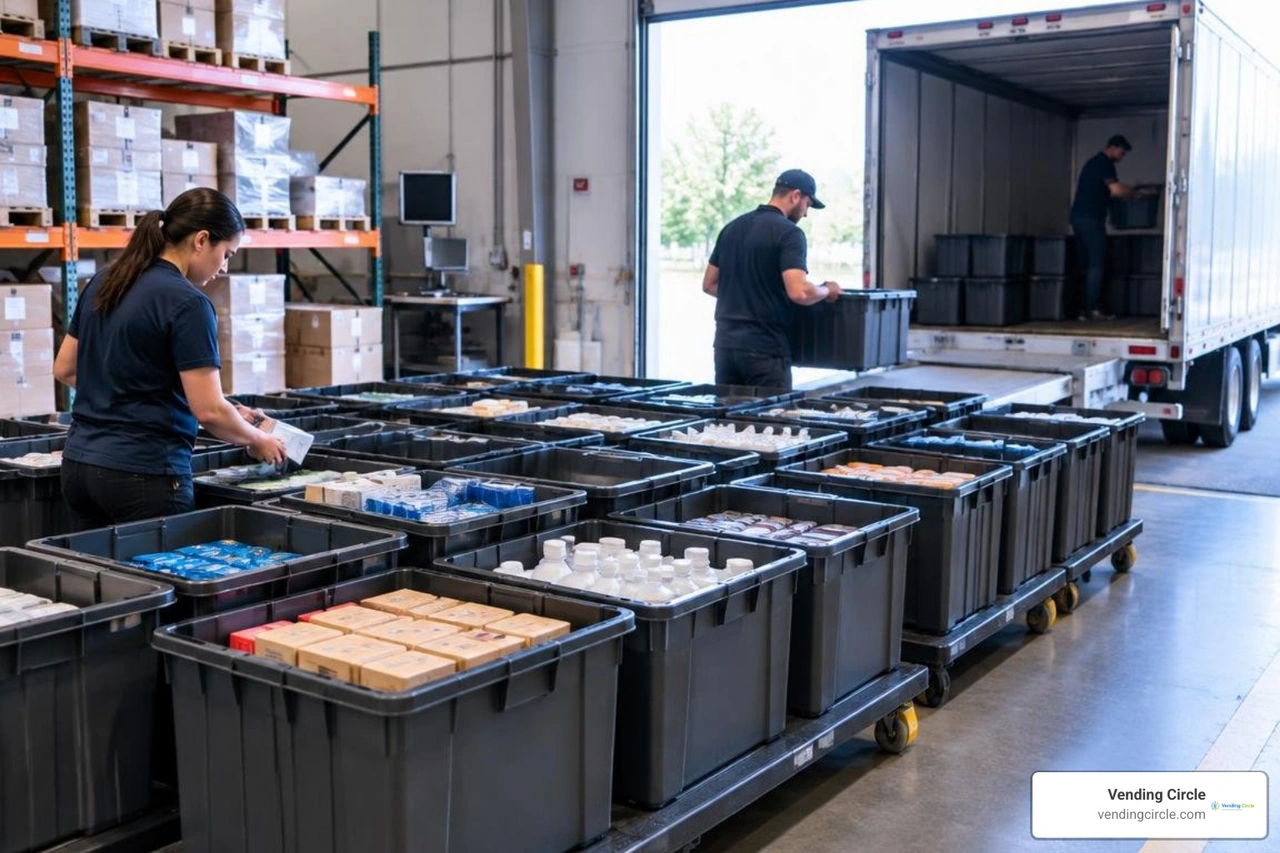
Advanced vending software flips this process on its head through dynamic warehouse pull sheets. The platform calculates exactly which coils are low across all machines scheduled for service, compiling an aggregated picking list for the warehouse team. Drivers load machine-specific, pre-kitted totes directly into their vans. Integrating intelligent route optimization software ensures that service visits are based on live demand rather than static calendar schedules, minimizing wasted miles and keeping shelves full.
Streamlining Fleet Logistics with Vending Software Solutions
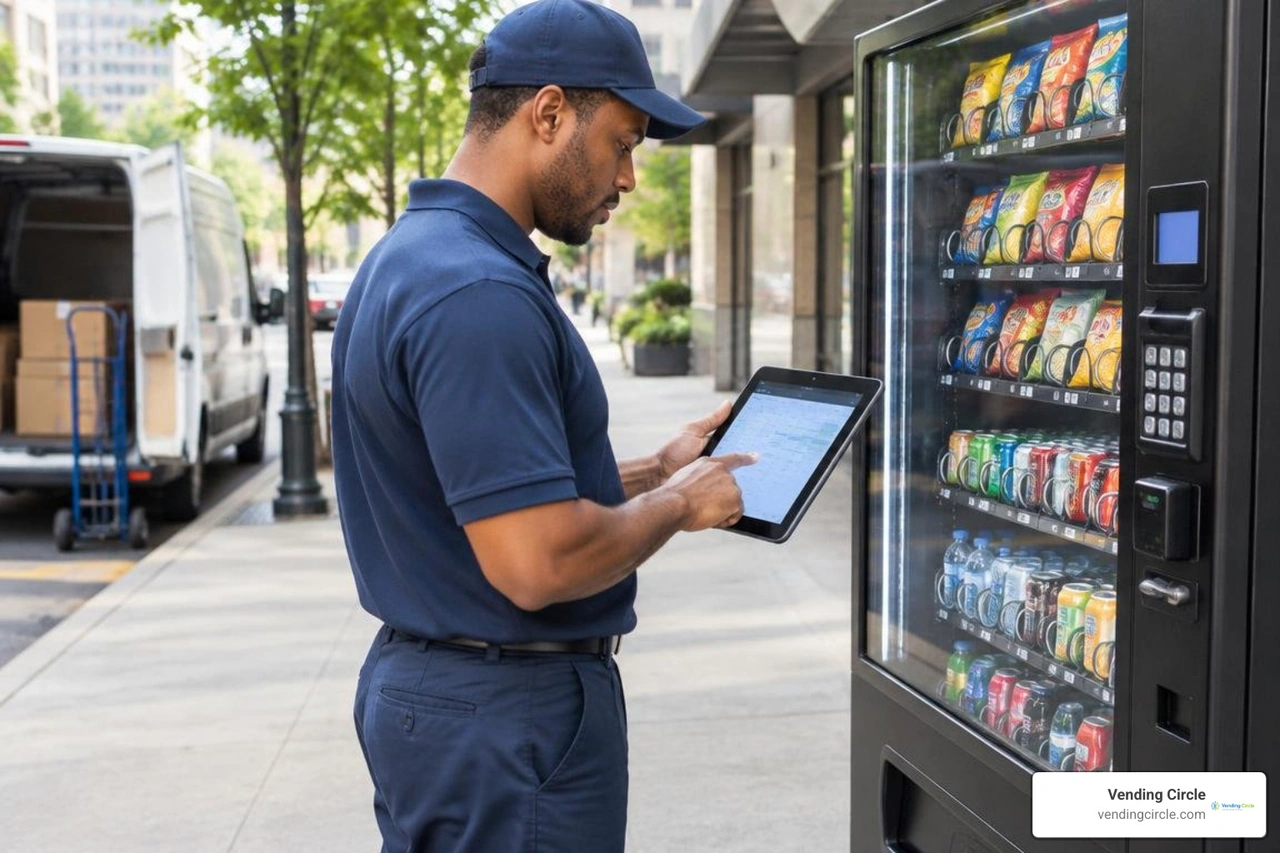
Field execution depends on giving drivers clear, easy-to-use mobile tools. Mobile driver applications display turn-by-turn routing, machine locations, planogram layouts, and digital pick sheets.
Many modern platforms utilize curbside polling and live data feeds to support predictive restock scheduling. If a machine on tomorrow's schedule still sits at 85% capacity because foot traffic was light, the software dynamically adjusts its service frequency, saving an unnecessary stop and reallocating driver time to high-volume locations that need urgent attention.
Demand Forecasting and Product Selection
Vending software does more than manage logistics; it provides actionable merchandising insights. By evaluating inventory turnover rates and sales velocity per spiral, you can quickly identify slow-moving items that occupy valuable shelf space.
Connecting these insights with accurate vending machine AI forecasting enables operators to adjust product selection ahead of seasonal demand shifts. If data reveals that carbonated water sales are climbing rapidly while standard sodas are slowing, you can optimize your planograms with high-margin vending machine products that maximize profit per slot.
When and How Operators Should Transition to Cloud Management
A common dilemma for operators is deciding when to invest in specialized software. While spreadsheets might seem budget-friendly during your first month, adopting dedicated software from day one instills disciplined operational habits that make future scaling seamless.
Most operators hit a steep operational barrier around 20 to 50 machines if they rely on manual tracking. At this stage, administrative overhead, inventory discrepancies, and inefficient routing become major bottlenecks.
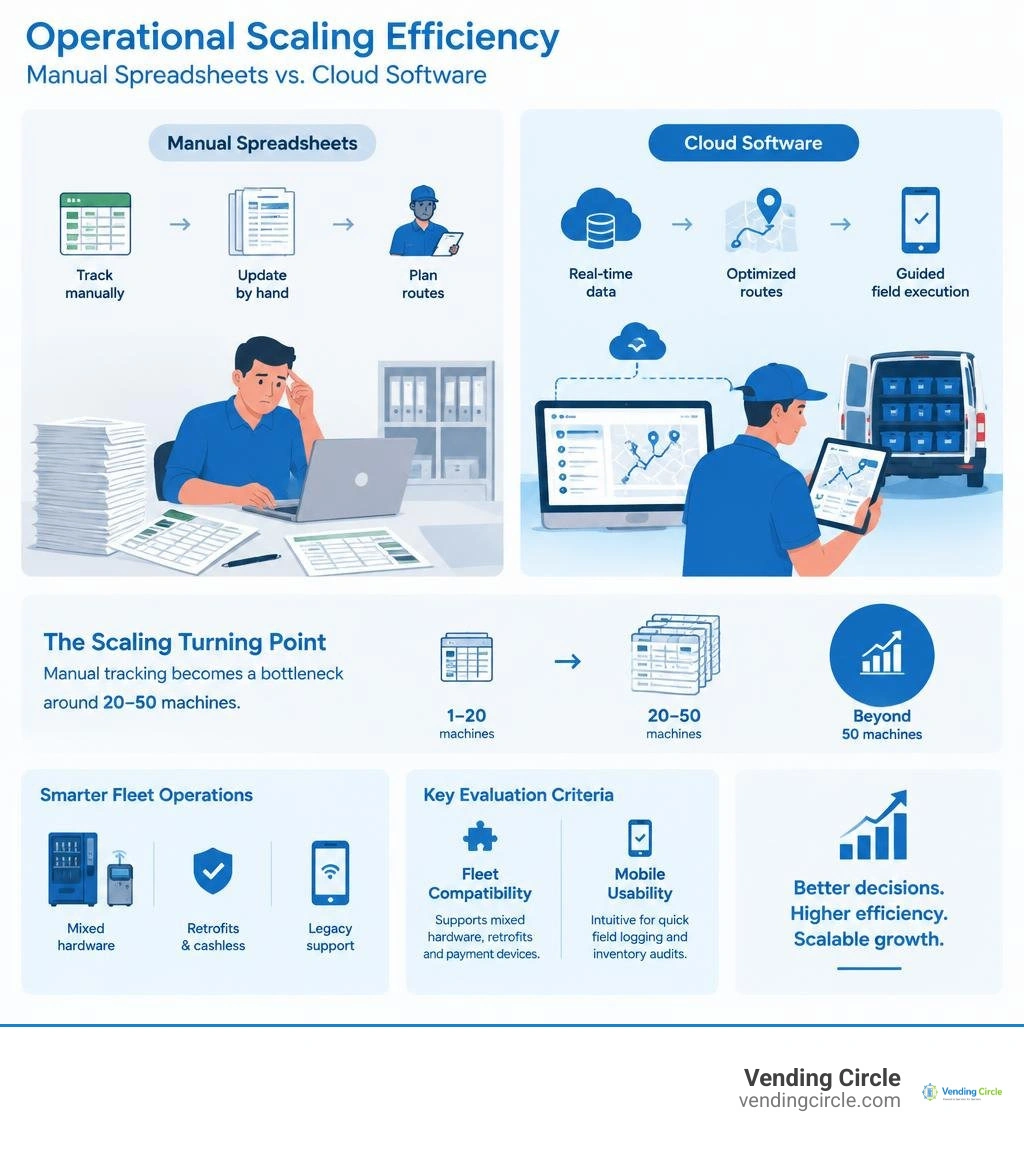
You do not need an entirely new fleet of smart machines to transition to modern software. Many software platforms support hybrid fleets, combining telemetry-enabled readers on newer units with mobile app logging for legacy, cash-only machines. For older cabinets using standard MDB or Pulse protocols, affordable retrofit kits can add cashless processing and cloud connectivity without the expense of purchasing new hardware.
When evaluating management platforms, consider the following criteria:
- Fleet Compatibility: Does the software support mixed hardware, retrofits, and diverse payment devices?
- Mobile Usability: Is the driver interface intuitive enough for quick field logging and inventory audits?
- Inventory Visibility: Does the platform track stock end-to-end across warehouse shelves, transit vehicles, and individual machine spirals?
- Financial Tooling: Can it automatically reconcile cash meters, calculate location commissions, and generate machine-level profit-and-loss reports?
- Scalability & Pricing: Does the per-machine software cost align with your current route margins and growth plans?
Measuring ROI and Efficiency Gains from Vending Software Solutions
Evaluating software requires looking closely at time saved and shrinkage eliminated. The investment pays for itself across several distinct operational areas:
- Labor and Fill Time: Reducing machine service time by 20% means drivers handle more machines per shift without requiring additional overtime or extra staffing.
- Fuel and Vehicle Maintenance: Dynamically routing stops based on restock needs rather than rigid calendar days cuts route mileage, lowers fuel consumption, and reduces vehicle wear.
- Shrinkage Reduction: Creating clear inventory audit trails across warehouse storage, route vehicles, and machines prevents unexplained product losses and cash discrepancies.
- Machine-Level Profit Margins: Detailed profit-and-loss reporting highlights underperforming locations, allowing you to renegotiate commission terms, alter pricing, or relocate equipment to more profitable accounts.
Integrating Customer Support and Machine Uptime
A vending operation's reputation depends heavily on customer satisfaction and equipment uptime. If a spiral jams or a bill validator rejects cash, unattended machines can quickly turn into frustrated customer complaints if issues go unaddressed.
Integrating automated customer support tools alongside your management software allows consumers to scan a QR code on the machine to submit support requests or receive instant refunds via digital payment. Case studies in unattended retail show that automated customer support platforms can reduce time spent managing support inquiries by up to 50%. Connecting real-time machine telemetry with customer support ticketing ensures equipment faults are flagged and resolved promptly, protecting both sales revenue and long-term account retention.
Frequently Asked Questions About Vending Software Solutions
Can vending software solutions manage offline or cash-only machines?
Yes. Modern vending software supports hybrid fleets. For connected machines, telemetry hardware streams sales and diagnostic data continuously. For offline or cash-only machines, route drivers use the platform's mobile app during physical service visits to record meter readings, log dispensed items, and perform inventory counts. The system aggregates both data streams into unified operational reports.
How does pre-kitting software reduce route driver labor?
Pre-kitting software uses real-time sales and inventory data to generate precise warehouse pick lists. Instead of loading full product cases onto delivery trucks and making multiple trips between the vehicle and the machine, warehouse staff pack machine-specific restock totes in advance. Drivers carry only the required items into the building, reducing physical restock time at each machine by up to 20%.
What is the typical timeline to see a positive ROI after implementation?
Most operators experience a positive return on investment within 3 to 6 months of full implementation. The financial gains stem from dynamic route scheduling that lowers fuel expenses, pre-kitting workflows that increase driver stop capacity, and automated reconciliations that catch cash shrinkage and product loss early.
Conclusion
Transitioning route operations from manual spreadsheets to advanced software transforms how you manage inventory, routes, and cash flow. Gaining full visibility across your warehouse, transit trucks, and machine coils eliminates guesswork, cuts unnecessary service stops, and ensures your machines remain stocked with the products your customers want.
As unattended retail continues to evolve, operators who leverage data-driven workflows will be best positioned to scale efficiently. At Vending Circle, our online community and procurement platform connects operators with proven operational strategies, manufacturer-direct pricing, weekly live Q&A sessions, and comprehensive industry resources. Explore the Vending Circle operator community and resources to discover new tools, connect with fellow route owners, and build a more profitable vending business.