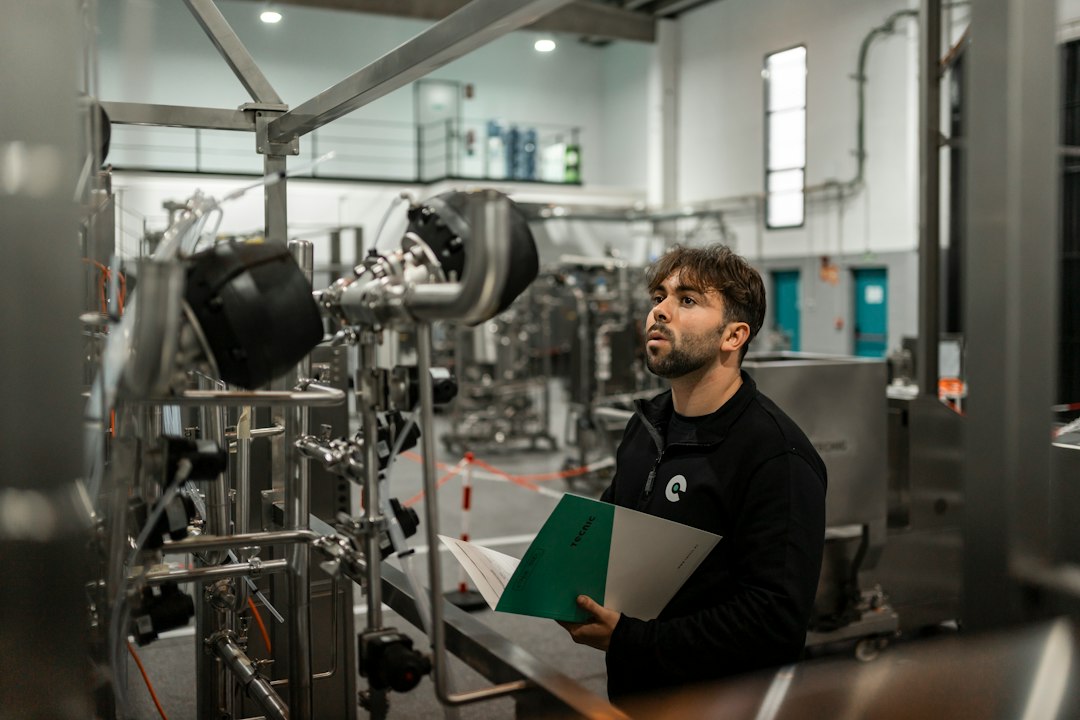
Machine Repair Mechanic Careers at a Glance
A machine repair mechanic diagnoses, fixes, and maintains equipment that keeps production running. To enter the field, start with a high school diploma or equivalent, then build hands-on skills through job training, a trade program, or an apprenticeship. Learn to read manuals, test mechanical and electrical parts, and work safely around powered equipment.
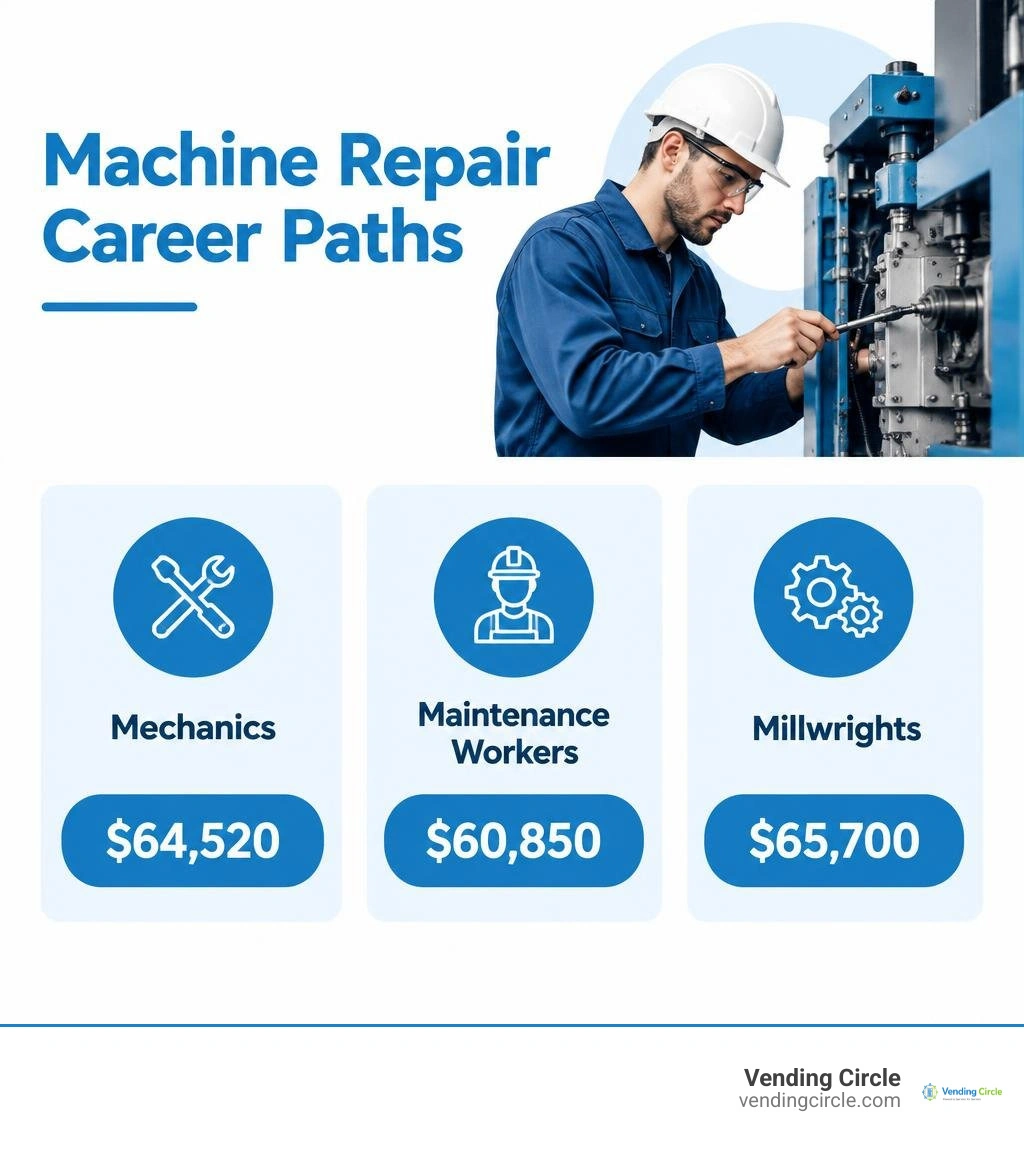
The career has a strong outlook. Industrial machinery mechanics earned a median $64,520 in May 2025, and employment in that occupation is projected to grow 18% from 2025 to 2035. Those figures describe industrial mechanics; pay and duties can differ for vending machine repair and other specialties.
I’m Manuel Mojica, founder of Vending Circle and a former vending business owner. My experience managing machines and dealing with downtime shapes how I look at the machine repair mechanic career.
Discover more about machine repair mechanic:
Understanding the Role of a Machine Repair Mechanic
Modern facilities rely on intricate mechanical networks, automated conveyor lines, fluid power circuits, and electronic controllers to manufacture goods, process food, and distribute products. When any link in that chain fails, production stalls at great financial expense.
A skilled technician steps in to pinpoint subtle wear patterns, test component integrity, and bring broken hardware back into factory alignment. From comprehensive federal occupational standards such as the O*NET industrial machinery mechanic profile, these professionals perform advanced diagnostics, equipment overhauls, and preventative upkeep across automated machinery. Rather than simply swapping out damaged components when an error occurs, they understand why the failure developed in the first place, adjusting tolerances to prevent repeat disruptions.
Industrial Machinery Mechanic vs. Maintenance Worker vs. Millwright
Within industrial maintenance, job titles often sound interchangeable, but their daily duties, technical scope, and typical earnings vary significantly. The three most common roles across plants and distribution hubs are mechanics, maintenance workers, and millwrights.
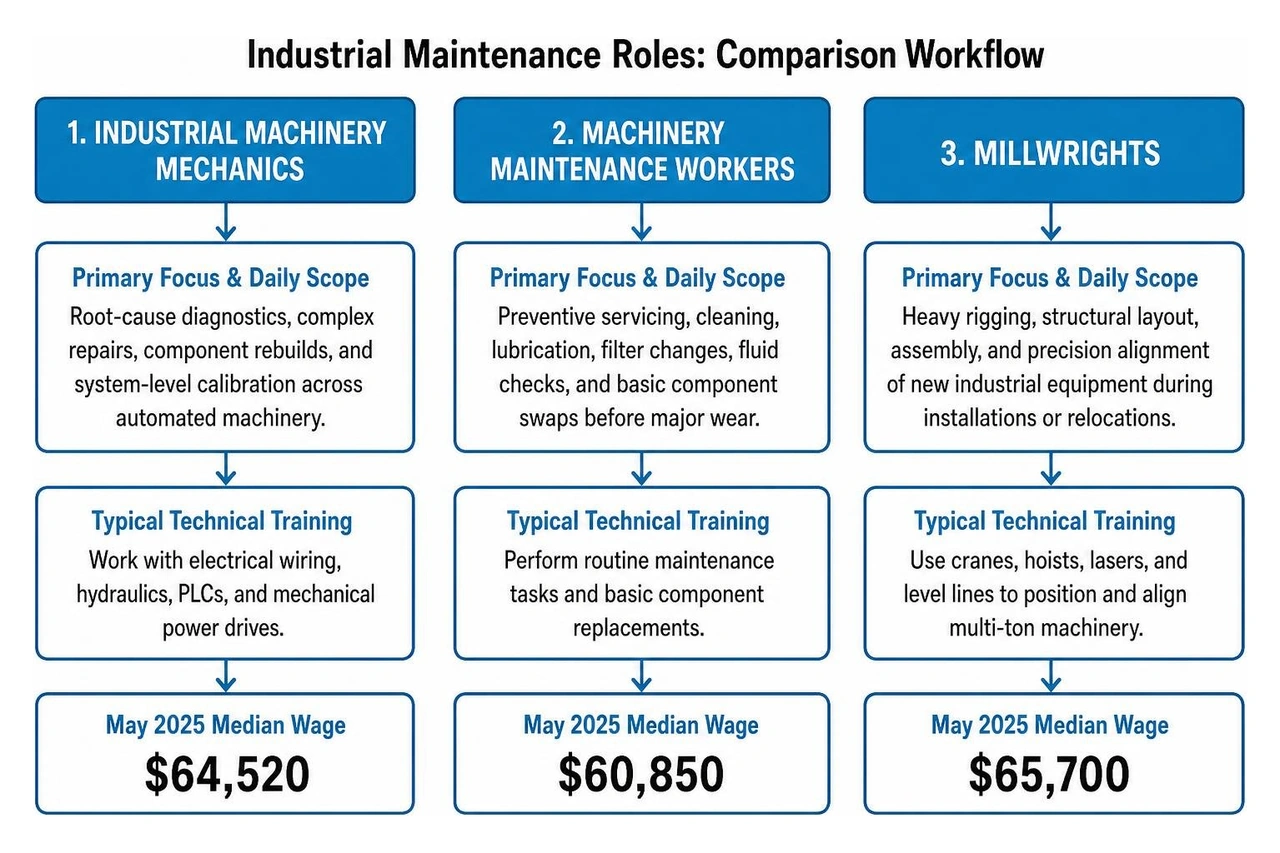
- Industrial Machinery Mechanics: These specialists handle root-cause diagnostic testing, complex disassemblies, component rebuilds, and system-level calibration. They work extensively with electrical wiring, hydraulics, programmable logic controllers (PLCs), and mechanical power drives.
- Machinery Maintenance Workers: These team members focus on recurring preventive servicing. They clean equipment, lubricate bearings, change filters, check fluid reservoirs, and carry out basic component swaps before major wear occurs.
- Millwrights: These craftsmen specialize in heavy rigging, structural layout, assembly, and precision alignment of new industrial equipment. They use cranes, hoists, lasers, and level lines to position multi-ton machinery during plant installations or facility relocations.
| Occupation Role | Primary Focus & Daily Scope | Typical Technical Training | May 2025 Median Wage |
|---|---|---|---|
| Industrial Machinery Mechanic | Deep diagnostics, component teardowns, complex rebuilds, and electrical/hydraulic troubleshooting | 1–2 years vocational training, associate degree, or long-term on-the-job apprenticeship | $64,520 / year |
| Machinery Maintenance Worker | Routine lubrication, filter replacement, cleaning, visual inspections, and basic part swaps | Moderate on-the-job training (often a few months to one year) | $60,850 / year |
| Millwright | Heavy rigging, uncrating, moving, leveling, laser alignment, and structural anchoring of machinery | 3- to 4-year formal apprenticeship (combining 144 hours classroom/year with 2,000 field hours/year) | $65,700 / year |
As documented in the BLS industrial machinery occupational outlook, these distinct roles combine to form an essential trade sector employing roughly 547,300 professionals across the United States.
Essential Duties for Every Machine Repair Mechanic

A machine repair mechanic rarely faces a predictable day. One morning might involve isolating an electrical fault in a conveyor belt drive, while the afternoon involves using a dial indicator to center a high-speed milling spindle.
The primary duties performed on the floor include:
- Sensory and Instrument Diagnostics: Listening for anomalous harmonic acoustic profiles, measuring machine vibration signatures to detect failing motor bearings, and using thermal cameras to spot overheating gearboxes.
- Electrical and Fluid System Testing: Using digital multimeters to conduct machine electrical repair and testing hydraulic proportional valves and pneumatic cylinders for pressure leaks.
- Mechanical Teardown and Reassembly: Systematically stripping down sub-assemblies using bearing pullers, impact wrenches, and specialized jigs to replace worn gears, bushings, and shafts.
- Precision Machining and Fabrication: Operating bench lathes, surface grinders, and drill presses to reshape metal stock or create custom brackets when replacement parts are discontinued or backordered.
- Computerized Maintenance Tracking: Logging all service interventions, diagnostic codes, meter readings, and inventory changes into Computerized Maintenance Management Systems (CMMS) or enterprise platforms like SAP.
- Post-Repair Verification: Conducting dry-run cycles and live production tests to measure clamping forces, concentricity, and thermal stability before handing equipment back to plant operators.
Education, Training, and Skill Requirements
Modern machinery blends high-pressure hydraulics, precision gears, and microprocessors. Because of this integration, entering the field requires a solid balance of mechanical aptitude, electronic troubleshooting skills, and formal training.
How to Become a Qualified Machine Repair Mechanic
While a high school diploma or equivalent provides the baseline entry requirement, employers strongly prioritize candidates with hands-on technical schooling or structured trade apprenticeships. High school courses in shop mechanics, algebra, physics, and blueprint reading create a practical foundation.
As detailed in the New York DOL apprenticeship training guidelines, a standard time-based apprenticeship involves roughly 8,000 hours of supervised, paid on-the-job training. Out of those 8,000 hours, approximately 3,600 hours focus directly on machinery maintenance, repair, and diagnostics, supported by hundreds of hours dedicated to drive systems, pumps, valves, electrical panels, and metal fabrication. Along with this practical work, apprentices complete at least 144 hours of related classroom instruction per year, ensuring they master trade mathematics, safety compliance, and schematic analysis.
Technical Competencies and Diagnostic Skills

Succeeding in machinery maintenance requires both physical coordination and analytical troubleshooting. Experienced technicians approach broken equipment methodically:
- Fluid Power & Pneumatics: Understanding how directional control valves, actuators, manifolds, and hydraulic pumps work under high pressure.
- Controls & PLC Troubleshooting: Tracing input/output signals from optical sensors and limit switches to programmable logic controller cards to locate interrupted control circuits.
- Preventive Strategy Implementation: Following machine maintenance tips 2026 to schedule proactive fluid flushes, belt tensioning, and sensor calibrations rather than waiting for catastrophic breakdowns.
- Precision Measurement: Reading micrometers, dial test indicators, feeler gauges, and laser alignment tools accurate to within thousandths of an inch.
- Fabrication & Welding: Utilizing MIG/TIG welding rigs and metal-cutting torches to repair worn structural framing, motor mounts, and sheet-metal housings.
Salary Insights and 2026–2035 Job Outlook
The high technical demands and steady retirement of veteran technicians have kept demand strong across manufacturing, automated logistics, and commercial operations.
Median Wages and Compensation by Industry
According to federal wage reports from May 2025, industrial machinery mechanics earned a median annual wage of $64,520, which equals roughly $31.02 per hour. Earnings vary based on geographic region, industry sector, shift differentials, and overtime hours.
- Top 10 Percent Earners: Surpassed $94,530 per year, often representing master technicians, specialized field engineers, and lead millwrights.
- Lowest 10 Percent Earners: Earned less than $45,760, representing entry-level apprentices and uncertified shop hands.
- Machinery Maintenance Workers: Recorded a median annual salary of $60,850.
- Millwrights: Achieved a median annual compensation of $65,700.
Over 51% of all industrial mechanics work in manufacturing facilities, while another 13% work in wholesale distribution. Because industrial downtime can cost facilities tens of thousands of dollars per hour, overtime is common. About 47% to 50% of mechanics routinely work more than 40 hours per week, earning time-and-a-half pay for emergency repairs and scheduled weekend maintenance.
Employment Trends and Automation Drivers
While automation is replacing repetitive manual assembly tasks, it has the opposite effect on maintenance roles. Every new robotic arm, automated sortation conveyor, and optical inspection scanner requires ongoing calibration and maintenance.
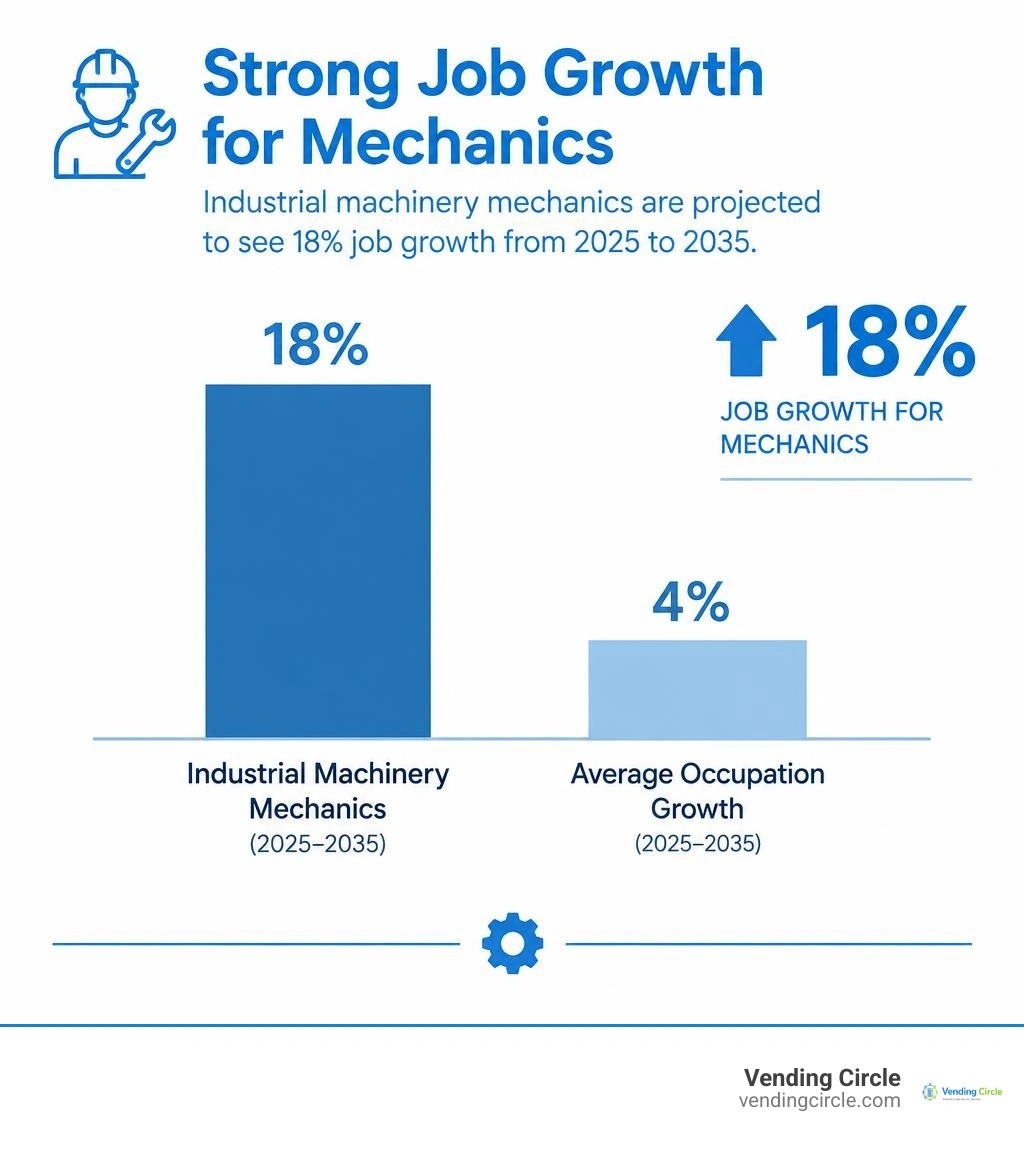
Federal employment projections estimate an 18% employment increase for industrial machinery mechanics from 2025 to 2035, far outperforming the average growth rate across all occupations. Across the entire sector, about 51,900 job openings are projected each year through 2035. This demand is driven by the expansion of automated warehousing, domestic manufacturing investments, and the need to replace retiring workers.
In contrast, dedicated entry-level machinery maintenance worker positions are projected to decline slightly by 2% as modern predictive diagnostics, automated lubrication hubs, and computerized sensors allow skilled industrial machinery mechanics to handle both advanced diagnostics and routine upkeep directly.
Work Environments, Machinery Types, and Career Pathways
Machine repair mechanics work in a wide variety of environments, from vast automotive assembly plants and clean pharmaceutical cleanrooms to regional commercial vending and refrigeration routes.
Industrial Machinery, Automated Retail, and Specialty Equipment
A mechanic's day-to-day work environment depends largely on the machinery they support:
- Heavy Production Machinery: Stamping presses, automated injection molders, robotic welding fixtures, packaging case packers, and overhead crane conveyors.
- Precision CNC & Milling Systems: Multi-axis lathes and computer-controlled routers that require meticulous calibration for runout, tram, and drawbar clamping force.
- Commercial and Automated Retail Systems: Modern automated retail kiosks, snack and beverage equipment, and coin/bill validators. Operators maintaining these systems monitor coke machine maintenance schedules, refer to a comprehensive vending machine parts cost guide for budgeting replacements, and maintain vending machine energy efficiency standards to manage utility costs.
- Commercial Refrigeration and Pumping Hardware: Ice-making systems and fluid dispensers requiring specialized diagnostics on an ice machine water pump or consultations with an experienced ice machine expert.
- Network-Connected Hardware: Telemetry-enabled equipment requiring a stable vending machine network connection to send real-time fault codes, manage inventory levels, and prevent an unexpected vending machine emergency restock.
Safety Standards, PPE, and Career Advancement
Working around high-voltage panels, heavy rotating gears, and pressurized fluid lines requires strict safety habits. Roughly 87% to 97% of machinery repair workers wear personal protective equipment (PPE) daily, including steel-toed boots, safety glasses with side shields, cut-resistant gloves, and hearing protection.
Strict adherence to OSHA Lockout/Tagout (LOTO) standards ensures that machinery cannot accidentally energize while a technician's hands are inside mechanical assemblies. Because 68% of mechanics work in indoor facilities without climate control, physical endurance and situational awareness are essential.
Starting as an apprentice or junior maintenance technician opens up clear career pathways:
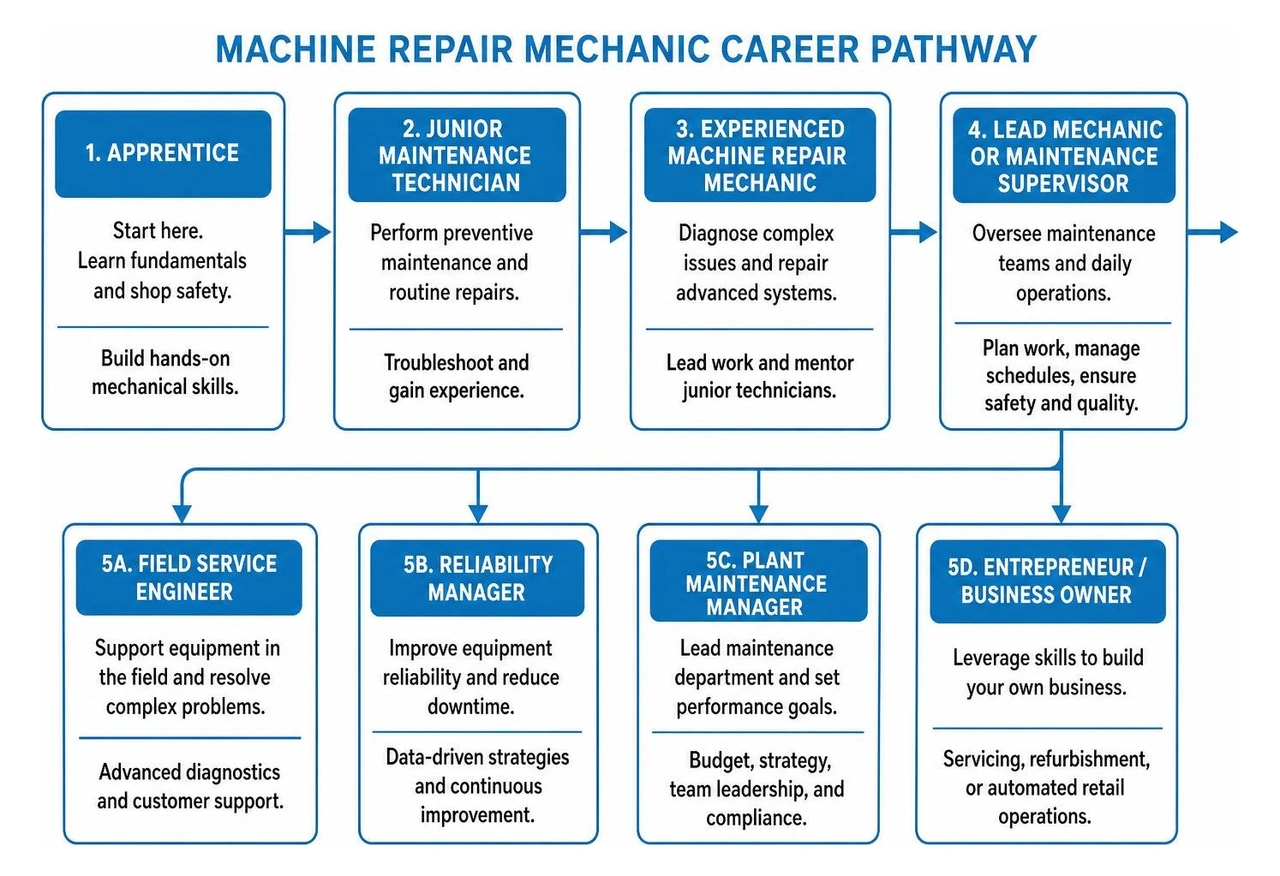
Experienced mechanics often advance into Lead Mechanic, Maintenance Supervisor, Field Service Engineer, or Reliability Manager positions. Others leverage their hands-on mechanical diagnostic background to launch independent servicing businesses, equipment refurbishment shops, or automated retail operations.
Frequently Asked Questions About Machine Repair Mechanics
What is the primary difference between a machine repair mechanic and a general maintenance technician?
While both roles focus on keeping hardware functional, their daily scope is quite different:
- A machine repair mechanic specializes deeply in production machinery, automated assembly systems, drive trains, and PLCs. They perform precision teardowns, custom part fabrication, and root-cause diagnostic testing.
- A general maintenance worker, as outlined in the 49-9071.00 - Maintenance and Repair Workers, General classification, handles a wider range of broad building maintenance tasks. Their day-to-day duties include light electrical wiring, basic plumbing, drywall repair, HVAC filter replacements, and general facility upkeep across commercial buildings and residential properties.
Broader details regarding related technical trades can be reviewed in the federal overview of Installation, Maintenance, and Repair Occupations.
How long does it take to complete a machine repair apprenticeship?
A registered industrial machinery mechanic apprenticeship typically takes 3 to 4 years of full-time commitment. During this period, an apprentice logs approximately 8,000 hours of paid on-the-job training alongside master mechanics, supplemented by at least 144 hours per year of structured classroom coursework in electrical theory, blueprint drafting, applied trade mathematics, and fluid power dynamics.
What are the highest-paying industries for machinery mechanics?
While standard manufacturing plants offer consistent work, the highest median wages for machinery mechanics are typically found in:
- Aerospace & Defense Equipment Manufacturing: Precision assembly facilities with tight tolerances, cleanroom requirements, and advanced automated robotics.
- Electric Power Generation & Utilities: Substation maintenance, turbine overhauls, and pump-drive systems.
- Chemical & Petroleum Processing: Refining plants and continuous chemical production facilities that require specialized explosion-proof equipment maintenance.
- Automotive & Heavy Equipment Assembly: High-volume, highly automated production lines where unscheduled line stoppages carry heavy financial penalties.
Job seekers can explore active trade openings and compensation models through real-world listings such as this Machine Repair Mechanic, ST Engineering - Hiring May 2026 posting.
Conclusion
A machine repair mechanic plays a vital role across modern industry, transforming complex error codes, mechanical vibrations, and fluid leaks into smooth, reliable production. As manufacturing lines and distribution networks adopt advanced robotics, PLCs, and optical sorting systems, the demand for technicians who combine physical mechanical aptitude with computerized diagnostics will only continue to grow. With a projected 18% job growth rate through 2035 and median earnings of $64,520, this trade provides strong long-term stability and high earning potential without requiring a traditional four-year college degree.
Whether you are managing multi-ton hydraulic presses in a factory, fine-tuning high-speed CNC tooling, or running a route of automated retail kiosks, maintaining mechanical uptime is the foundation of profitability. For automated equipment operators looking to cut downtime, streamline parts procurement, and master proactive maintenance routines, explore our detailed guide to vending machine maintenance to keep your hardware running reliably.