Choosing a Snack Vending Machine with a Card Reader
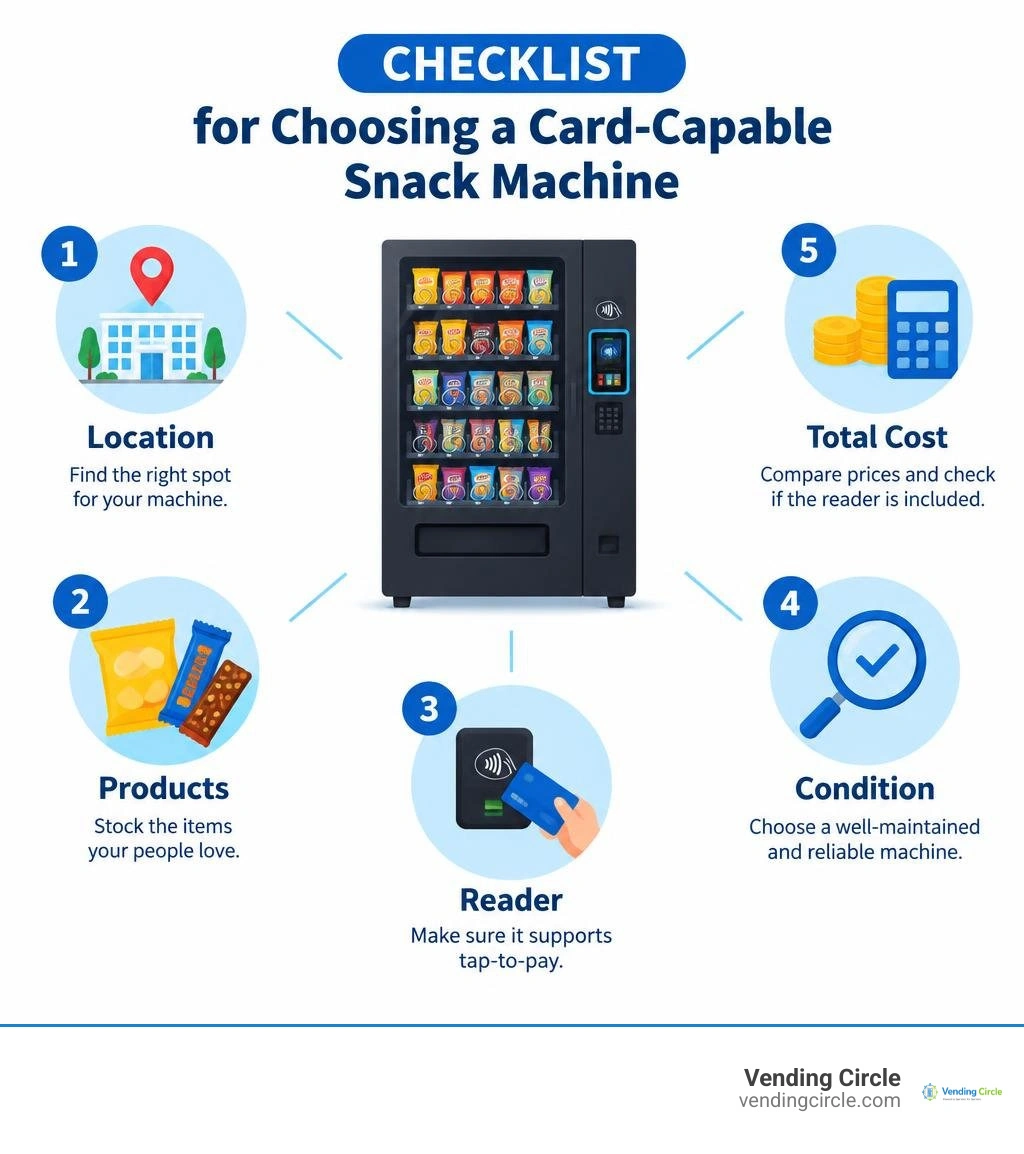
Start with the location, then choose the machine. When choosing a snack vending machine with a card reader, look for reliable dispensing, enough space for your best-selling products, and a reader that supports tap-to-pay. Choose a snack-only unit if drinks are already covered. Choose a refrigerated combo if one machine needs to sell both.
New combo machines often cost $3,000 to $7,000; used units can cost $1,500 to $3,000. Check whether the reader is included before comparing prices. Cashless payments now account for more than 70% of vending transactions, so a working reader can matter as much as the machine itself.
Manuel Mojica, founder of Vending Circle, draws on experience sourcing and operating machines to assess what makes a snack vending machine with a card reader worth buying.
Relevant articles related to snack vending machine with card reader:
- vending cashless reader
- how do vending machine credit card readers work
- used vending machines with card reader
Key Features to Look for in a Snack Vending Machine with Card Reader
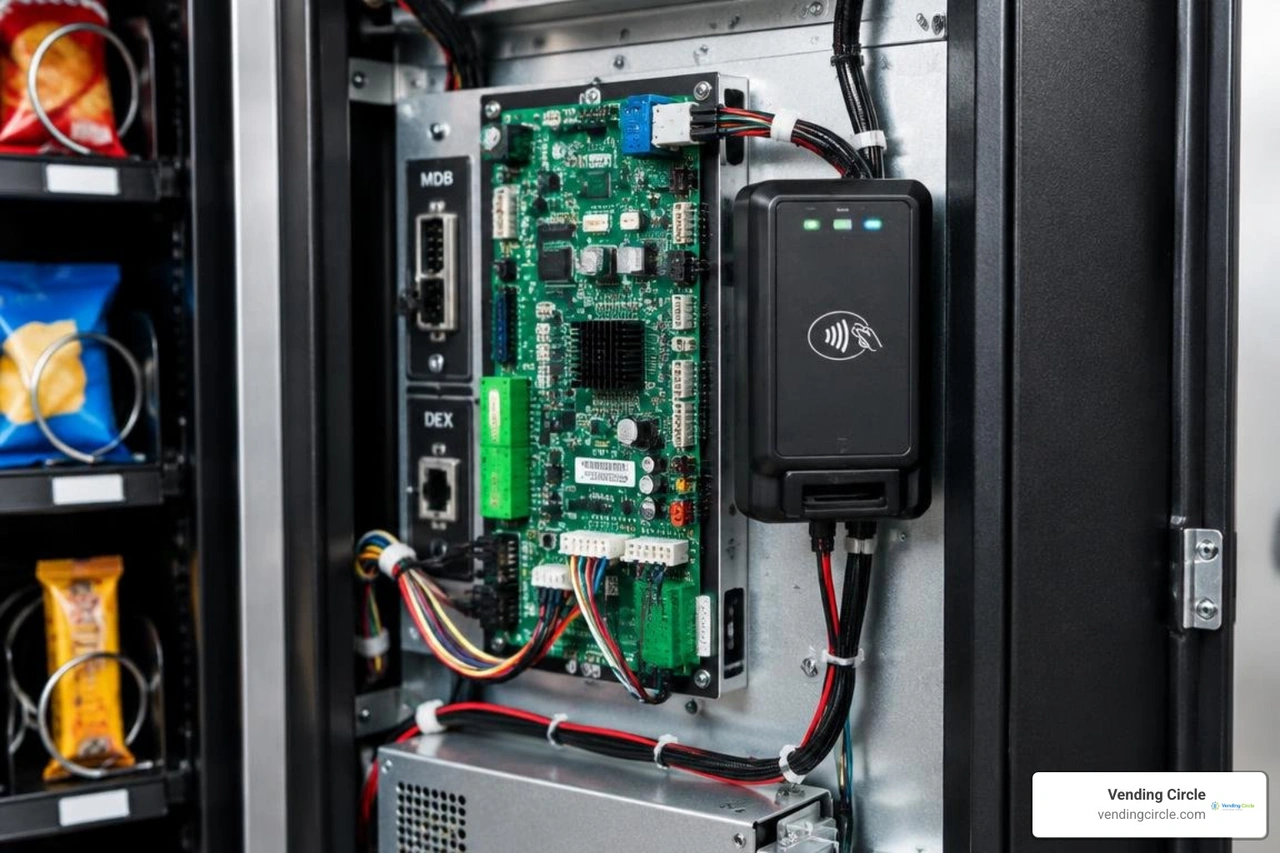
When evaluating modern automated retail equipment, the control board and internal communications framework dictate how reliably your machine performs in the field. The industry standard protocol is MDB (Multi-Drop Bus), which allows the main control board to seamlessly communicate with payment peripherals like cashless readers, bill acceptors, and coin changers. Modern builds also feature DEX (Data Exchange) ports that export diagnostic and transaction telemetry directly to management platforms.
Beyond internal communication protocols, several practical physical features protect your inventory and optimize operational uptime:
- Guaranteed Drop Sensors: Modern machines use infrared beam arrays (such as iVend™ or SureVend™) at the bottom of the delivery chute. If a product fails to drop, the coil turns again or the customer can make another selection, preventing frustrated calls and refund requests.
- Accessibility Standards: Compliance with Americans with Disabilities Act (ADA) guidelines ensures reachable keypads, payment slots, and product delivery doors for all consumers.
- Display & Visual Merchandising: High-efficiency LED lighting keeps items brightly visible while consuming minimal power. Modern front displays showcase clean pricing panels and digital instructions.
- Modern Power Management: Investing in energy-efficient vending machine technology significantly reduces daily electric utility costs, which is especially important for business accounts managing long-term placement agreements.
- Anti-Theft Guards: Rugged physical anti-theft baffles inside the delivery bin block people from reaching up into the product trays from the outside.
A prime example of an integrated commercial unit featuring advanced digital controls is the 28.35 in. Vending Machine, KM-VMR-30-BR, which pairs a compact physical profile with factory-fitted cashless capabilities.
Understanding Cashless Payment Systems and Telemetry
Modern consumers rarely carry paper bills or spare coins. Card readers support NFC (Near Field Communication) contactless technology, enabling rapid tap-to-pay via mobile wallets like Apple Pay and Google Pay, as well as standard EMV chip cards and magnetic swipes.
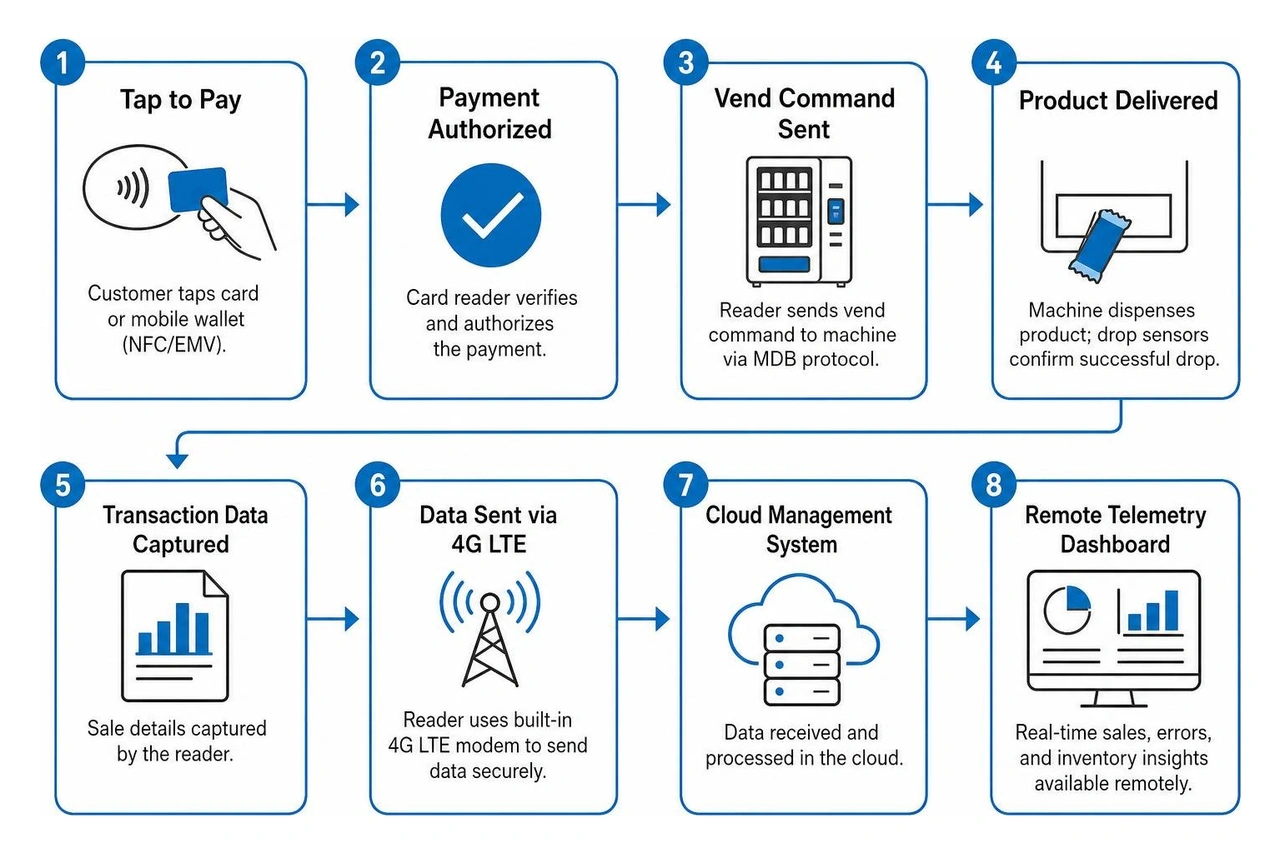
These devices connect to payment networks through built-in 4G LTE cellular modems. When adding a card reader to a vending machine, the unit routes transaction data directly to a cloud management system. This provides real-time sales telemetry, error reporting, and product-level velocity tracking so you can plan restocks remotely without making unnecessary trips.
Refrigerated vs. Ambient Snack Machine Configurations
Deciding between an ambient (room temperature) and a refrigerated cabinet depends on the product mix you intend to vend:
- Ambient Snack Cabinets: Best suited for standard potato chips, pretzels, nuts, pastries, and hard candies. They draw very little electricity (often under 1 kWh/day) and have no refrigeration components to service.
- Dual-Zone Refrigerated Units: Essential if you plan to sell temperature-sensitive snacks such as chocolate bars, protein bars, yogurt snacks, fresh baked goods, or cold beverages. Dual-zone systems keep lower beverage decks cold (around 39°F) while maintaining upper snack shelves at a moderate cooling level (around 50°F to 60°F) to avoid chocolate melting or condensation.
- Refrigerant and Power: Modern refrigerated units use eco-friendly R-290 hydrocarbon refrigerant, meeting federal environmental standards while operating on a standard 110-115V wall outlet. Keeping essential vending machine supplies like coil spacers and temperature sensors handy ensures smooth year-round operation.
Top Picks: Top Commercial Snack and Combo Units
Finding the right equipment means balancing physical footprint, product diversity, and payment hardware. Here is how leading commercial options stack up:
| Machine Model | Category | Selections / Capacity | Cooling Type | Base Price |
|---|---|---|---|---|
| Selectivend WS5000 | Dedicated Snack | 40 Selections / ~630 Items | Ambient (Non-Refrigerated) | $5,244.00 |
| Selectivend 29-Selection Combo | Combo Snack & Drink | 29 Selections (217 Snacks, 136 Drinks) | Dual-Zone Refrigerated (R-290) | $5,919.00 |
| Pacau Smart AI Vending Machine | Smart Combo | 6 Layers / 300–800 Cans/Items | Full Refrigeration | $2,798.00 |
| Used Seaga HY900 | Compact Combo | 20+ Selections (Snacks & Drinks) | Refrigerated Drink Deck | $2,089.05 |
| Refurbished Premium Combo Package | Two-Piece Split Combo | 40 Snack / 470+ Drink Selections | Separate Ambient Snack & Cold Drink | $4,795.00 |
Selecting reliable credit card swipe vending machine hardware ensures steady performance regardless of cabinet configuration.
Best Dedicated Snack Vending Machine with Card Reader Options
If your venue already has a separate drink machine or an on-site cafeteria, a dedicated snack machine is the best route.
- Selectivend WS5000 40 Selection Snack Vending Machine with Card Reader: A heavyweight commercial unit designed for high-traffic environments. It accommodates up to 630 individual items across 40 distinct spirals. Featuring a low electrical footprint (around 0.62 kWh/day), electronic pricing adjustments up to $655.35, and iVend™ optical drop sensors, it provides reliable high-volume dispensing.
If you are sourcing multiple units across multiple accounts, reviewing options for sourcing machines through vending wholesale can yield meaningful equipment savings.
Best Combination Snack Vending Machine with Card Reader Models
When floor space is limited, combination machines maximize retail variety under a single footprint:
- Selectivend 29-Selection Ambient / Refrigerated Snack And Drink Combo Vending Machine with Coin Mechanism, Bill Validator, and Card Reader: Built for heavy commercial use, this machine houses 217 snack items on upper ambient trays and 136 cold beverage items below. It includes multi-vend functionality, allowing customers to buy a snack and a drink in one cashless swipe.
- Pacau Smart AI Vending Machine with Card Reader Snack and Drink Combo Refrigerated 6 Layer 800 Can Capacity AI Visual Recognition App Management for Gyms Offices High Traffic Locations (Blue) and its Black Finish Variant: A grab-and-go cooler utilizing internal AI camera recognition. Customers tap their card, open the door, take their snacks and drinks, and the AI tracks what was removed when the door closes.
- Used Seaga HY900 Combo Vending Machine with Card Reader – Vendo Fleet: A compact, field-tested combo machine suited for wellness studios, medical offices, and boutique gyms needing snacks and drinks in tight spaces.
Cost Breakdown: New, Refurbished, and Used Equipment
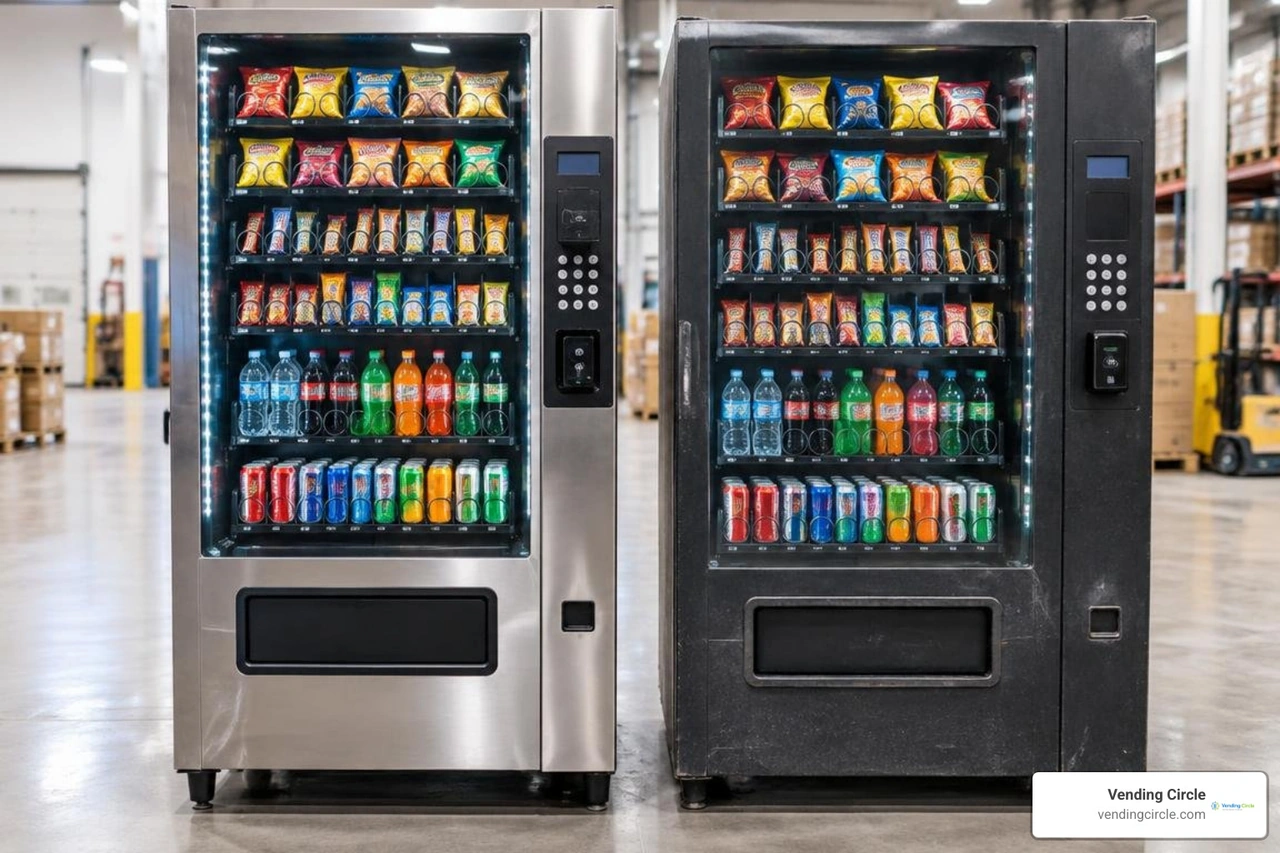
Understanding equipment tiers helps you deploy capital effectively while maintaining reliable operations:
| Equipment Condition | Upfront Price Range | Reader Included? | Typical Warranty | Best Use Case |
|---|---|---|---|---|
| New Commercial | $3,000 – $7,000 | Often integrated or optional add-on | 1 to 2 Years (Parts & Labor) | High-profile corporate sites, hospital lobbies |
| Factory Refurbished | $2,000 – $4,800 | Usually pre-fitted with modern MDB reader | 90 to 180 Days (Parts) | Established accounts, expanding routes |
| Inspected Used | $1,500 – $3,000 | Varies; may require retrofit kit ($200–$500) | 30 to 60 Days or As-Is | Entry-level routes, lower-traffic locations |
When building your operating budget, refer to a comprehensive vending machine pricing guide to factor in hardware retrofits and payment processing overhead. Card reader hardware typically costs between $200 and $500 per unit if purchased separately, plus monthly wireless connectivity fees ($6 to $12) and merchant processing fees (typically 5% to 6% per swipe).
Location Strategy, Profit Potential, and Ongoing Maintenance
Securing high-performing vending machine locations directly drives your return on investment. The best placements feature consistent foot traffic and captive audiences:
- Manufacturing Facilities & Warehouses: 24/7 shift workers relying on fast snack breaks.
- Office Breakrooms: 50 to 200+ employees seeking mid-afternoon snacks and energy drinks.
- Gyms & Fitness Centers: High demand for protein bars, healthy snacks, and hydration drinks.
Financial Expectations
A standard combo or snack vending machine placed in a moderate-traffic venue generates between $500 and $1,500 in monthly gross revenue.
After product costs (Cost of Goods Sold averaging 40% to 55%), cashless transaction fees, and general supplies, monthly net operating profit generally lands between $200 and $700 per machine before equipment debt service.
Maintaining Equipment and Optimizing Inventory
To keep margins healthy, implement smart vending machine inventory management routines:
- Monitor Remote Telemetry: Review daily sales velocity via your cashless reader's dashboard to plan restock loads accurately.
- Product Rotation: Always rotate inventory front-to-back using the FIFO (First-In, First-Out) method to eliminate expired stock.
- Routine Upkeep: Follow routine machine maintenance tips on every service call—wipe down the drop chute, clean condenser coils on refrigerated units, test the bill validator belts, and confirm the card reader's cellular signal.
Frequently Asked Questions About Cashless Snack Vending
How much does a card reader add to monthly operating costs?
A card reader incurs two main ongoing costs: a monthly wireless service/telemetry fee (typically $6 to $12 per month per device) and credit card processing fees (generally 5% to 6% per transaction, or a small flat per-swipe fee). Because card readers typically increase overall machine sales volume by 20% to 35%, the added revenue far outweighs these operating costs.
What is the difference between a combo machine and a snack-only machine?
A snack-only machine dedicates all internal tray space to ambient snacks (chips, candy, pastries), providing higher capacity (often 30 to 40 selections and 400+ items). A combo machine splits its internal cabinet into an ambient snack section on top and a refrigerated beverage deck on the bottom, allowing you to sell both product lines from a single physical machine.
How much revenue does a cashless reader add over cash-only machines?
With more than 70% of consumer vending transactions occurring through credit, debit, or mobile wallets (Apple Pay, Google Pay), installing a card reader typically increases gross revenue by 25% or more compared to cash-only units. Cashless readers also enable multi-vend transactions, raising the average ticket size per visit.
Conclusion
Upgrading to a card-capable snack or combo vending machine is essential for meeting modern customer payment expectations. Balancing physical build quality, energy efficiency, guaranteed drop sensors, and reliable cellular payment readers ensures consistent uptime and steady operational cash flow.
At Vending Circle, our community and marketplace help operators connect directly with equipment sourcing, technical training, weekly live Q&A sessions, and discounted supplies. When you are ready to expand or upgrade your route equipment, explore commercial snack and drink vending machines to find the right setup for your business.